
Mark Bittman’s Tomato Jam Recipe, Adapted for Canning
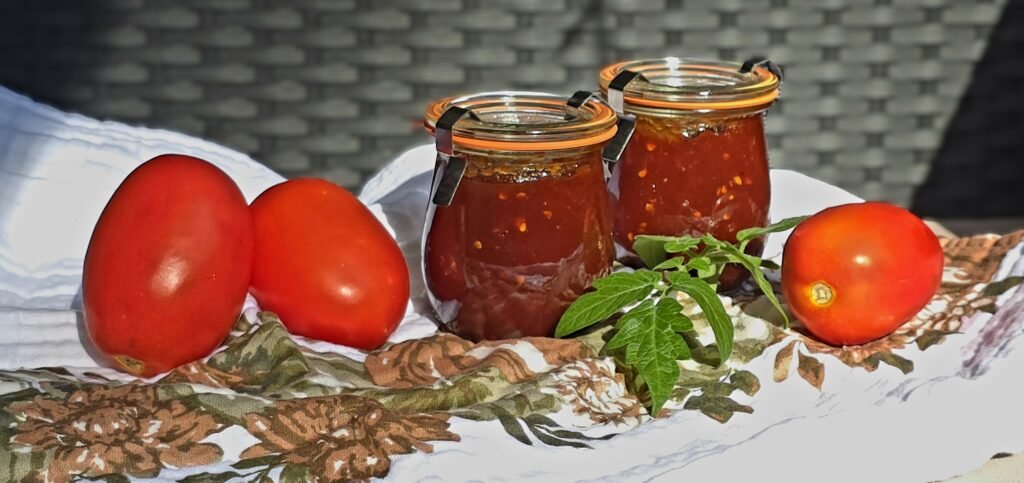
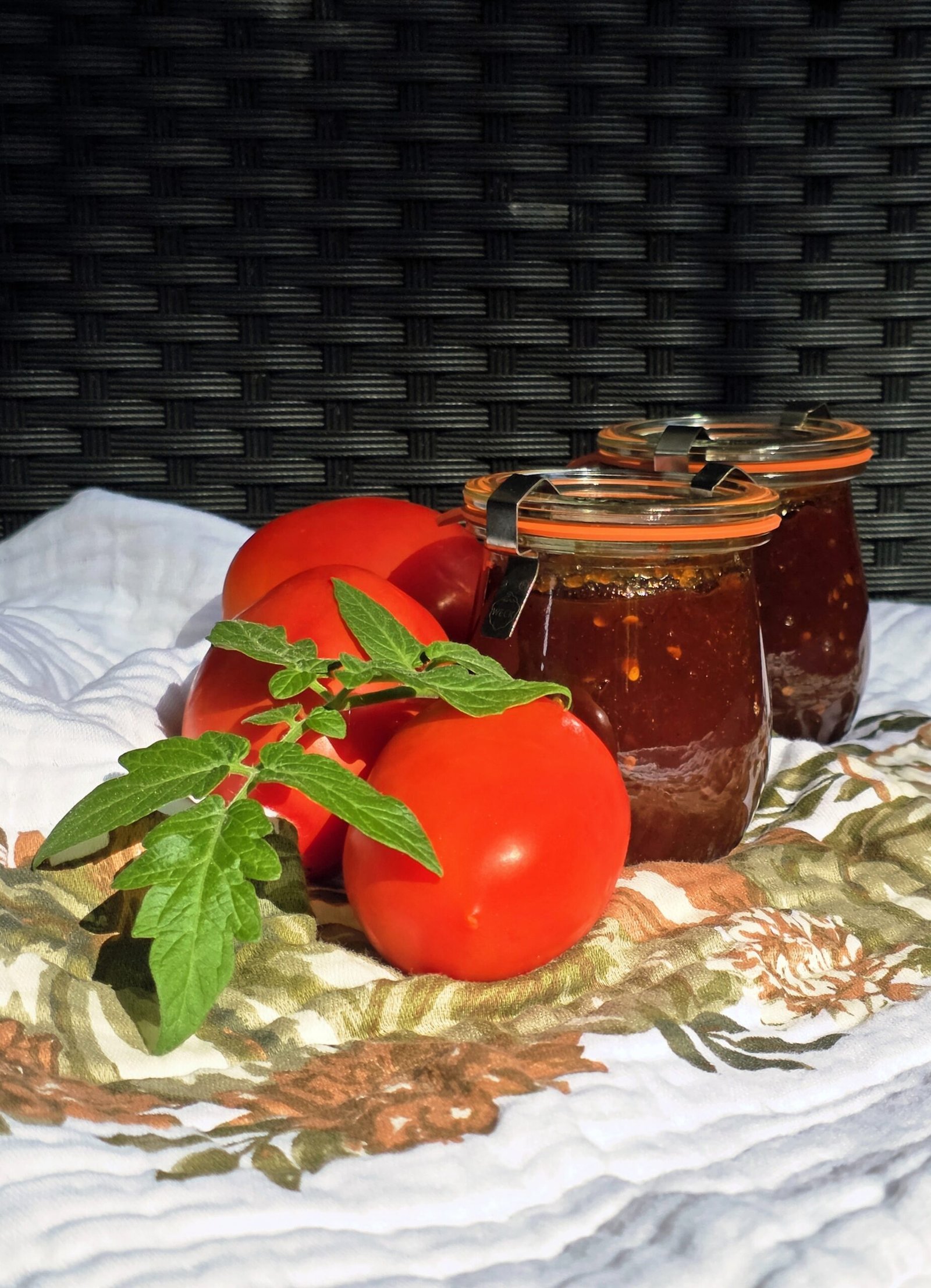
Tomato jam. Sweet, savory, and richly spiced. Made to showcase ripe tomatoes. A small-batch tomato preserve adapted for canning from Mark Bittman’s famous refrigerator jam.
🔪 Prep:
15-20 min
🫕Cook:
~1 hr 50 min
🫙3
half-pint (250 ml) jars
💰Cost per jar:
~$2.48 USD / ~$3.41 CAD*
*when tomatoes are in season
Tomato jam sounds like a stretch … until you taste it. Ripe tomatoes cooked down with sugar, citrus juice, and warm spices turn into something sweet, savory, and unmistakably tomato-y, not the ketchup you’re picturing. No pectin required, and a batch costs a fraction of what the specialty tomato jams run on Amazon or specialty stores.
Why You’ll Love This Tomato Jam
- Tomato flavor stays front and center. Sugar and warm spices round out this tomato jam without turning it into ketchup.
- No added pectin! Just tomatoes, sugar, citrus, and spices
- Costs far less than specialty condiments. A pantry staple you can make for a fraction of what a jar of gourmet tomato jam costs at the store.
- Versatile! Works with a burger and a cheeseboard.
- A perfect solution when you don’t know what to do with all those extra tomatoes and want something more creative than salsa, BBQ sauce, or ketchup.
- Includes water bath canning instructions for a pantry-ready preserve.
Mark Bittman’s Tomato Jam and Why We Adapted It
From time to time, a good canning recipe idea comes from the most unexpected places, as is the case with this tomato jam. We found a reference to this recipe in the middle of an argument that had nothing to do with jam.
Somewhere on a canning subreddit, a thread had turned into a debate about homemade tomato paste. Is it worth the hours it takes to reduce a pot of tomatoes down to a few tablespoons of paste? In that same conversation, someone brought up Mark Bittman’s tomato jam, the sweet-savory, warmly spiced preserve that had a cult-like following since it ran in the New York Times over a decade ago.
Unfortunately, it was a refrigerator-only tomato jam.
That was the gap we wanted to fix when adapting Mark Bittman’s recipe for canning.
We buy tomatoes by the case every canning season and always wonder what to do with all those tomatoes we bring home. So, a recipe that could turn part of that tomato case into something worth gifting, not just sauce and paste, was a no-brainer for us. We looked at NCHFP’s own tomato jam guidance and worked out how to safely acidify tomatoes for canning. The first batch that we made felt like we were getting away with something. In fact, if you look at numbers, it’s not luck it is just math, done properly and applied to canning. That is the approach we used when adapting Mark Bittman’s tomato jam recipe.
Because something this good couldn’t be allowed to go un-canned.
How is This Tomato Jam Recipe Different?
This is not Mark Bittman’s original recipe with a canning label slapped on it. We used his tomato jam as the starting point and developed our own version for canning.
The basic sweet-savory idea stays. But we changed the spice profile and the way the recipe is cooked and finished for our version.
What we changed
- Allspice instead of cloves. We prefer the warmer, rounder flavor of allspice with tomatoes.
- Lime zest. It adds a fresh citrus note that works particularly well with the cumin, ginger, and allspice.
- The cooking process. Bittman’s original is a refrigerator jam. Our version was developed specifically as a canned preserve.
The result is still recognizably Bittman’s tomato jam in spirit, but it is our adaptation, with its own flavor profile and canning method.
Tomato Jam: Key Ingredients
Tomatoes
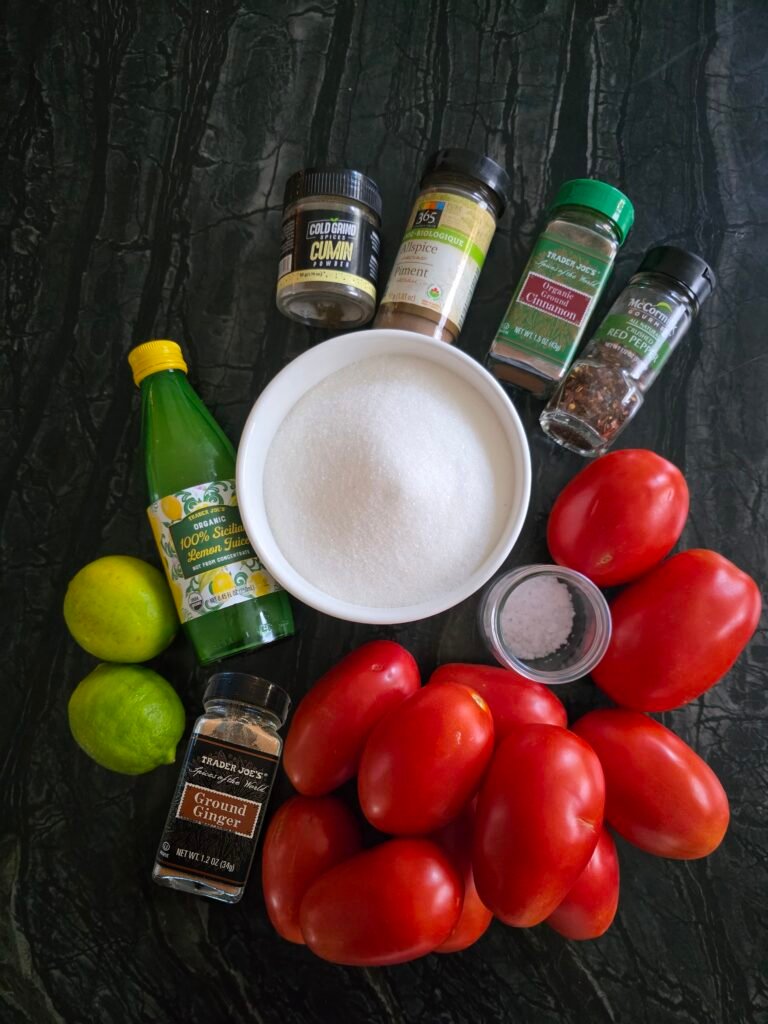
Roma tomatoes are the entire base of the jam. They provide the bulk and the flavor as they reduce down with the sugar and spices.
Why this form: Plum-style tomatoes have less water than slicing tomatoes, so they reduce to jam consistency faster.
Substitution: None recommended. While we haven’t tested this with canned tomatoes, however NCHFP advises that their acidity and water content can differ enough from fresh to matter in a canning recipe.
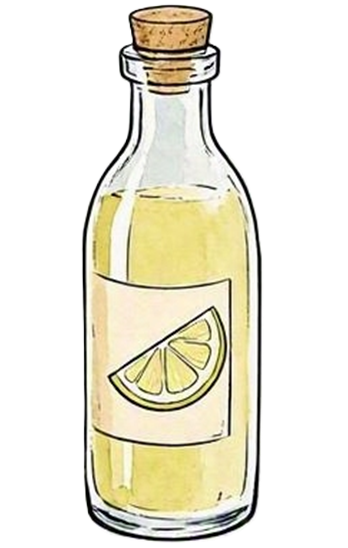
Bottled Lemon Juice
One of two acid sources that bring this jam to a safe pH for canning. Reason being, tomatoes alone sit too close to the safety line.
Why this form: Bottled acidity is standardized; fresh lemon juice varies too much to trust for canning.
Do not substitute or reduce this amount. It’s one of two measured acid sources this recipe depends on.
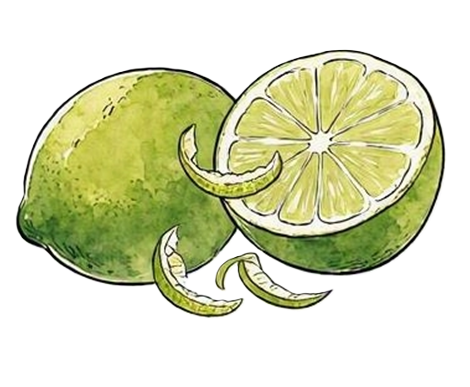
Freshly Squeezed Lime Juice
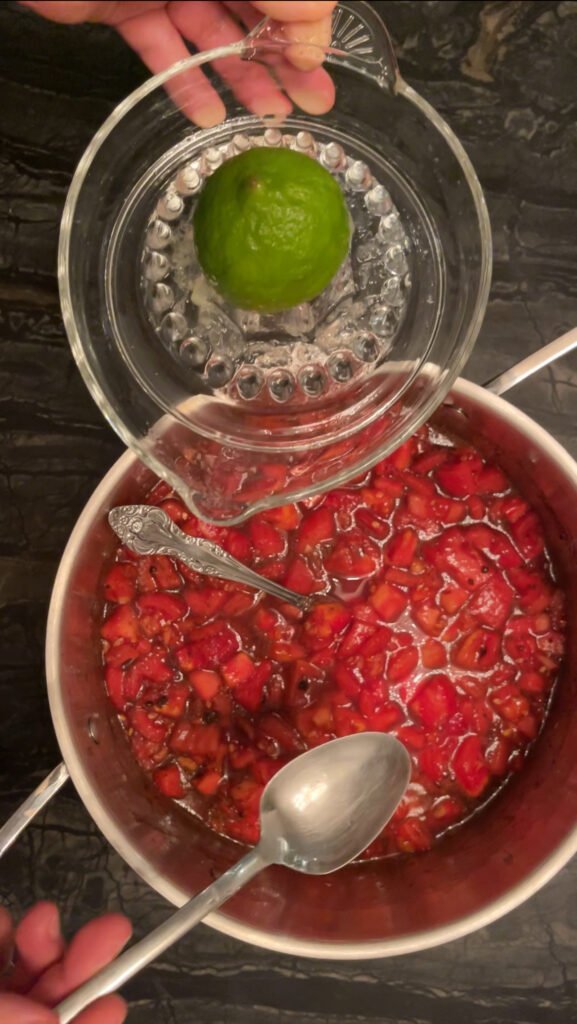
This is the second acid source and Mark Bittman’s own flavor choice, kept because it’s what makes the jam taste right against his spice blend. It’s doing real acidification work too, not just acting as flavoring.
Why this form: Fresh lime’s acidity averages close to bottled lemon’s regulated minimum. Together, the two juices land at roughly double NCHFP’s own tomato jam ratio.
Don’t reduce this amount either. It isn’t the flexible half of the recipe.
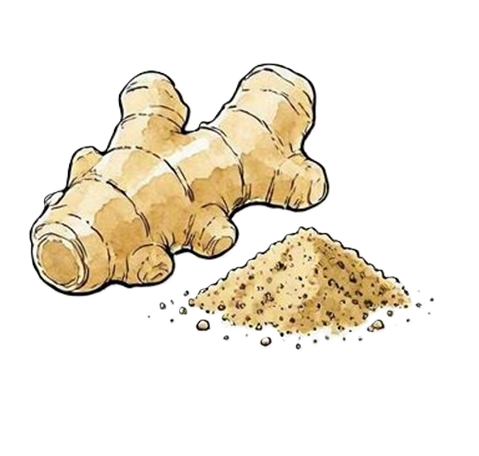
Dried Ground Ginger
Fresh Ginger is what makes Bittman’s original tomato jam recognizable. Fresh ginger is low-acid ingredient. The amount of fresh ginger needed for real flavor would cut into the safety margin of this tomato jam canning recipe.
Ground dry ginger is a substitution this adaptation recipe depends on. Dried, in a much smaller amount, doesn’t have the same problem as fresh.
Why this form: Ground ginger is more concentrated than fresh, so a small measured amount matches the flavor of fresh without adding meaningful low-acid bulk to this canning recipe.
Do not substitute fresh for dried, or increase the amount. It’s the third piece of this recipe’s acid math, not a flavor swap.
Lookup pH of canning ingredients↗️

Pantry Master’s Note
Why dried ginger and not fresh? It’s not just a flavor call. It’s what keeps this jam’s acid math intact, and it’s backed by more than our own testing. Ball’s own canning spokesperson has said on record that dry ingredients are fine to add to a tested recipe, but fresh ones shouldn’t be, because fresh changes the pH.
The National Center for Home Food Preservation backs the same principle: dried herbs and spices run several times stronger than fresh, which is exactly why the swap isn’t 1:1. Multiple university extension services, including one answer specifically about jams, say the same: dried can be adjusted to taste, fresh can’t be swapped in without retesting the recipe.
None of this makes our recipe a tested Ball or NCHFP formula. It simply supports the distinction between changing dry flavorings and changing the ingredients that determine a recipe’s acidity.
Sources:
What This Tomato Jam Costs to Make
The biggest lever on cost of this tomato jam is how you buy the tomatoes. At a US farmers market stall, tomatoes typically run $2–4/lb; the same market selling by the case (25 lb box) usually drops that under $1/lb – which is the bulk approach this recipe assumes, and matches the per-pound rate at the farmers markets in Canada.
| INGREDIENT | USD | CAD |
| Tomatoes (1.5 kg / 3.3 lb) | $2.48–4.13 | $4.13 |
| Granulated sugar (2¼ cups) | $0.65–0.95 | $0.85–1.25 |
| Fresh lime juice + zest (~5 limes) | $1.25–3.10 | $2.50–5.00 |
| Bottled lemon juice (¼ cup) | $0.20–0.40 | $0.20–0.40 |
| Ground ginger (1½ tsp) | $0.15–0.35 | $0.20–0.40 |
| Cinnamon, allspice, cumin, red pepper flakes (combined) | $0.35–0.80 | $0.40–0.90 |
| Salt (2¼ tsp) | $0.02–0.05 | $0.02–0.05 |
| Total batch (3 jars) | $5.10–9.78 | $8.30–12.13 |
Cost per Jar: ~$1.70–3.26 USD / ~$2.77–4.04 CAD
Comparable artisan tomato jams retail for $8–12 per 8–9 oz jar at Amazon or specialty food stores. So, even at the top of this range, you’re making it for well under half that, and as little as a fifth of the price at the low end. Plus, let’s face it, you know exactly what went into those jars.
Common Mistakes When Making This Tomato Jam Recipe
❌ Swapping in fresh lemon juice: Fresh lemons vary in acidity fruit to fruit, and there’s no way to tell by looking or tasting. Always measure this one from the bottle.
❌ Treating fresh and dried ginger as a 1:1 swap: Dried ground ginger is here because fresh ginger’s moisture content shifts the jam’s acidity. Plus, dried ginger is more concentrated by volume. For these reasons, going back to fresh changes flavor strength and safety math at once.
❌ Using canned tomatoes instead of fresh: Undeniably, reaching out for canned tomatoes is tempting off-season. However, canned tomatoes are already processed to their own acidity and water content, which won’t match what this recipe is built around.
❌ Walking away near the end of the cook: As the jam cooks down, sugar concentration goes up, and the jam mixture goes from “just simmering” to “scorching” faster than it seems like it could. At the 1 hour mark start checking jam every 10 minutes or so. Additionally, stir jam more often than feels necessary right after you add lime zest and the remaining lime juice (in the last 15–20 minutes). A scorched batch tastes bitter all the way through
Mark Bittman’s Tomato Jam, Adapted for Canning
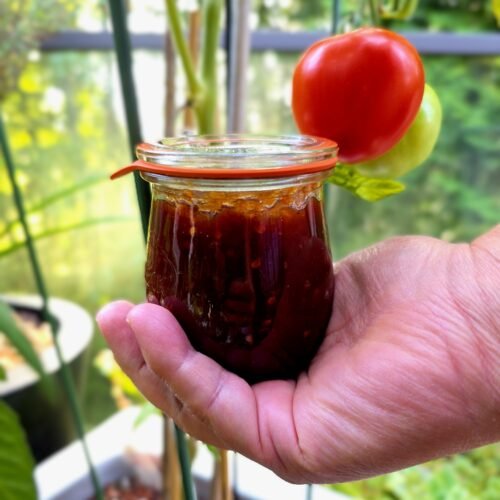
Tomato Jam Without Pectin: How to Know When It’s Done
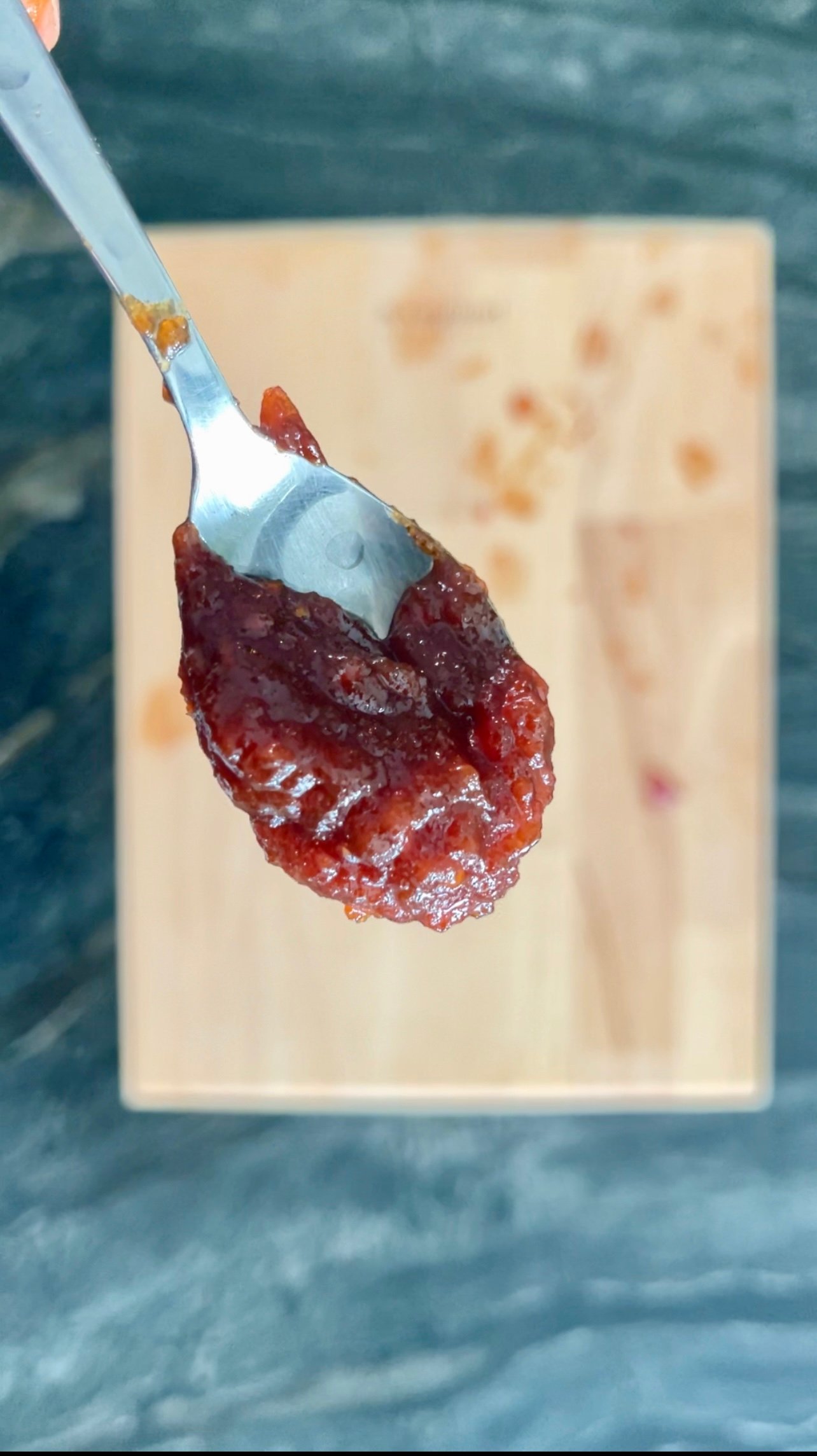
This tomato jam sets the traditional way – without added pectin.
Modern recipes that use pectin can set in a matter of minutes at a full rolling boil; this one doesn’t have that shortcut. Instead, slow evaporation during cooking is doing the bulk of the work in this recipe. Additionally, it relies on the pectin already naturally present in the tomatoes, drawn out and concentrated by the acid present in this jam mixture. That’s why this recipes calls for close to two hours of cooking time, instead of ten or twenty minutes.
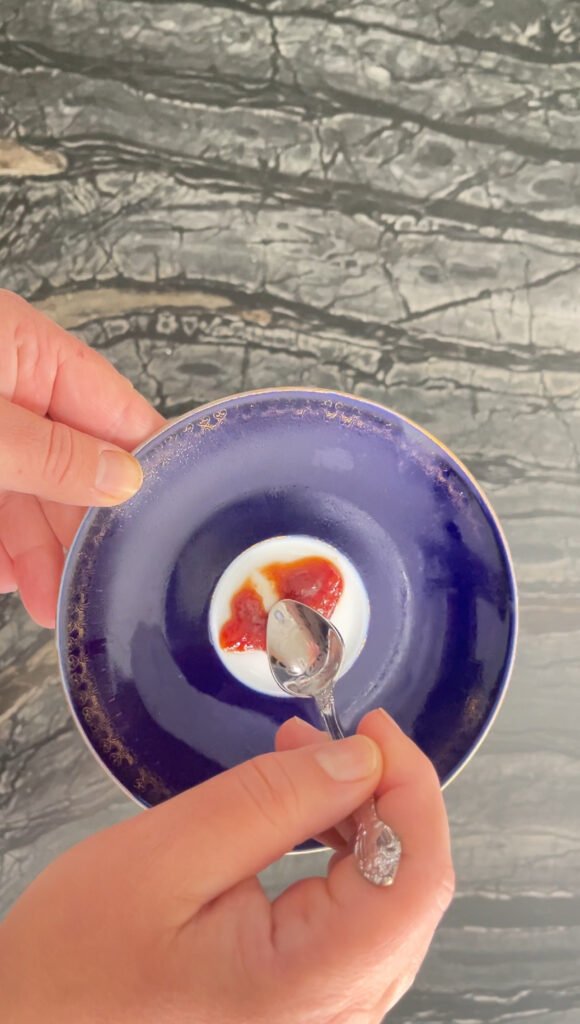
We use the cold plate test to check for set. Here’s how: Spoon a little onto a chilled plate and push the edge with your fingertip. If it wrinkles slightly and holds its shape, it’s set. If it’s still loose, give it a few more minutes and test again.
If it’s consistently taking longer than the recipe says, your pot is probably too narrow. A wide, heavy-bottomed pot – something in the 4–6 quart stainless range – gives more surface area, so more water evaporates per minute instead of the jam just sitting there getting hotter.
Canning Methods
This is a high-acid jam preserve. Out canning table follows standard NCHFP’s processing times for jams and jellies.
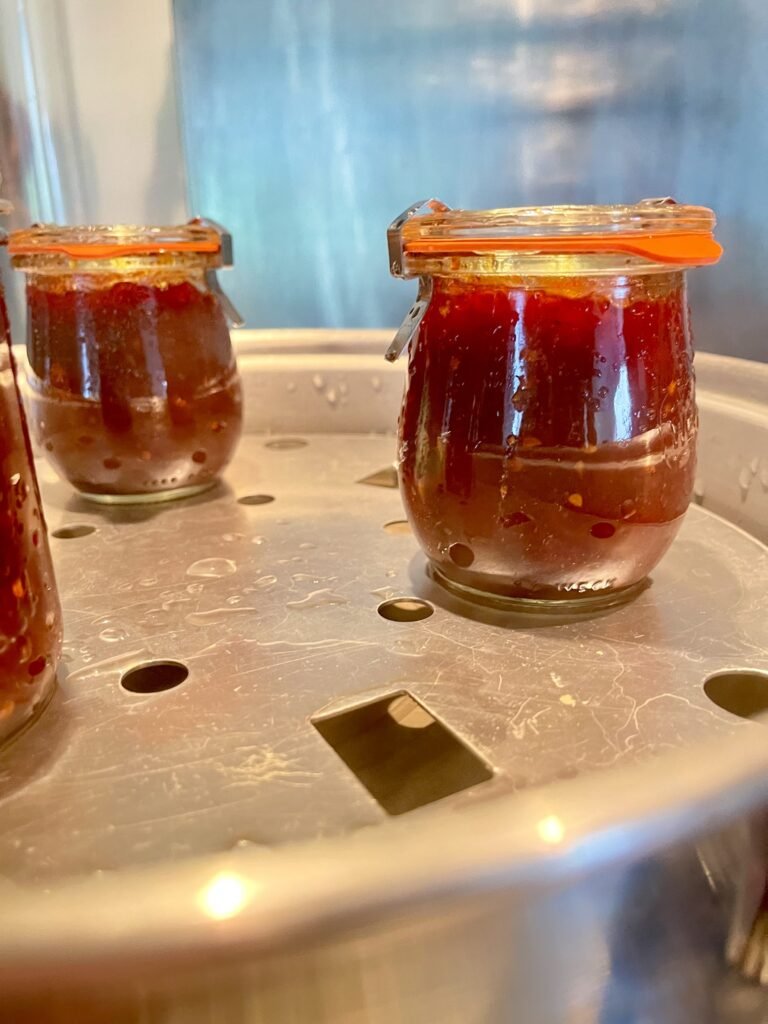
Both water bath canning and atmospheric steam canning use identical processing times for this recipe. We typically use an atmospheric steam canner for speed and lower water use, but a water bath canner works equally well and is the most widely used method in home preserving.
Processing table – Steam Canner & Water Bath
Jar size: Half-pint or Pint (8 oz / ~250 mL or 16 oz / ~500 mL)
Pack style: Hot
Applies to: Atmospheric steam canner AND water bath canner (same processing times)
| Altitude | Processing time |
| 0–1,000 ft | 5 min |
| 1,001–6,000 ft | 10 min |
| Above 6,000 ft | 15 min |
Not sure which elevation band is yours? Our Canning Altitude Calculator will give you the answer in a couple of seconds.
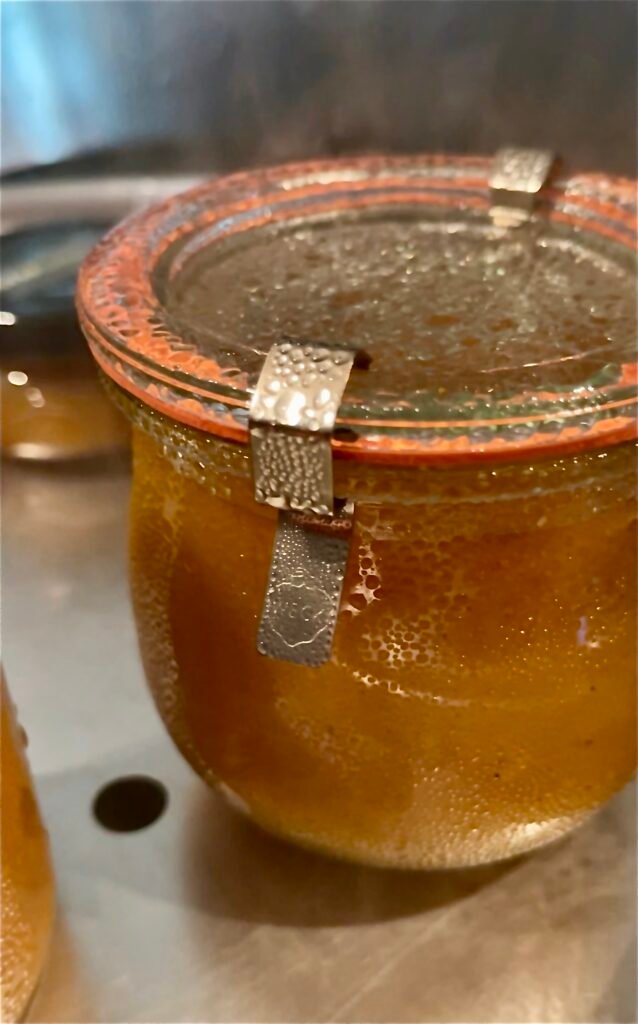
Atmospheric steam canning is newer to the home canning world. Nevertheless, it has been validated for high-acid preserves like this. It uses less water, heats up faster, and doesn’t require jars to be submerged.
- Prepare your atmospheric steam canner according to the manufacturer’s instructions. Typically, fill the base with the recommended amount of water and preheat until steam begins to vent.
- Place filled jars on the canner rack. Cover with the dome lid.
- Start timing once a steady column of steam has been venting continuously.
- When processing time is complete, turn off heat.
- Remove jars straight up with a jar lifter. Most important, do not tilt. Place on a towel-lined counter or cutting board.
New to steam canning?
Ready to ditch water bath canners?
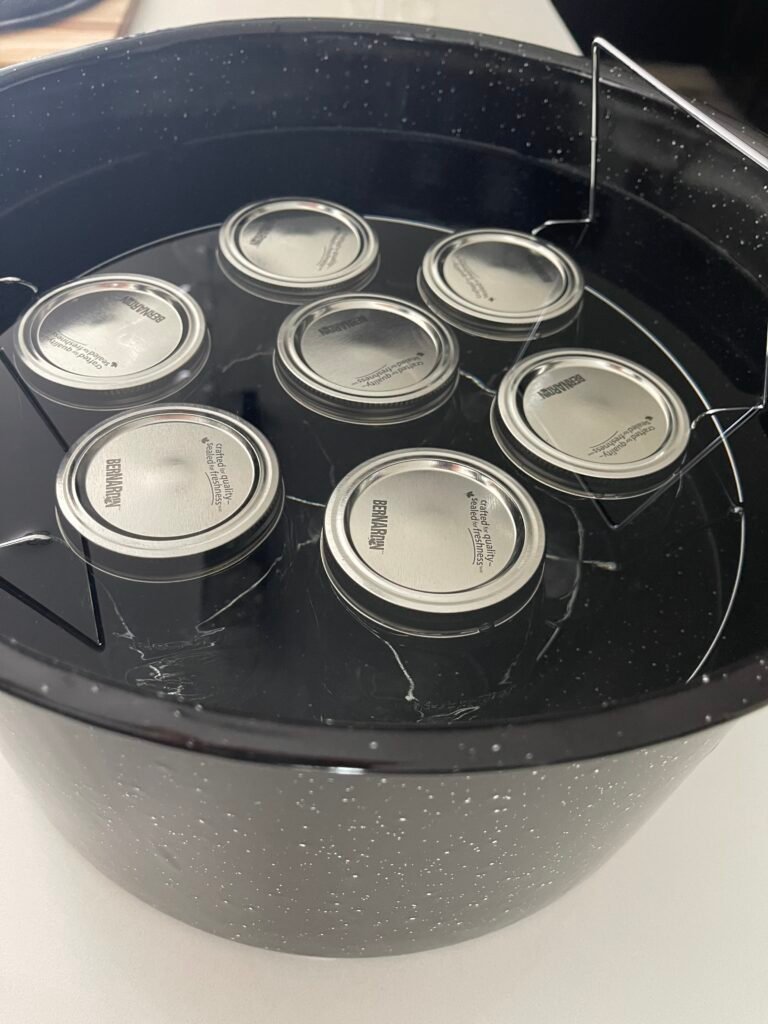
Water Bath Canning
Undeniably, water bath canning is the most widely used method for high-acid preserves and the one most canners learn first. If you already own a water bath canner, this is a perfectly sound way to process this jam.
- Place filled jars on the canner rack and lower it into boiling water. Always remember, water must cover the lids by at least 1 inch.
- Start timing once you reach a full rolling boil. Processing times are identical to the table above.
- When processing is complete, turn off heat and let jars rest in the water for 5 minutes before removing them. This step helps prevent siphoning.
- Lastly, remove jars straight up with a jar lifter.
Looking to understand how the two methods compare?

Prefer Open Kettle?
Open kettle canning is not a USDA-recommended method. For this recipe, we used atmospheric steam canning to get consistent, shelf-stable results. However, open kettle remains a long-established traditional method that some experienced canners still use for high-acid preserves.
We don’t dismiss traditional methods. For those who choose to use open kettle, we’ve put together a guide that explains how it is practiced, along with the key steps aimed at reducing common risks within that traditional approach.
After sealing (all methods)
- Do not touch, adjust bands, or press lids for 12–24 hours.
- After cooling, check seals: press the center of each lid. If it doesn’t flex, the seal is good. Any jar that didn’t seal goes in the fridge → use within 3 weeks.
- Remove bands for storage (they trap moisture and can mask a broken seal over time). Label with contents and date.
- Store in a cool, dark place. Peak quality for 12–18 months.
Check your processing time/ canning pressure if you’re above 1,000 feet↗️
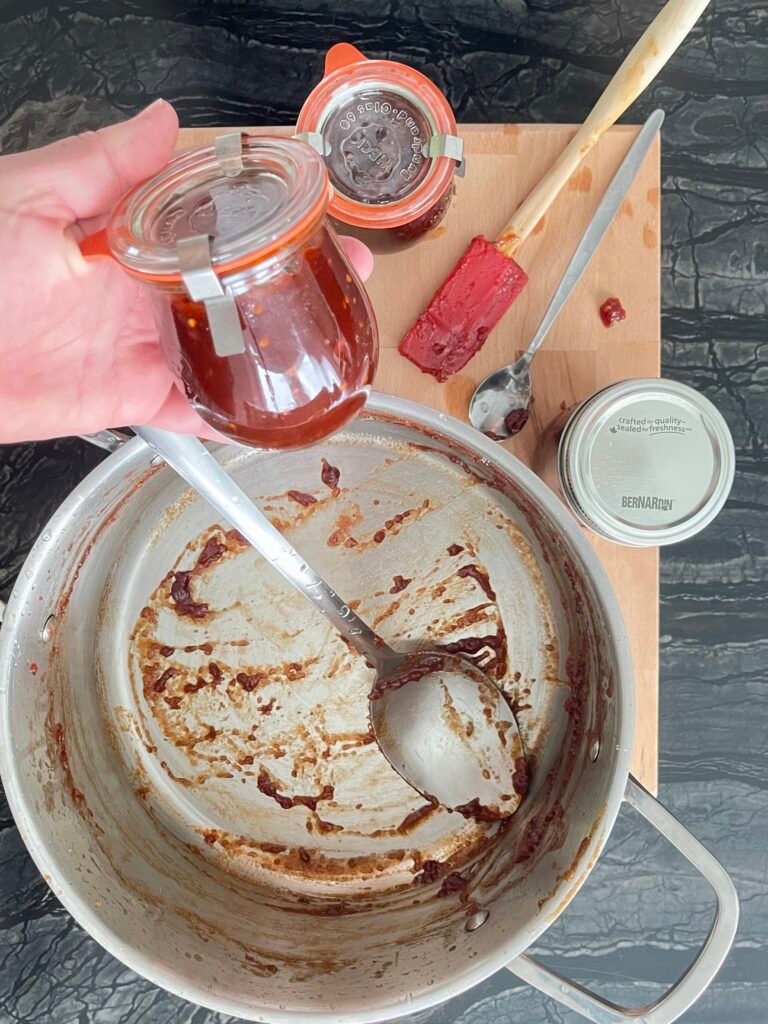
How to Make Tomato Jam – Step-by-Step Photo Gallery
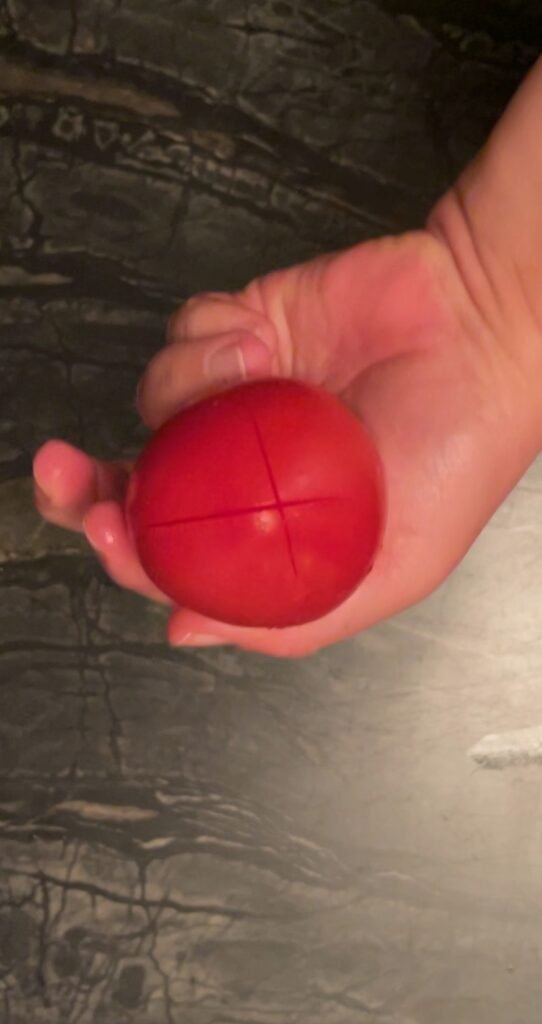
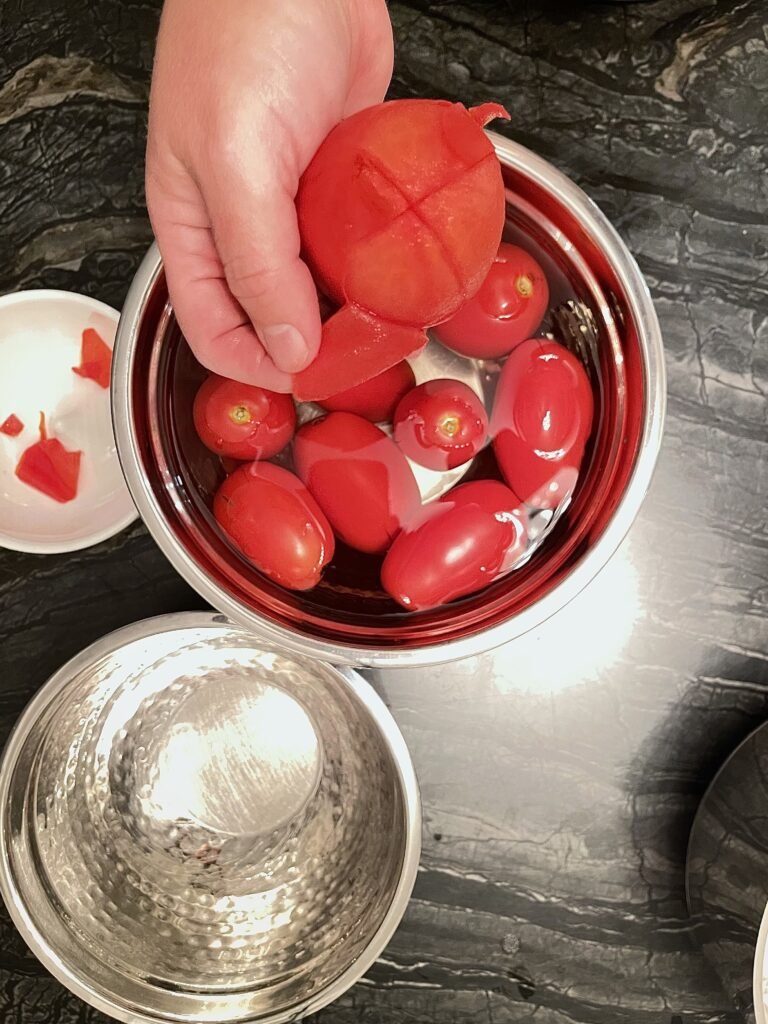
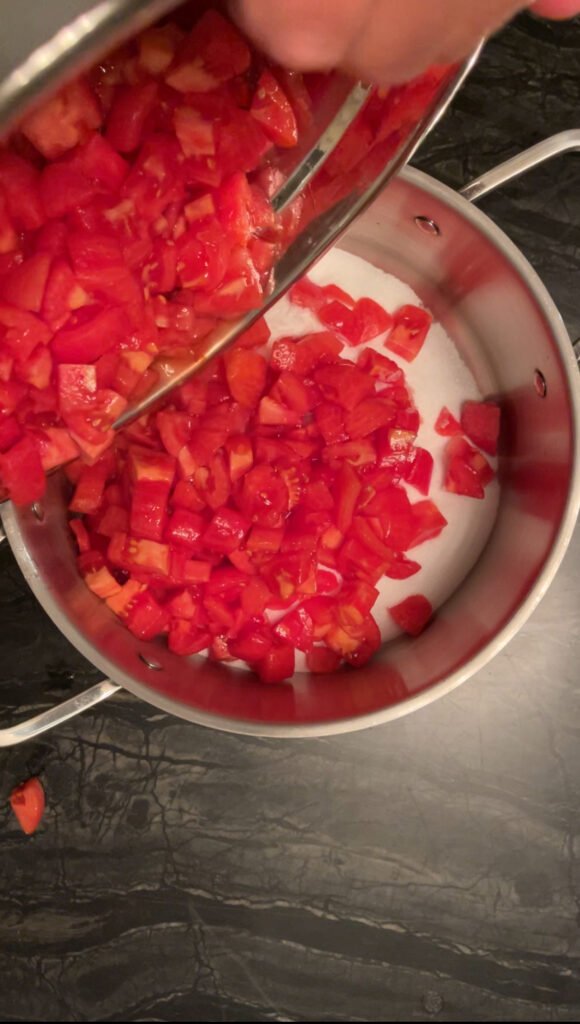
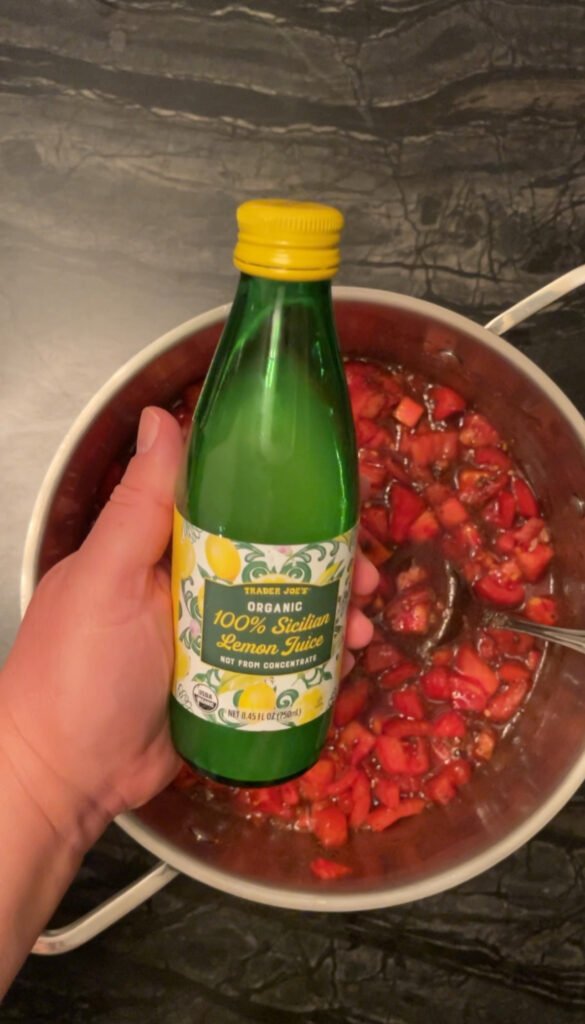
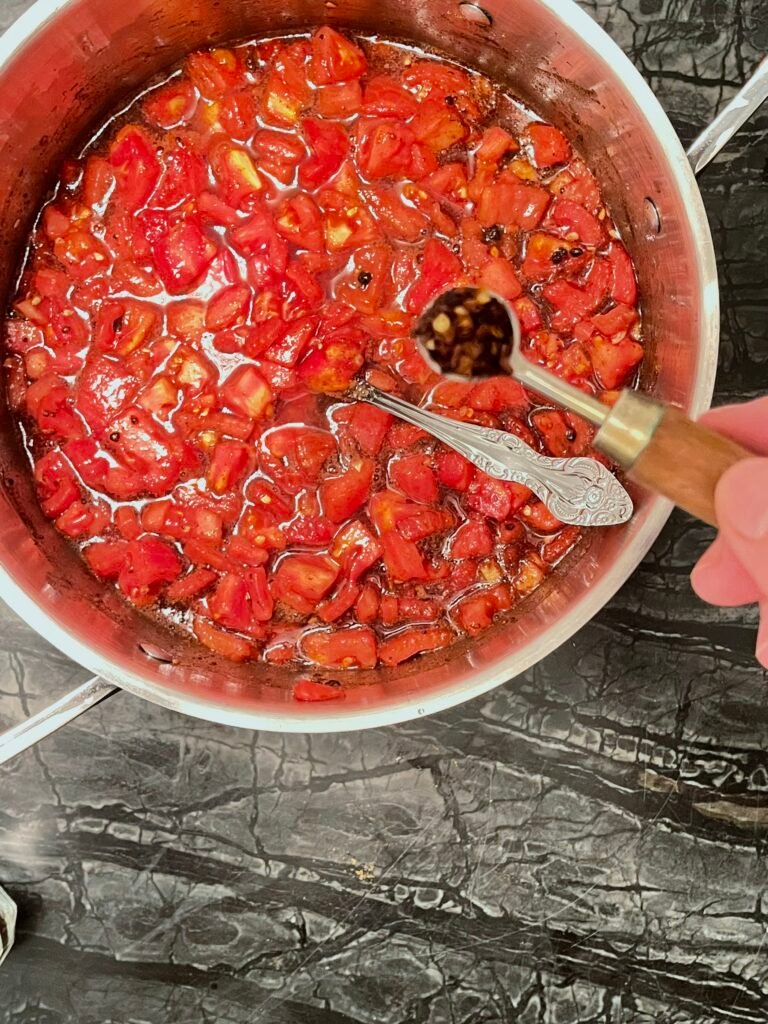
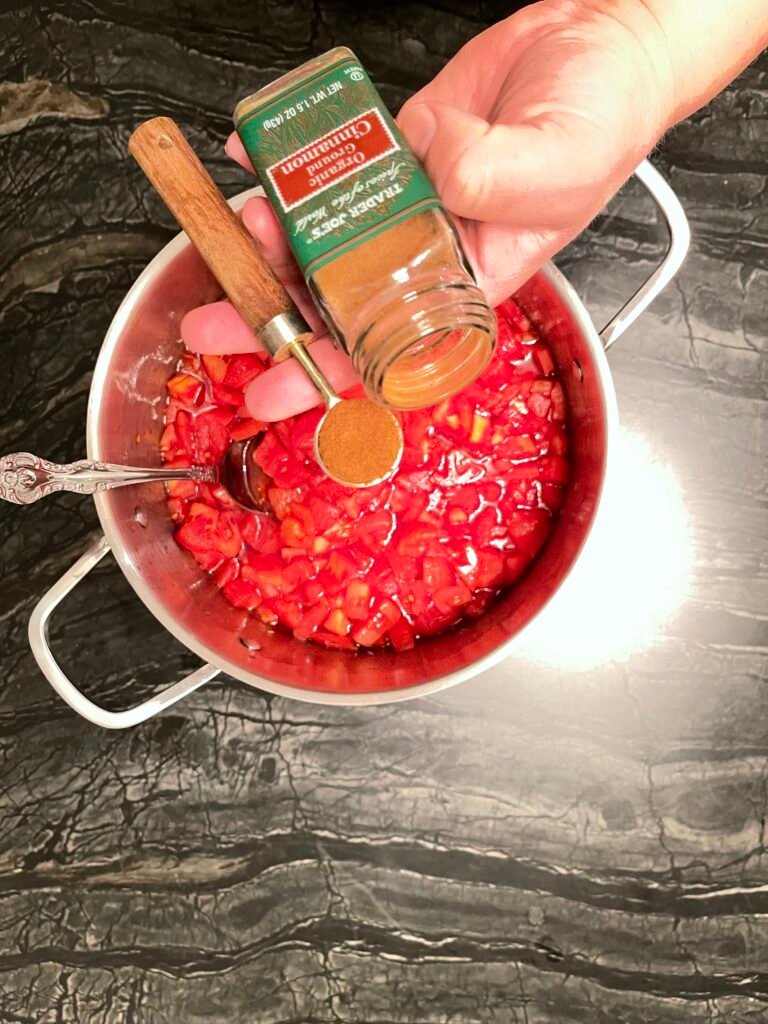
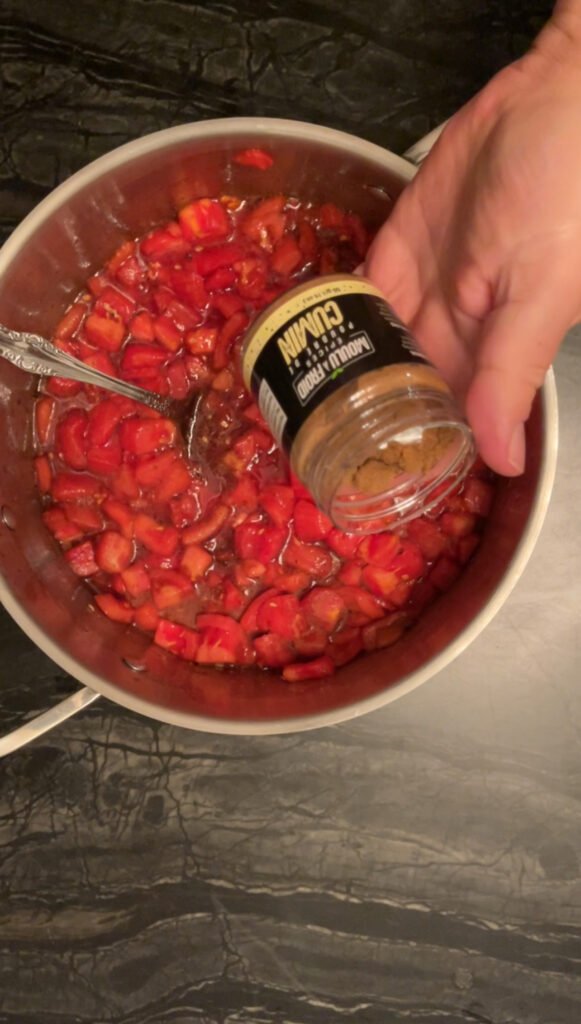
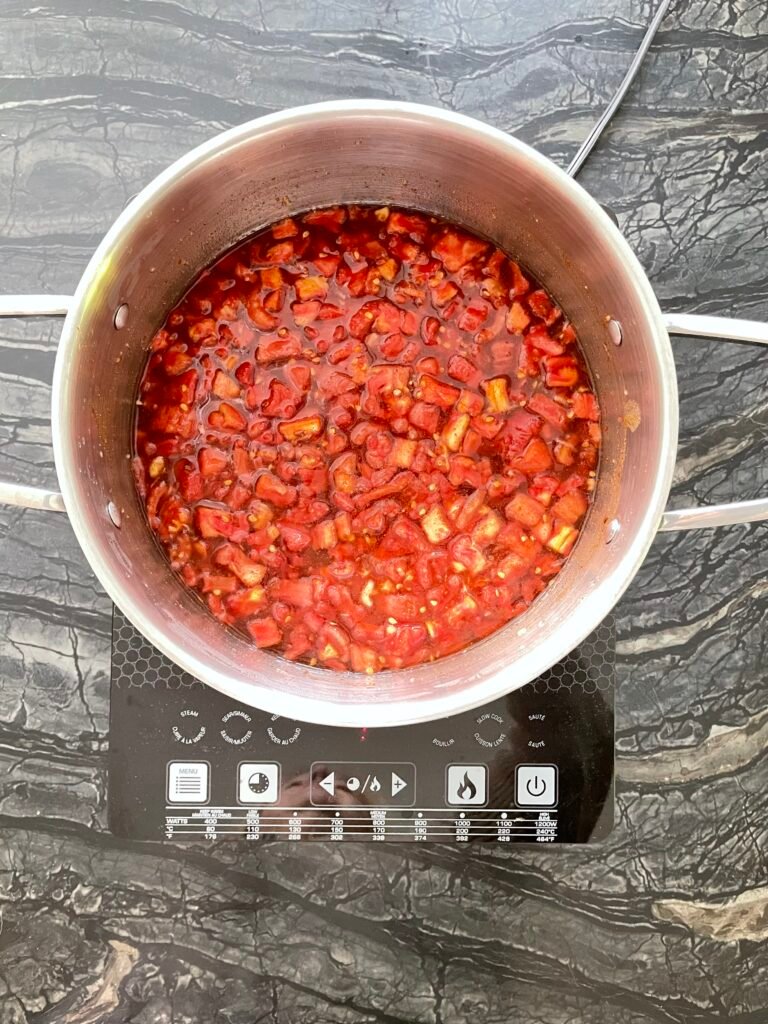
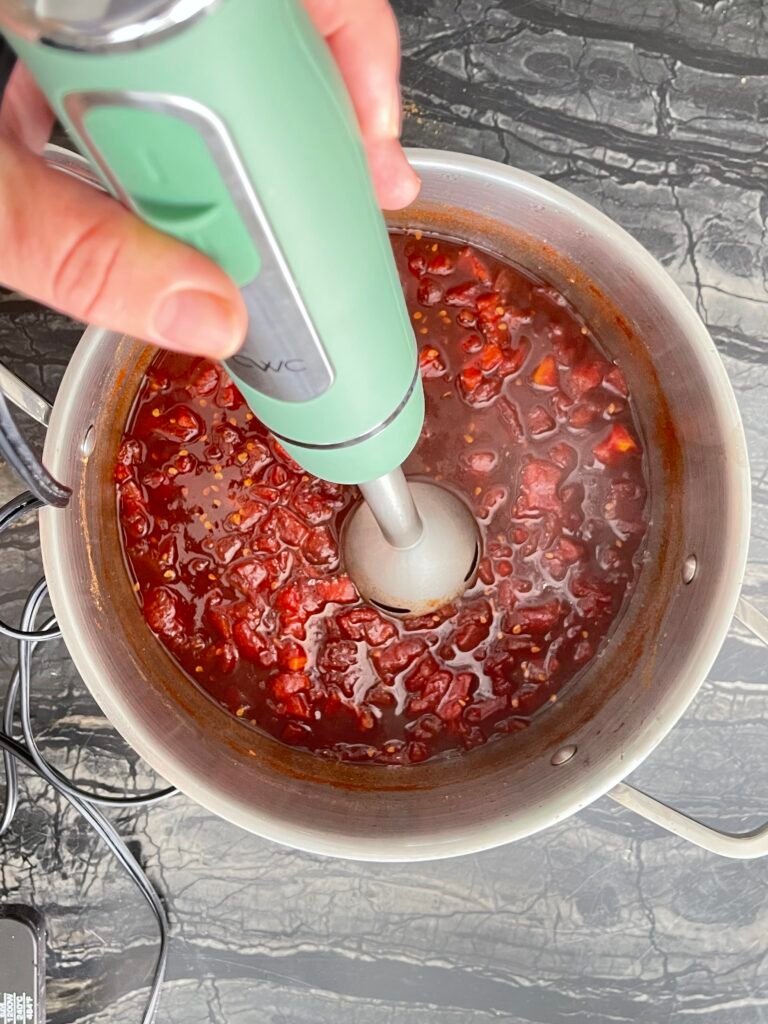
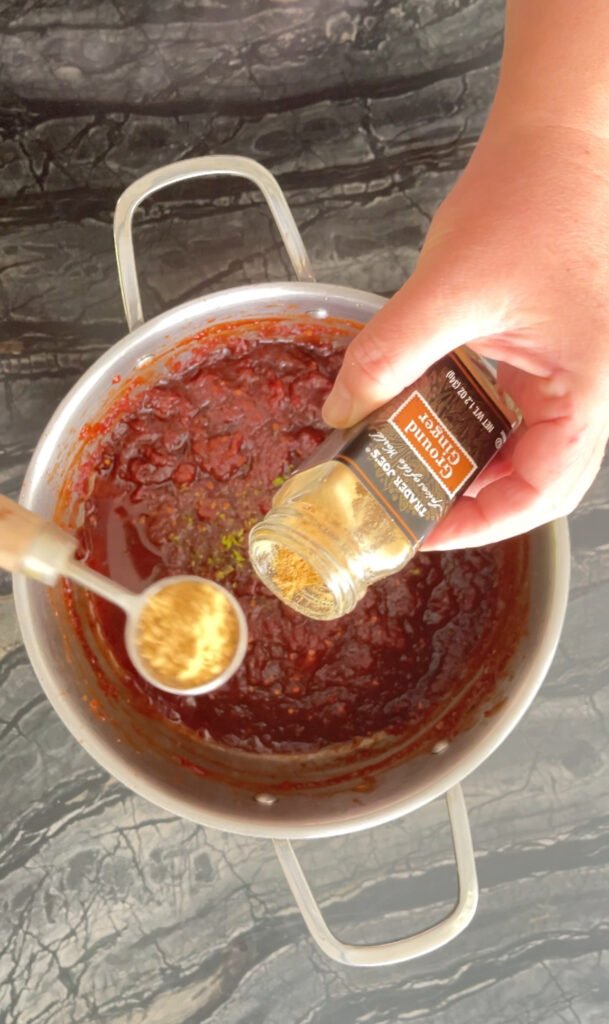
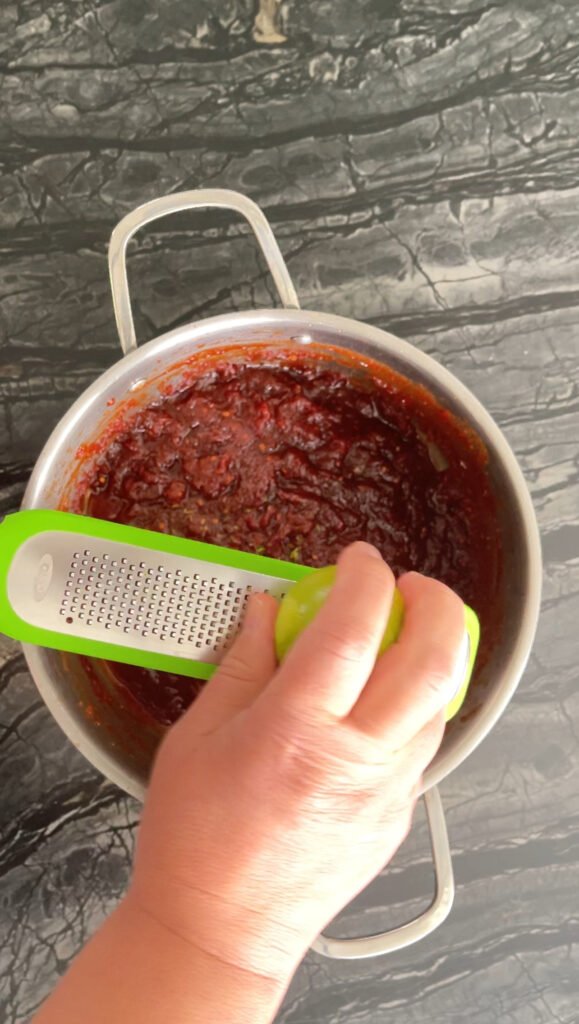
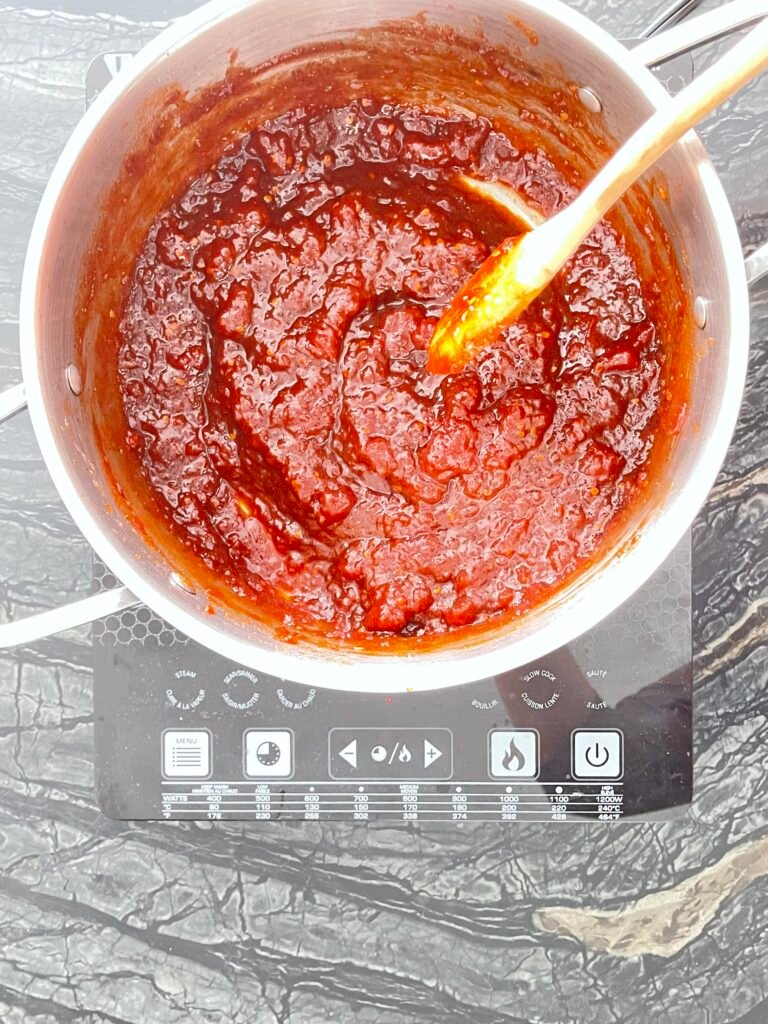
How to Use Tomato Jam: Beyond the Cheeseboard
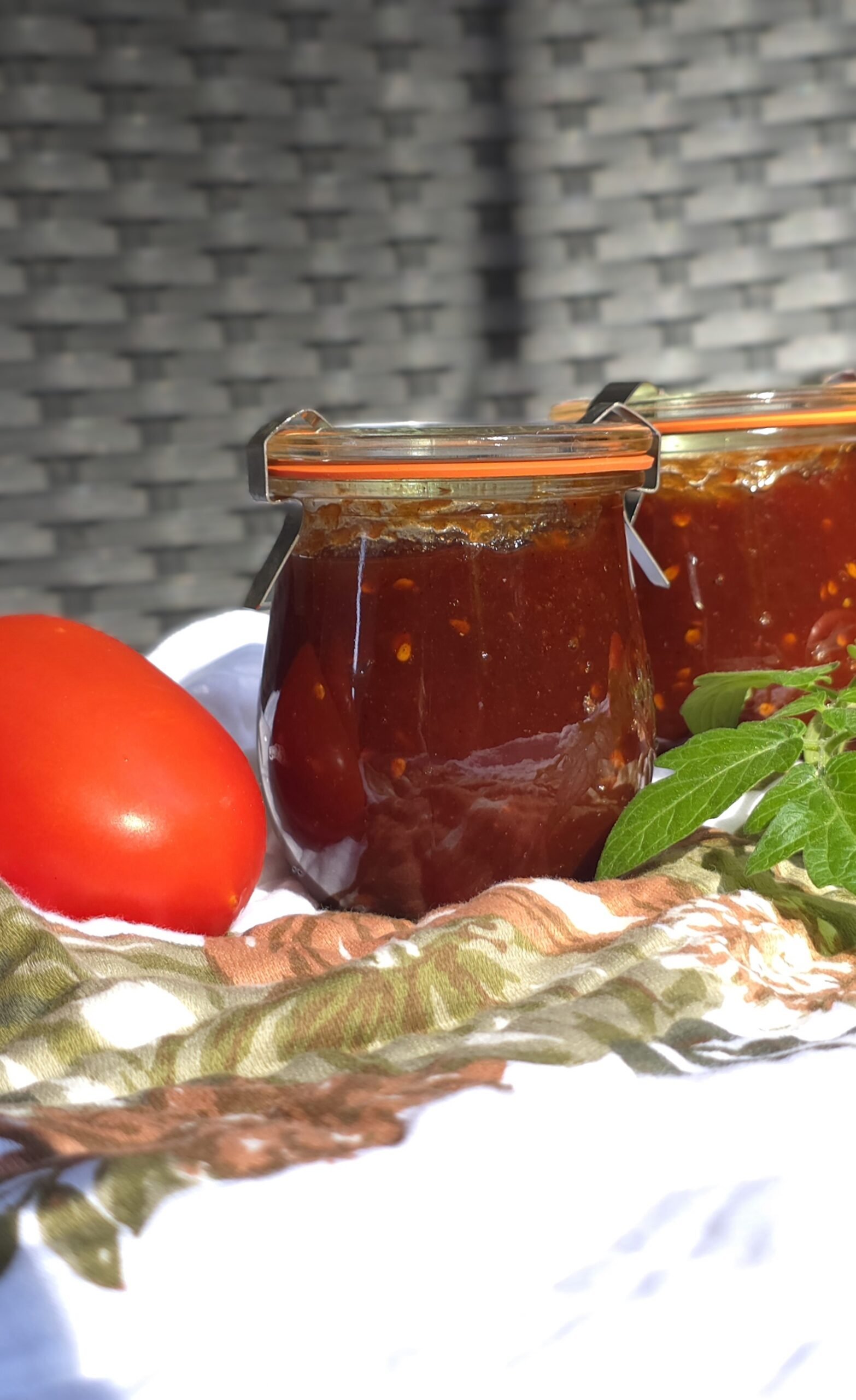
This tomato jam is as much a savory condiment as a sweet one, which means it shows up in more places than a typical fruit preserve would. A few ways to put it to work:
- As a Burger or Sandwich Spread: Skip the ketchup. A spoonful on a burger, a grilled cheese, or a fried egg sandwich does more work than plain tomato ever could.
- Stirred Into a Vinaigrette: Whisk a spoonful into oil and vinegar for a quick, spiced tomato vinaigrette.
- Alongside Hash Browns: Swap it in for ketchup on the breakfast plate – a spoonful next to crispy hash browns gets the same sweet-tomato hit with a lot more going on.
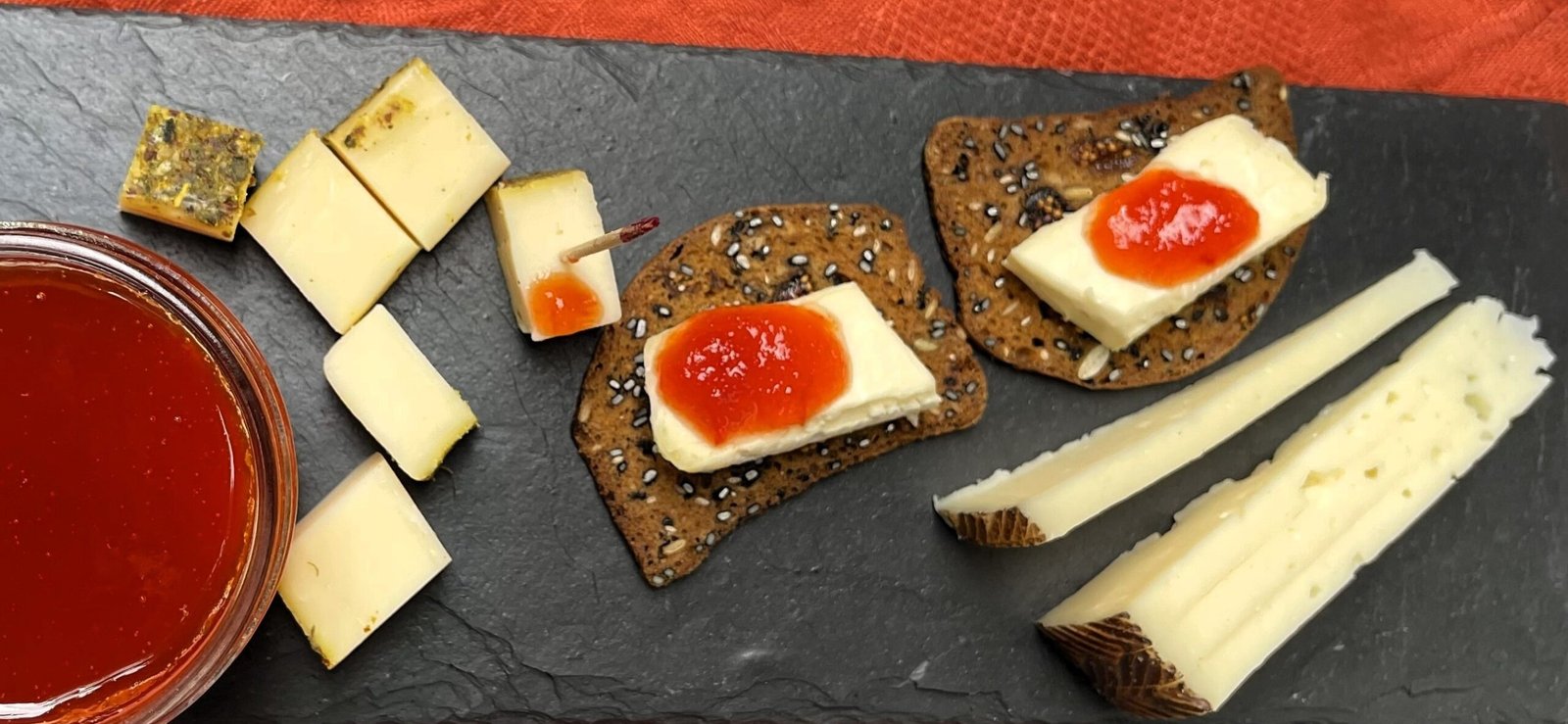
- On a Cheese Board: And finally, yes, tomato jam belongs on a cheeseboard, full stop. To be clear, we are talking not just tucked next to the soft cheeses. It holds its own with a sharp aged cheddar or a firm alpine-style cheese as easily as it does with brie or goat cheese, alongside crackers, cured meats, and nuts as part of the whole spread.
FAQ
No. The USDA and NCHFP don’t individually test third-party recipes. This is our own adaptation of Mark Bittman’s original refrigerator jam, built using NCHFP’s published guidance for safely acidifying tomatoes for canning. It hasn’t been independently tested by NCHFP or USDA.
━━━━━━━━━━━━━━━━━━━━
Yes, but scale everything by the same multiplier: tomatoes, both acid sources, and the spices together. Don’t scale the acid down relative to the tomatoes even if a bigger batch feels “too acidic”; the ratio is what makes it shelf-stable.
━━━━━━━━━━━━━━━━━━━━━
Bottled lemon gives a standardized, guaranteed acid level. Fresh lime, which averages close to that same acidity, adds a second measured dose on top of it. Together they land at roughly double the acid-to-tomato ratio of NCHFP’s own tested recipe.
━━━━━━━━━━━━━━━━━━━━━
It most likely needs more time, not more ingredients. This is a reduction-set jam. If the cold plate test still shows it is flowing right back together, keep cooking rather than reaching for pectin or cornstarch.
━━━━━━━━━━━━━━━━━━━━━
No. Dried is a safety substitution, not a flavor preference. Fresh ginger’s moisture content shifts the jam’s acidity balance, and dried is more concentrated by volume than fresh.
━━━━━━━━━━━━━━━━━━━━━
We can’t certify that – only NCHFP or USDA can, for a recipe they’ve tested directly, and this one hasn’t been. What we can walk you through is the reasoning: it’s built around two measured acid sources, bottled lemon juice and fresh lime juice, at a combined ratio that runs roughly double NCHFP’s own tested tomato jam recipe, per pound of tomatoes. That ratio is the whole basis for the approach, which is why both acid sources need to be measured exactly as written, not adjusted to taste.
━━━━━━━━━━━━━━━━━━━━━
No, not this one. Tomatoes carry enough natural pectin to set on their own once it’s drawn out by acid and concentrated through slow evaporation. Exactly the reason why this recipe skips added pectin and relies on a longer cook time instead. See “Tomato Jam Without Pectin” above for how to test for set.
━━━━━━━━━━━━━━━━━━━━━
Related Recipes
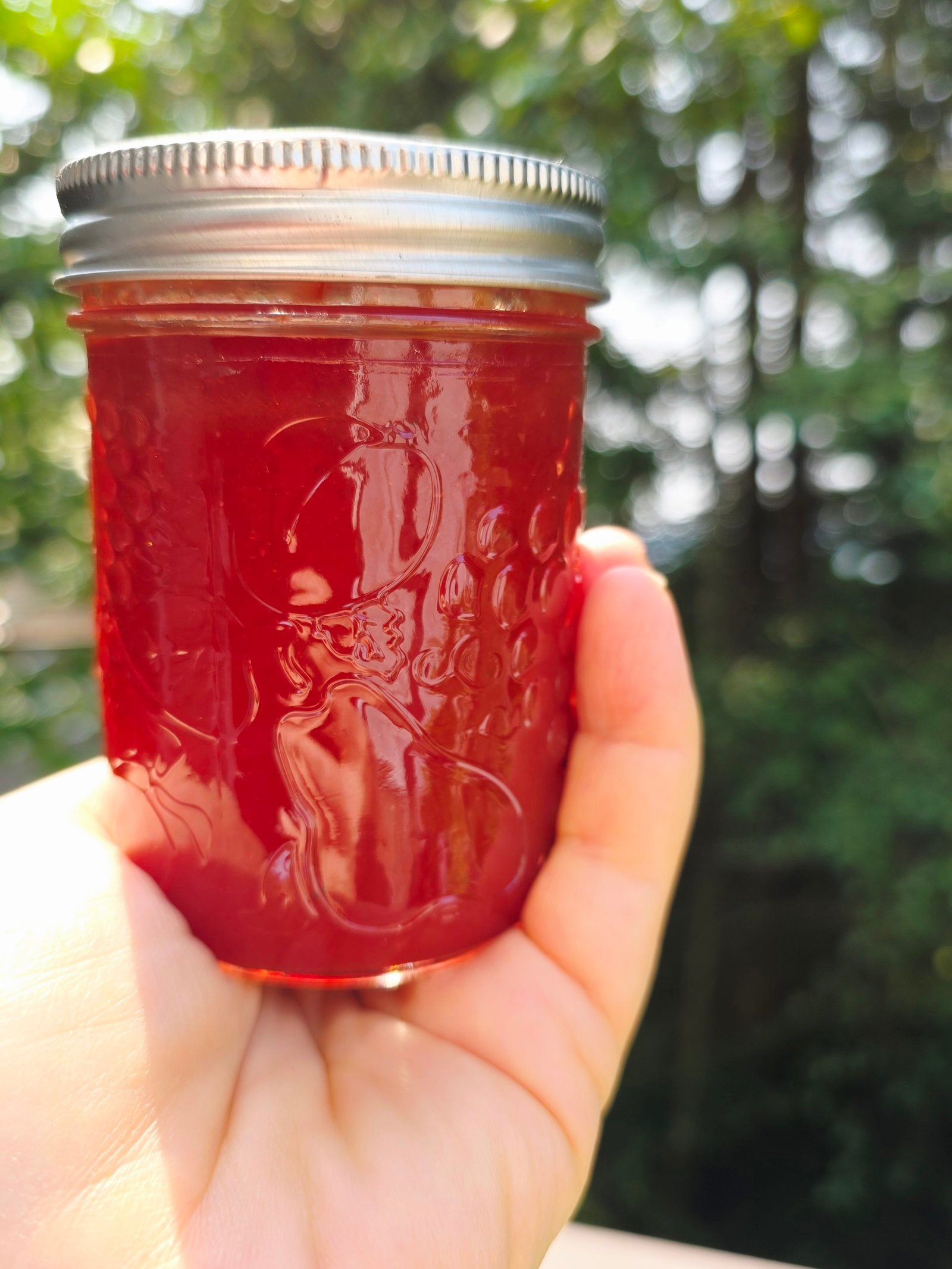
Old-Fashioned Plum and Tomato Ketchup
-the savory counterpart to this tomato jam’s sweetness, proof tomatoes don’t have to go the sauce-and-salsa route.
Join the pantry
Fresh recipes when the season calls for them. Preservation guides you can trust – every method, traditional to modern. Ideas for turning your pantry into weeknight dinners. Seasonal alerts that help you preserve more for less. Honest reviews of the tools that matter.
Tried this preserve? We’d love to hear how it turned out!