Sour Cherry Jam Canning Recipe
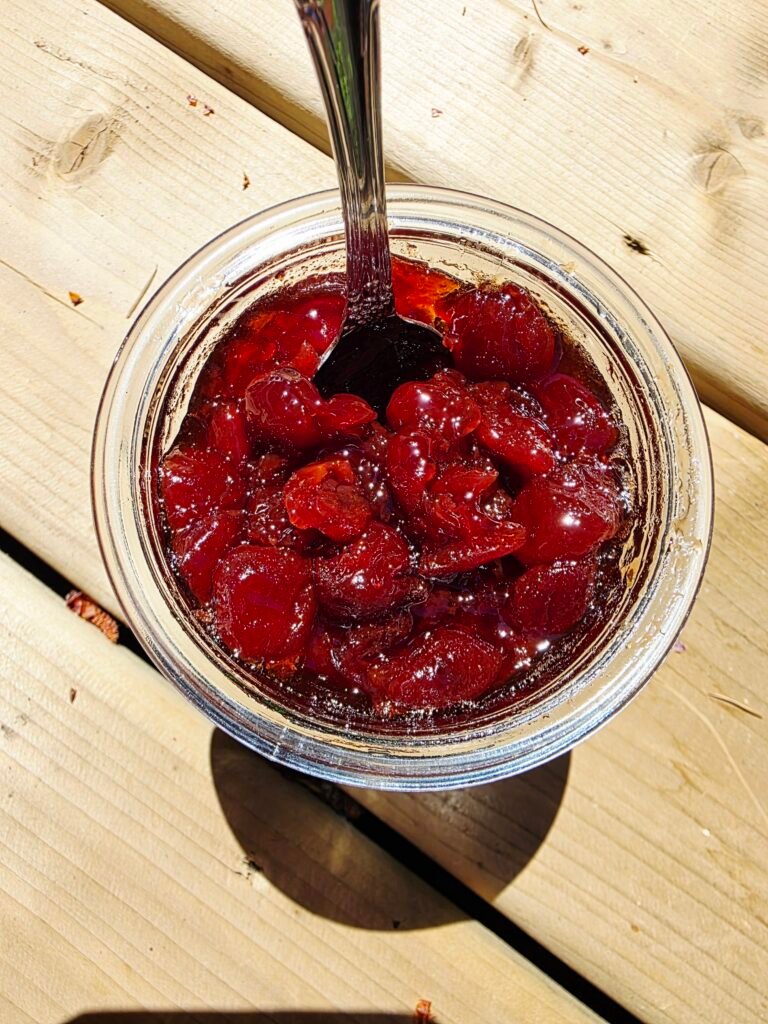
Sour cherry jam that tastes surprisingly…like cherries. Three simple ingredients: sour cherries, sugar, and pectin. One remarkably complex preserve.
🔪 Prep:
40 mins
⏲️ Macerate:
Overnight
🫕Cook:
20 mins
(5 min x 4 cycles) + final boil to gel
🫙4
half-pint jars
💰Cost:
~$5 to $6 per jar
Most sour cherry jam recipes turn sour cherries into a sweet, uniform spread. This recipe takes a different approach. Four short cook-and-cool cycles do the work of one long boil, which is the whole trick. Slow, not fussy. Worth every hour.
Leave it plain, or build on it with a splash of brandy or a spoonful of cocoa.
Why You’ll Love This Sour Cherry Jam:
- Made for busy schedules. Four short cooking sessions let you make exceptional sour cherry jam a few minutes at a time instead of giving up an entire afternoon
- Gentle on the fruit. Short cook cycles preserve the sour cherry texture and flavor better than a single long boil ever could.
- Naturally suited for canning. Sour cherries are acidic enough for both water bath and atmospheric steam canning. You don’t need lemon juice!
- A recipe you can make your own. Leave it plain, or build on it with a splash of brandy or a spoonful of cocoa.
The European Roots of This Sour Cherry Jam
Most jam recipes ask you to clear your calendar. This one doesn’t, and never did.
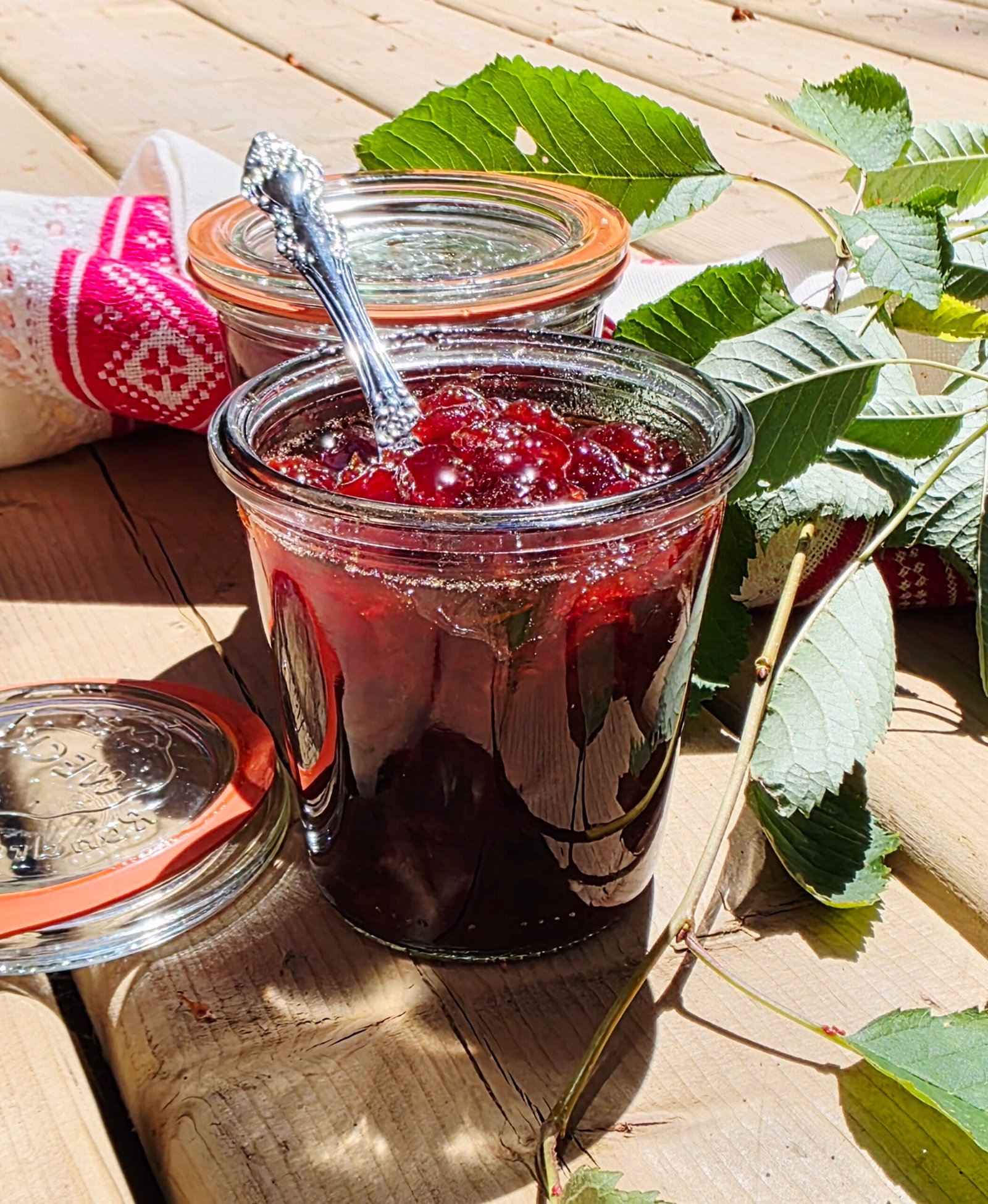
Our mom worked full time, ran a busy household, and still found time to make sour cherry jam every summer. It is not because she had a free afternoon, but because she never needed one to make this jam.
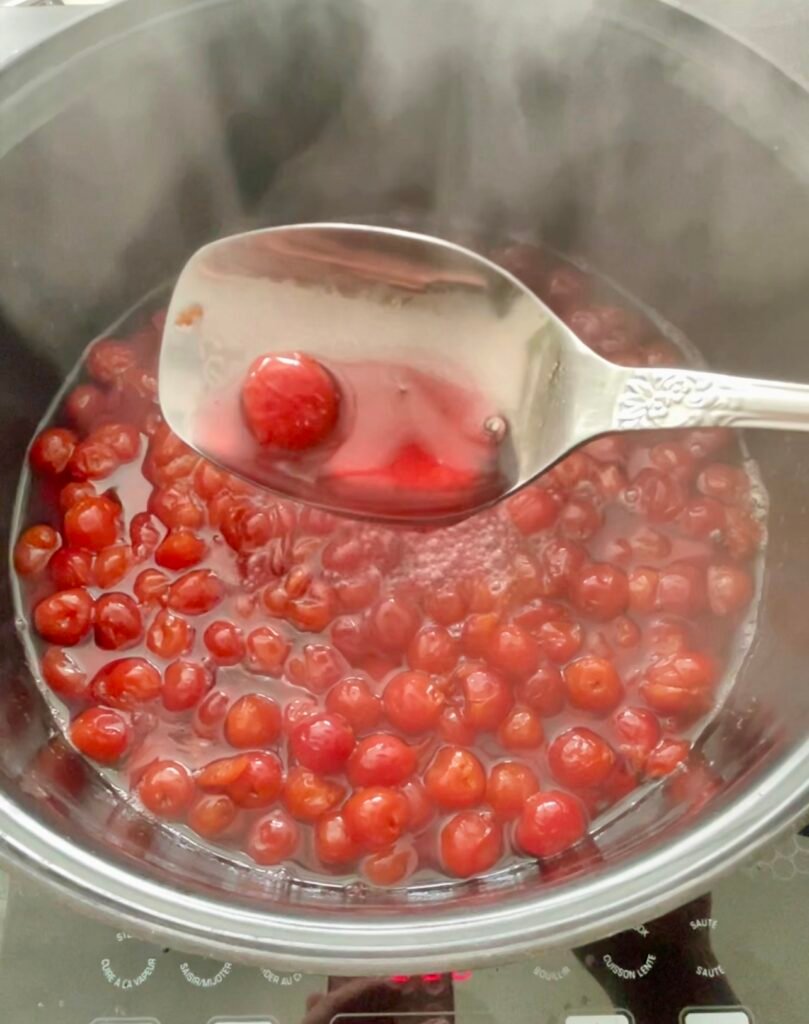
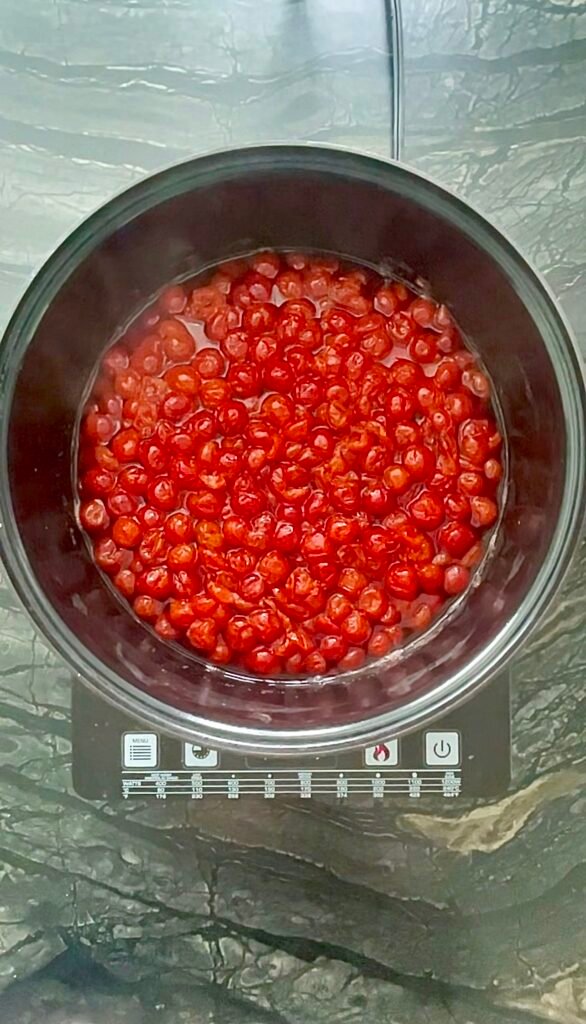
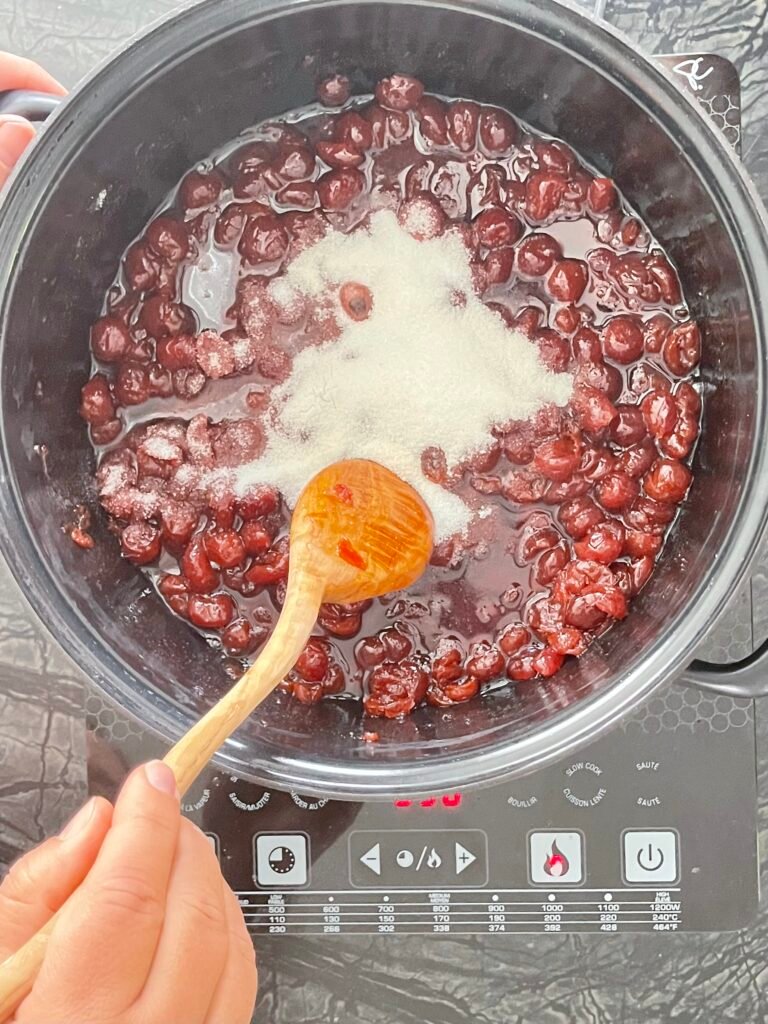
She’d stir in part of the sugar, bring the cherries to a boil, then turn off the heat before leaving for work. The pot would sit undisturbed until evening, the cherries slowly resting in their own juices. Then in the evening, after dinner, she’d repeat the process. More sugar, another short boil and then again let the cherries rest overnight. The next day, one more cycle, before finally ladling the jam into jars.
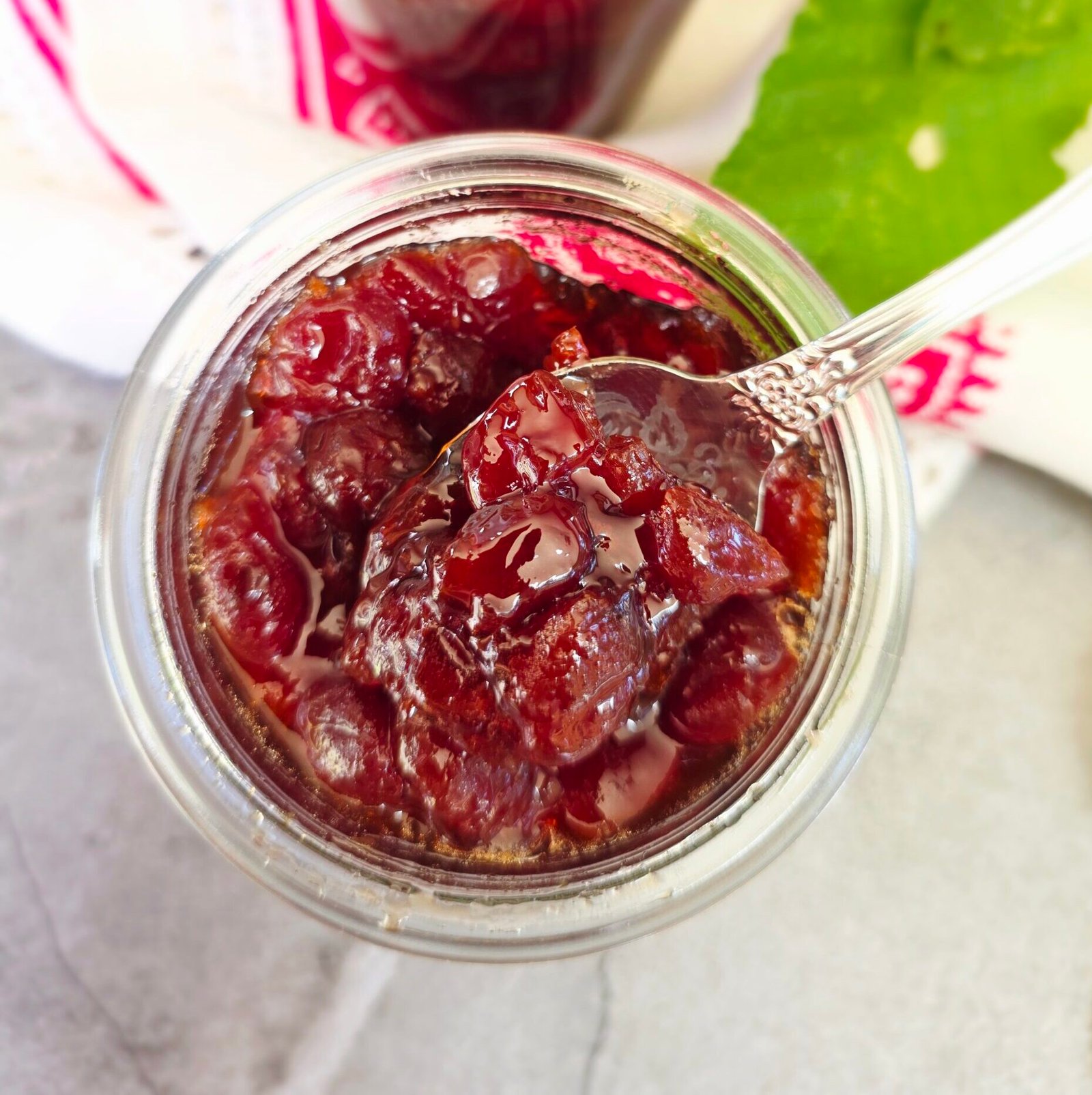
At the time, we thought she was just working around a busy schedule. Years later, we realized she was also doing something a single long boil never could: the cherries changing from bright red to deep burgundy, developing a richer flavor while holding onto their shape. Bite into one and you’ll find two textures. First, a gentle firmness on the outside from the concentrated sugars. Then, soft and juicy at the center.
This sour cherry jam recipe is our homage to her and her instinct, that we have translated into measurements and canning instructions anyone can follow to make a batch of this fantastic sour cherry jam.
Sour Cherry Jam Key Ingredients
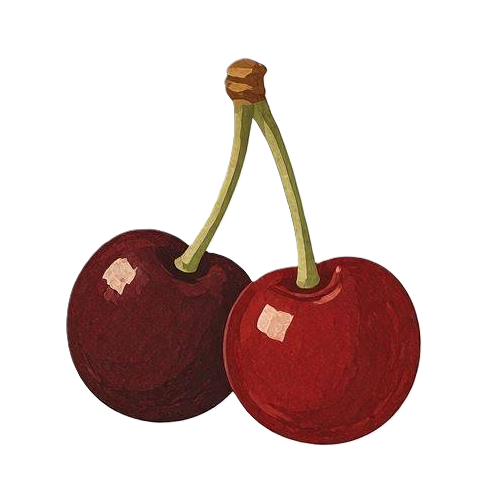
Sour Cherries
Sour cherries (also called tart or pie cherries) are naturally acidic and much less commonly found in grocery stores than sweet cherries. They’re too soft to ship well, so a U-pick orchard or the frozen fruit aisle is usually your best bet.
Substitution: This recipe is built specifically around sour cherries. Sweet cherries are lower in acid and behave differently in a preserve. They’re a different recipe, not a substitution within this one.
Sugar
Sugar here is doing three jobs. Firstly, it sweetens the naturally tart fruit. Secondly, it helps draw cherry juice out during the overnight macerate. Lastly, it is contributing to the final gel alongside the pectin.
Substitution: Don’t reduce this amount. Sour cherries are tart enough that cutting the sugar back significantly changes both the flavor balance and the set.
Pectin
Sour cherries are naturally low in pectin, which is why most old-fashioned sour cherry jam recipes rely on a long, continuous simmering and a heavy dose of sugar instead of added pectin. This recipe reduces both. We use less sugar and less cook time, even though the full process still spans a couple of days. Instead, we make up the difference with a small amount of added pectin.
Substitution: Regular powdered pectin is what this exact tested batch uses. Pomona’s Universal Pectin should also work. For those unfamiliar with low-methoxyl pectin, it gels via calcium rather than sugar concentration, which should make it even more forgiving than regular pectin. However, we haven’t confirmed that in this specific jam recipe.
A Quick Note on Pectin:
If you see “pectin” on a label and instantly think of synthetic chemical additives, you are not alone – but you can breathe a sigh of relief! Pectin is actually a 100% natural, plant-based soluble fiber found in the cell walls of fruits. Far from being a synthetic lab creation, commercial powdered pectin is cleanly upcycled from real fruit, primarily by simmering down citrus peels and apple pomace left over from the juice industry. In fact, beyond its magical ability to thicken a low-sugar jam, it acts as a powerful prebiotic that actively supports gut health. 🧡We love it because reaching for a clean, high-quality powdered pectin allows us to cut the sugar in our jams drastically without sacrificing texture or relying on weird artificial preservatives.
Note: We do not recommend using liquid pectin because commercial versions contain added shelf-stabilizers and preservatives like sodium benzoate.
Why This Sour Cherry Jam Sets Without Extra Lemon Juice
If you’ve ever made jam that refused to set, you might look at this recipe and wonder whether it contains enough sugar and whether it should include lemon juice.
It’s a fair question.
Regular (high-methoxyl) pectin needs two things to form a good gel: enough dissolved sugar and enough acidity.
At first glance, this recipe doesn’t seem to have either. Indeed, with only 815 g of sugar and 1,767 g of pitted sour cherries, the starting sugar ratio is lower than what many traditional jam recipes call for. Plus, there’s no bottled lemon juice in sight.
However, the ingredient list alone, doesn’t tell the whole story. This is what happens behind the scene, and how 815 g. of sugar is enough to make a properly set sour cherry jam:
🍒The cherries contribute their own natural sugars, and before the pectin is ever added, the fruit goes through four short cook-and-cool cycles. Each round evaporates a little more water, gradually increasing the concentration of all the dissolved sugars in the jam – both the added sugar and the cherries’ natural sugars.
By the time the final sugar-and-pectin mixture is stirred in, the jam contains much less water than it did at the beginning. In essence, regular pectin doesn’t respond to the amount of sugar listed in the recipe; it responds to the concentration of dissolved sugars present when the gel forms.
The second requirement is acidity. Sour cherries are naturally acidic enough to provide the environment regular pectin needs, so this recipe doesn’t require bottled lemon juice at all.
How to Pit Sour Cherries Faster (Without Wasting the Juice)
If there is one part of this recipe that takes patience, it’s pitting the cherries.
Our 5-pound batch took about 40 minutes to pit by hand. While that time is well spent, it’s also the one place where the right tool makes a noticeable difference. If you preserve cherries every summer, a good cherry pitter quickly earns its place in the kitchen.
Irrespective of whether you use a cherry pitter, a paperclip, or your fingers, work over a large bowl. Sour cherries release a surprising amount of juice as soon as they’re pitted, and every drop belongs in the jam.
What this Sour Cherry Jam Costs to Make
Sour cherry prices vary widely by region because production is concentrated in specific places. In those regions, U-pick runs $2.65–$4.00 per pound. In regions where sour cherries are the scarcer specialty item, U-pick runs closer to $5/lb and store-bought closer to $7/lb. If you can’t find fresh, frozen sour cherries work just as well and cherries usually come pre-pitted.
For this sour cherry jam batch, we used 5 lbs of whole fresh cherries. This yielded about 1,767 g (3.9 lbs) pitted cherries. Basically, you are looking at a 22% weight loss – worth knowing when planning how much to buy or pick.
| Ingredient | USD $ | CAD $ |
| Sour cherries (5 lb whole) | 13.25 – 20.00 | 25.00 |
| Granulated sugar (4 cups / 815 g) | 1.05 – 1.30 | 1.40 – 1.70 |
| Regular powdered pectin (1 tbsp) | 0.50 – 0.75 | 0.65 – 0.95 |
| Total batch (4 half-pint jars) | 14.80 – 22.05 | 27.05 – 27.65 |
Cost per Jar: $3.70 – $5.51 USD / $6.76 – $6.91 CAD
For comparison, artisan sour cherry jam from U.S. brands like American Spoon run $10–$14 a jar in stores. This homemade sour cherry jam costs around half that, even at the top of your cost range. Plus, you get to control the ingredients that go inside.
Common Mistakes When Making Sour Cherry Jam (and how to fix them)
❌ Doubling this sour cherry jam recipe:
Larger batches of whole-fruit preserves heat unevenly, take much longer to cook down, and often scorch on the bottom. If you want to make more jam, run two batches back to back instead of doubling one.
❌ Rushing the cool-down between cycles:
Each cook-and-cool cycle does two things. The short boil evaporates water, concentrating the sugar a little more each round. This technique lets us use less sugar than a typical jam recipe require and still get a good set. The cooling-down period gives the cherries time to fully absorb that syrup, which is what makes them plump and pleasantly chewy rather than shriveled or watery. Cut cycles short and you risk both: a weaker set from under-concentrated sugar, and cherries that never fully take up the syrup.
❌ Skipping the final gel test:
Because this jam builds up gradually across several cook stages, it’s tempting to assume it’s ready once it looks thick. Still run a proper set test (thermometer or cold plate) at the final cook, the same as you would for any other jam.
Sour Cherry Jam Recipe for Canning: A European-Style Preserve
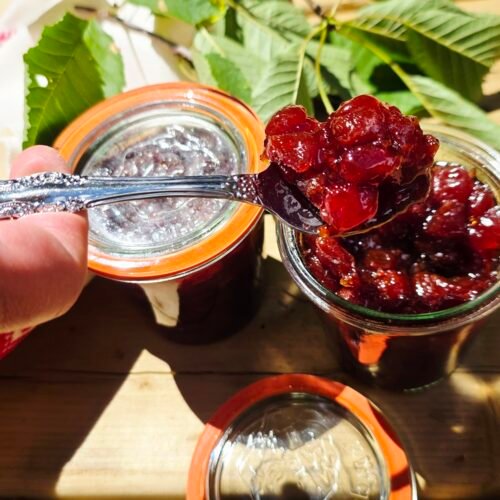
Gourmet Variations for Sour Cherry Jam
One of the reasons we love this recipe is that it’s just as good left simple as it is dressed up with spices, spirits, or creative add-ins. This is what we’ve tried in our kitchen:
| If you want… | Add… | When to add it |
| Classic Sour Cherry Jam | Nothing | Enjoy the pure flavor of the fruit. |
| Brandy Sour Cherry Jam | ¼ cup brandy | Stir it in during the last few minutes of the final cook. |
| Chocolate Sour Cherry Jam | 1–2 tbsp unsweetened cocoa powder | Whisk it in during one of the final cook cycles. |
| Spiced Sour Cherry Jam | Cinnamon stick, star anise, or cloves | Add during one of the early cook cycles so the spices have time to infuse. |
| Vanilla Sour Cherry Jam | Vanilla bean or vanilla paste | Add near the end of cooking for the freshest flavor. |
A Few Tips for Creating Your Own Sour Cherry Jam Variations
Most flavorings fall into one of three categories, and each behaves a little differently in jam.
 Spices and herbs need time to infuse, so add them during the earlier cook-and-cool cycles. They need time to developer their flavors. For that reason, they are perfectly suited to this recipe becaue of the long resting time between cooking rounds.
 Alcohol is different. If you add brandy early, most of the alcohol evaporates and leaves behind a mellow, integrated flavor. Stir it in during the final few minutes of cooking and you’ll preserve more of its aroma, creating a brighter, more noticeable finish.
 Dry ingredients, such as cocoa powder, don’t increase the liquid in the pot, but they do thicken the preserve. Whisk them in thoroughly to prevent lumps, and add them during one of the later cook cycles so you can judge the final consistency before committing the entire batch.
Most flavorings fall into one of three categories, and each behaves a little differently in jam. The key is knowing when to add each one so it can contribute the right balance of flavor and texture.
First, spices and herbs need time to infuse. For that reason, we recommend adding them during the earlier cook-and-cool cycles. The long resting periods between cooking rounds are exactly what help those flavors deepen and meld into the jam.
Alcohol works a little differently. Add brandy early, and much of the alcohol will evaporate, leaving behind a mellow, well-blended flavor. However, if you want a stronger brandy taste, stir it in during the final few minutes of cooking so more of its flavor remains.
Finally, dry ingredients such as cocoa powder work a little differently. They won’t add any extra liquid to the pot, but they will thicken the jam. Whisk them in well to prevent lumps, and add them during one of the later cook cycles so you can check the texture before adding too much.
Canning Methods
This is a high-acid, jelly style preserve. While the standard processing time for jellies is 5-10-15 minutes, we recommend the NCHFP’s optional 10-minute boiling water/ atmospheric steam canner process that is believed to provide a stronger vacuum in the jar for hot pepper jelly type preserves.
Both water bath canning and atmospheric steam canning use identical processing times for this recipe. We typically use an atmospheric steam canner for speed and lower water use, but a water bath canner works equally well and is the most widely used method in home preserving.
Processing table – Steam Canner & Water Bath
Jar size: Half-pint or Pint (8 oz / ~250 mL or 16 oz / ~500 mL)
Pack style: Hot
Applies to: Atmospheric steam canner AND water bath canner (same processing times)
| Altitude | Processing time |
| 0–1,000 ft | 10 min |
| 1,001–6,000 ft | 15 min |
| Above 6,000 ft | 20 min |
Not sure which elevation band is yours? Our Canning Altitude Calculator will give you the answer in a couple of seconds.
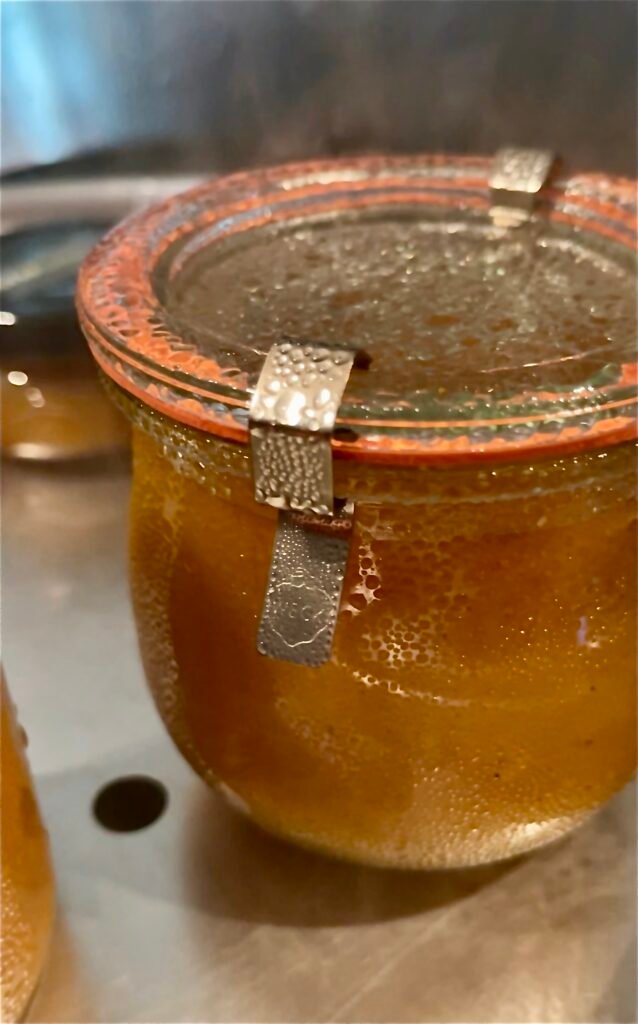
Atmospheric Steam Canning
Atmospheric steam canning is newer to the home canning world. Nevertheless, it has been validated for high-acid preserves like this. It uses less water, heats up faster, and doesn’t require jars to be submerged.
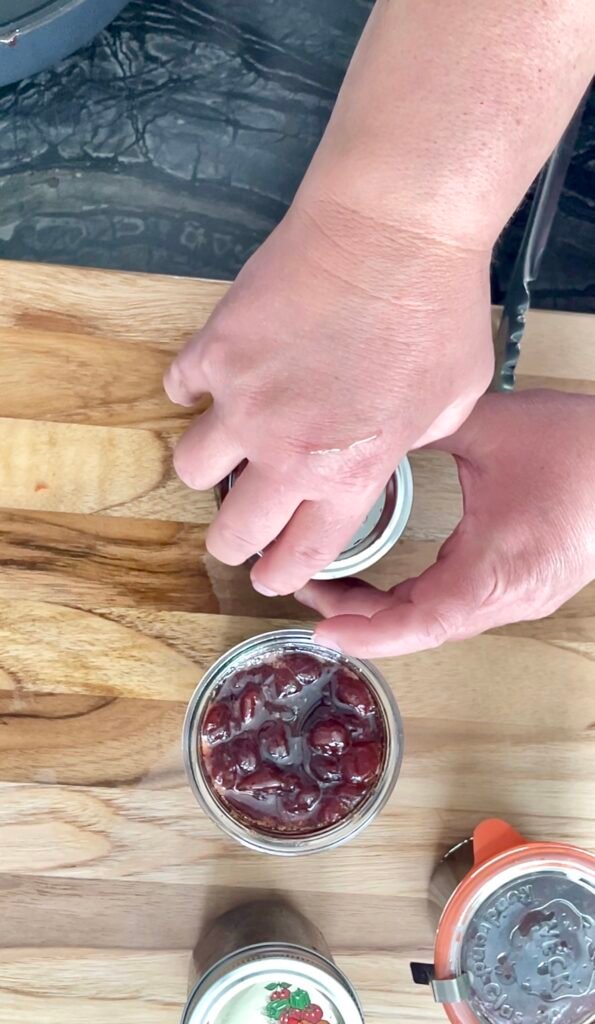
- Prepare your atmospheric steam canner according to the manufacturer’s instructions. Typically, fill the base with the recommended amount of water and preheat until steam begins to vent.
- Place filled jars on the canner rack. Cover with the dome lid.
- Start timing once a steady column of steam has been venting continuously.
- When processing time is complete, turn off heat.
- Remove jars straight up with a jar lifter. Most important, do not tilt. Place on a towel-lined counter or cutting board.
New to steam canning?
Ready to ditch water bath canners?
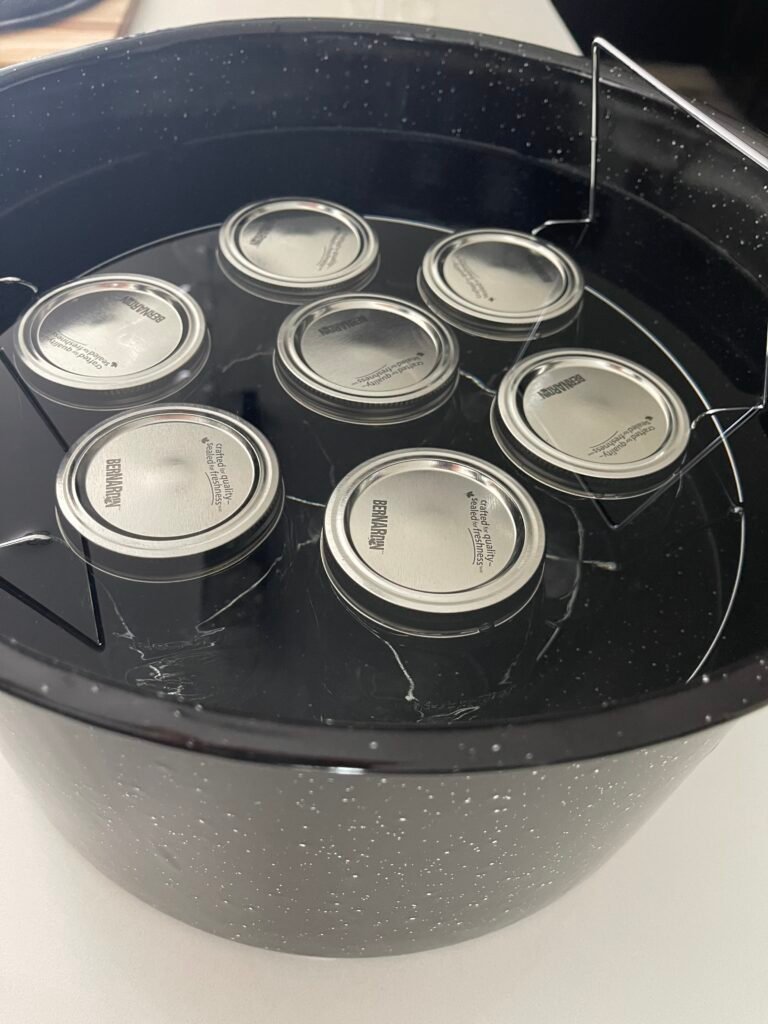
Water Bath Canning
Undeniably, water bath canning is the most widely used method for high-acid preserves and the one most canners learn first. If you already own a water bath canner, this is a perfectly sound way to process this jam.
- Place filled jars on the canner rack and lower it into boiling water. Always remember, water must cover the lids by at least 1 inch.
- Start timing once you reach a full rolling boil. Processing times are identical to the table above.
- When processing is complete, turn off heat and let jars rest in the water for 5 minutes before removing them. This step helps prevent siphoning.
- Lastly, remove jars straight up with a jar lifter.
Looking to understand how the two methods compare?

Prefer Open Kettle?
Open kettle canning is not a USDA-recommended method. For this recipe, we used atmospheric steam canning to get consistent, shelf-stable results. However, open kettle remains a long-established traditional method that some experienced canners still use for high-acid preserves.
We don’t dismiss traditional methods. For those who choose to use open kettle, we’ve put together a guide that explains how it is practiced, along with the key steps aimed at reducing common risks within that traditional approach.
After sealing (all methods)
- Do not touch, adjust bands, or press lids for 12–24 hours.
- After cooling, check seals: press the center of each lid. If it doesn’t flex, the seal is good. Any jar that didn’t seal goes in the fridge → use within 3 weeks.
- Remove bands for storage (they trap moisture and can mask a broken seal over time). Label with contents and date.
- Store in a cool, dark place. Peak quality for 12–18 months.
Check your processing time/ canning pressure if you’re above 1,000 feet↗️
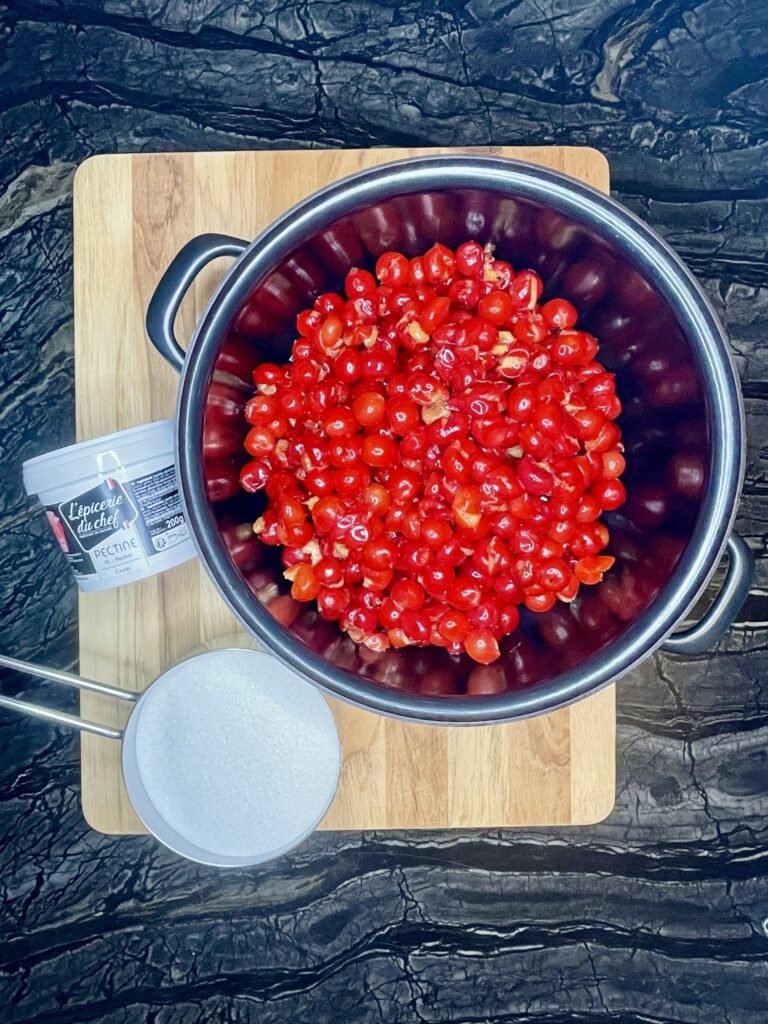
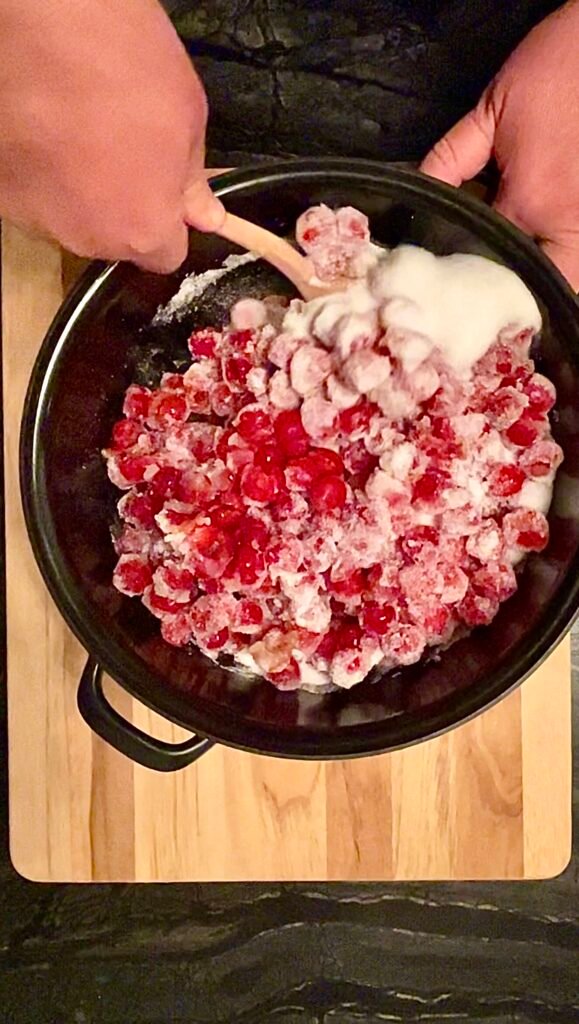
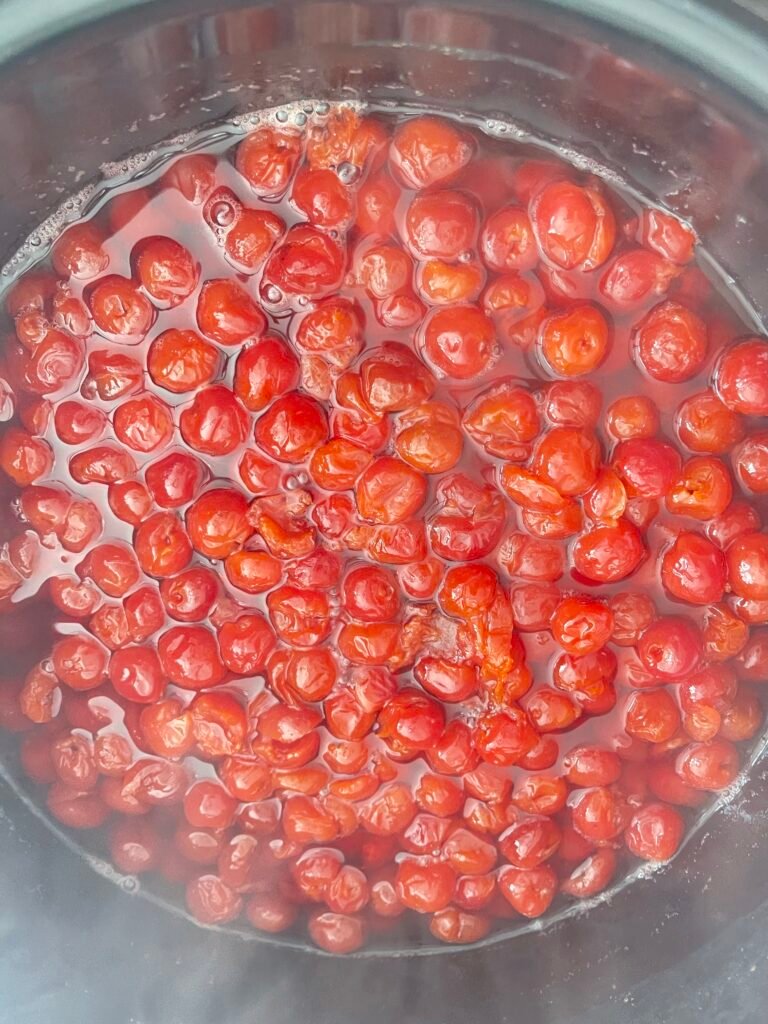
How to Make Sour Cherry Jam – Step-by-Step Photo Gallery
Sour Cherry Jam Serving Suggestions
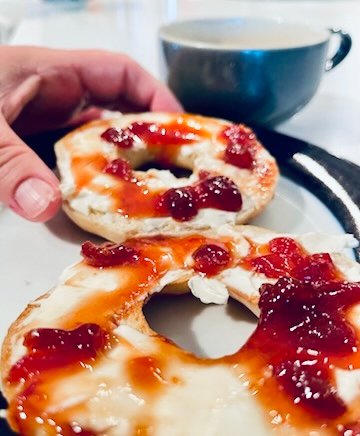
This sour cherry jam is just as comfortable on a cheese board as it is at the breakfast table. While it’s delicious spread on toast, it also works with soft cheeses, simple desserts and made into sauces to serve alongside roasted meats.
If you’re wondering what to do with sour cherry jam, here are a few of our favorite ways to enjoy it:
- Spread it on warm toast, croissants, buttery biscuits or cheddar sconces where the cherries become the star of breakfast.
- Spoon it over vanilla ice cream or cheesecake for a deep cherry flavor upgrade to your dessert.
- Pair it with soft cheeses like Brie, Camembert, or goat cheese on a charcuterie board.
- Mix it balsamic vinegar and make it into a simple sauce. Then, serve it alongside roast duck or venison.
- Mix it in plain yogurt or oatmeal for a breakfast that feels a little more special.
- Use it to fill pastries or crepes.
- Lastly, use it for Black Forest-inspired cakes
FAQ
Yes. Frozen sour cherries work well in this recipe and have one big advantage: they’re usually already pitted, saving about 40 minutes of prep for a 5-pound batch. Thaw them completely and add all of the juices to the pot before proceeding with recipe.
No. Sour cherries are naturally acidic enough for safe water bath or atmospheric steam canning. That’s why this recipe doesn’t require bottled lemon juice.
We don’t recommend it. Larger batches heat less evenly, take longer to reduce, and are more likely to scorch or develop a softer set. For the best texture and consistent results, make two separate batches instead.
Not as a direct substitution. Sour cherries contain less natural acid and have a different balance of sugars, so they behave differently during cooking and canning.
Don’t panic! Jam often continues to firm up for 24 to 48 hours after processing. If it’s still too loose after two days, return it to a pot, bring it to a full boil, test it on a cold plate, then reprocess it using new lids.
Yes, but you’ll need to cook the jam much longer to reduce it enough for a natural set, which will produce a different texture and softer fruit than this recipe is designed to achieve. Another option is to increase the sugar to about a 1:1 ratio of sugar to prepared sour cherries, as many traditional jam recipes do. Either approach creates a different preserve than the one described here.
Not with this recipe. Canned sour cherries have already been cooked and processed, so they behave very differently from fresh or frozen fruit. While in theory you can make a preserve from canned cherries, you’ll need a recipe developed specifically for them, with its own ingredients list, ingredient ratios, cooking times, and canning instructions.
Related Recipes
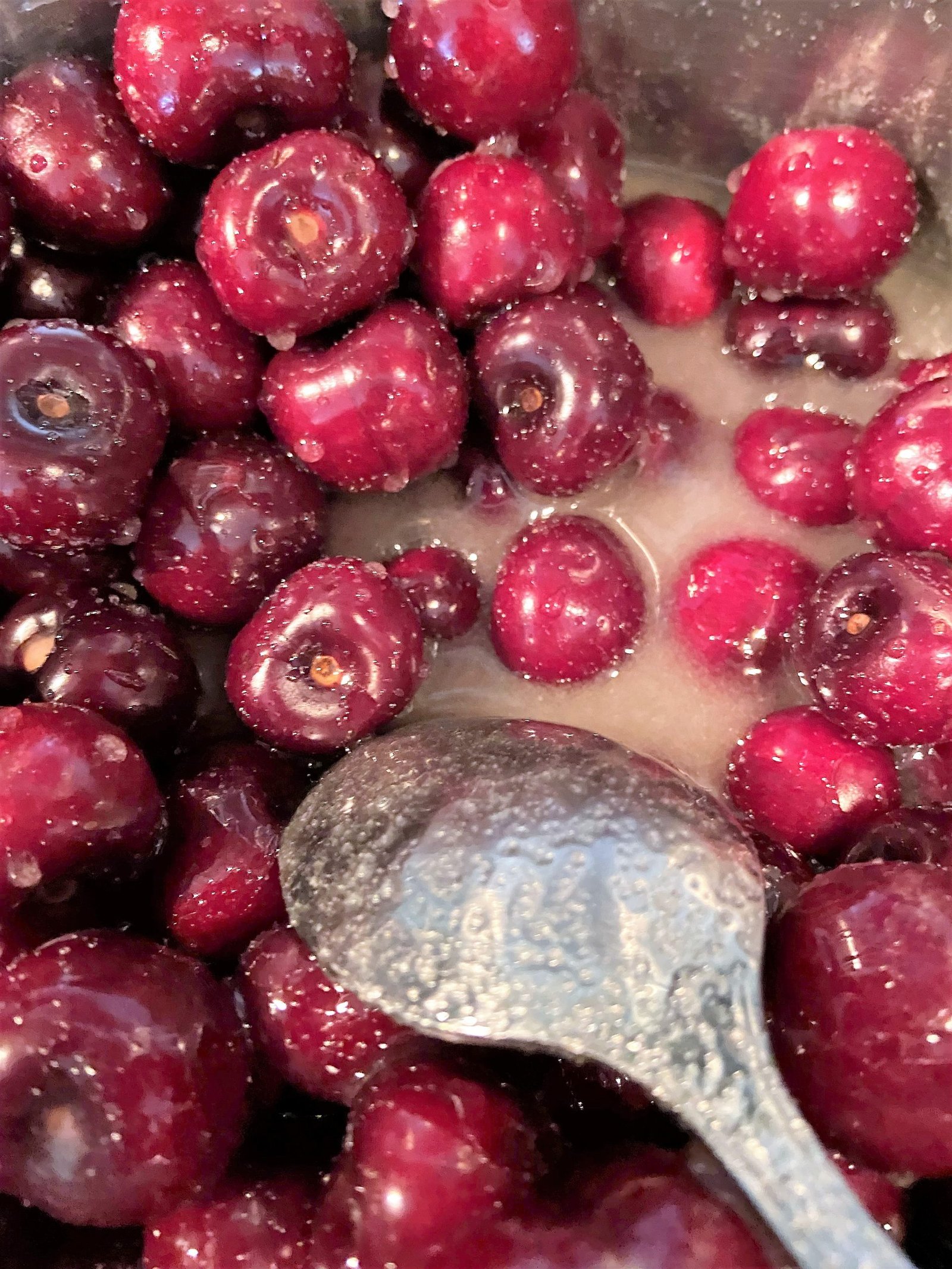
Italian-Style Cherry Preserve – Amarena Style
This Italian-style cherry preserve is made in the spirit of traditional Amarena preserve, using fresh sweet cherries to create whole fruit suspended in a rich, glossy syrup.

Pectin-Free Strawberries In Syrup
Crafted with ripe, whole strawberries, our jam is painstakingly slow-cooked to lock in their natural goodness. Ideal for pancakes, French toast, or ice cream.
Join the pantry
Fresh recipes when the season calls for them. Preservation guides you can trust – every method, traditional to modern. Ideas for turning your pantry into weeknight dinners. Seasonal alerts that help you preserve more for less. Honest reviews of the tools that matter.
Tried this preserve? We’d love to hear how it turned out!