Blueberry Orange Jam Canning Recipe
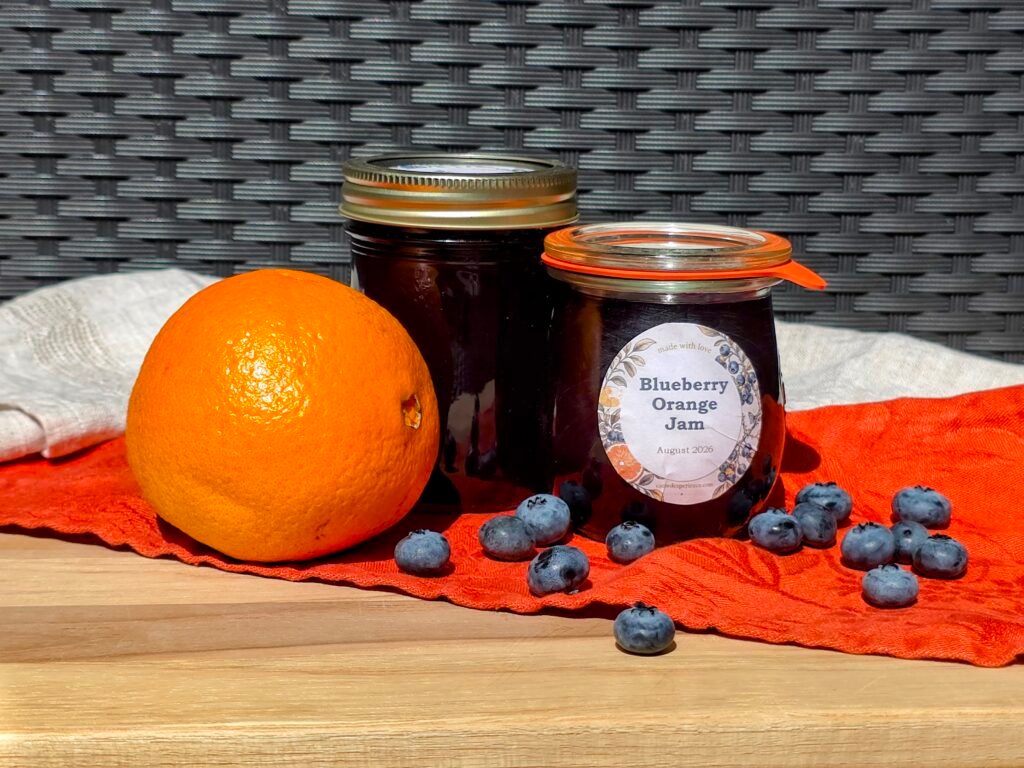
Blueberry orange jam. Sweet and intensely blueberry, with fresh orange juice and zest for a subtle citrus flavor. A small-batch preserve inspired by the jams made by professional pastry chefs and chocolatiers.
🔪 Prep:
15 min
⏲️ Macerate:
3 hrs (or overnight)
🫕Cook:
~25-30 min
🫙5
half-pint jars
💰Cost:
~ $2.20-3.95 per jar*
*When using U-Pick blueberries
The blueberry orange jam sounds interesting, but do you need another orange-flavored preserve? Maybe not. But then you taste what orange does to blueberries: it doesn’t make them taste more like orange. It makes them taste more like blueberries. And that’s the whole trick.
Why You’ll Love This Blueberry Jam Recipe
- Blueberry flavor stays front and center. Orange enhances the berry flavor rather than turning this into an orange preserve.
- Fresh orange adds something unexpected. It brings out the natural sweetness and fruity character of the blueberries.
- No marmalade-style bitterness. There is no orange peel in this jam, so the finished preserve tastes like blueberry jam with a little something extra.
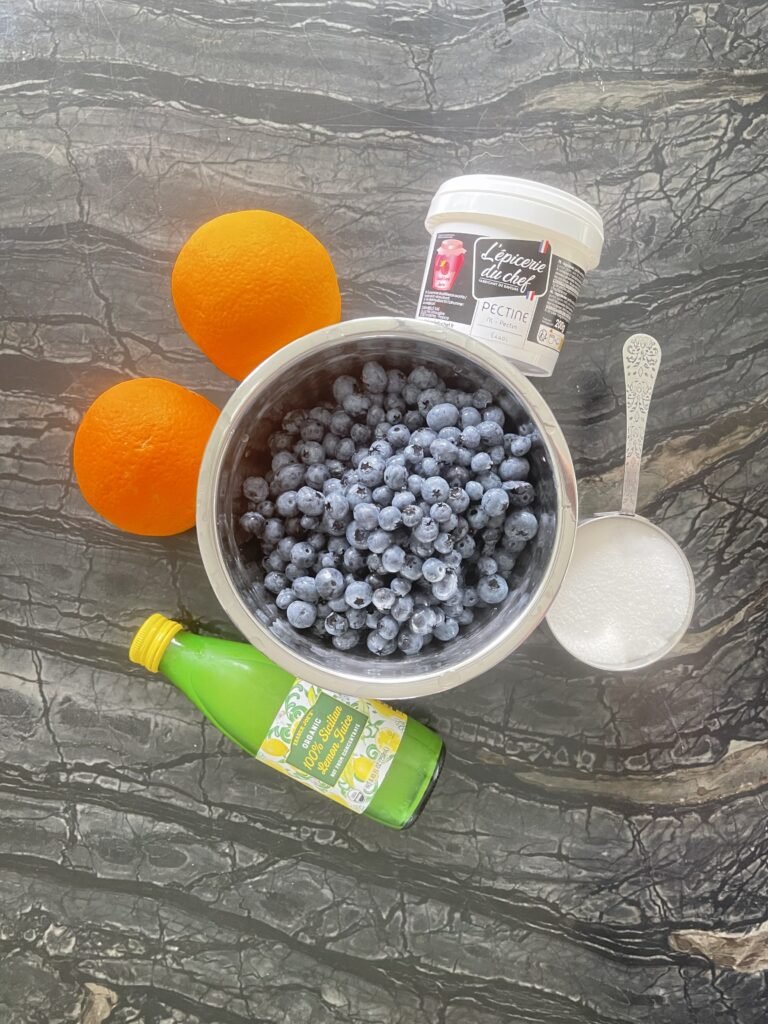
- Simple ingredients. Just blueberries, oranges, lemon juice, sugar and pectin.
- Small batch, big blueberry flavor. It’s a good excuse to bring home another basket from the u-pick, even when you already have more blueberries than you know what to do with.
- Includes water bath canning instructions. Make a batch now and enjoy it from the pantry later.
The Bakeshop Jam That Made Us Curious
The first time we saw blueberry orange jam, it wasn’t something we were looking for.
We spotted it at a fine tea retailer, and the idea sounded nice enough. Then we looked at the ingredients: blueberries, sugar, oranges, corn syrup, lemon juice, fruit pectin and citric acid.
Mmm… corn syrup? Let’s just say we weren’t exactly inspired.
And since neither of us is particularly crazy about marmalade, we didn’t think much more about it.
Then we saw blueberry orange jam again.
This time, it was at the same fine bakeshop where we had discovered the strawberry lime jam that inspired another one of our experiments.
See our Strawberry Lime Jam if you haven’t read that story yet.
This jar was different. No corn syrup. No orange peel. Just a blueberry jam with orange juice and zest.
That was enough to make us curious.
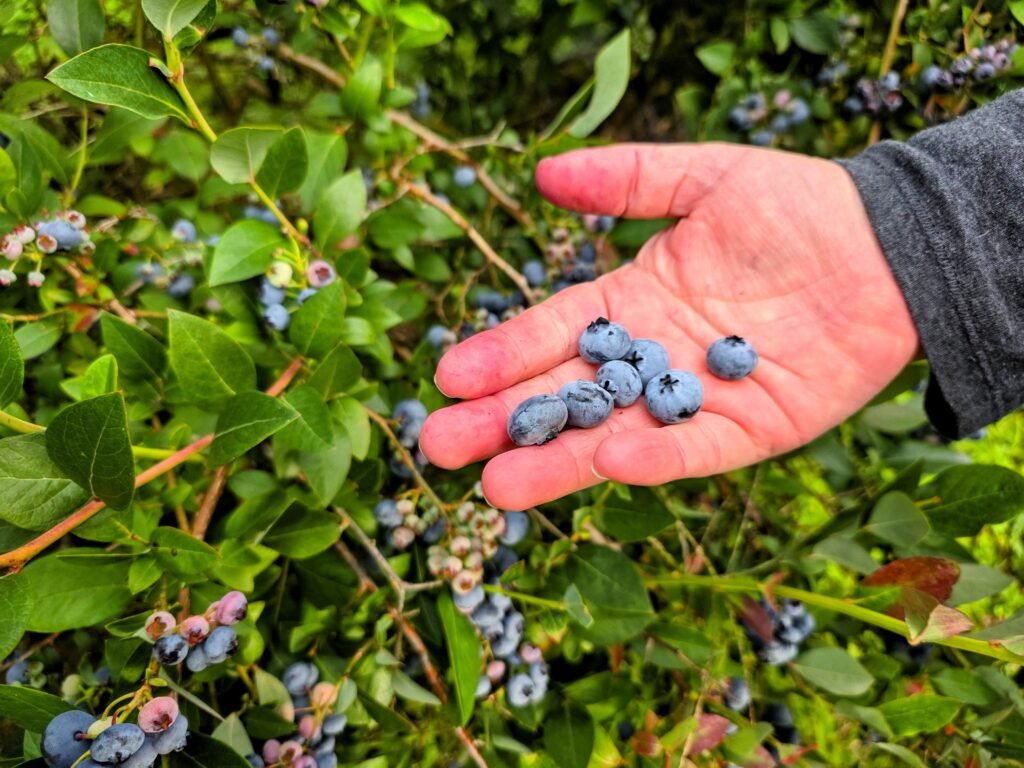
Plus, the timing was perfect. Blueberries were $1 a pound at the u-pick, and if you’ve been around here for a while, you already know we have a slight problem with picking more berries than two people could possibly eat.
So, naturally, we picked more.
And made jam.
Why Orange Works With Blueberries In a Jam
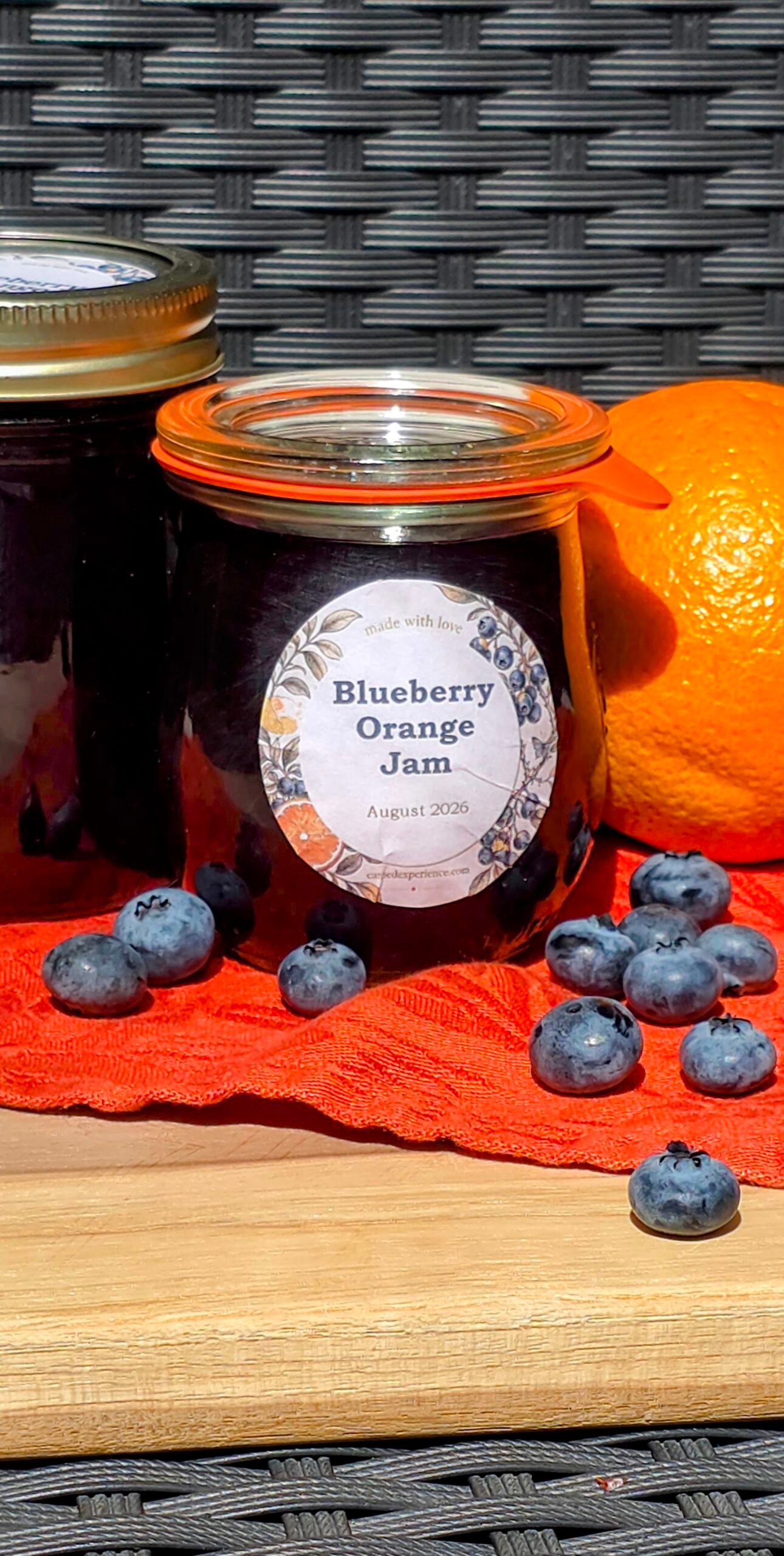
Frankly, we expected the orange to make the jam taste, well, like orange.
It didn’t. At least, not when we used a modest amount.
Instead, the orange seemed to turn up the volume on the blueberries.
The jam tasted sweeter and more intensely blueberry, but you couldn’t necessarily put your finger on the orange. It was there, but it was not “in your face”.
We tried it with more orange juice, too.
And that’s actually the version we preferred.
With more orange, the citrus becomes noticeable and the jam tastes more sophisticated. With less, you get a more traditional blueberry jam with a little extra depth.
So, we’ve included the amount we liked best, but you can scale the orange juice down if you prefer a less orange-flavored blueberry jam.
And that’s really what surprised us about this recipe. We didn’t set out to make something unusual. We just wanted to see whether a jam we’d noticed twice was actually worth making.
Turns out, it was.
Blueberry Orange Jam: Key Ingredients
Blueberries
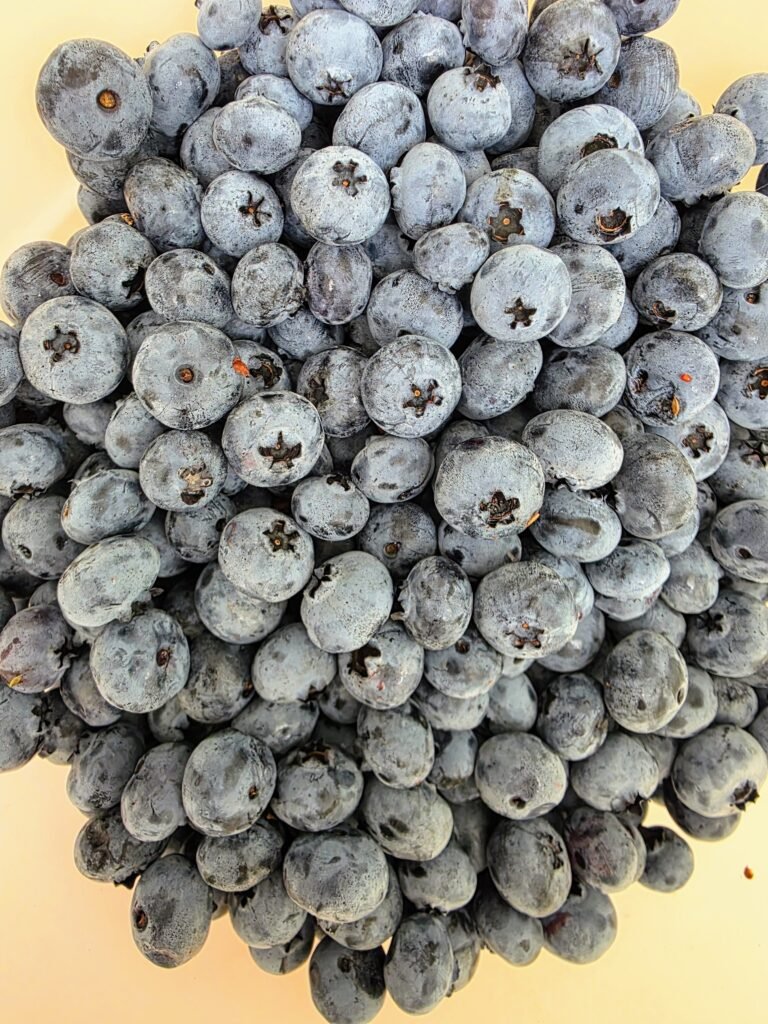
Use sweet, flavorful blueberries for the best jam. Fresh blueberries are wonderful when they’re in season, but frozen blueberries work just as well here. Thaw them first and use all the juice they release.
This is one of the beauties of this recipe: you don’t have to wait for the blueberry season. If you have oranges on hand and don’t feel like making marmalade, reach for a bag of frozen blueberries instead.
Oranges
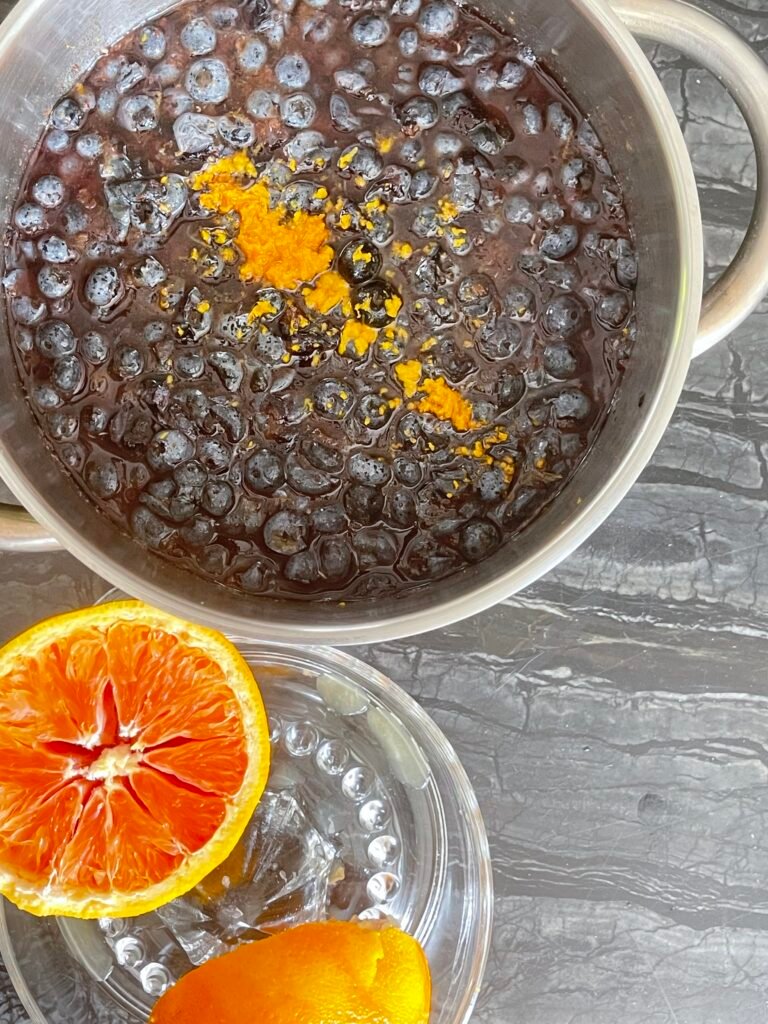
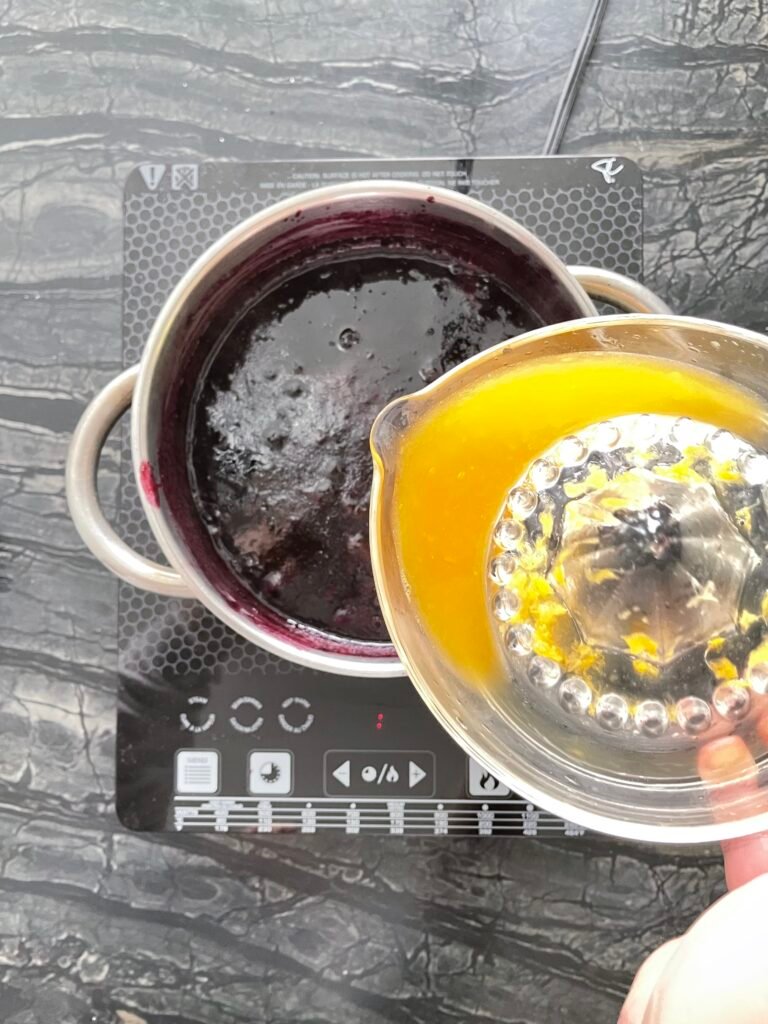
Use fresh oranges for both the juice and zest. Orange zest provides the concentrated orange flavor, while the juice contributes citrus flavor and acidity.
Minneola tangelos are a good substitute for oranges. They’re juicy, aromatic and easy to zest, and you can use the same amount of juice and zest called for in the recipe.
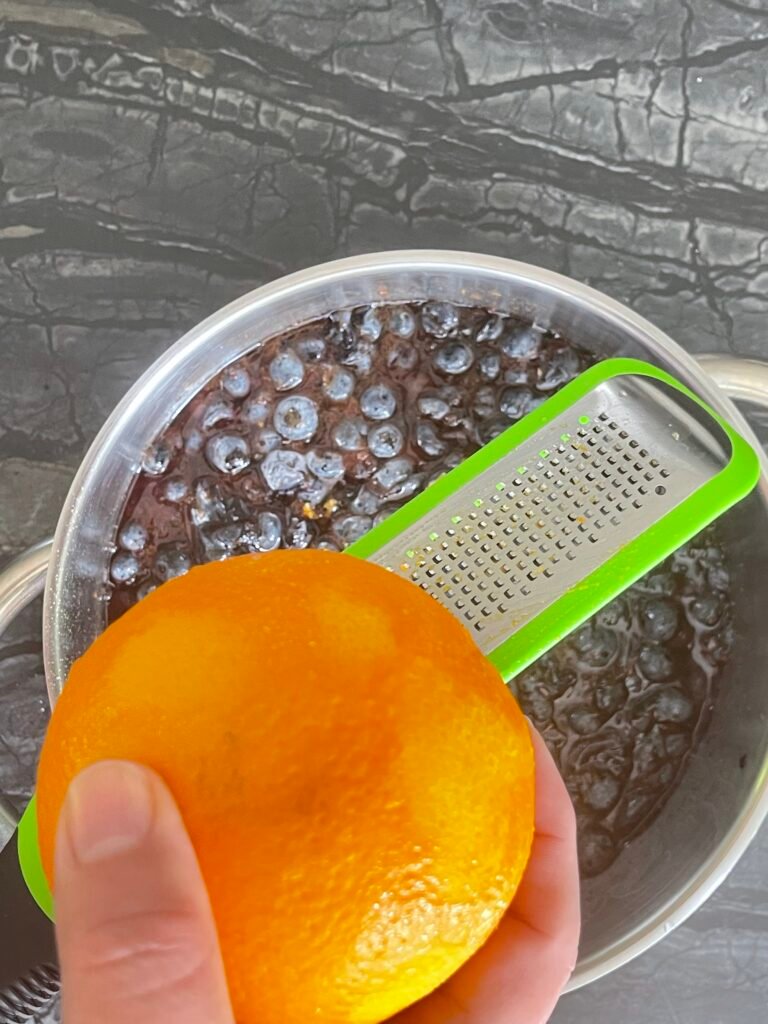
Zest the fruit before juicing it, taking only the colored outer layer of the peel. Avoid the white pith, as it can make the jam bitter.
Lemon Juice
The lemon juice isn’t here to make the jam taste lemony. It’s part of the recipe’s acidity and preservation balance.
Blueberries are naturally acidic, but their acidity depends on growing conditions and varies by variety. The lemon juice helps provide a more consistent level of acidity in the finished jam.
Don’t reduce or omit the lemon juice. It’s an important part of the recipe and should be measured as written.
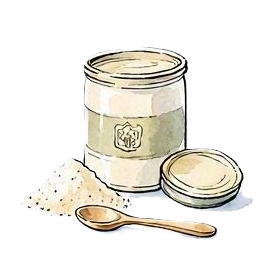
Powdered Pectin
We use European bulk powdered pectin to set our blueberry orange jam, but any regular powdered pectin should work. As we wrote previously, we don’t recommend liquid pectin for our recipes because its formulation often includes additional ingredients that aren’t what we want in a simple homemade jam.
You can substitute regular pectin with a low-methoxyl pectin such as Pomona’s Universal Pectin. Having said that, we haven’t tested the exact amount of low methoxyl pectin needed to produce the set we’re aiming for in this recipe. Our best estimate is about 1½ teaspoons, which should be more than enough for a fairly firm set.
Most importantly, don’t add extra pectin just because the jam looks loose while it’s hot. Your blueberry jam will continue to set as it cools.
If seeing “pectin” on an ingredient label makes you worry about synthetic additives, take a deep breath – you are totally in the clear!
🍎🍊Powdered pectin is 100% natural fruit powder.
At a microscopic level, pectin is a soluble fiber that lives inside the cell walls of plants and fruits, acting like nature’s structural glue. The commercial powdered pectin you buy isn’t created in a chemical lab; it’s actually cleanly upcycled directly from real fruit! It’s extracted by gently simmering down citrus peels and apple pomace left over from the juice industry.
Beyond its magical ability to gel and thicken preserves, pectin is also a fantastic prebiotic that helps feed the good bacteria in your gut. 🧡 We love using high-quality powdered pectin because it lets us cut the sugar in our jams drastically without sacrificing that thick, beautiful texture or relying on weird artificial additives.
A Quick Note on Liquid Pectin: We stick strictly to powdered pectin! Commercial liquid versions often contain added chemical shelf-stabilizers and preservatives (like sodium benzoate) that we prefer to skip in our homemade jams and jellies.

Pantry Master Note
If you can get Calypso blueberries, use them. They’re very sweet and make a wonderfully rich blueberry jam. By comparison, early-season Duke blueberries tend to be less sweet, while late-season blueberries such as Elliot can be firmer and more tart. Regardless of the blueberry variety you choose, the jam will work. You simply will get a less sweet or more pronounced blueberry flavor.
Best of all, you don’t need fresh blueberries at all. Frozen blueberries work beautifully. So, when oranges are in season and you’re staring at a bunch of them thinking, I really don’t want to make marmalade, this is the recipe to reach for.
What This Blueberry Orange Jam Costs to Make
These estimates reflect typical U-pick blueberry prices in Canada and the United States, where buying berries directly from a grower can make homemade blueberry jam considerably less expensive. Pantry ingredients are based on typical retail prices.
| Ingredient | USD | CAD |
| Blueberries (1,500 g / 3.3 lb) | $6.60–13.25 | $3.30–6.60 |
| Granulated sugar (800 g) | $1.30–1.50 | $1.20–1.40 |
| Oranges (2–4) | $2.00–3.50 | $2.50–5.00 |
| Bottled lemon juice (1 tbsp) | $0.05–0.10 | $0.05–0.10 |
| Powdered fruit pectin (2½ tbsp) | $1.00–1.50 | $1.25–1.75 |
| Total batch (5 half-pint jars) | $10.95–19.85 | $8.30–14.85 |
Cost per Jar: ~$2.20–3.95 USD / ~$1.65–2.95 CAD
The blueberries will make the biggest difference to the final cost. Pick your own, buy directly from a local grower, and the cost of homemade blueberry jam drops a lot!
Because this recipe works with frozen blueberries, you don’t need to make it while blueberries are in season. Freeze some of those inexpensive U-pick blueberries, then make this jam later when oranges are plentiful or on sale. That’s how you can lower your cost per jar even more!
Common Mistakes When Making This Blueberry Jam
❌ Using the Wrong Part of the Orange Peel: The best orange flavor comes from the colored outer layer of the peel. The white pith underneath is bitter. Getting it into your preserve can give the finished blueberry orange jam a harsh taste. For the finest zest and the least chance of getting into the pith, a fine citrus zester is the best tool for the job. They’re inexpensive, useful far beyond making jam, and if you don’t have one yet, this is a good excuse to shop for a Microplane zester. A box grater will work if that’s what you have. Use the finest side and grate lightly, turning the orange as you go. Stop as soon as you reach the white pith.
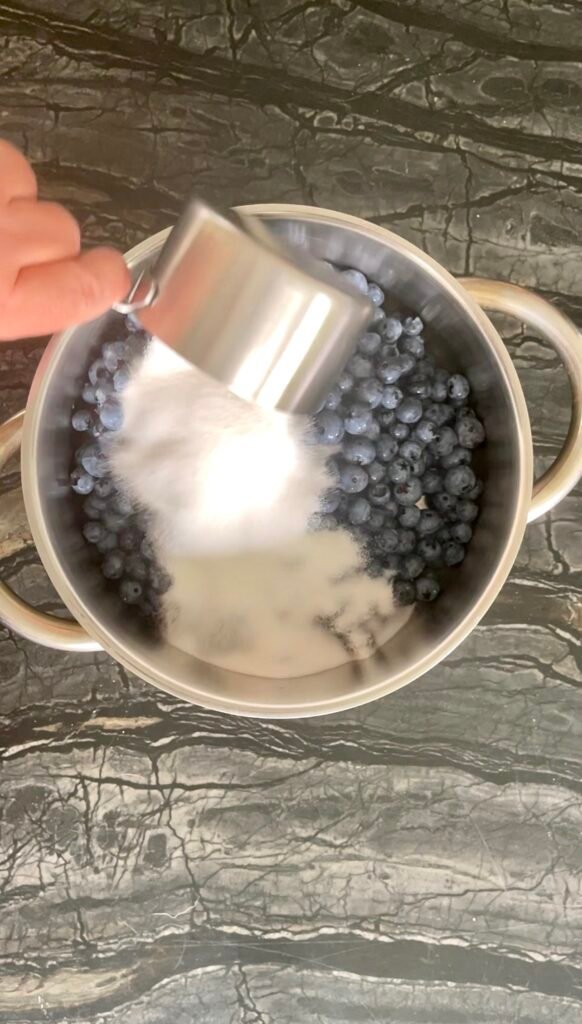
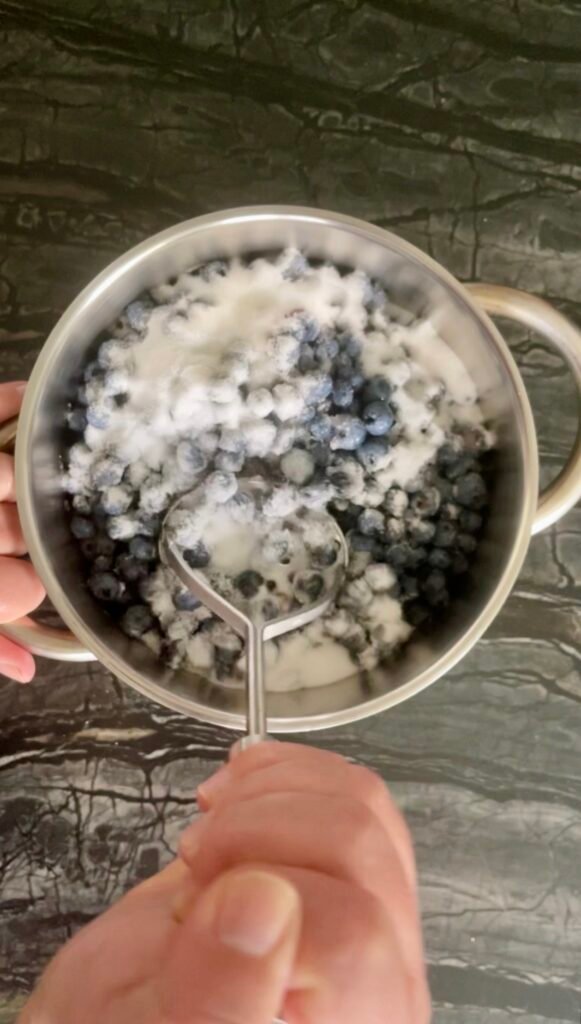
❌ Skipping the Maceration: Don’t skip the maceration just because you’re in a hurry. Macerating the blueberries with sugar gives them time to release their juices before cooking and helps the sugar penetrate the fruit.
❌ Adding the Pectin Too Early: It can be tempting to add all the ingredients to the pot and let them cook together. That’s not how we make this blueberry orange jam. Pectin works best when it isn’t subjected to a long cooking time. In this canning recipe, the blueberries cook first so they have time to soften and develop their flavor. The pectin is added later, mixed with the remaining sugar, and cooked for a very short period of time. Adding the pectin at the beginning means it spends much longer time cooking, which can weaken its ability to set the jam properly.
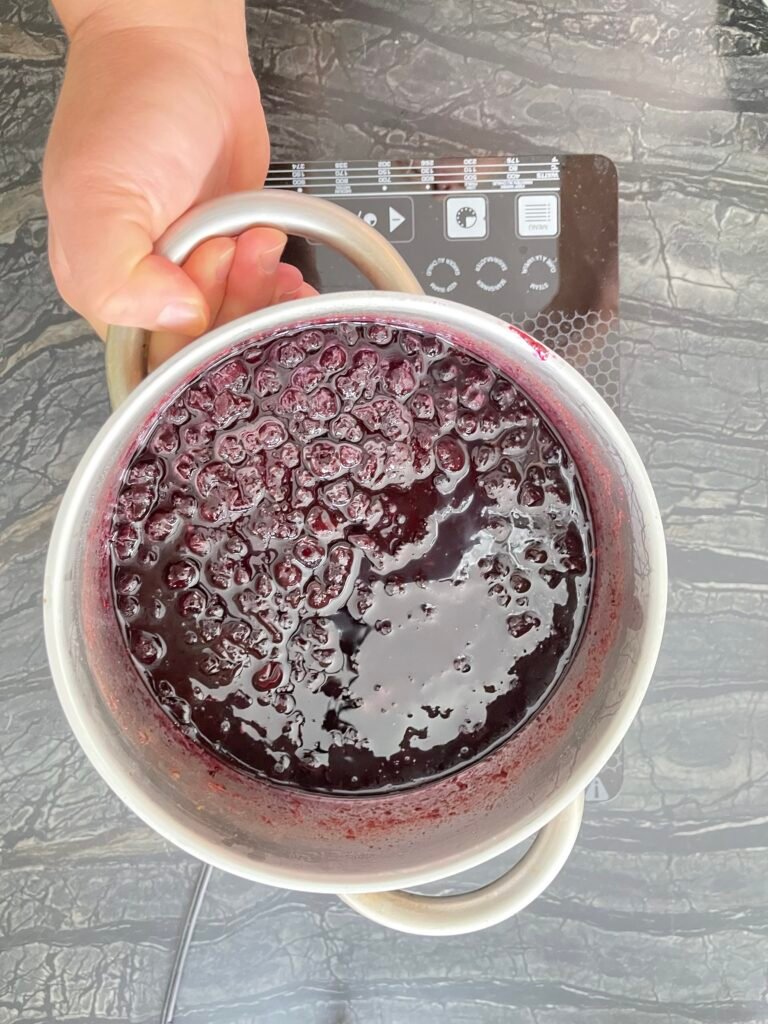
❌ Using Too Much Pectin: This is an easy mistake to make when you’re standing over a pot of blueberry jam that still looks loose. You start thinking, It’s not setting. I’ll just throw in another ½ teaspoon of pectin. Don’t. Hot jam is supposed to look loose. The jam will continue to thicken as it cools, and adding extra pectin can turn your blueberry jam into a super firm or gummy one. Instead, use the cold-plate test. If the jam is still too loose after the initial 5-minute test, continue cooking and test again. Give the jam time to tell you whether it actually needs more cooking before reaching for more pectin.
Blueberry Orange Jam
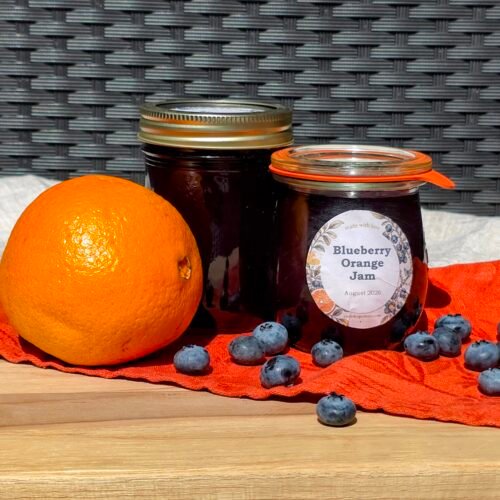
Canning Methods
This is a high-acid jam preserve. Out canning table follows standard NCHFP’s processing times for jams and jellies.
Both water bath canning and atmospheric steam canning use identical processing times for this recipe. We typically use an atmospheric steam canner for speed and lower water use, but a water bath canner works equally well and is the most widely used method in home preserving.
Processing table – Steam Canner & Water Bath
Jar size: Half-pint or Pint (8 oz / ~250 mL or 16 oz / ~500 mL)
Pack style: Hot
Applies to: Atmospheric steam canner AND water bath canner (same processing times)
| Altitude | Processing time |
| 0–1,000 ft | 5 min |
| 1,001–6,000 ft | 10 min |
| Above 6,000 ft | 15 min |
Not sure which elevation band is yours? Our Canning Altitude Calculator will give you the answer in a couple of seconds.
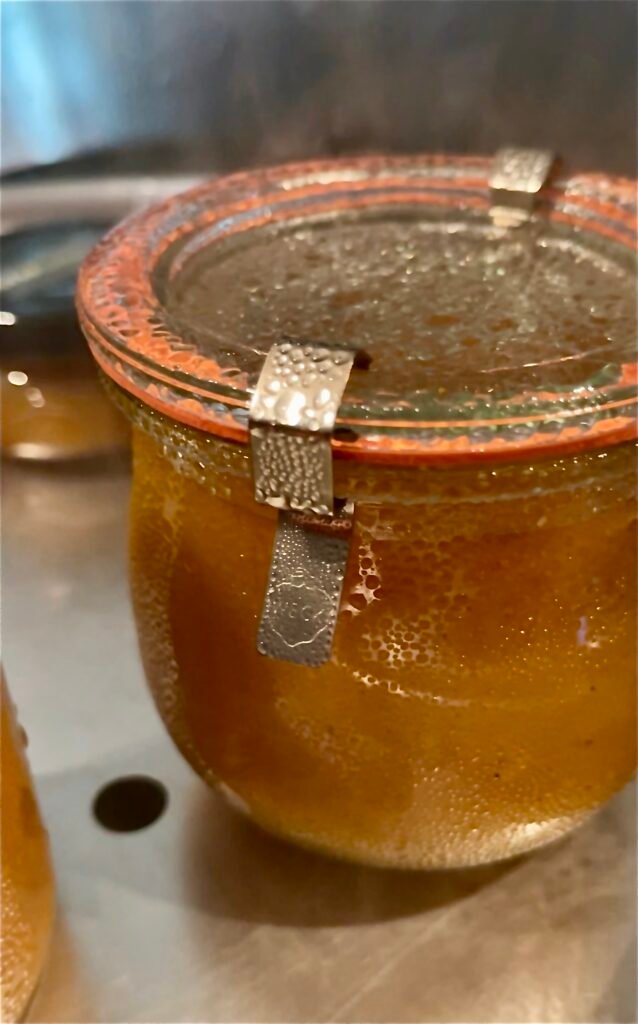
Atmospheric steam canning is newer to the home canning world. Nevertheless, it has been validated for high-acid preserves like this. It uses less water, heats up faster, and doesn’t require jars to be submerged.
- Prepare your atmospheric steam canner according to the manufacturer’s instructions. Typically, fill the base with the recommended amount of water and preheat until steam begins to vent.
- Place filled jars on the canner rack. Cover with the dome lid.
- Start timing once a steady column of steam has been venting continuously.
- When processing time is complete, turn off heat.
- Remove jars straight up with a jar lifter. Most important, do not tilt. Place on a towel-lined counter or cutting board.
New to steam canning?
Ready to ditch water bath canners?
Water Bath Canning
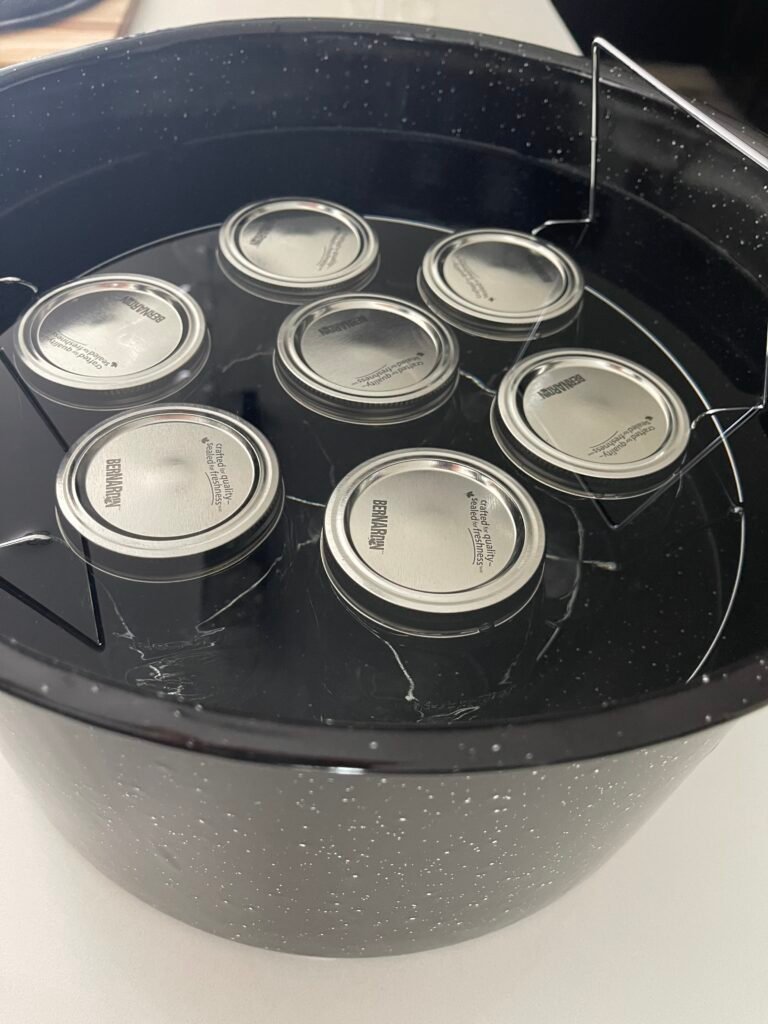
Undeniably, water bath canning is the most widely used method for high-acid preserves and the one most canners learn first. If you already own a water bath canner, this is a perfectly sound way to process this jam.
- Place filled jars on the canner rack and lower it into boiling water. Always remember, water must cover the lids by at least 1 inch.
- Start timing once you reach a full rolling boil. Processing times are identical to the table above.
- When processing is complete, turn off heat and let jars rest in the water for 5 minutes before removing them. This step helps prevent siphoning.
- Lastly, remove jars straight up with a jar lifter.
Looking to understand how the two methods compare?

Prefer Open Kettle?
Open kettle canning is not a USDA-recommended method. For this recipe, we used atmospheric steam canning to get consistent, shelf-stable results. However, open kettle remains a long-established traditional method that some experienced canners still use for high-acid preserves.
We don’t dismiss traditional methods. For those who choose to use open kettle, we’ve put together a guide that explains how it is practiced, along with the key steps aimed at reducing common risks within that traditional approach.
After sealing (all methods)
- Do not touch, adjust bands, or press lids for 12–24 hours.
- After cooling, check seals: press the center of each lid. If it doesn’t flex, the seal is good. Any jar that didn’t seal goes in the fridge → use within 3 weeks.
- Remove bands for storage (they trap moisture and can mask a broken seal over time). Label with contents and date.
- Store in a cool, dark place. Peak quality for 12–18 months.
Check your processing time/ canning pressure if you’re above 1,000 feet↗️
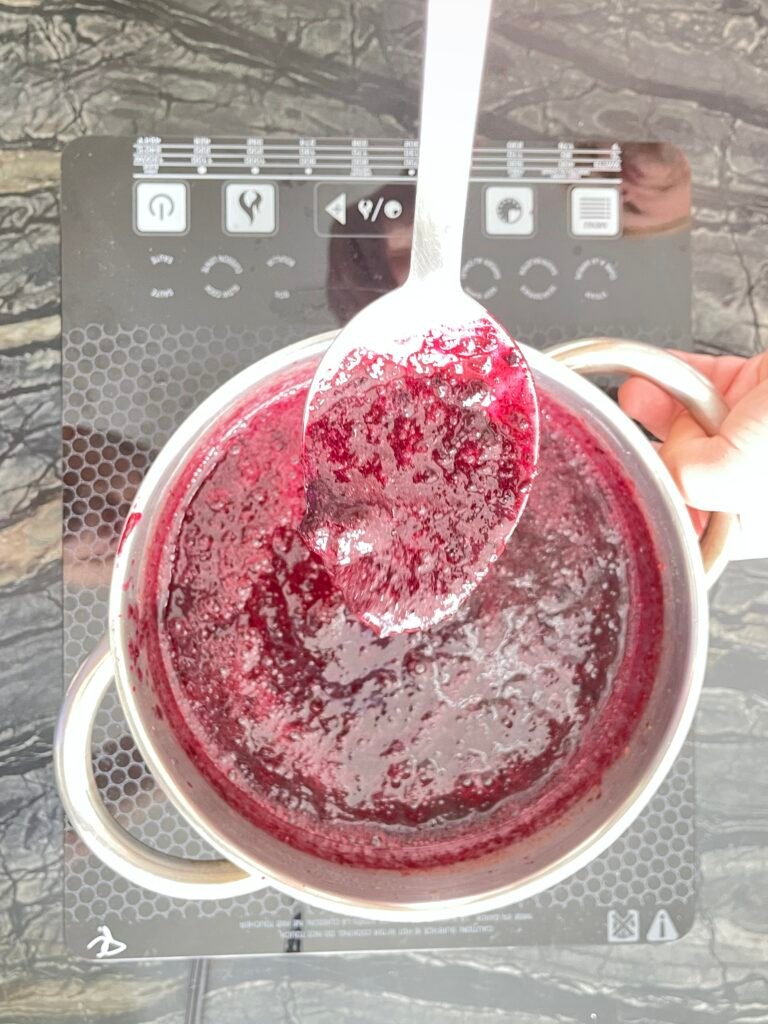
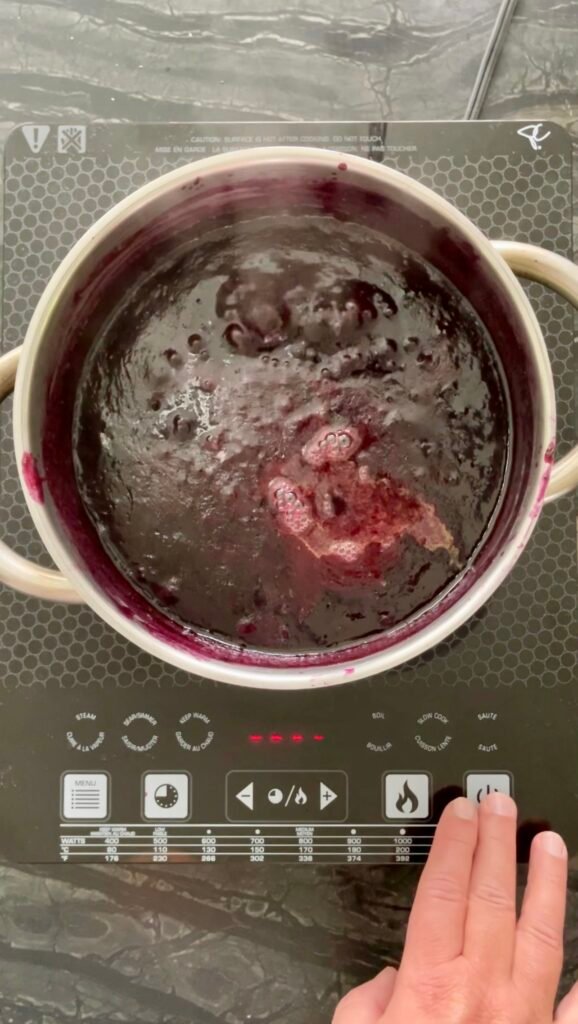
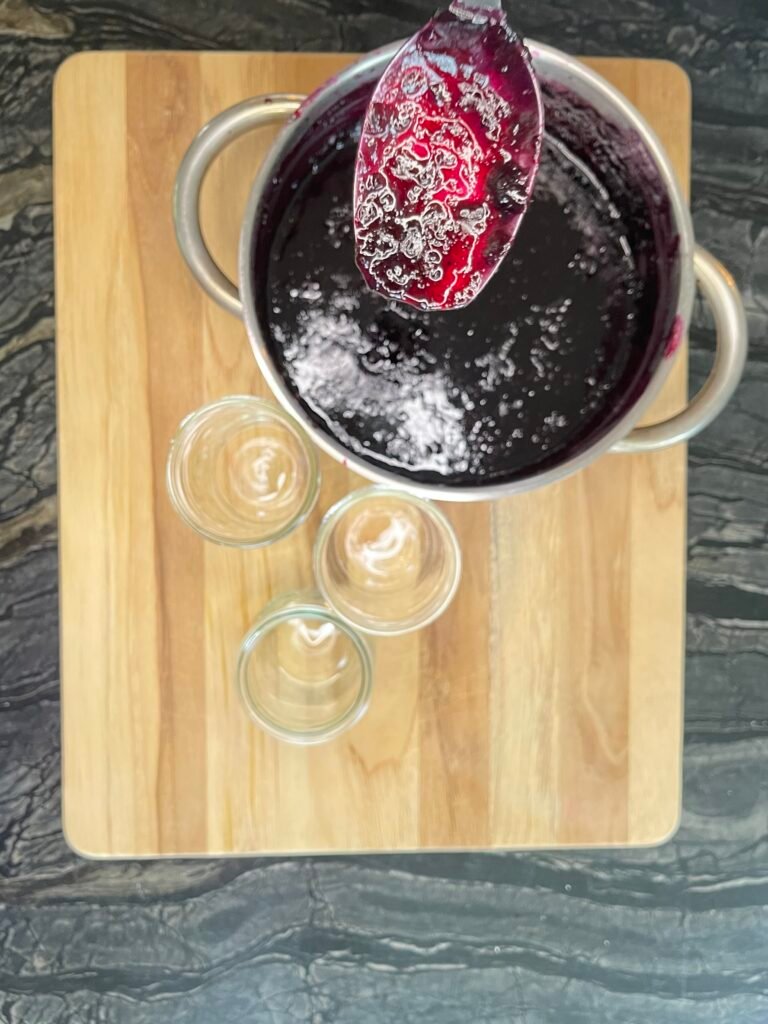
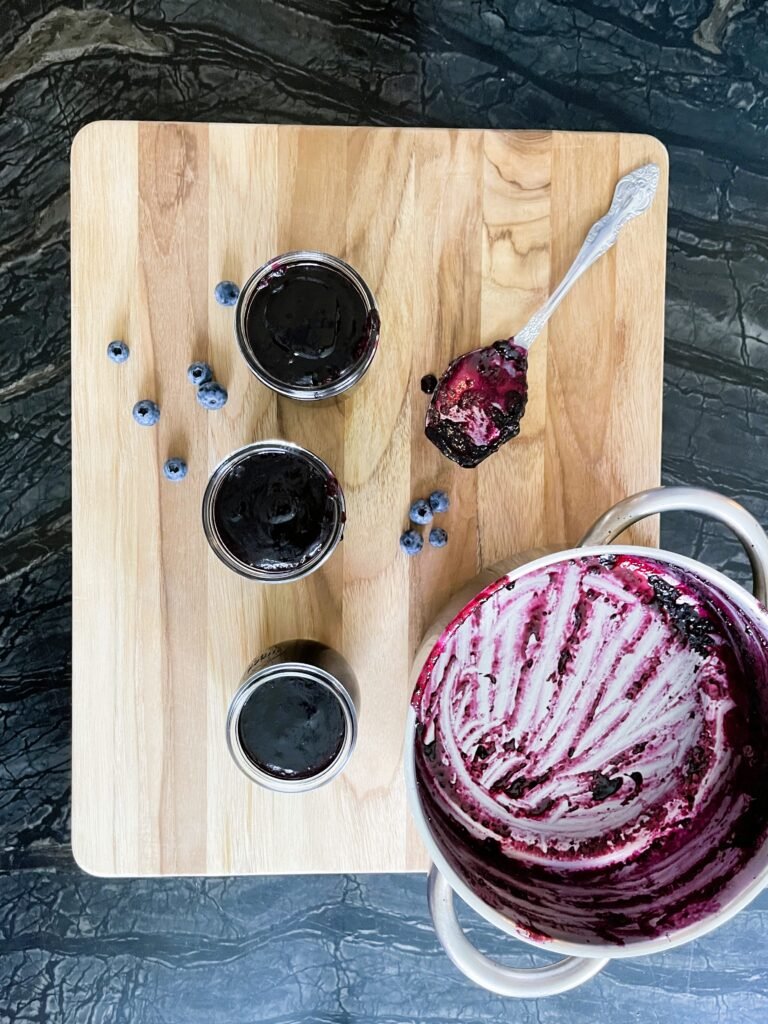
How to Make Blueberry Orange Jam – Step-by-Step Photo Gallery
How to Use Blueberry Orange Jam
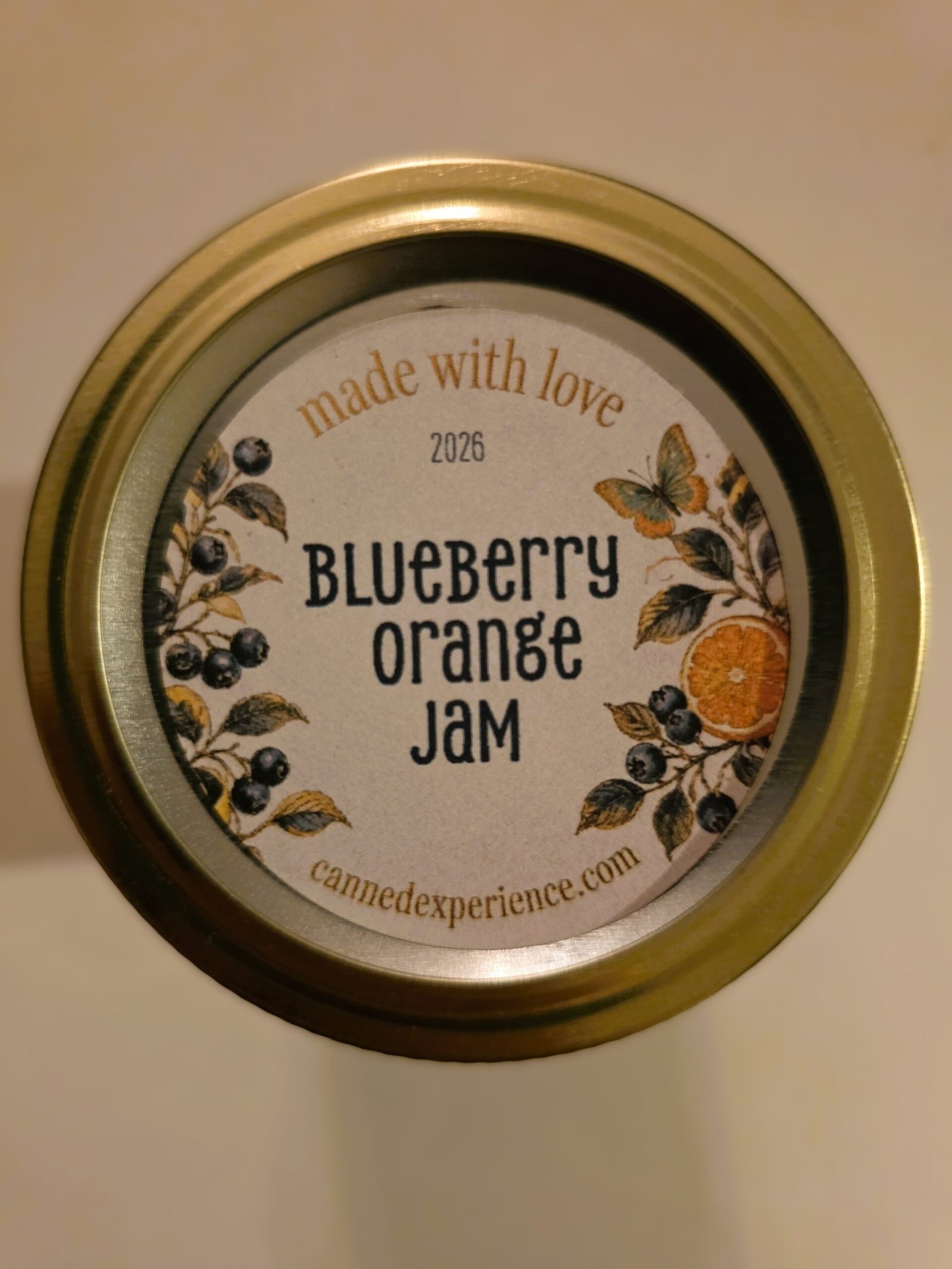
This blueberry orange jam is especially good anywhere you would use ordinary blueberry jam, but the orange gives it a little more range.
Spread It on Toast and Scones
Start with the obvious. Spread it on toast, English muffins, biscuits or warm scones. It’s especially good with a little whipped butter underneath.
Use It With Chocolate
The blueberry-orange combination works surprisingly well with chocolate. Use the jam between layers of chocolate cake, spread it over brownies, or pair it with a simple chocolate tart.
Turn It Into a Quick Fruit Sauce
Warm a spoonful or two of jam with a little water or orange juice until it loosens. Spoon it over ice cream, cheesecake, pancakes or waffles.
FAQ: Blueberry Orange Jam
Blueberries are naturally low in pectin, so adding pectin is the easiest way to get a reliable set. You can make blueberry jam without added pectin, but it usually requires longer cooking to concentrate the fruit enough to achieve a good set. For this recipe, we’re using regular powdered pectin to get the dependable set that we want without having to cook the blueberries for an unnecessarily long time.
━━━━━━━━━━━━━━━━━━━━━
It’s a blueberry orange jam, not an orange marmalade with blueberries. Marmalade is traditionally made from citrus fruit and includes the peel, while this recipe uses blueberries as the main fruit. The orange zest and juice add citrus flavor, but the finished preserve is still a blueberry jam.
━━━━━━━━━━━━━━━━━━━━━
Yes, but you will need to change the recipe. Blueberries are naturally low in pectin, and this recipe uses considerably less sugar than the traditional fruit-to-sugar ratio used in many no-pectin jams. Without added pectin, you could use a more traditional 1:1 ratio of blueberries to sugar and cook the jam until it reaches the setting point. In other words, for 1,500 g (3.3 lb) of blueberries, you would use about 1,500 g (3.3 lb) of sugar rather than the 800 g (4 cups) used in this recipe. The longer cooking concentrates the fruit, sugar and natural pectin, producing a thicker jam. However, this approach will give you a much sweeter jam, reduce the final fruit flavor, and produce a smaller yield as more water cooks away. It is also a different recipe, so don’t simply leave out the pectin and follow the cooking and canning instructions here.
━━━━━━━━━━━━━━━━━━━━━
Simple answer is – yes, you can freeze it instead of canning it.
Here’s why that works. The canning job is to make the jar safe to sit on a shelf at room temperature for a year. Freezing does that job in a different way – nothing grows in a jar that’s frozen solid, so you don’t need the boiling-water step at all.
And here’s the part that trips people up: the jam sets because you cooked it to the right point (that gel stage, roughly 220°F), not because you boiled the jars afterward. So skip the water bath, and your jam still sets exactly the same.
A few things to watch for if you do decide to freeze it:
-Leave more room at the top of the jar. Jam expands when it freezes, so give it a good ½ to 1 inch of headspace, more than you’d leave for canning. If you don’t, you’ll crack the jar or pop the lid off in the freezer.
-Use jars rated for the freezer. Go for straight-sided ones, not the shouldered Mason-jar shape. Those shoulders are exactly where jars split when the contents expand. Even though we are no plastic containers fans, plastic freezer containers will work. Shop for Freezer Jars↗️
-Texture may change over time. It might weep a little liquid or come out slightly softer once thawed after a long stretch in the freezer. Doesn’t mean it’s gone bad, just not quite as pretty.
If you’re talking about raw/no-cook freezer jam (the kind with instant pectin), that’s a whole different animal and this doesn’t apply the same way.
━━━━━━━━━━━━━━━━━━━━━
No. The USDA and the National Center for Home Food Preservation (NCHFP) do not individually test third-party recipes. NCHFP provides tested recipes, canning principles, and processing guidance for different types of foods. This blueberry orange jam recipe is our own formula, developed using established canning guidance and traditional European jam-making techniques, including maceration. It has not been tested by the NCHFP or USDA. For canning, we use the NCHFP’s published guidance for processing high-acid fruit spreads with added pectin and adjust the processing time for altitude.
━━━━━━━━━━━━━━━━━━━━━
Yes, frozen blueberries work just as well as fresh ones for this recipe. If using frozen, allow them to thaw first and keep all the liquid they release, as that juice is essential for maceration and achieving the proper set.
━━━━━━━━━━━━━━━━━━━━━
Bottled lemon juice has a standardized, guaranteed acidity level (pH 4.6 or lower), which ensures safe home canning. Fresh lemons vary in acid content, which could compromise the preservation safety required for water bath canning.
━━━━━━━━━━━━━━━━━━━━━
Skipping maceration isn’t recommended. Soaking the blueberries in sugar draws out their juices, softens the skins, and helps the natural pectin bind with the sugar, resulting in a rich texture without needing artificial thickeners.
━━━━━━━━━━━━━━━━━━━━━
Sugar acts as both a preservative and a key structural component that interacts with pectin to set the jam. Reducing the sugar significantly may prevent the jam from setting properly and could shorten its shelf life.
━━━━━━━━━━━━━━━━━━━━━
For altitudes over 1,000 feet (300 meters), you must extend your boiling water bath processing time according to standard altitude conversion charts. You can use our free canning altitude calculator to easily find your local elevation and determine the exact processing times and pressures required for your location.
━━━━━━━━━━━━━━━━━━━━━
When stored in a cool, dark place with undisturbed seals, unopened jars will maintain peak quality for 12 to 18 months. Once opened, keep the jar refrigerated and consume it within 3 to 4 weeks.
━━━━━━━━━━━━━━━━━━━━━
Related Recipes
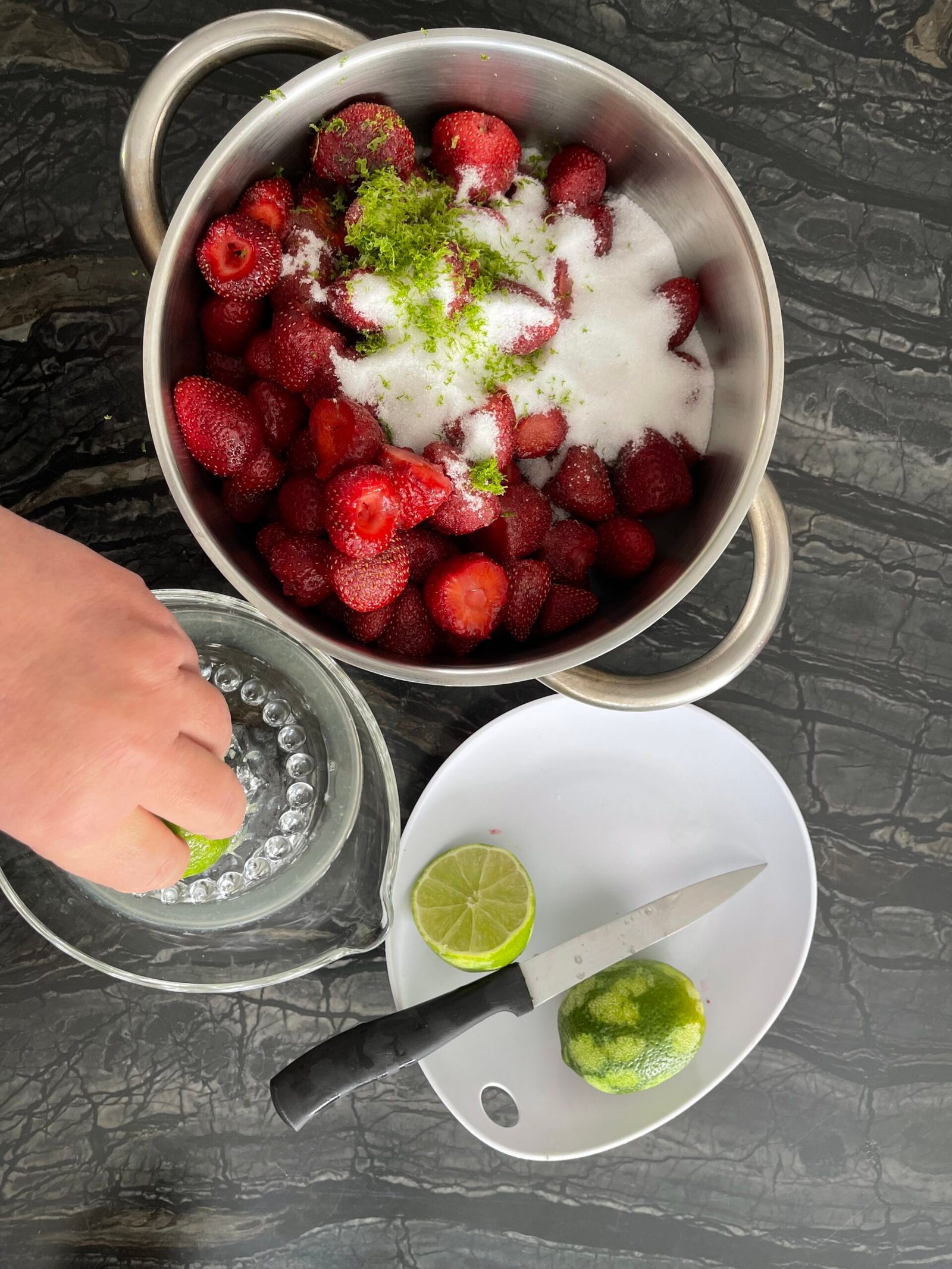
Strawberry Lime Jam with Vanilla
Inspired by the same French bakery as our blueberry orange jam, this one combines strawberries with lime and vanilla.
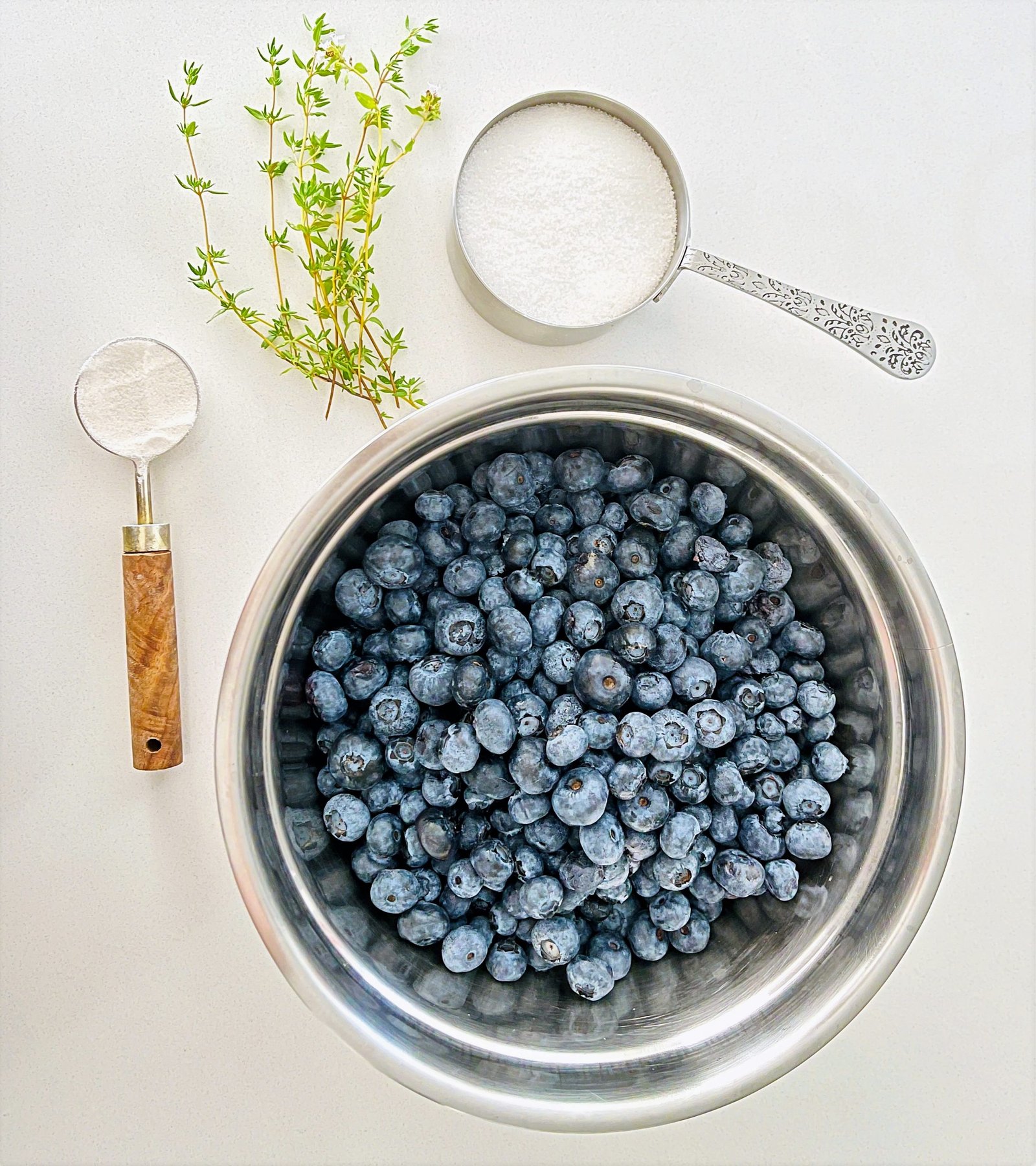
Love blueberry jam but want to try something different? Thyme gives the sweet blueberries a little savory edge.
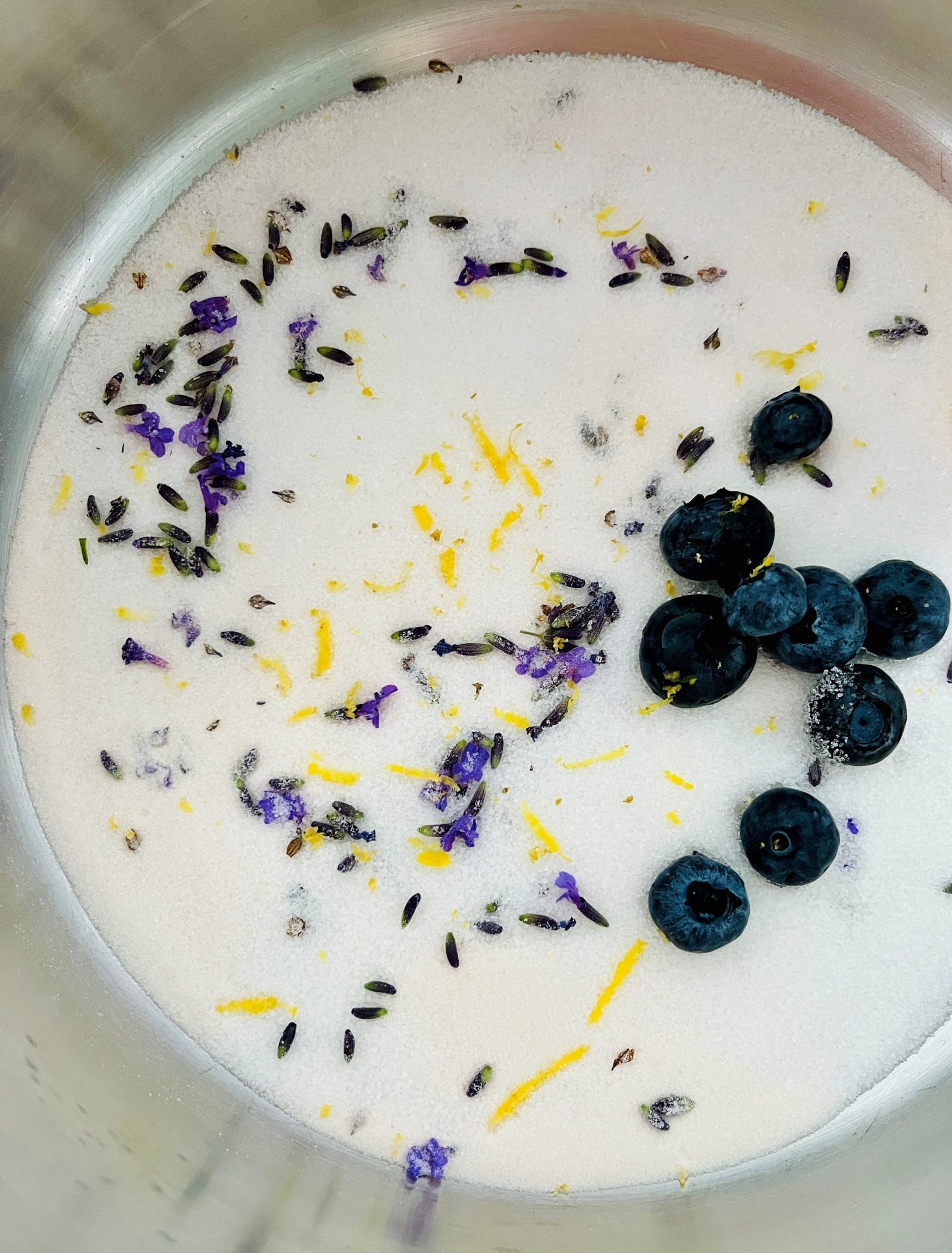
Another blueberry jam with an unexpected partner. Lavender adds just enough floral flavor to make the blueberries taste a little more interesting.
Join the pantry
Fresh recipes when the season calls for them. Preservation guides you can trust – every method, traditional to modern. Ideas for turning your pantry into weeknight dinners. Seasonal alerts that help you preserve more for less. Honest reviews of the tools that matter.
Tried this preserve? We’d love to hear how it turned out!