
Zucchini Pickles Recipe for Canning
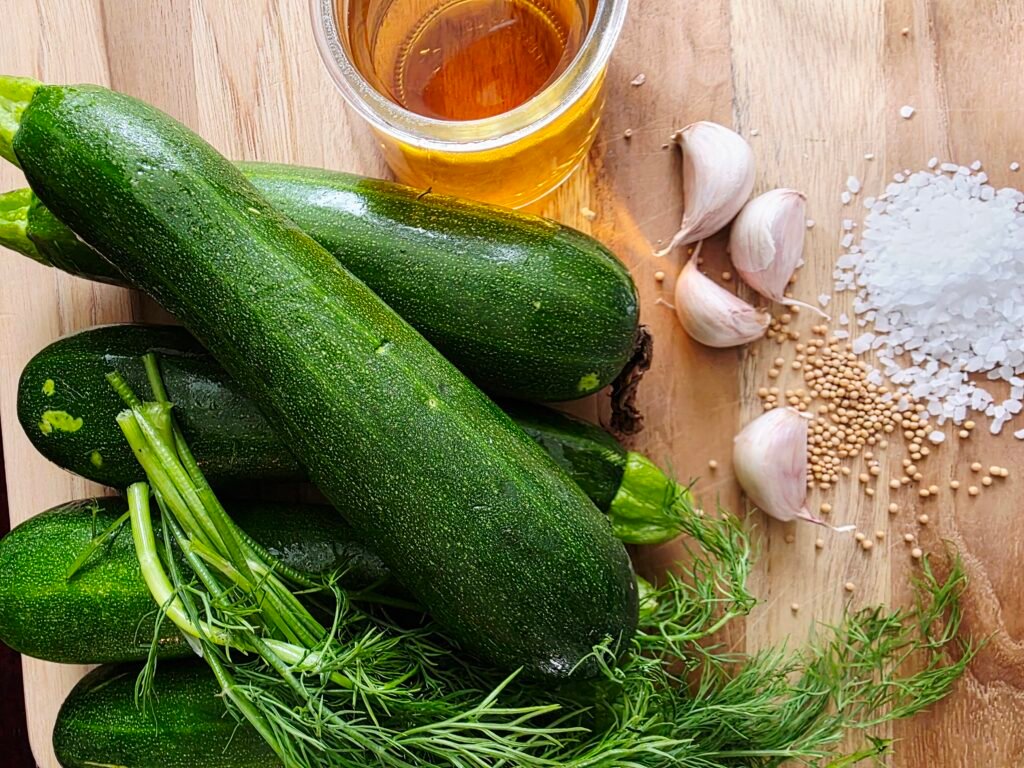
Zucchini pickles for canning. Young zucchini, fresh dill, garlic, mustard seed, water and apple cider vinegar are all it takes. No fancy ingredients. No cucumber impersonation. Just good, tangy pickled zucchini
🔪 Prep:
20 min
🫕Cook:
7 min
🫙6
quart jars
💰Average Cost:
~ $2 per jar
This zucchini pickle recipe for canning gives all that summer squash somewhere to go besides taking up space in your refrigerator. And, unlike cucumber pickles, zucchini pickles aren’t exactly lining the grocery store shelves. If you want them, you’ll have to make them yourself. On the positive side, you’ll know exactly what goes into your jars.
Why You’ll Love These Zucchini Pickles
- Simple ingredients: Young zucchini, garlic, fresh dill, mustard seed and apple cider vinegar are all you need for these delicious homemade pickles.
- Easy to scale: The recipe gives measurements per quart (liter), so you can make more or fewer jars depending on how much zucchini you have.
- A different take on pickles: Apple cider vinegar gives these zucchini pickles a distinctive tang that sets them apart from the usual cucumber pickle.
- Great way to preserve zucchini: If you’re looking for what to do with extra zucchini, this pickling recipe turns it into something you can enjoy long after zucchini season is over.
Got Zucchini? How About Canning Zucchini Pickles?
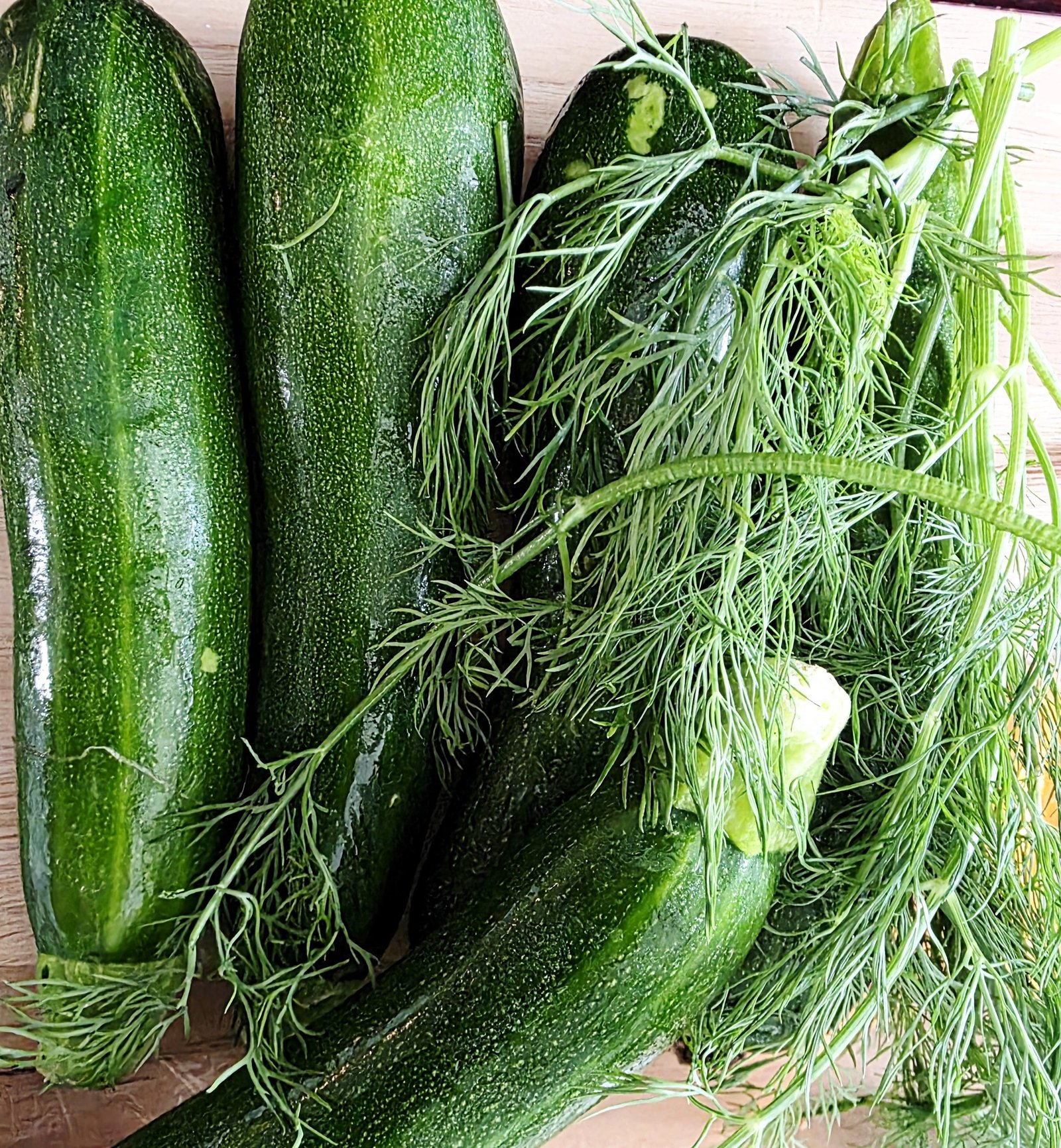
Maybe you grew them. Maybe someone gave you a bagful. Maybe, like us, you saw them for 90 cents a pound and thought, Well, at that price…
Whatever the reason, they’re now taking up residence in your refrigerator.
And zucchini is not exactly a low-maintenance roommate. It takes up space, you shuffle it around, and somehow there always seems to be more. This becomes a real problem when you come home from the strawberry U-pick with a basket of hard-earned berries, only to discover that the space in your refrigerator intended for them is already occupied.
Long story short, it was hot when we made these zucchini pickles. That meant we weren’t looking for a complicated preserving project. We wanted something easy and, most importantly, something that would get the zucchini out of our refrigerator.
We’ll admit we didn’t have much faith in this pickled zucchini recipe or the finished preserve. We had worried it would taste like zucchini trying to be a pickled cucumber. It didn’t. It was actually quite good.
The flavor was mellow, pleasantly tangy and surprisingly versatile. We liked these zucchini pickles with hot dogs, alongside grilled meats, and cubed into salads.
So, success.
And that’s why we are sharing this pickled zucchini recipe for canning. If you have more zucchini than you know what to do with, here’s one more way to get it out of your refrigerator and into the pantry without turning a hot summer day into an all-afternoon preserving project!
Pickled Zucchini: Key Ingredients
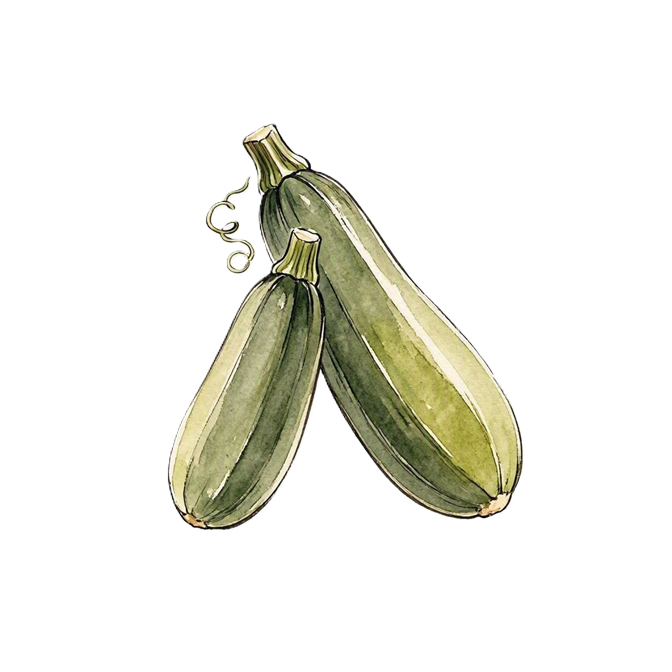
Young Zucchini
Young, firm zucchini work best for zucchini pickles because they contain less water and have a firmer texture. The lower water content helps maintain the intended acidity of the finished pickles, while the firmer zucchini hold their texture better after processing. For the best results, choose relatively small zucchini with few large seeds.
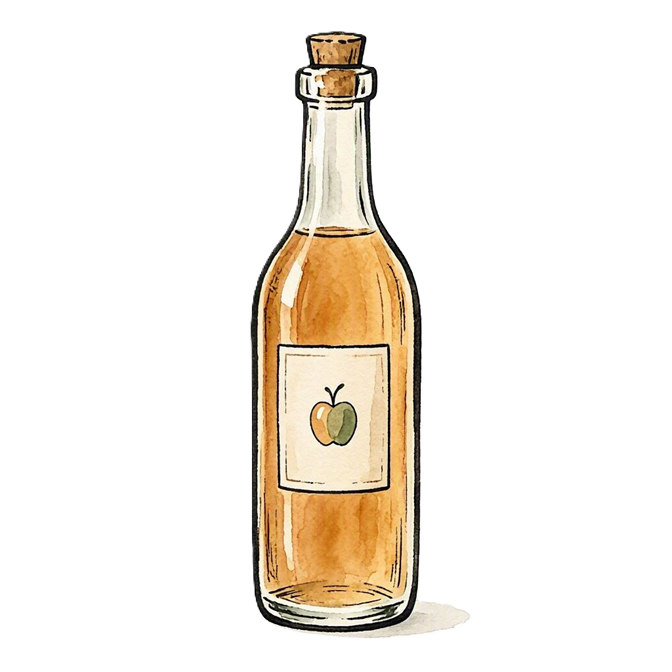
Apple Cider Vinegar
Vinegar is critical to the preservation of these zucchini pickles because its acidity lowers the pH of the zucchini and brine. Use apple cider vinegar with 5% acidity.
Do not reduce the vinegar or substitute a lower-acidity vinegar. You can increase it for a tangier pickle. White wine vinegar or white vinegar can be substituted, but they will give the pickled zucchini a sharper, cleaner vinegar flavor.
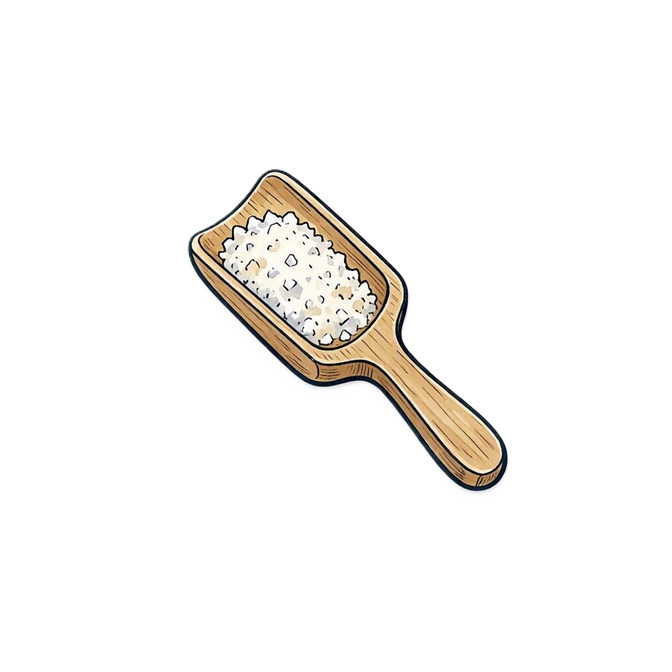
Pickling Salt
Pickling salt dissolves readily in the brine and contains none of the iodine or anti-caking additives found in some regular table salts, which can make the brine cloudy or leave sediment. While you can substitute another salt for pickling salt, we recommend using pickling salt because the end result is harder to predict with different salts.
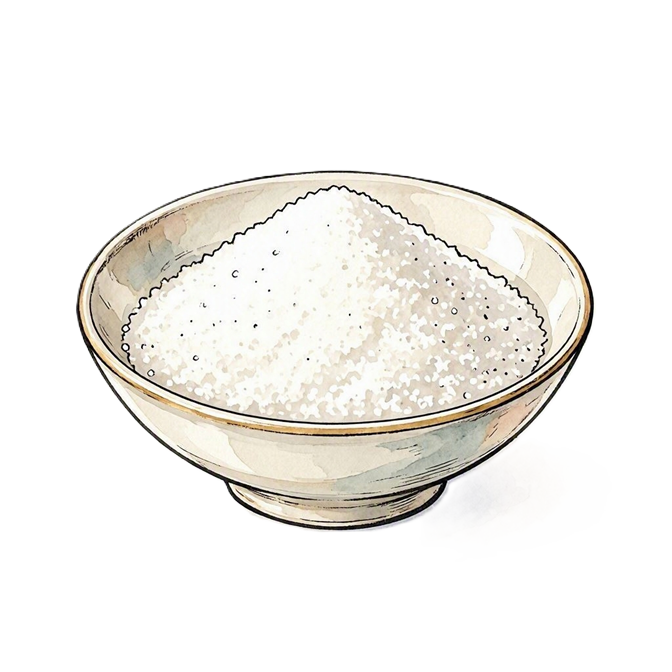
Sugar
Sugar balances the acidity of the vinegar and mellows down the flavor. It is not what makes these zucchini pickles shelf stable.
You can substitute an appropriate sugar alternative if you need to avoid sugar.
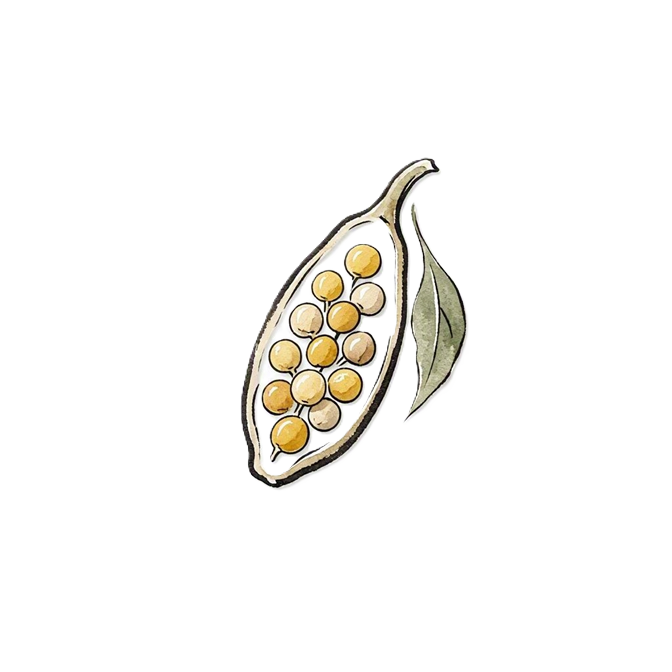
Mustard Seed
Mustard seed adds small bursts of warm, slightly spicy flavor. If you don’t have whole mustard seed, you can substitute ground mustard. The finished brine will be cloudy rather than clear, but this affects appearance, not the quality or flavor of the pickles. A 1-to-1 substitution is acceptable but will give you more pronounced flavor.

Pantry Master Note
Did You Know? A US quart holds 32 fl oz (946 mL). That’s about 6% less than a true European 1-liter jar. We’re calling these “quart jars” for our US readers; if you’re actually filling 1 liter jars (Weck, Le Parfait or Canadian quart jar), you’ll have a touch more room to fill with zucchini and brine.
The amount of brine you need, will vary depending on the size and shape of your zucchini and how tightly you pack the jars. The water quantity listed here is an estimate. Always make sure jarred zucchini is fully covered while maintaining the required ½-inch headspace.
What These Zucchini Pickles Cost to Make
The expensive part of these zucchini pickles is the zucchini, and even that doesn’t have to cost much when you buy directly from a grower. We paid just $0.90 CAD per pound for young zucchini, so about 4.5 pounds cost $4.05 CAD for this six-quart batch.
Fresh dill and garlic add some cost, while the remaining ingredients are inexpensive pantry staples. Prices vary depending on where you shop and whether you buy directly from growers. So the figures below are estimates based on current 2026 market prices.
| Ingredient | USD $ | CAD $ |
| Young zucchini (2 kg) | $3.50–$5.00 | $4.05 |
| Apple cider vinegar (1,350 mL / 45 Tbsp) | $0.66–$1.98 | $2.70–$3.65 |
| Pickling salt (6 Tbsp) | $0.12–$0.24 | $0.16–$0.24 |
| Granulated sugar (6 Tbsp) | $0.12–$0.24 | $0.14–$0.24 |
| Garlic (24 cloves) | $1.80–$3.60 | $2.40–$3.60 |
| Fresh dill (12–18 sprigs) | $1.20–$1.80 | $1.74 |
| Mustard seed (6 tsp) | $0.18–$0.42 | $0.18–$0.48 |
| Total batch (6 quart jars) | ~$7.58–$13.28 | ~$11.37–$13.95 |
That’s a pretty good price for six quarts of homemade zucchini pickles, especially when the main ingredient is inexpensive summer produce. And if you found yourself with more zucchini than you know what to do with, turning it into pickled zucchini means those cheap summer vegetables don’t have to take over your refrigerator.
Cost per Jar: ~$1.75 USD / ~$2.15 CAD
Common Mistakes When Making Peach Apricot Jam with Lavender
❌ Not adjusting for altitude: Water boils at a lower temperature at higher elevations, so processing times need to be adjusted according to your altitude. Find your altitude and then check the altitude table adjustment before processing your zucchini pickles. This tool will give you exactly the answer you need↗️
❌ Changing the vinegar or water proportions: The vinegar provides the acidity needed for safe preservation. Don’t reduce the vinegar or add extra water to make the brine milder. Estimate brine pH with free digital brine pH calculator↗️
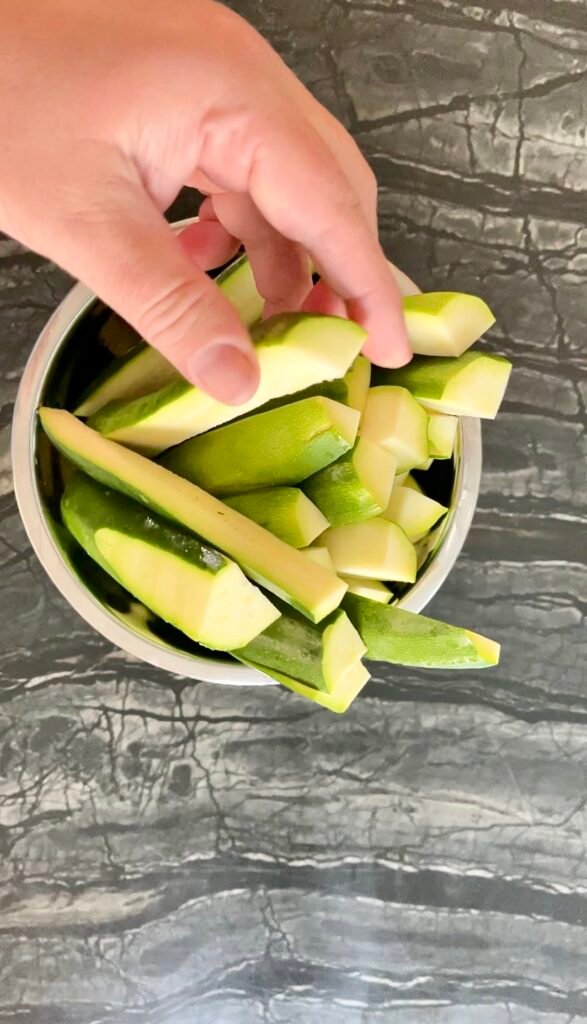
❌ Leaving the ends on the zucchini: Trim both ends before cutting the zucchini into spears. The blossom end in particular can contain enzymes that contribute to softening, so it’s worth removing rather than leaving it to chance.
Zucchini Pickles Canning Recipe
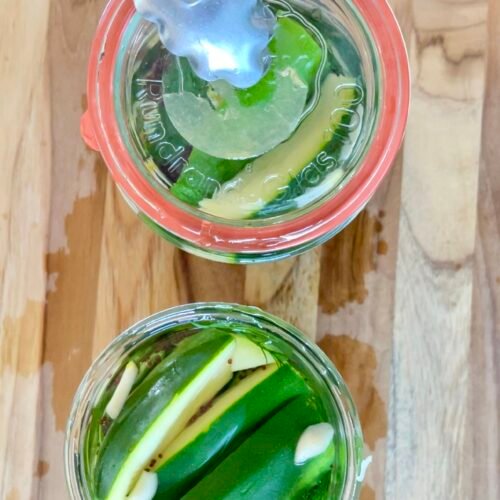
Canning Methods
Processing table – Steam Canner & Water Bath
Jar size: quart (~1L) jars
Pack style: Raw Cold
Applies to: Atmospheric steam canner AND water bath canner (same processing times)
| Altitude | Processing time |
| 0–1,000 ft | 10 min |
| 1,001–6,000 ft | 15 min |
| Above 6,000 ft | 20 min |
Not sure which elevation band is yours? Our Canning Altitude Calculator will give you the answer in a couple of seconds.
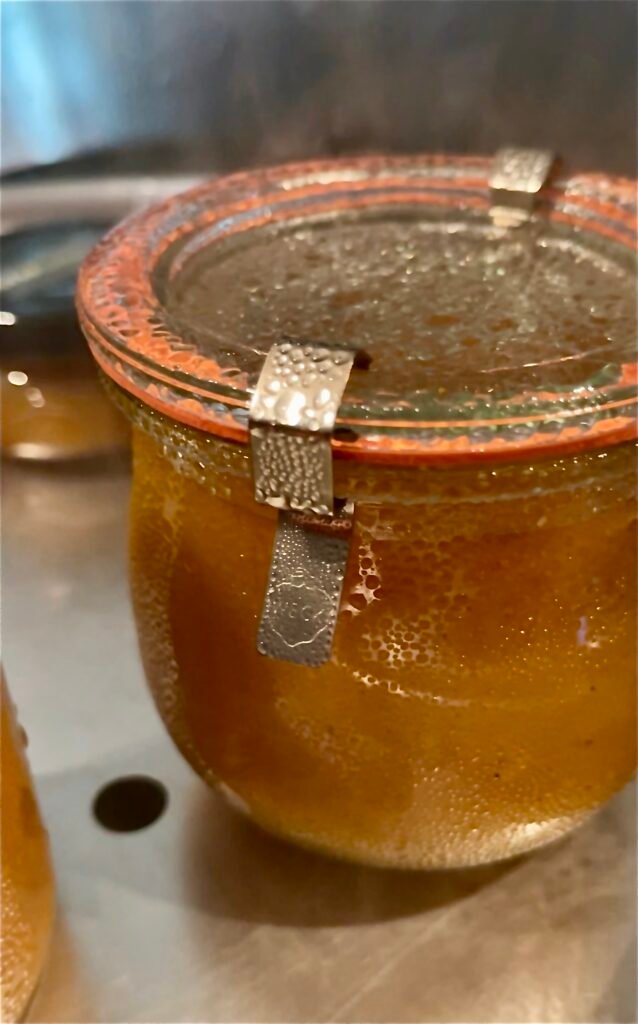
Atmospheric steam canning is newer to the home canning world. Nevertheless, it has been validated for high-acid preserves like this. It uses less water, heats up faster, and doesn’t require jars to be submerged.
- Prepare your atmospheric steam canner according to the manufacturer’s instructions. Typically, fill the base with the recommended amount of water and preheat until steam begins to vent.
- Place filled jars on the canner rack. Cover with the dome lid.
- Start timing once a steady column of steam has been venting continuously.
- When processing time is complete, turn off heat.
- Remove jars straight up with a jar lifter. Most important, do not tilt. Place on a towel-lined counter or cutting board.
New to steam canning?
Ready to ditch water bath canners?
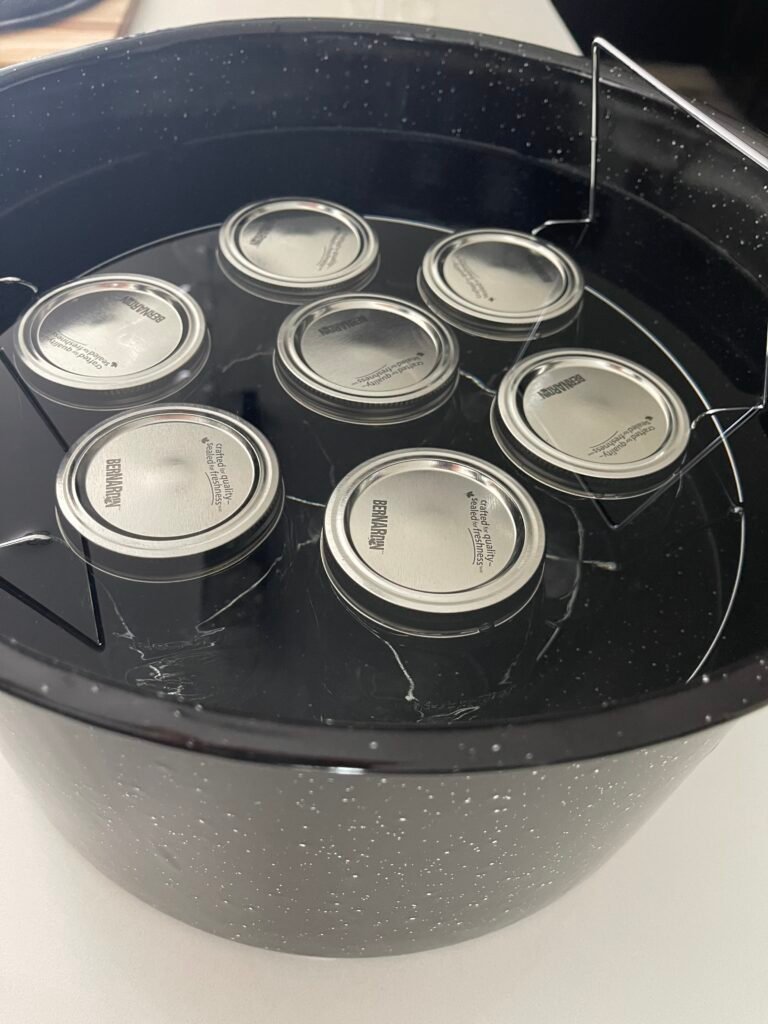
Water Bath Canning
Undeniably, water bath canning is the most widely used method for high-acid preserves and the one most canners learn first. If you already own a water bath canner, this is a perfectly sound way to process this jam.
- Place filled jars on the canner rack and lower it into boiling water. Always remember, water must cover the lids by at least 1 inch.
- Start timing once you reach a full rolling boil. Processing times are identical to the table above.
- When processing is complete, turn off heat and let jars rest in the water for 5 minutes before removing them. This step helps prevent siphoning.
- Lastly, remove jars straight up with a jar lifter.
Looking to understand how the two methods compare?

Prefer Open Kettle?
Open kettle canning is not a USDA-recommended method. For this recipe, we used atmospheric steam canning to get consistent, shelf-stable results. However, open kettle remains a long-established traditional method that some experienced canners still use for high-acid preserves.
We don’t dismiss traditional methods. For those who choose to use open kettle, we’ve put together a guide that explains how it is practiced, along with the key steps aimed at reducing common risks within that traditional approach.
After sealing (all methods)
- Do not touch, adjust bands, or press lids for 12–24 hours.
- After cooling, check seals: press the center of each lid. If it doesn’t flex, the seal is good. Any jar that didn’t seal goes in the fridge → use within 3 weeks.
- Remove bands for storage (they trap moisture and can mask a broken seal over time). Label with contents and date.
- Store in a cool, dark place. Peak quality for 12–18 months.
Check your processing time/ canning pressure if you’re above 1,000 feet↗️
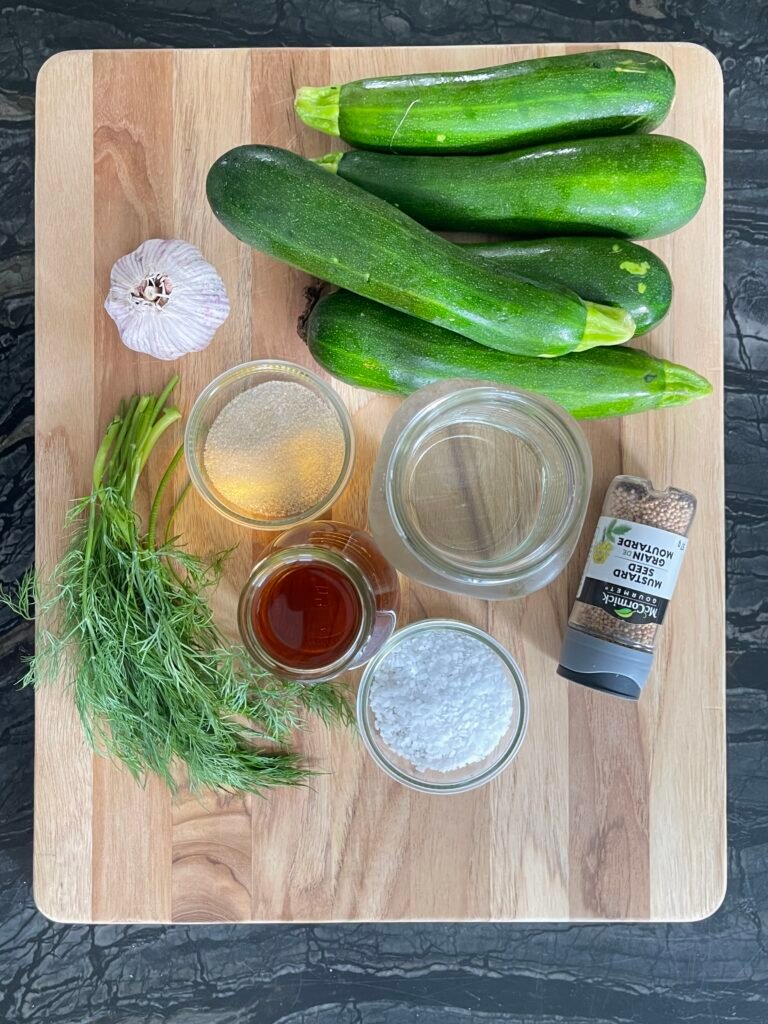
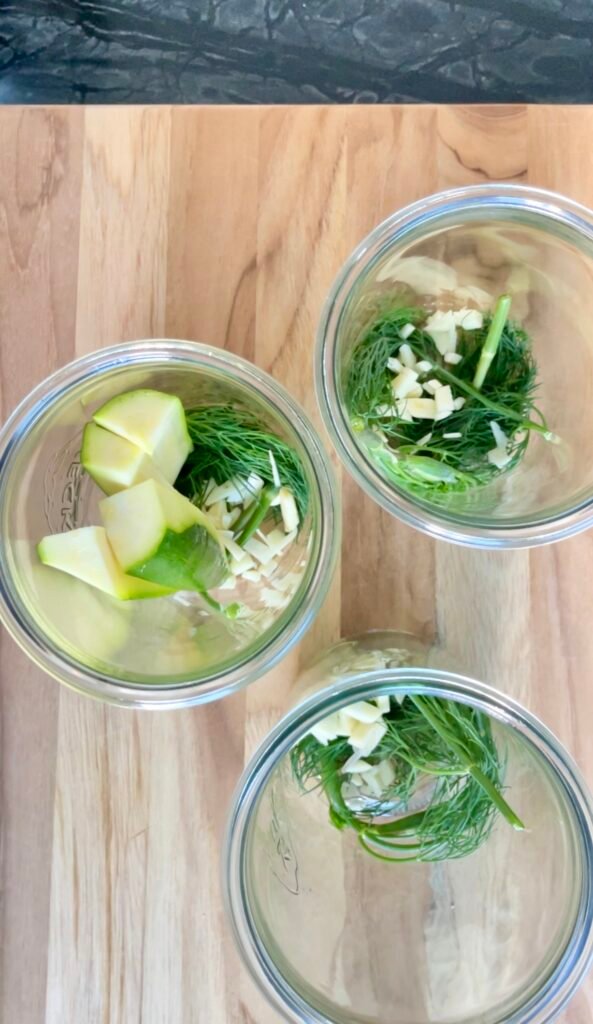
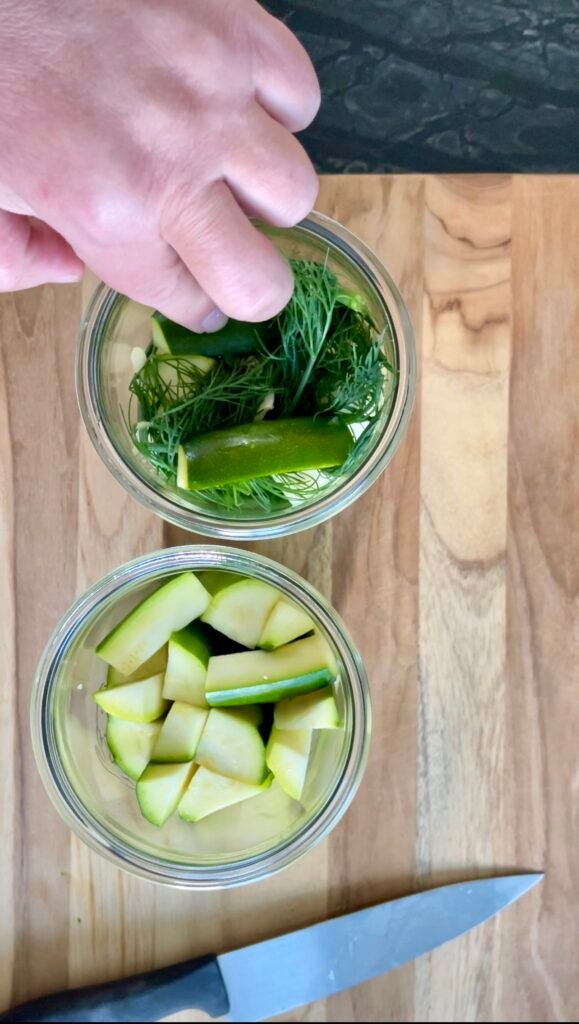
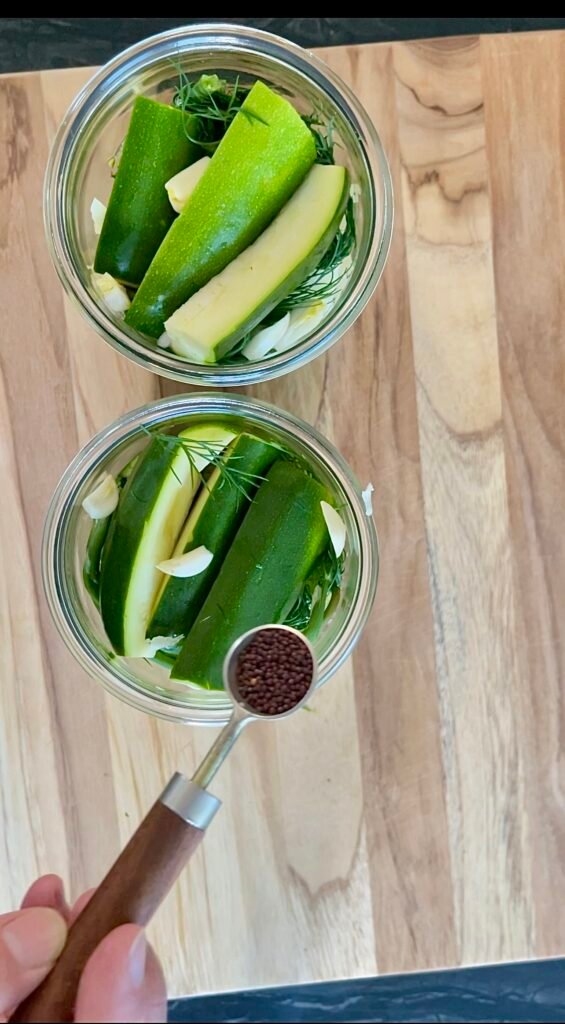
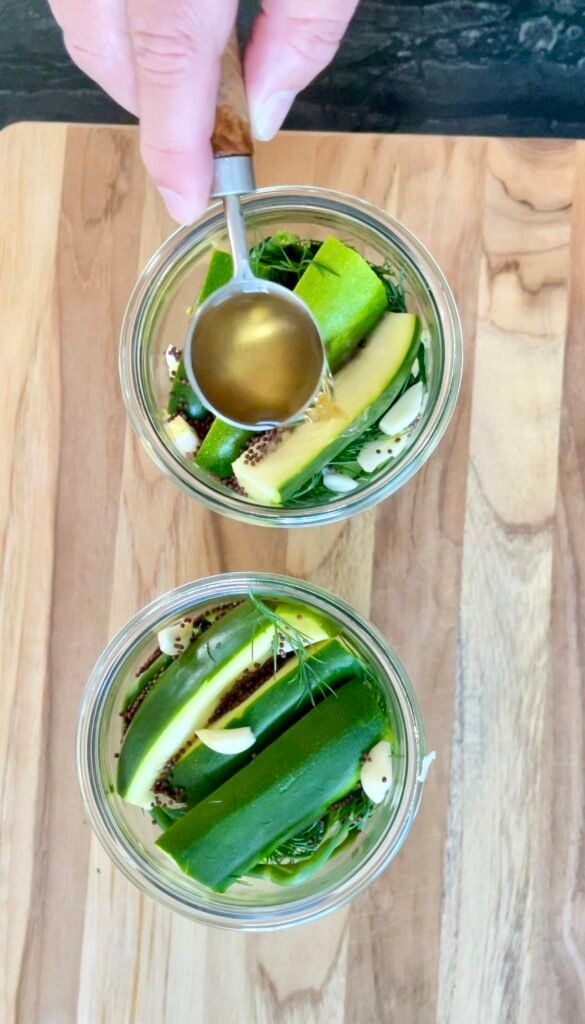
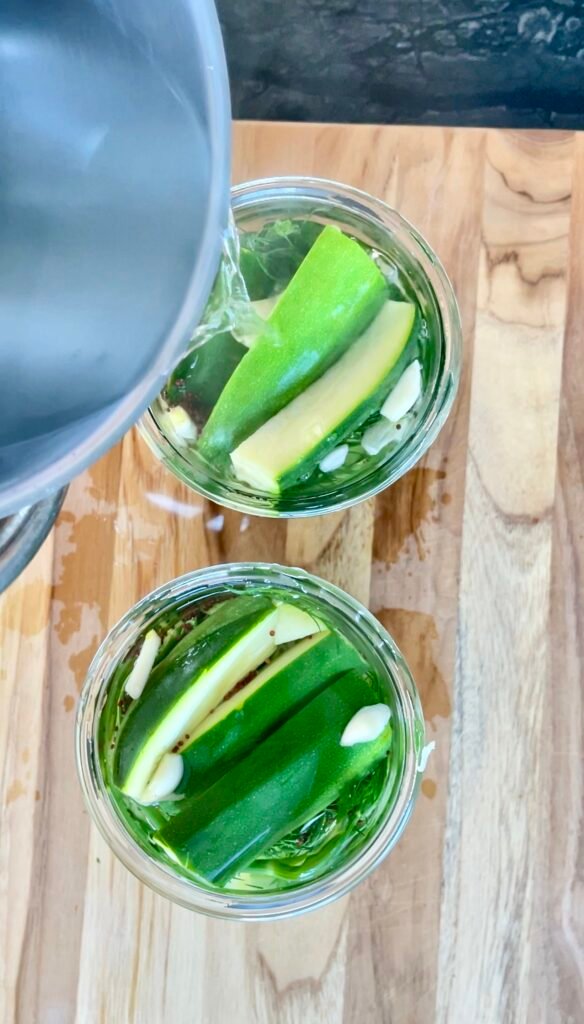
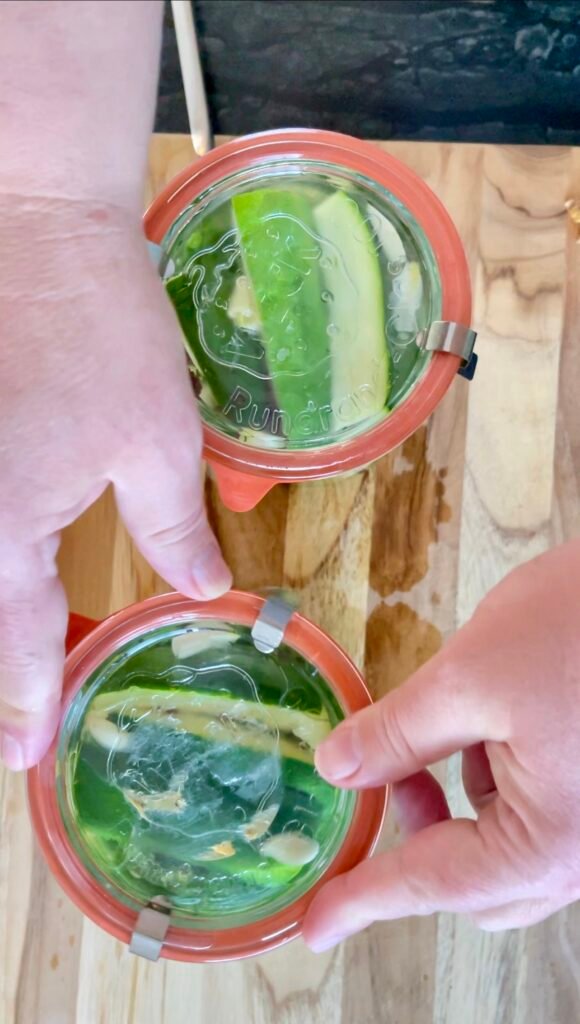
How to Pickle Zucchini – Step-by-Step Photo Gallery
How to Use Pickled Zucchini
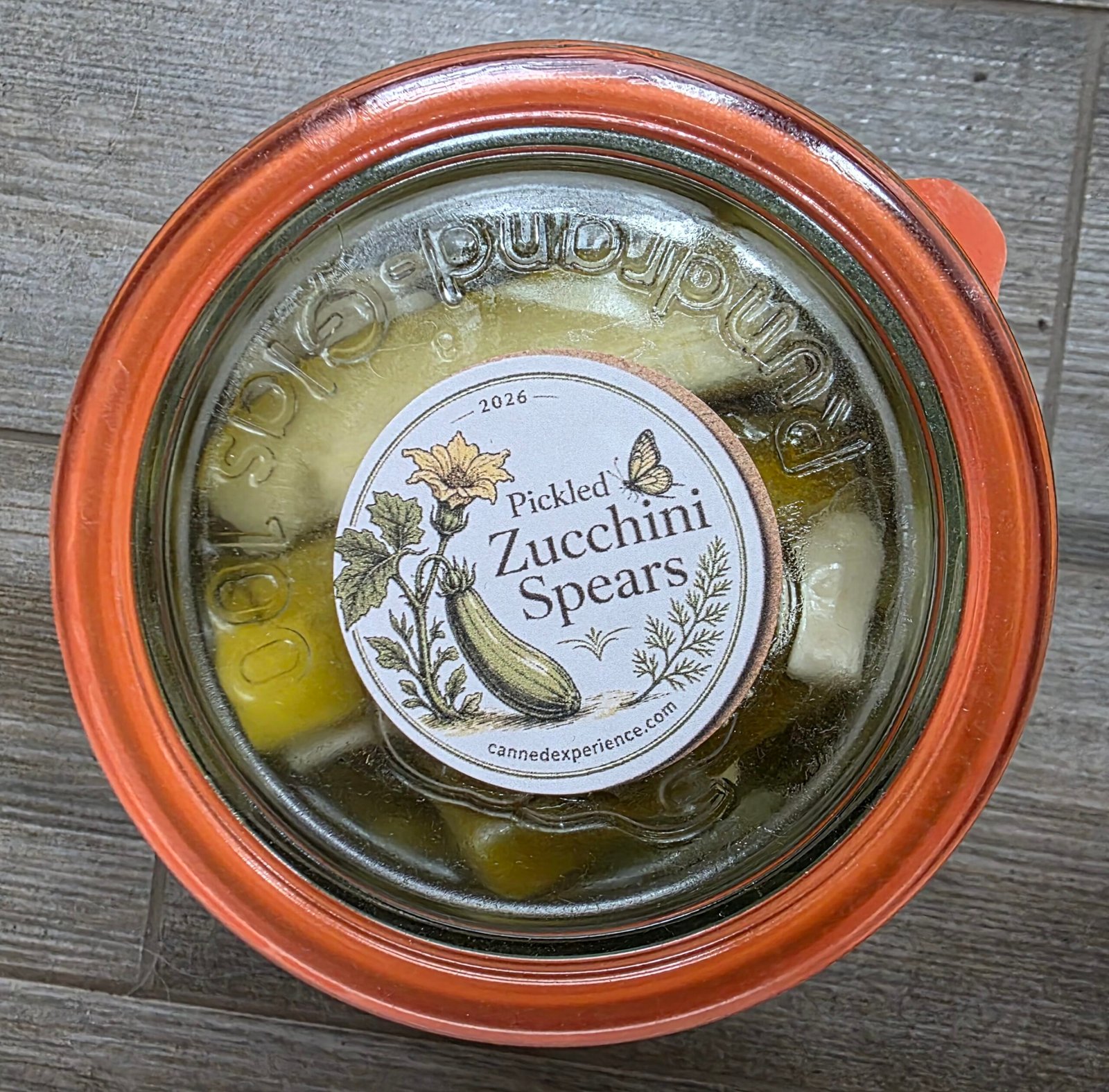
First, these zucchini pickles are best chilled before serving. Once a jar is opened, refrigerate it and use clean utensils when removing the pickles. As for what to do with them, pickled zucchini makes an easy addition to meals anywhere you would normally reach for a cucumber pickle. Here are some of the many ways to use them:
- With sandwiches and burgers: Serve a chilled zucchini pickle spear alongside grilled burgers, pulled pork or a deli sandwich.
- On a snack or charcuterie board: Cut zucchini pickles into bite-size pieces and serve with cheese, cured meats, olives and crackers.
- With grilled meats: No big surprise here. This is one of the usual ways to serve pickles, because the tangy vinegar flavor works extremely well with grilled beef, pork, sausages and chicken.
- Alongside lunch or dinner: Serve pickled zucchini straight from the jar as a simple side with almost any savory meal.
- Chopped into salads: Dice pickled zucchini and add it to potato salad, egg salad or tuna salad for extra tang.
- In sandwiches and wraps: Slice one or two zucchini spears into strips and tuck them into sandwiches and wraps for a tangy bite.
FAQ
Yes! They have a light, absorbent structure that soaks up vinegar, dill, and garlic exceptionally well, producing a tangy, savory pickle with a pleasantly tender-crisp bite.
Absolutely. Zucchini can replace cucumbers 1:1 in most vinegar-based pickling recipes. While they have a slightly different texture than cucumbers, they provide a very similar crunch and tangy flavor when processed in a 5% acidity brine.
We do not. In our recipe, raw zucchini spears are packed raw into hot, sterilized jars (raw/cold pack method), and hot brine is poured over them before atmospheric steam processing.
To maximize crispness in zucchini pickles:
-Use small, young, firm zucchini with minimal seed development (they contain less water).
-Trim both the stem and blossom ends (the blossom end contains enzymes that soften pickles).
-Pack the raw spears tightly into jars without pre-cooking.
-Process only for the recommended water bath time (10 minutes at sea level) to avoid over cooking the squash.
No. This is a heritage Ukrainian family recipe, adapted to meet modern safe-processing standards for a boiling water bath or steam canner. It is not a recipe out of the NCHFP database. It also intentionally uses less vinegar than most tested recipes, for a milder result (see the vinegar FAQ below for why).
Basically, less vinegar per jar means a milder finished pickle – gentler on the palate, and gentler on digestion. In fact, acidic foods, vinegar included, are a recognized trigger for heartburn and nausea, particularly for anyone already dealing with GERD or a sensitive stomach. This recipe trades about 0.21 pH units of brine acidity for that (~2.68 in this recipe vs. a typical NCHFP-tested brine at ~2.47). That’s not a meaningful safety trade-off: both numbers sit roughly two full pH units below the 4.6 threshold that defines safe for water bath canning.
No. Plain zucchini is a low-acid vegetable and is not suitable for water-bath canning. Zucchini must be properly acidified as a pickle before water-bath processing. Freezing is another option for preserving plain zucchini.
The vinegar must have 5% acidity. You can use white distilled vinegar, apple cider vinegar or wine vinegar at 5% acidity. The type of vinegar affects the flavor, but the acidity is what matters for safe preservation.
No, without processing these zucchini pickles you’d have to store them in the refrigerator.
Cloudy brine can have several causes, including the use of table salt that often contains anti-caking agents or iodine. Ground mustard will also make the brine cloudy, but this does not affect the quality of the pickles.
Garlic can sometimes turn blue, green or blue-green after being exposed to an acidic pickling brine. This is a natural chemical reaction between compounds in the garlic and the acidic environment and does not necessarily indicate spoilage. If the jar was properly processed and remains sealed, coloration alone is not a reason to discard the pickles.
Refrigerate the jar and treat it as a refrigerator pickle. Reprocessing it will likely lead to mushy pickles. Do not store an unsealed jar at room temperature.
Related Recipes
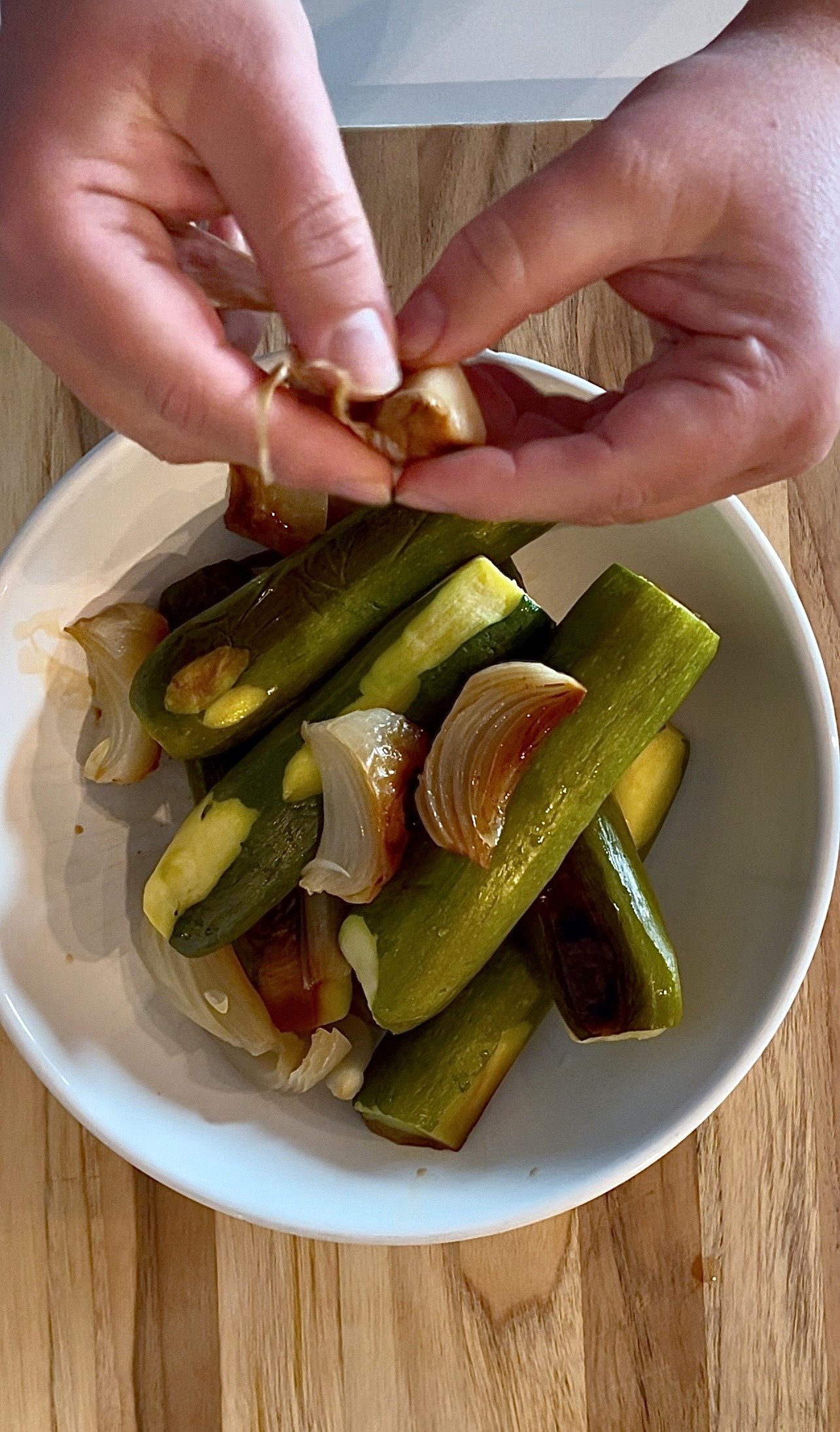

If you have more zucchini than you can possibly pickle, turn it into this savory Ukrainian zucchini spread instead.
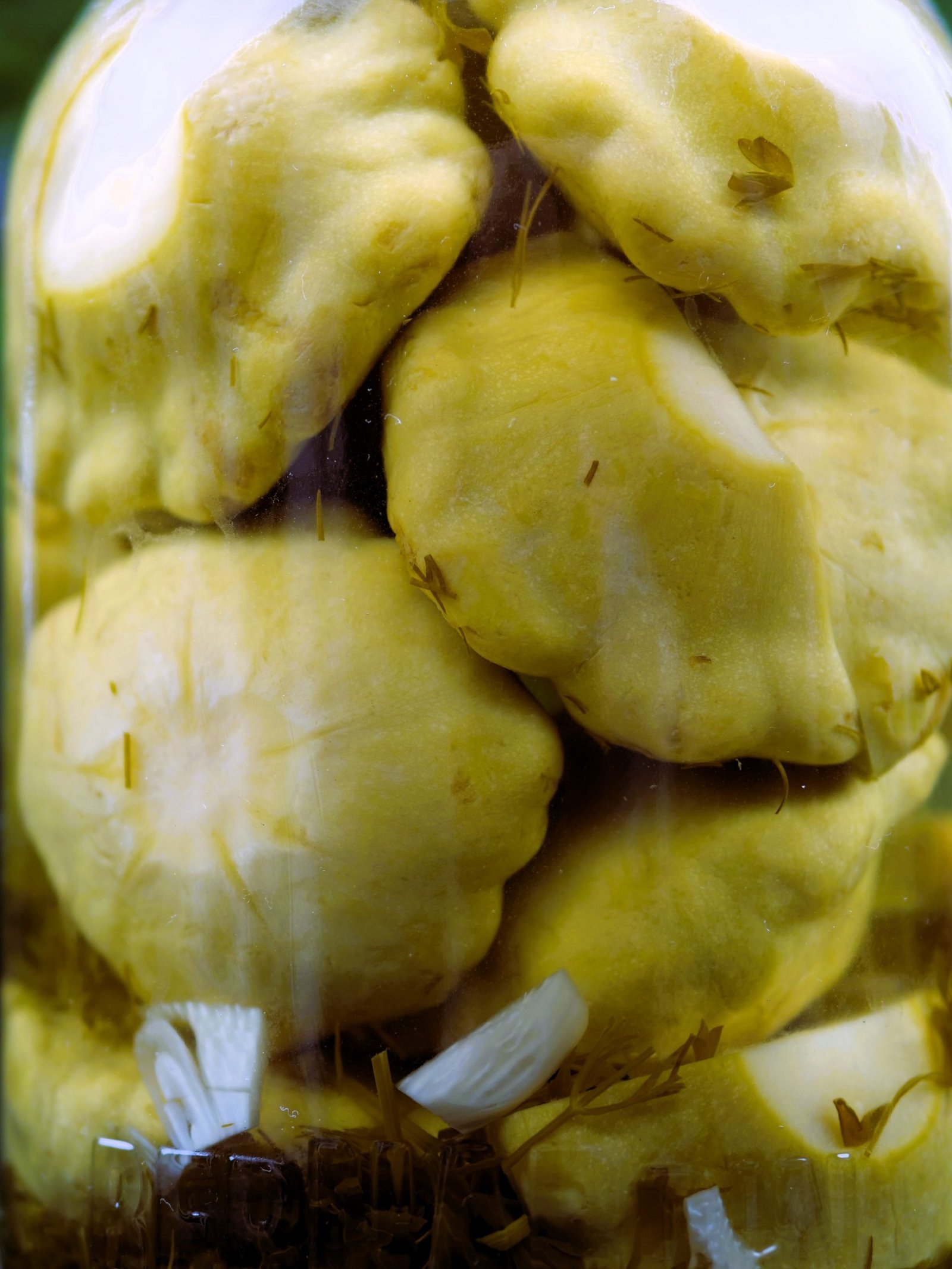
Like zucchini pickles, pattypan squash is a summer squash and can be pickled too
Join the pantry
Fresh recipes when the season calls for them. Preservation guides you can trust – every method, traditional to modern. Ideas for turning your pantry into weeknight dinners. Seasonal alerts that help you preserve more for less. Honest reviews of the tools that matter.
Tried this preserve? We’d love to hear how it turned out!