Food pH and Canning Safety: The Home Canner’s Complete Guide
Tomato recipes call for bottled lemon juice because of it. Pickles depend on vinegar because of it. Green beans need a pressure canner because of it. And when a tested recipe says “don’t skip this ingredient,” chances are it’s because of it too. That “it” is the food pH.
You don’t need a chemistry degree to can safely, but understanding a little about food acidity makes canning instructions much easier to follow. It also helps explain why recipes sometimes call for ingredients that seem unnecessary at first glance.
The number you’ll see referenced over and over in canning is pH 4.6. Foods below that level are considered high acid. Foods above it are considered low acid. That dividing line determines whether a food can be safely processed in a boiling water bath or whether it requires pressure canning.
In this guide, we’ll look at what pH means in practical terms, where common canning ingredients fall on the scale, and why the pH of a raw ingredient doesn’t always tell you how the finished product should be processed.
Lookup pH of canning ingredients ⬇️
👩🍳 Pantry Master’s Note: Why pH 4.6 is the canning safety threshold
Clostridium botulinum spores are naturally present in soil, dust, and on fresh produce. They can survive boiling water temperatures, which is why canning safety isn’t just about killing microorganisms. It’s also about preventing them from growing in the first place.
A sealed jar of low-acid food creates the kind of environment botulism spores like: little or no oxygen, plenty of moisture, and room-temperature storage. Acidity a.k.a. pH changes that equation.
Once a food reaches a pH of 4.6 or lower, botulism spores can no longer grow and produce toxin. That is why pH 4.6 appears so often in canning recommendations and why foods are classified as either high acid or low acid.
- A boiling water bath reaches 212°F (100°C) at sea level. That’s sufficient for high-acid foods such as jams, jellies, pickles, fruit preserves, and properly acidified tomatoes.
- Low-acid foods require higher temperatures – around 240°F (116°C). That temperature can only be reached in a pressure canner.
This is why squash and cucumbers are canned differently, even though both may be growing side by side in the garden. The difference isn’t the food itself. It’s the acidity.
High-acid, low-acid, and borderline foods
High‑Acid Foods
pH < 4.6
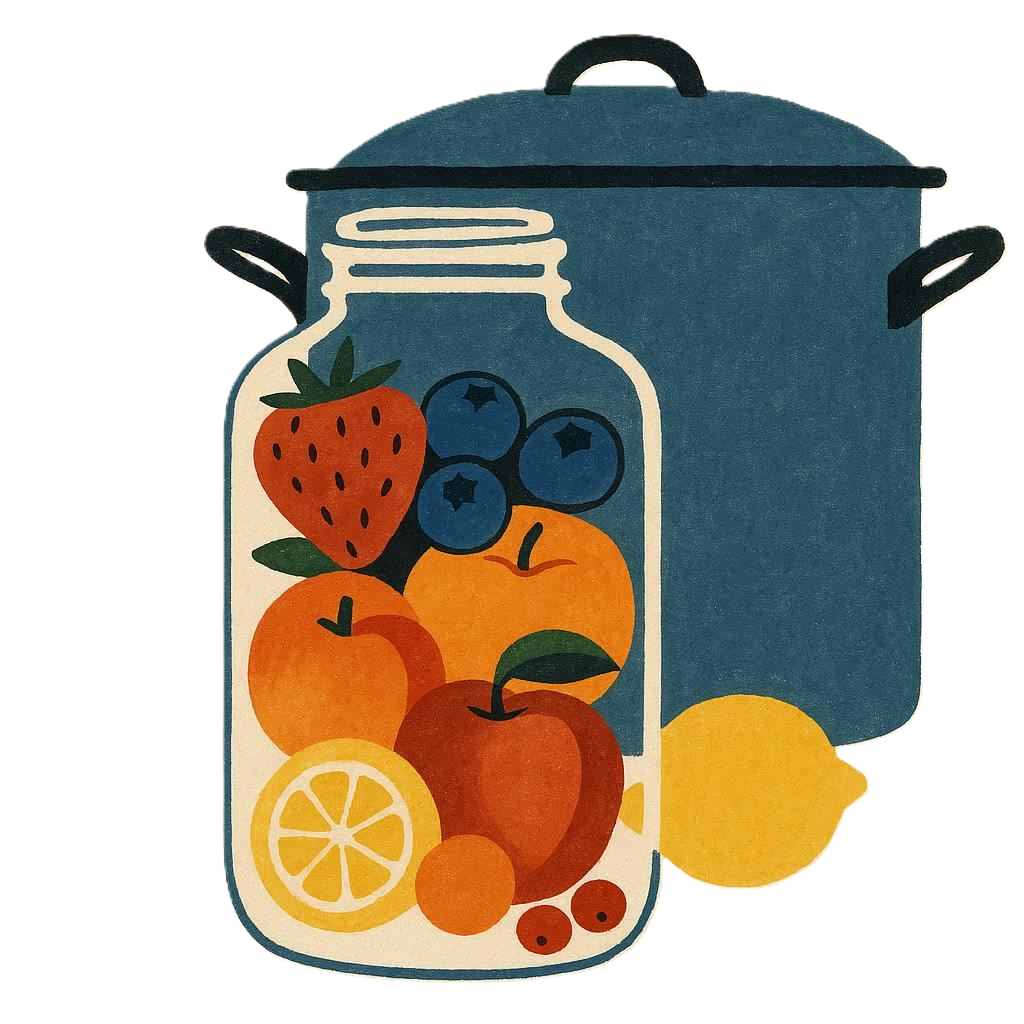
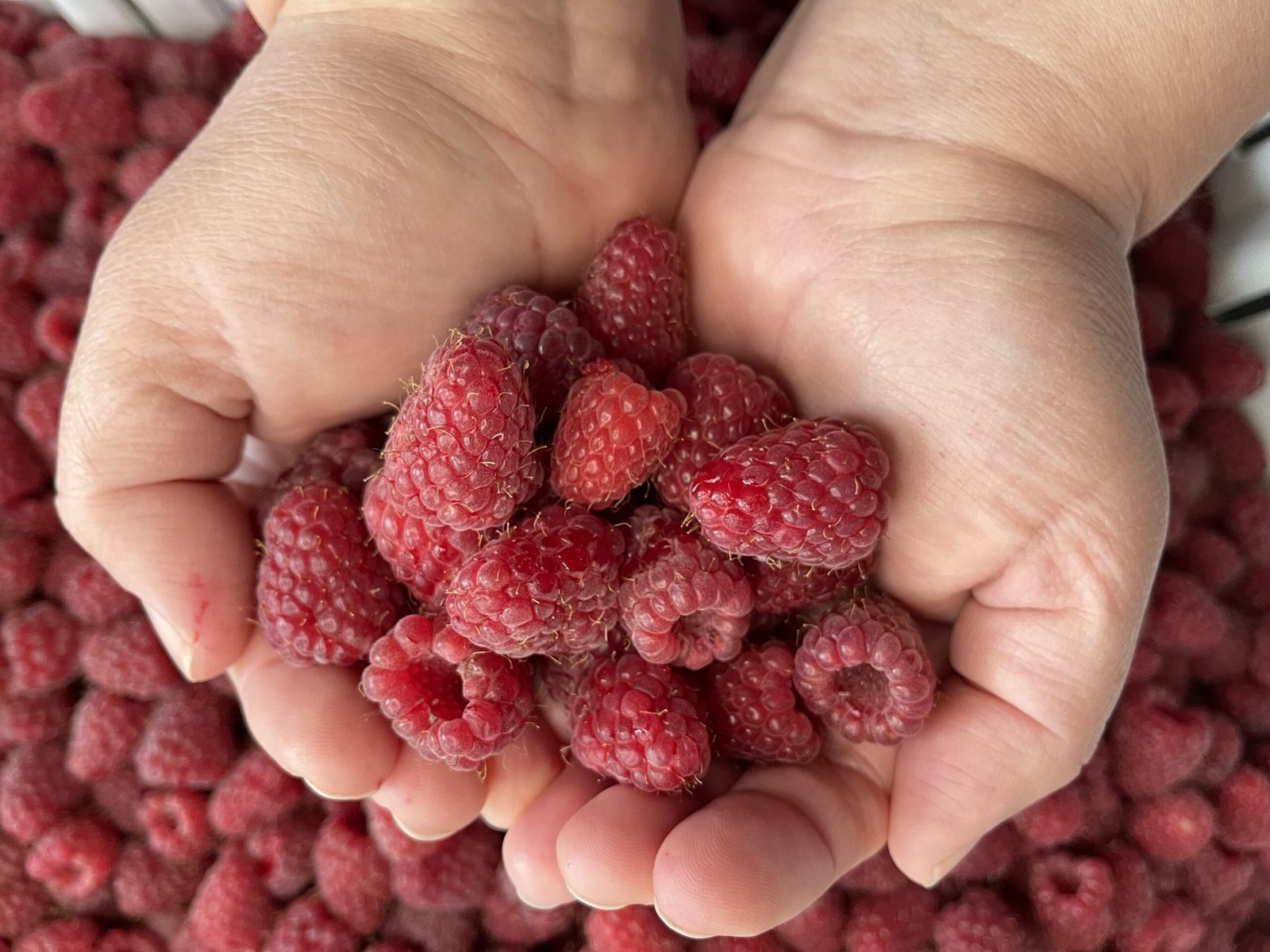
- Most fruits and berries
Low‑Acid Foods
pH > 4.6
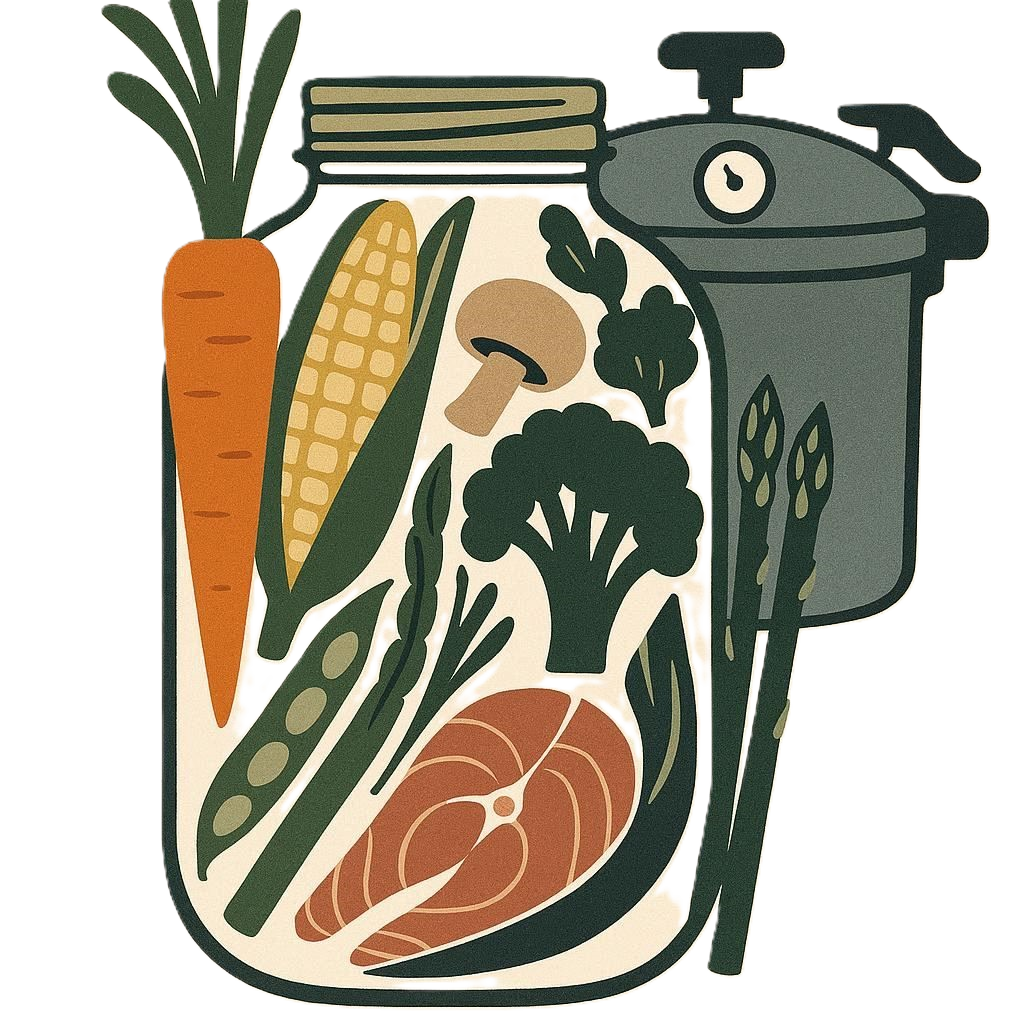
- Most vegetables, meats, seafood, dairy products
For canning purposes, foods generally fall into three groups based on their natural acidity.
High-acid foods have a pH below 4.6. Most fruits and berries fall into this category. Their natural acidity helps prevent botulism growth, which is why they can be safely processed in a boiling water bath.
Low-acid foods have a pH above 4.6. This includes most vegetables, meats, seafood, dairy products, and starchy foods like potatoes and squash. When canned on their own, these foods require pressure canning.
Potatoes are a good example of why this matters. They are low-acid, dense, and often canned in water or as purées. If processed without a pressure canner, they can create an environment where botulism spores survive and grow. This is why all reliable home canning recipes treat potatoes as a pressure-canning food.
Between the two are the foods that tend to cause the most confusion.
Tomatoes are the classic example. Depending on the variety, ripeness, and growing conditions, tomatoes can fall close to the 4.6 cutoff. That’s why modern tomato canning recipes call for bottled lemon juice or citric acid regardless of the variety being used. Figs, ripe pears, and some apricots can also fall close to this borderline range.
At this point, it can look like pH alone decides everything. But that’s where home canning gets more nuanced.
The pH of a raw ingredient is only part of the picture. Once ingredients are combined into a jam, pickle, salsa, relish, or chutney, the acidity of the finished product can be very different from the acidity of the individual ingredients that went into it.
Why Raw pH Doesn’t Tell the Whole Story
One thing that surprises many new canners is that the natural pH of a food doesn’t automatically tell you which canning method to use.
Take figs as an example. Fresh figs are considered a low-acid food. If you looked only at a pH chart, you might assume they can’t be processed in a boiling water bath.
Yet, fig jam has been safely water-bath canned for generations. Matter of fact, we have one on this site too!
The difference is the finished recipe, which normally contains sugar and lemon juice. Plus, a cooking process that changes the acidity of the final product. For these reasons, the pH of the jam is not the same as the pH of a fresh fig.
The same idea applies to many other foods. Cucumbers become pickles. Peppers become relishes. Tomatoes become salsa. In each case, the finished recipe, and not the raw ingredient, determines whether water-bath canning is safe.
A pH chart can tell you where an ingredient starts. It cannot tell you where the finished recipe ends up after ingredients are combined, cooked, and acidified. That’s why you can’t determine a canning method from a pH chart alone.
The exception: meat, poultry, seafood, and dairy
There is one important exception to the rule that low-acid foods can sometimes be made water-bath safe through acidification: animal products.
Many fruits and vegetables can be transformed into safe pickles, relishes, chutneys, and preserves through the addition of vinegar, lemon juice, or other acids. Meat, poultry, seafood, and eggs do not behave the same way.
A cucumber can absorb vinegar throughout the product relatively quickly. A piece of pork cannot. While acid may affect the surface, the interior of the meat can remain close to its natural pH. From a canning perspective, that’s a critical difference.
This is why home canning recommendations treat animal proteins differently from fruits and vegetables. Pickling, brining, smoking, or marinating do not eliminate the need for pressure canning.
You’ll sometimes see commercially produced pickled fish, pickled herring, or other acidified meat products on store shelves. Those products are made using commercial equipment and processing methods that are not available in a home kitchen.
Pickled eggs are another common source of confusion. They can be safely made and stored in the refrigerator, but they are not considered a shelf-stable home-canned product.
The same principle applies to dairy. Milk, cream, butter, and cheese are not suitable for home canning. Shelf-stable dairy products sold in stores rely on commercial processing methods that cannot be reproduced in a home kitchen.
For home canners, the rule is simple: if you’re preserving meat, poultry, or seafood, use a pressure canner and follow a reputable canning recipe designed for that specific product.
The pH of common foods
The lookup below covers raw pH values for foods used in home canning. Search for what you need, or filter by category. The classification badge describes the food’s natural acidity, not what you should do with it. What you can make from each food depends on the recipe you’re following.
pH of Canning Ingredients
Raw ingredients used in home canning — fruits, vegetables, animal proteins, dairy, acids, and sweeteners — with their natural pH ranges. Search what you’re planning to use. The line at 4.6 is the safety threshold for botulism; above it, you’re either pressure canning or acidifying with a tested recipe.
A practical way to think through a canning project
When deciding how a food should be canned, start by looking at the finished product rather than a single ingredient.
- If you’re canning meat, poultry, seafood, or plain vegetables, you’ll almost always be looking at pressure canning. These foods remain low acid throughout the process.
- If you’re making a jam, jelly, pickle, relish, chutney, fruit preserve, or salsa, the answer is less obvious. The acidity of the finished recipe may be very different from the acidity of the individual ingredients.
Next, look for a reputable canning recipe designed for the product you want to make. Reliable sources include USDA publications, university extension services, Ball canning books, and experienced canning authors who build recipes around established canning principles.
Finally, follow the recipe as written. In canning, ingredients do more than contribute flavour. Vinegar, bottled lemon juice, sugar, and produce ratios all affect the safety of the finished product. Reducing the vinegar, increasing the vegetables, or making other significant changes can alter the final acidity.
A pH chart can help you understand why a recipe works. It cannot tell you how to formulate a safe recipe from scratch.
How acidification works in canning
Many foods that are naturally low acid can be safely water-bath canned once enough acid is added to the recipe. Pickles, relishes, chutneys, and many salsas rely on this principle.
In home canning, that acid usually comes from vinegar, bottled lemon juice, or citric acid.
Distilled white vinegar with 5% acidity is the standard choice for pickling. That number matters. A recipe developed for 5% vinegar should not be made with a weaker vinegar unless the recipe specifically allows it.
Bottled lemon juice is commonly used when canning tomatoes. Unlike fresh lemons, bottled juice has a standardized acidity, which is why canning recipes specify it so often.
Citric acid provides the same acidity without adding much flavour. Many tomato and salsa recipes use it as an alternative to lemon juice.
Whatever acid a recipe calls for, treat it as an ingredient rather than an optional adjustment. Acidity is part of what makes the recipe safe.
pH meters and test strips
Many home canners are surprised to learn that affordable digital pH meters are now widely available. If you enjoy experimenting, developing recipes, or simply understanding your ingredients better, a pH meter can be a good tool to have in your canning kitchen.
That said, most experienced canners I know don’t own one. They rely on established formulations and safe ingredient ratios rather than measuring every batch. One other thing, safe canning depends on much more than a single pH reading!
Regarding the pH strips. What many canners do not realize is that pH test strips are often too imprecise for canning work. pH test strips can provide a rough estimate of acidity, but they are not precise enough to verify the safety of a home-canned product. Food samples are often coloured, cloudy, or pulpy, making strip readings difficult to interpret accurately. If you need to measure pH for recipe development or verification, a properly calibrated digital pH meter is the better tool.
Tried this preserve? We’d love to hear how it turned out!