
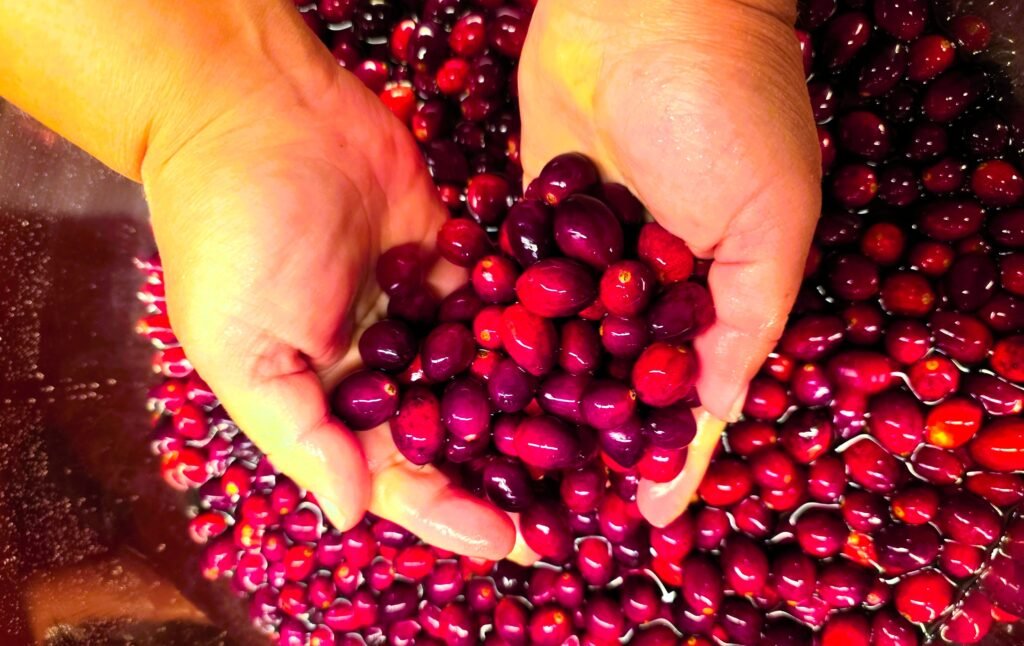
Homemade Cranberry Juice Recipe for Canning (With or Without Sugar)
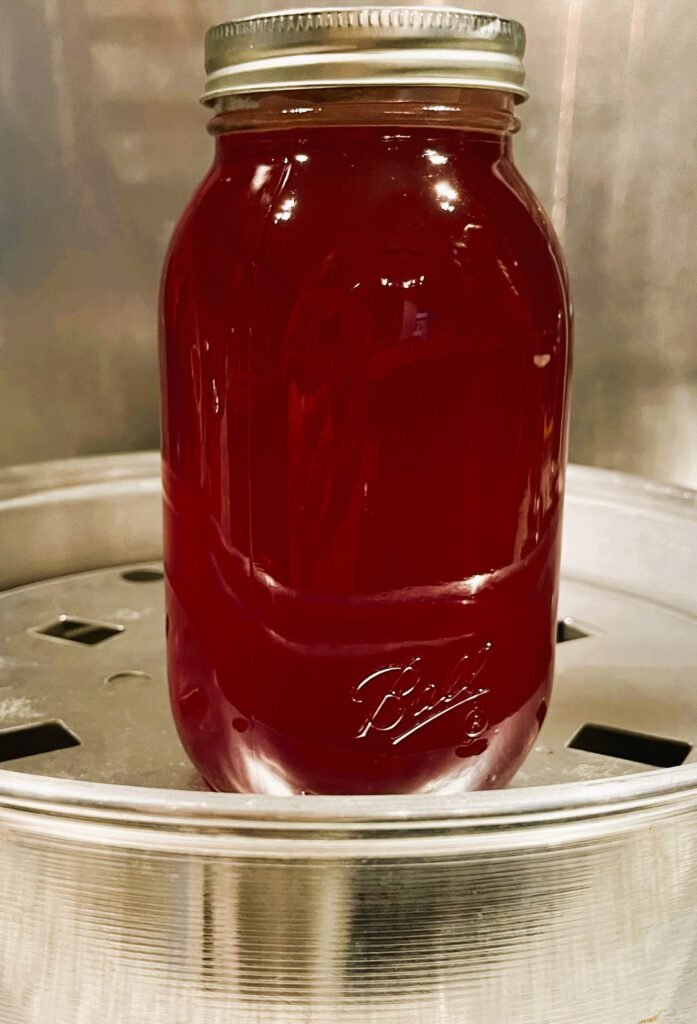
Homemade cranberry juice, deep red, clear, and pleasantly tart. Leave it unsweetened or add sugar, honey, or stevia to taste. Enjoy it fresh or follow our recipe for canning cranberry juice to make it shelf-stable.
🔪 Prep:
60 min
⏳Rest:
24-48 hrs
🫕 Cook:
10 min
🫙Yield:
3 pint jars
💰Cost per jar*:
$1.33 USD / $1.93 CAD
*varies with your berry prices
🍒 Bonus: Leftover pulp for 4 half-pint jars of jam or sauce
This recipe for canning cranberry juice starts where some social media videos get it wrong. Sure, a few berries, some sugar, and water in a jar looks easy and may be fine for a couple of days in the fridge. But that berry-to-water ratio may not be acidic enough to keep your homemade juice in the pantry. When canning cranberry juice, we use equal parts cranberries and water instead, the proportion from Bernardin, as published by Penn State Extension. Made this way, cranberry juice can be processed in a water bath or steam canner. You don’t need a pressure canner for this: cranberry juice is acidic enough that water-bath or steam canning does the job safely.
Why You’ll Love This Cranberry Juice Recipe
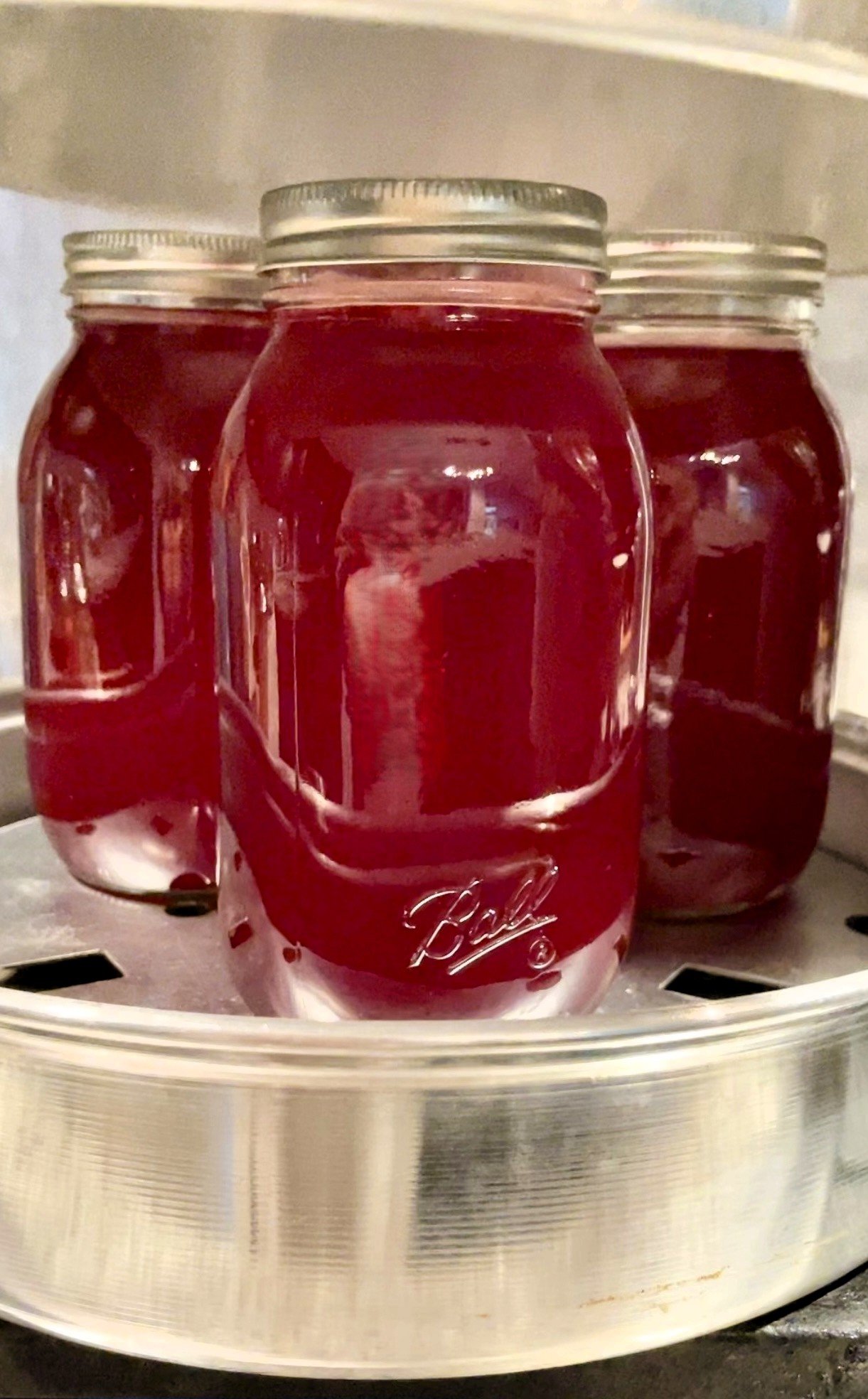
- Works with fresh or frozen cranberries.
- Great for homemade drinks, syrups, shrubs, cocktails, and desserts.
- Clear, deep red juice with no sediment.
- Sweeten it your way: sugar, honey, stevia, or nothing at all.
- Cheap! Two pounds of cranberries make a quart and a half of homemade cranberry juice.
- Shelf-stable, so it keeps in the pantry instead of taking fridge or freezer space.
- Built on a tested method, with 1:1 berry-to-water ratio.
- Perfect for water bath or atmospheric steam canning.
- You can make two preserves from one batch of cranberries so nothing goes to waste.
A Note on Cranberry Nutrition:
As per University of Maine Cooperative Extension, one cup of raw cranberries has about 47 calories, 4 grams of fiber, and 13 mg of vitamin C. That’s around 14% of what you need for the day. Cranberries are also one of the best natural sources of A-proanthocyanidins, the antioxidant compounds.
Canning Cranberry Juice: Why Not Just Put Berries in the Jar?
Search for “cranberry juice canning recipes” on social media and you will find a popular shortcut. It goes like this: put sugar and a handful of whole cranberries into a quart jar, fill it with water, and let the canner do the work. The berries supposedly release their flavour over the next few weeks and you get pure cranberry juice with minimum effort.
We understand the appeal. Less work, fewer dishes, and juice ready to go straight into the pantry. But there’s a catch, or rather two.
The first is acidity. While cranberries are naturally quite acidic, usually around pH 2.5–2.7, water has a neutral acidity – pH of 7. When there’s more water than cranberries, the acidity of your brew may or may not be high enough for safe water-bath canning. You can’t tell by looking at the jar, and you can’t assume that a few whole berries will release enough juice to acidify all that water.
The second catch is heat. Whole cranberries change the way heat moves through the jar. Sugar adds another complication. You don’t want undissolved sugar settling in the jar and leaving you with an uneven mixture to process.
For our cranberry canning recipe we follow Bernardin’s method instead. Yes, it takes a couple of days, but we get clear juice that is safe for canning and pantry storage.
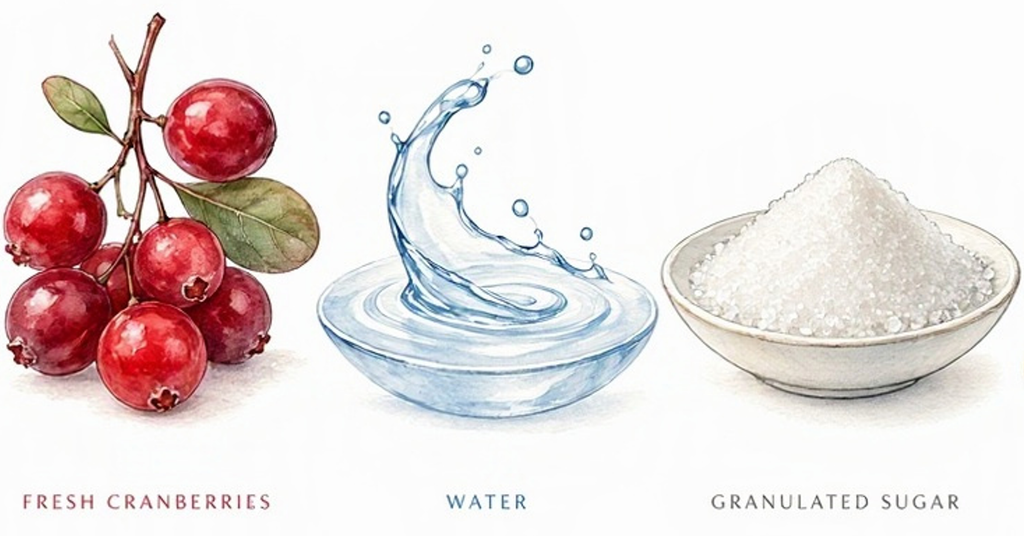
Homemade Cranberry Juice: Key Ingredients & Substitutes
Cranberries
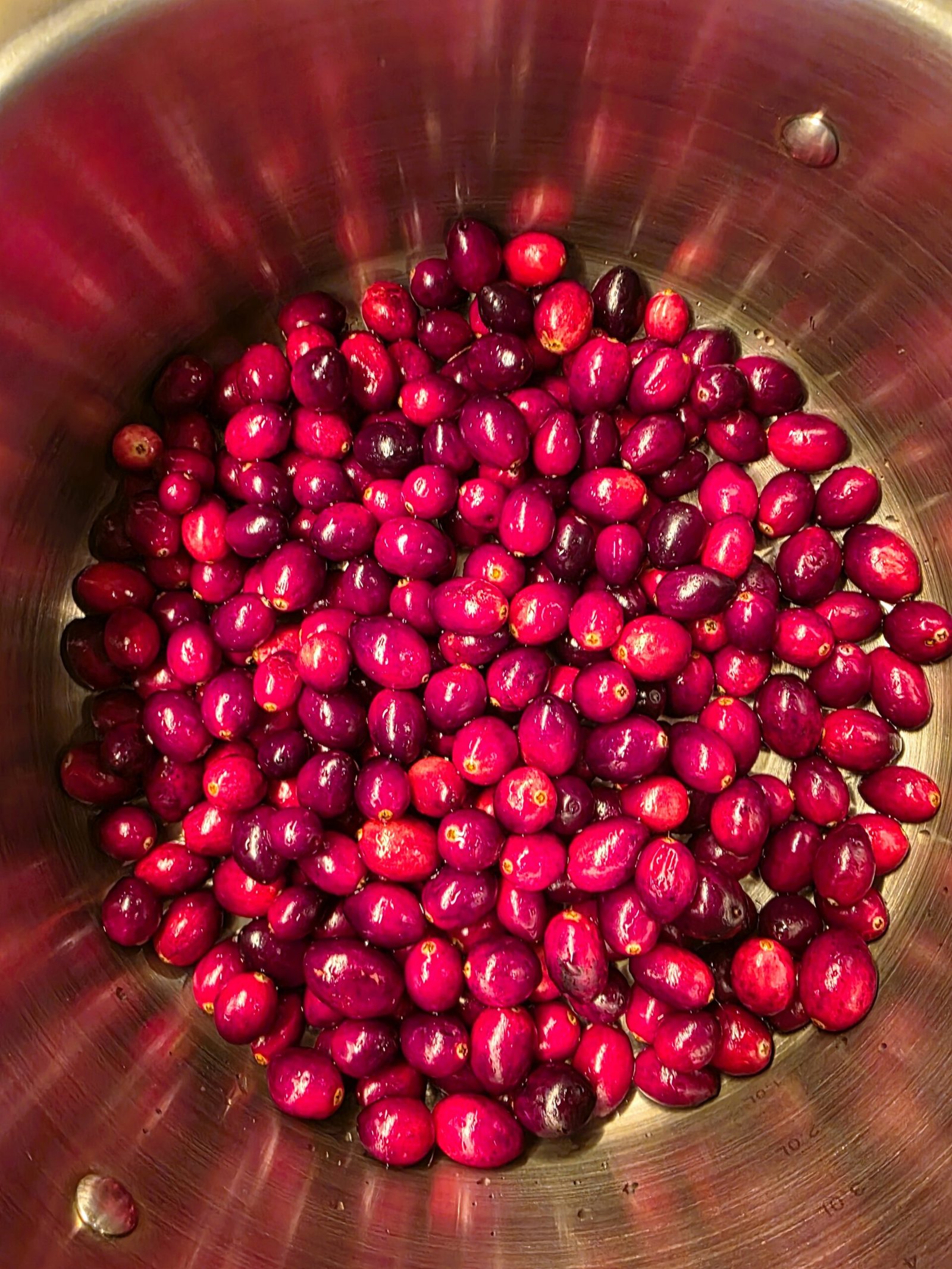
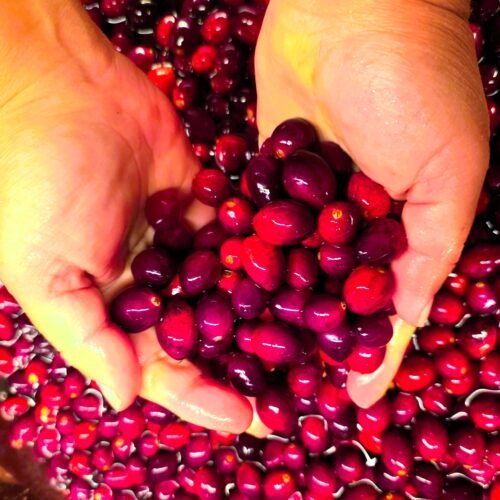
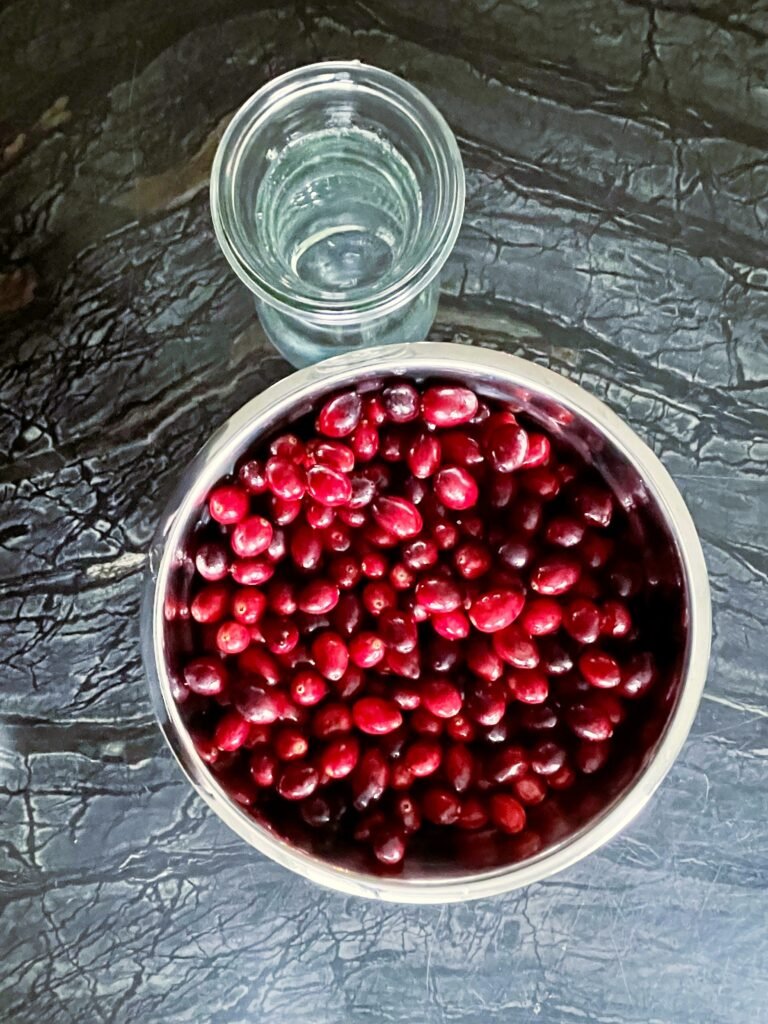
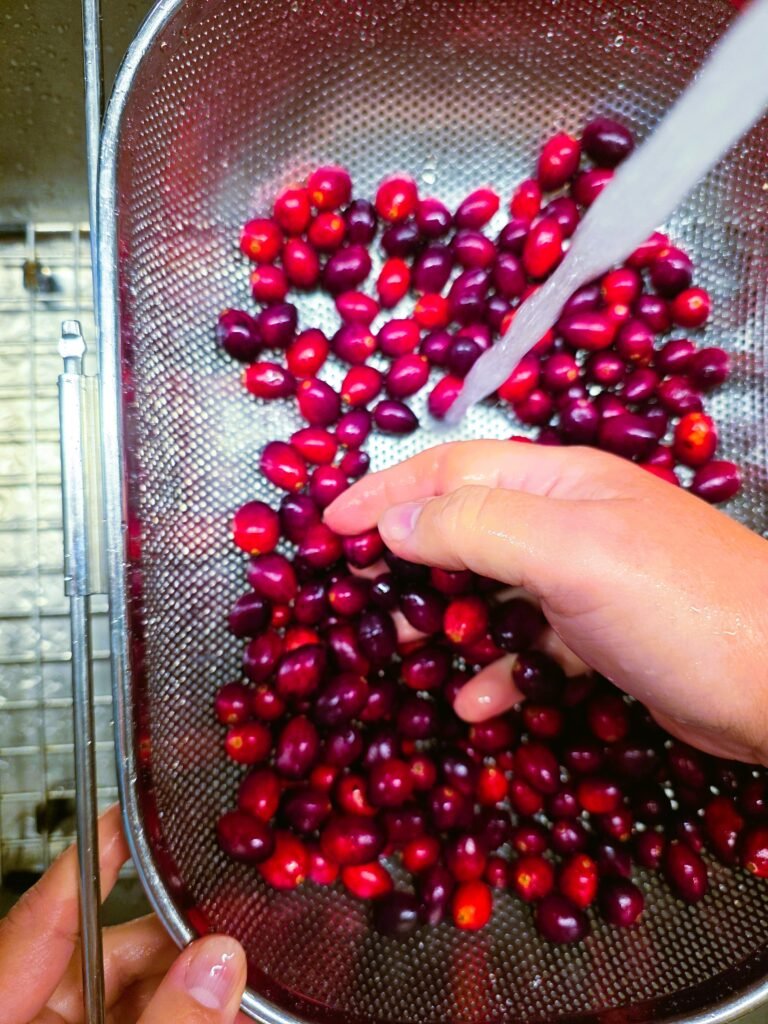
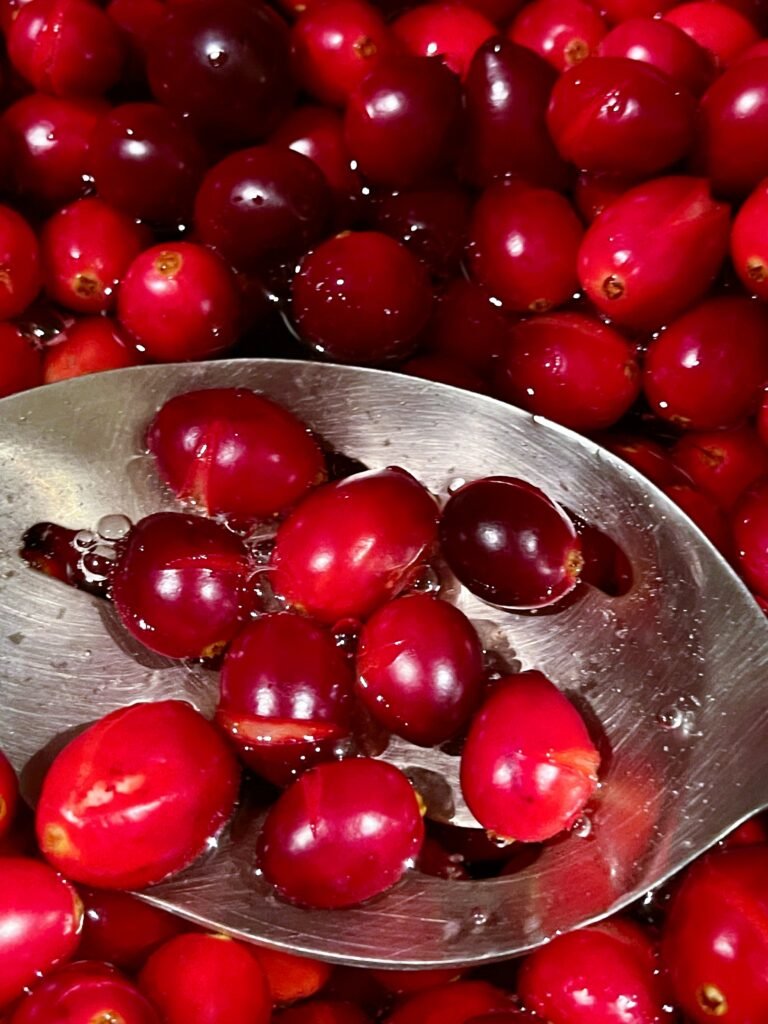
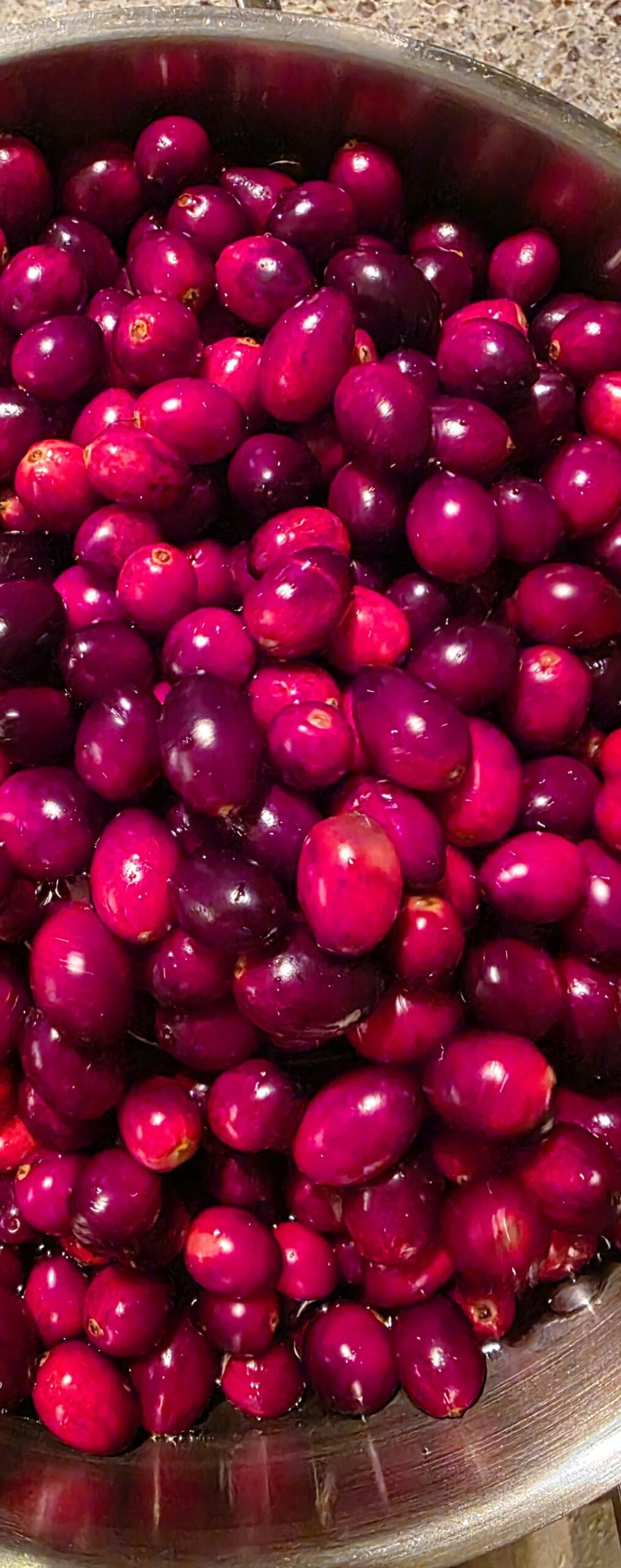
We use 2 lb (907 g) of fresh cranberries, which measured 9 cups. Remove the stems, and take out any berries that are soft or have burst.
- Substitution: Frozen cranberries work too and there’s no thawing needed. Use the same 2 lb (907 g) of cranberries, and keep the equal ratio of berries to water.
Sugar (optional)
Our first batch was cranberry juice with granulated sugar, since that’s what most people already have in the pantry. It softened the tartness in the finished juice but didn’t hide it. If you prefer naturally tart juice, skip it completely. Alternatively use more sugar if you want sweeter cranberry juice.
- Substitution: Honey or stevia are both good substitutes.
Choose Your Homemade Cranberry Juice Sweetness
The cranberry canning recipe is the same irrespective of the sweetener you pick.
| Sweetener Type | Unsweetened | Sugar | Honey | Stevia |
| Amount for this batch (3 pint jars) | None | ⅓ cup (67 g) | About 2½ tbsp (50 g) | The package amount that equals ⅓ cup of sugar |
| Good for | Pure cranberry flavour | A mild sweetness that keeps it tart | A mellow, rounded sweetness | Keto-friendly, diabetic-friendly sweetness with no added sugar |
| Note | No added sugar | About 11 g of added sugar per glass | About 7 g of added sugar per glass. Not for children under 12 months | No added calories or carbohydrates with pure stevia |

Pantry Master Note
Honey is about 1.3 times sweeter than sugar. For that reason, you need less of it in this cranberry juice recipe. Stevia extract, in contrast, is 200 to 300 times sweeter, so we recommend using very little of it. Stevia can also leave a slight aftertaste that sugar doesn’t.
Unsweetened Cranberry Juice Recipe variation (With No Added Sugar)
If you’re watching your sugar or calories, make the unsweetened version or use stevia. In the unsweetened version, nothing goes into the jar except cranberries and water.
Stevia works either way. You can stir it into the hot juice at step 5, or add it to the glass once the jar is open, so each person sweetens to taste. Read the ingredient list first, since some stevia products are blended with other sweeteners or fillers.
Note that unsweetened doesn’t mean sugar-free. Cranberries have natural sugars, and some of them end up in the juice. If you manage diabetes, count the natural carbohydrates and follow your own dietary guidance.
What Does Homemade Cranberry Juice Cost?
Now, if you don’t particularly care about the preservatives used in some commercial cranberry drinks, or the sweeteners and other fruit juices added to stretch them, then maybe price is your main consideration.
But first, let’s compare like with like. To be clear, we’re not talking the run-of-the-mill cranberry cocktail that may contain only a small amount of cranberry juice.
We are talking homemade cranberry juice that contains only cranberries and water with sweeteners skipped or added to taste.
For best comparison, look at pure cranberry juices. For example, R.W. Knudsen’s Just Cranberry Juice and Lakewood’s organic pure cranberry juice cost roughly US$9–12 for a 32 fl oz bottle. That’s approximately US$9.50–12.50 per litre. These are the sorts of products you’re comparing this homemade cranberry juice with.
Where to Find Cheap Cranberries:
Fresh cranberries show up in stores from October through December, and that’s when prices drop the most. Stock up then and freeze what you don’t use. The days right after Thanksgiving are usually the cheapest window of the year, once stores start clearing out what’s left. If you’re canning in bulk, it’s worth calling a local cranberry grower directly. You will likely find out that many sell cranberries by the case at a real discount over store prices.
| INGREDIENT | USD | CAD |
| Cranberries (2 lb / 907 g) | $2.00 | $2.90 |
| Water (9 cups / 2.1 L) | $0.00 | $0.00 |
| Total batch (3 pint jars / 3 x 500 ml) | $2.00 | $2.90 |
Cost per Jar: ~$0.66 USD* / ~$0.96 CAD
That works out to less than a dollar per jar in Canada, and even less in the USA, based on our ingredients estimate.
We bought our cranberries directly from a farmer for $1.45 CAD per pound, taking a larger quantity. For our U.S. readers, the best grocery price we found was at ALDI, at $0.75 US for a 12 oz bag. That’s approximately $1.00 US per pound.
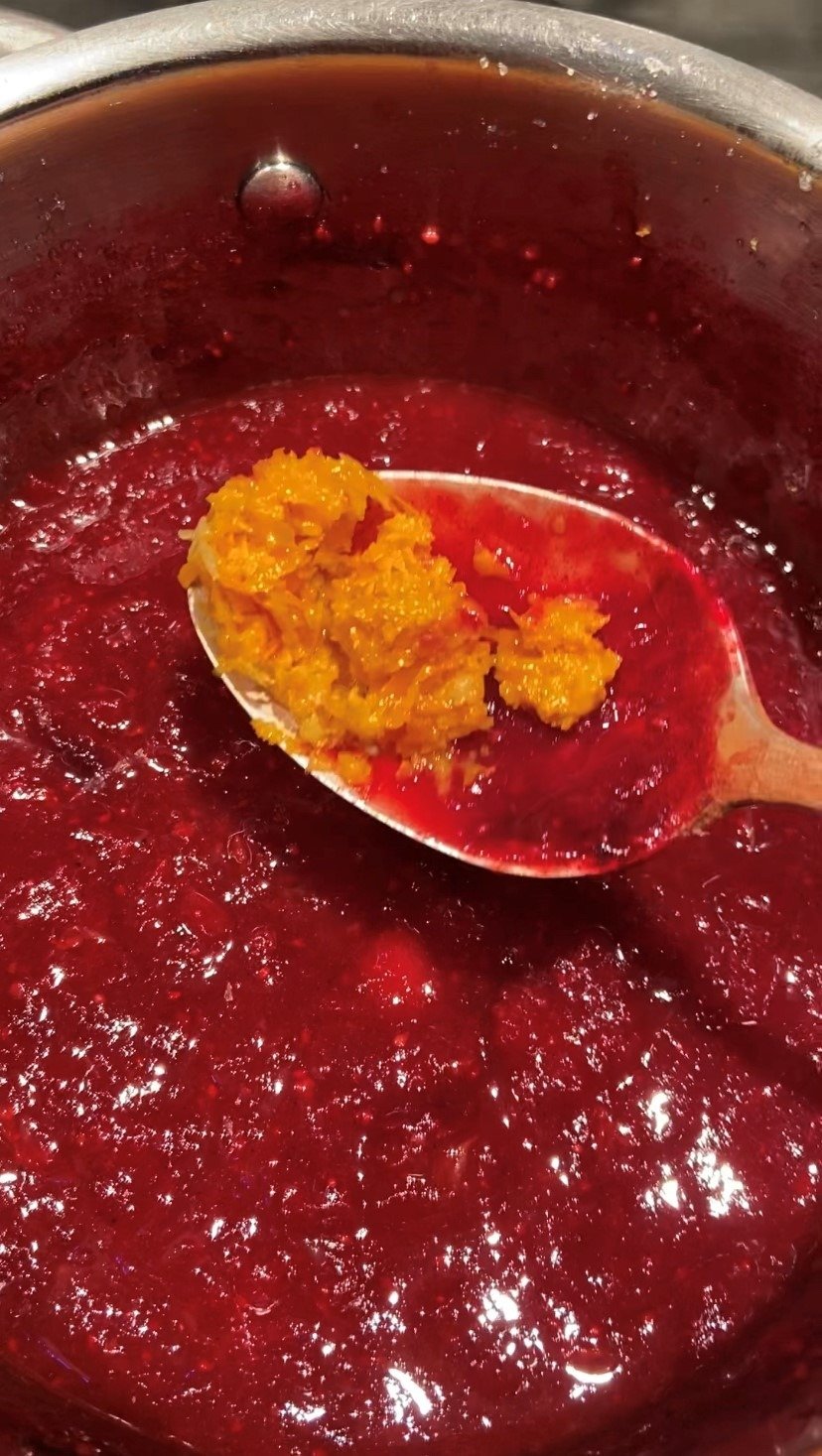
💡Bonus: This recipe doesn’t stop at the homemade cranberry juice. The leftover berry pulp makes about 4 half-pint jars of cranberry jam or cranberry sauce giving you two pantry staples from the same 2-pounds of cranberries and making the most of every berry.
Common Mistakes When Canning Cranberry Juice
If you want to know how to can cranberry juice without any surprises, these are the mistakes to avoid.
❌ Using fewer berries or more water: The natural acids that make cranberry juice acidic come from the berries. Add too much water or use too few cranberries, and you dilute those acids. The finished juice may not have the acidity needed for safe canning. For that reason, maintain the same cranberry-to-water proportions whether you’re processing one pound of cranberries or twenty.
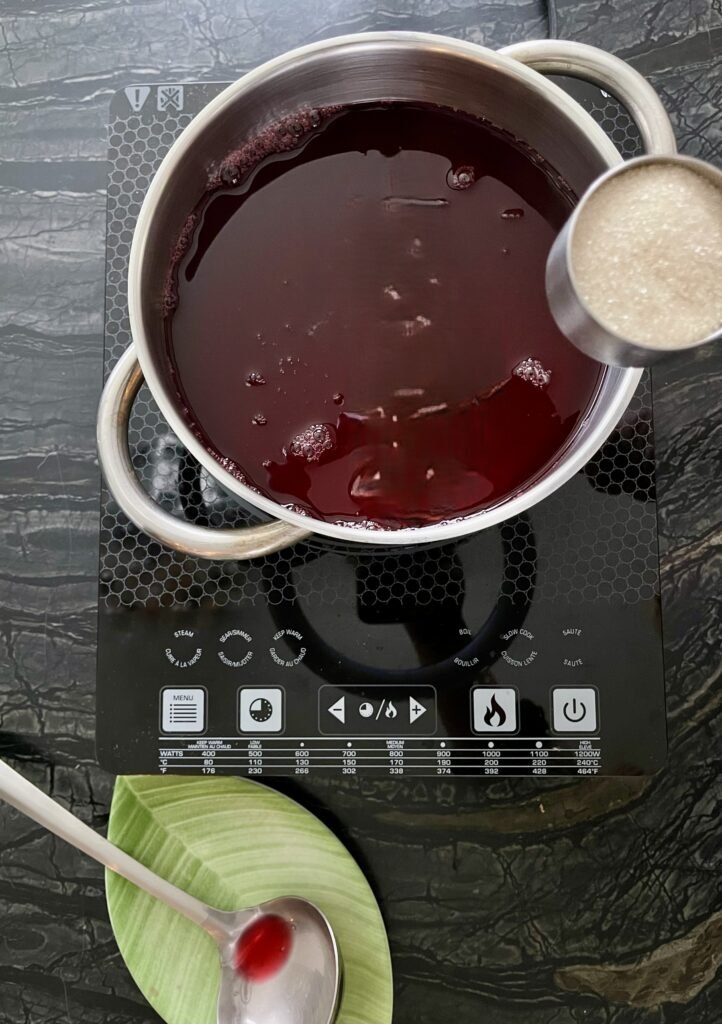
❌ Boiling the juice before jarring: Cranberries are high in pectin, and boiling can make the juice thicken like jelly. It can also dull the fresh flavour. Heat the juice to 190°F (88°C) and hold it there for 5 minutes. Don’t let it boil.
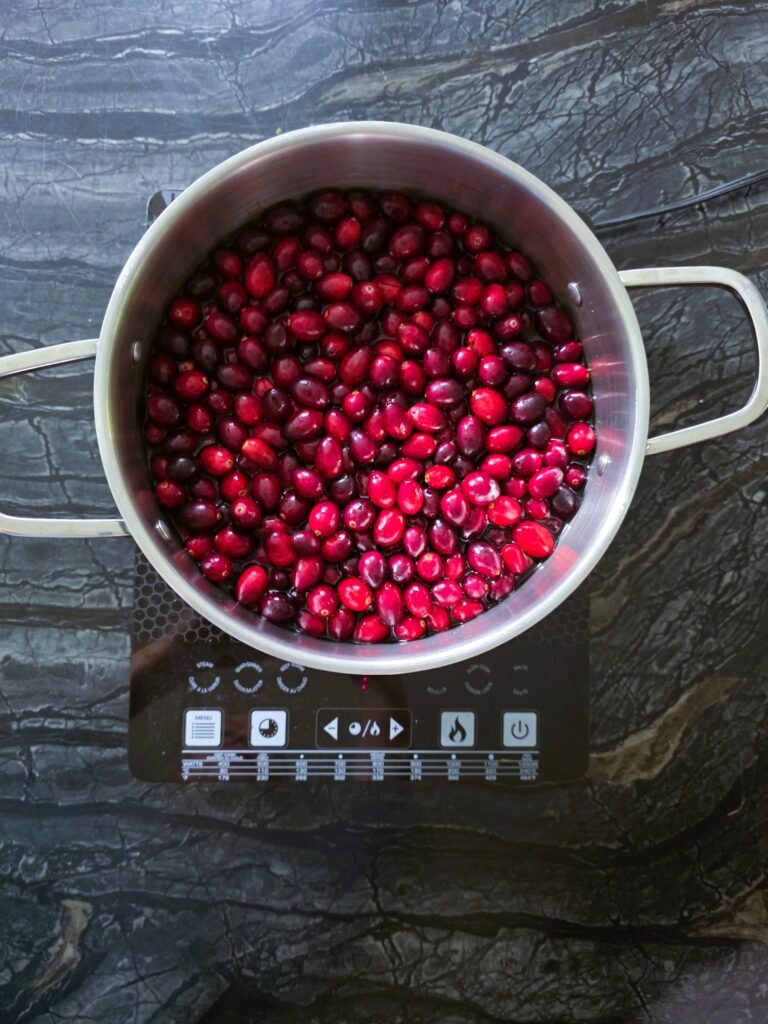
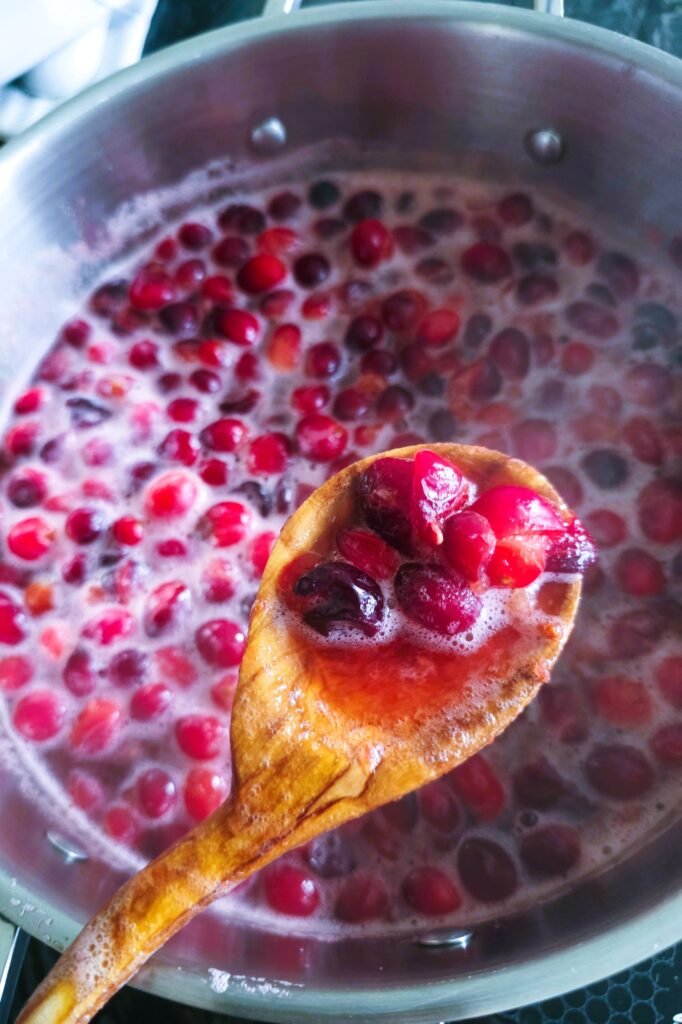
❌ Taking the pot off the heat too soon: Cranberries contain natural organic acids, including quinic, citric, and malic acids. Cooking the berries until they burst helps release their juice and acids into the water. If you stop too soon, you may not extract enough juice from the berries. Cook until most berries have burst, then continue for about 5 minutes. Don’t stop when only a few have popped.
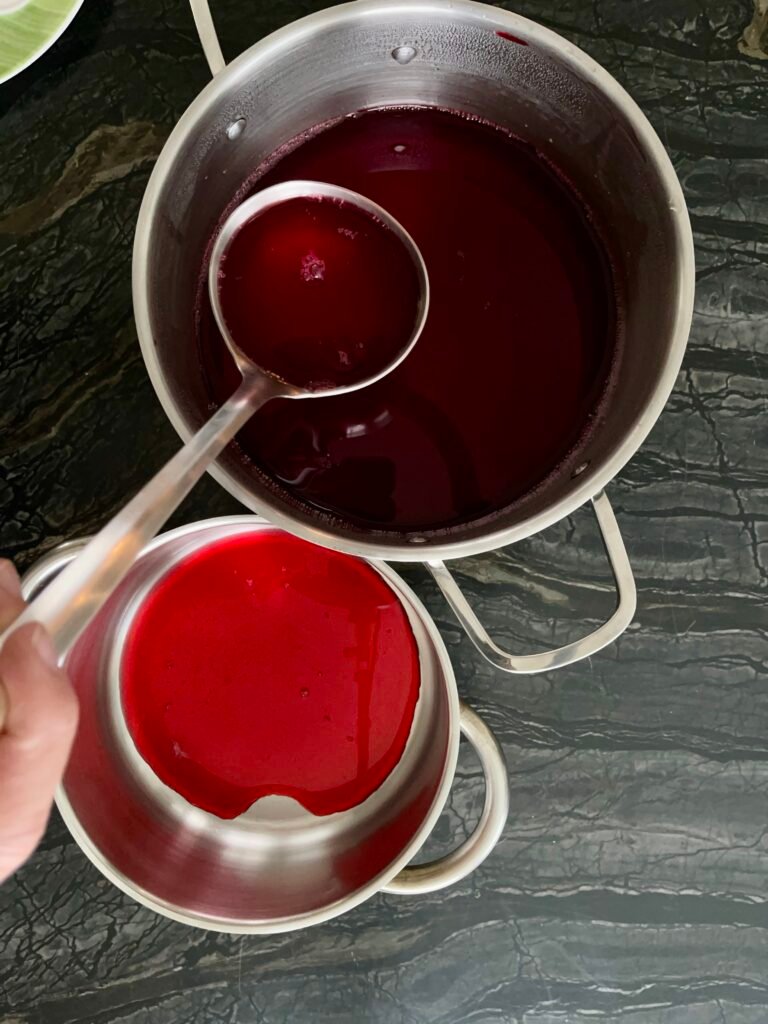
❌ Adding sweetener while cooking the cranberries: Wait until the juice has been strained and the sediment removed before adding sweetener. This lets you taste the finished juice and adjust the sweetness to your liking, rather than guessing how much you’ll need before straining. It also keeps the cranberry pulp unsweetened if you plan to save it for another use.
❌ Forgetting to adjust for altitude: Water boils at a lower temperature at higher altitude, so the jars get less heat. The 15 minutes is for up to 1,000 ft (305 m). Above that, use the longer times in the processing chart. If you are unsure about your altitude for canning, check our handy tool.
Homemade Cranberry Juice Recipe for Canning (Unsweetened or Sweetened)
Canning Methods
Processing Table for Crabapple Jelly
Jar size: 500 mL (pint) or 1 L (quart)
Pack style: Hot
Applies to: Water bath canner/ Atmospheric steam canner
| Altitude | Processing time |
| 0–1,000 ft | 15 min |
| 1,001–6,000 ft | 20 min |
| Above 6,000 ft | 25 min |
Not sure which elevation band is yours? Our Canning Altitude Calculator will give you the answer in a couple of seconds.
Note: Bernardin’s published method specifies the cranberry-to-water ratio, juice preparation, heating, and processing instructions. Sugar is optional in that method. Honey and stevia are sweetener variations rather than part of the specifically validated Bernardin method; they’re based on the food chemistry and existing research on using honey and stevia in preserves
After sealing (all methods)
- Do not touch, adjust bands, or press lids for 12–24 hours.
- After cooling, check seals: press the center of each lid. If it doesn’t flex, the seal is good. Any jar that didn’t seal goes in the fridge → use within 3 weeks.
- Remove bands for storage (they trap moisture and can mask a broken seal over time). Label with contents and date.
- Store in a cool, dark place. Peak quality for 12–18 months.
Check your processing time/ canning pressure if you’re above 1,000 feet↗️
Step-by-Step Overview
What to Do with Homemade Cranberry Juice
A jar of homemade cranberry juice is more than a drink. It is a pantry ingredient. You can pour it into a glass today, cook with it all winter, and use it to make something new later on.
- Drink it: Serve it chilled, straight from the jar. If it is too sharp for you, mix it with water or sparkling water. You can also blend it with apple or orange juice, or use it as the base for a holiday punch.
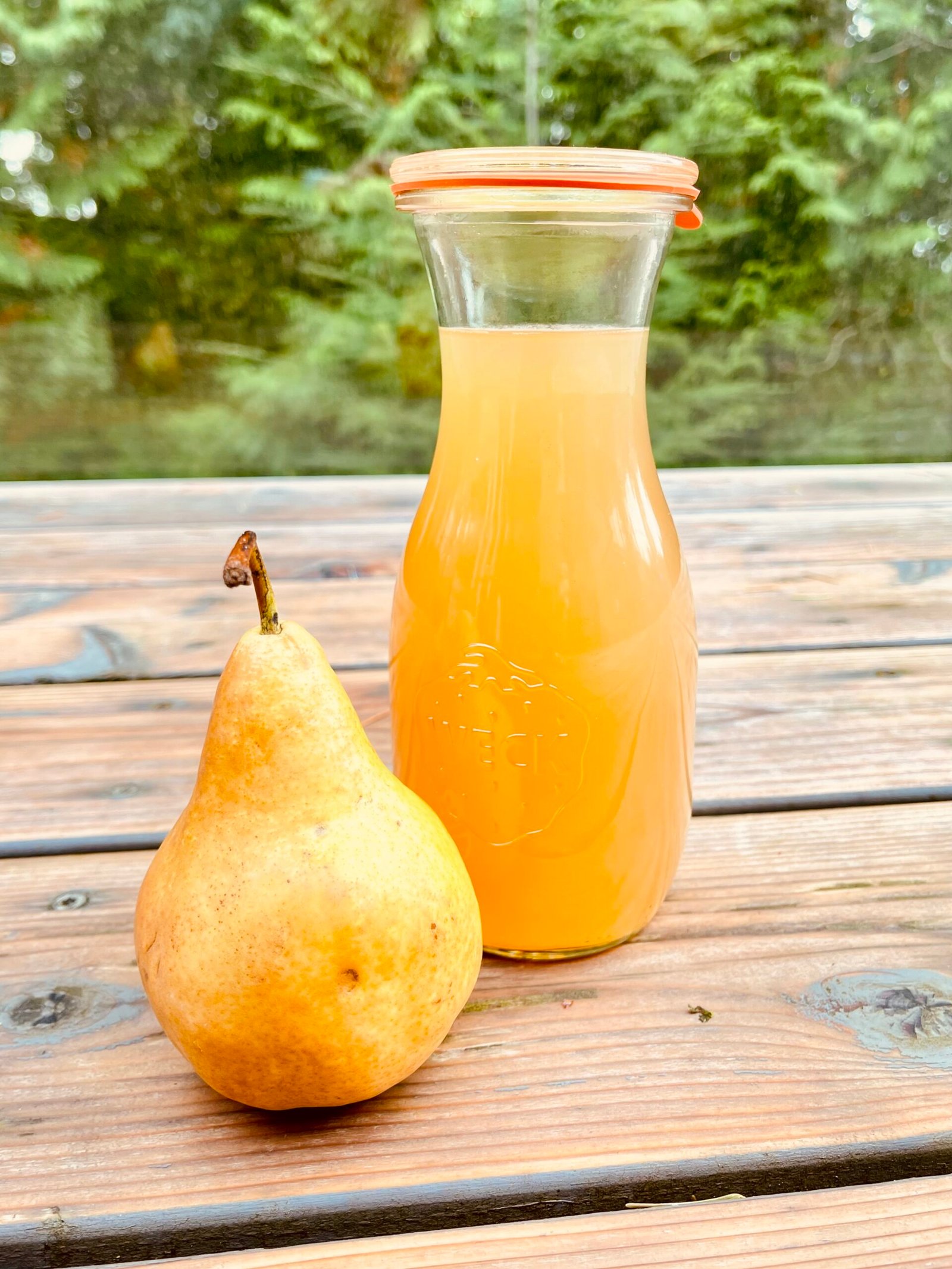
- Cook with it: The tart juice works anywhere you want a bright, fruity edge. Simmer it down into a glaze for ham, pork, or turkey. Use it to poach pears. Whisk it into a salad dressing or a marinade. Swap it for some of the liquid in muffins or pancakes. You can even cook your next batch of cranberry sauce in it.
- Make jelly later: Cranberries are high in pectin, so the juice is a good starting point for jelly. We are working on a cranberry jelly recipe made from this juice. [Add link when published.] Until it is ready, keep a jar of the unsweetened version on the shelf, so you can decide how much sugar the jelly needs.
FAQ: Canning Cranberry Juice
Cranberries are high in pectin, and boiling can make the juice thicken like jelly. It can also dull the fresh flavour. Heating to 190°F (88°C) and simmering it for 5 minutes keeps the juice hot enough for a hot pack required for this recipe.
━━━━━━━━━━━━━━━━━━━━━
Yes! Homemade cranberry juice can be preserved using a boiling water bath or an atmospheric steam canner. Make sure to follow the recommended jar sizes and processing times, including the altitude adjustment for your location.
━━━━━━━━━━━━━━━━━━━━━
No. Canning is just one way to preserve homemade cranberry juice. You can keep it in the refrigerator if you plan to drink it soon, or freeze it for longer storage. Canning is a good option when you want shelf-stable juice that you can keep in your pantry without taking up freezer space.
━━━━━━━━━━━━━━━━━━━━━
For this cranberry juice recipe, yes. The cranberries need to be heated with an equal amount of water until their skins split and release their juice. Simply pouring boiling water over whole cranberries in jars does not replace this step. Cooking the berries first is part of the published method and helps extract the juice before straining.
━━━━━━━━━━━━━━━━━━━━━
Yes. Homemade cranberry juice freezes well. Let the juice cool, then pour it into freezer-safe containers, leaving room at the top for expansion. You can freeze it with or without sweetener. Thaw it in the refrigerator and give it a stir before serving if some sediment has settled.
━━━━━━━━━━━━━━━━━━━━━
For the best quality, use properly processed and sealed cranberry juice within one year. Store the jars in a cool, dark, dry place. Check the seals before opening, and refrigerate any leftover juice after opening.
━━━━━━━━━━━━━━━━━━━━━
Plan on approximately 4½ to 6 pounds of fresh cranberries for one US gallon of juice. In our kitchen, a 1.5 kg (3.3 lb) batch produced 3 quarts, while a 2 lb batch produced one quart and one pint. Actual yield varies depending on the berries and how much juice you recover after straining and settling.
━━━━━━━━━━━━━━━━━━━━━
Absolutely. Sugar is optional in Bernardin’s cranberry juice recipe. The cranberries provide the natural acidity, while sugar is added only for sweetness. You can leave the juice unsweetened and adjust it when serving.
━━━━━━━━━━━━━━━━━━━━━
Yes — cranberry juice with honey is one of our favorite variations. Honey is naturally acidic and contains several organic acids, with gluconic acid being the main one. Its average pH is around 3.9 (safe for canning), although it varies with the type and floral source.
The cranberry juice itself provides most of the acidity needed for water-bath canning. Honey is added for flavour, not as a preservative or to make the juice acidic.
━━━━━━━━━━━━━━━━━━━━━
Yes, stevia can be used to sweeten the juice. Unlike sugar or honey, stevia is a high-intensity sweetener, so you only need a very small amount. It does not supply the acidity; the cranberries do that. Research on stevia-sweetened fruit beverages has found no significant change in pH compared with sugar-sweetened versions.
Use pure stevia extract or a product without large amounts of added bulking ingredients. Stevia contributes sweetness, not preservation, so keep the cranberry-to-water proportions and full canning process unchanged.
━━━━━━━━━━━━━━━━━━━━━
No. This is not a recipe developed or tested by the USDA. We follow Bernardin’s published cranberry juice method, including its cranberry-to-water proportions, cooking, straining, settling, reheating, and water-bath processing instructions. Penn State Extension’s October 2026 guidance also identifies this Bernardin method as the proper way to can homemade cranberry juice. We give credit to the original source rather than calling it a USDA-tested recipe.
━━━━━━━━━━━━━━━━━━━━━
If you are not into canning, no problem. You have two other options for storing this cranberry juice.
In the fridge: Make the juice as directed in the recipe, all the way through the heating step. Let it cool, pour it into clean jars, and refrigerate within 2 hours of heating. Use it within 5 days.
In the freezer: Pour the cooled juice into freezer-safe containers, and leave at least 1 inch (2.5 cm) of headspace so the juice has room to expand. Freeze it, and thaw it in the fridge.
Related Recipes
Join the pantry
Fresh recipes when the season calls for them. Preservation guides you can trust – every method, traditional to modern. Ideas for turning your pantry into weeknight dinners. Seasonal alerts that help you preserve more for less. Honest reviews of the tools that matter.
Tried this preserve? We’d love to hear how it turned out!