The Ultimate Berry Powerhouse: Blueberry Blackcurrant Jam Recipe
We’ve been on an exciting berry adventure ever since we discovered a charming blackcurrant farm in Fraser Valley, just a short drive from our city. Since then, we created many blackcurrant preserves for our friends and family. After perfecting all the single-berry blackcurrant recipes, we decided it was time to get creative and explore the best combinations of blackcurrants with other berries and herbs. This is how we came up with this blueberry blackcurrant jam recipe, and we can’t stop raving about it and sharing it with everyone. And honestly, what’s not to like. You have two super berries in one jam! Think of it as two superheroes teaming up to create a delicious and healthy preserve.
We put a lot of effort into making sure this blueberry blackcurrant jam is both shelf-stable and as low in sugar as possible. The result is a jam that’s not only tasty but also packed with vitamins and antioxidants.
If you’ve already made plenty of blackcurrant jams, jellies, and syrups, and you’re itching for new ways to use these amazing berries, consider combining blackcurrants with blueberries and following this recipe to make a unique and flavorful jam.
This blueberry blackcurrant jam started as a fun experiment, so it’s a small batch jam now. However, you can scale up the ingredients to make a larger batch if you want to share this tasty treat with friends and family. So why not give it a try?
Blackcurrants and blueberries are not the same
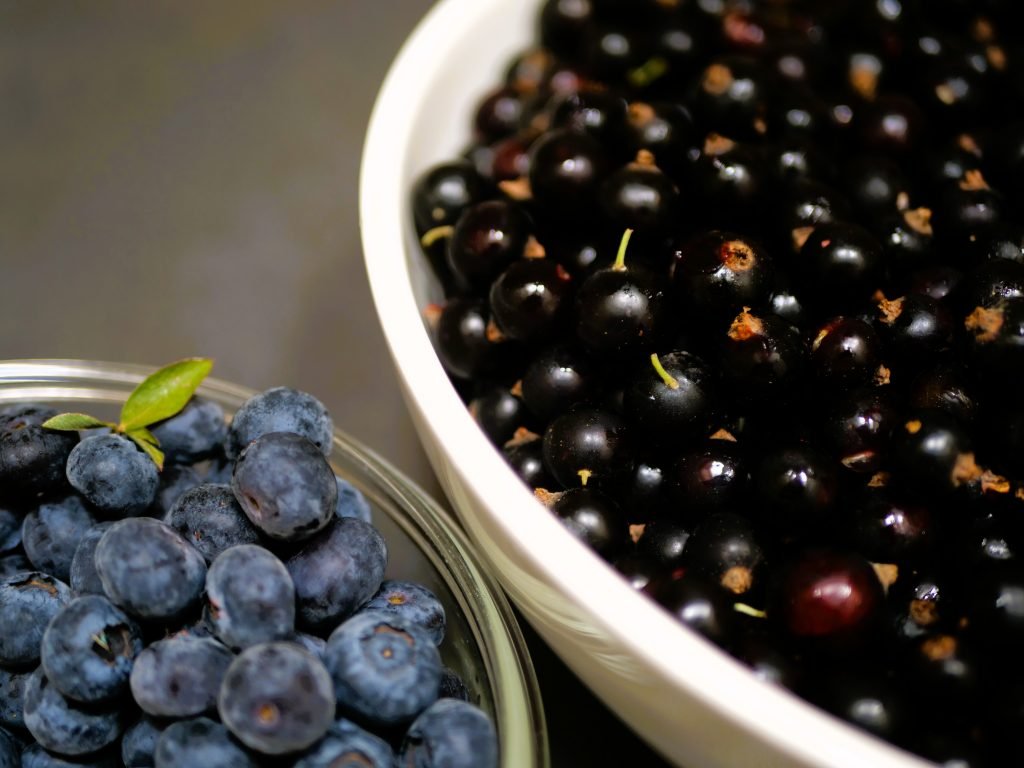
We’ve heard this question so many times that it’s time to set the record straight: blueberries and blackcurrants are not the same! While blueberries and blackcurrants are both purple colored berries, they have distinct differences in terms of appearance, taste and nutritional content:


Appearance:
- Blueberries: Typically blue or purple with a smooth skin and a crown (a small, star-shaped calyx) at the end opposite the stem.
- Blackcurrants: Dark purple to black with a glossy skin and no crown. They are smaller and grow in clusters.
Taste:
- Blueberries: Sweet with a slightly tart flavor. The taste can vary depending on the variety and ripeness.
- Blackcurrants: Tart and tangy with a more intense, slightly earthy flavor. They are often considered too tart to eat raw and are usually sweetened when used in recipes.
Nutritional Content and Health Benefits:
- Blueberries: Rich in flavonoids and high in vitamins C and K, fiber, manganese and potassium. Known for their antioxidant properties, which help combat oxidative stress and may reduce the risk of heart disease, lower blood pressure and cholesterol as well as improve digestion.
- *Source: WebMD: https://www.webmd.com/diet/health-benefits-blueberries
- Blackcurrants: Extremely high in vitamin C (about four times more than oranges), also rich in vitamin A, potassium, and antioxidants like anthocyanins. Offer potent anti-inflammatory and antimicrobial benefits, aiding in cardiovascular health, neurodegenerative and ocular diseases, and more, thanks to their rich biochemical constituents.
- *Source: National Library of Medicine: https://pubmed.ncbi.nlm.nih.gov/22673662/
Culinary Uses:
- Blueberries: Commonly eaten fresh, added to cereals, salads, and desserts, and used in baking (muffins, pancakes, pies). They are also used to make jams, sauces, and smoothies.
- Blackcurrants: Often used in cooked or processed forms, such as jams, jellies, syrups and sauces. They are also used in baking and beverages, like the popular British blackcurrant drink Ribena, or French créme de casis liqueur.
Both berries offer significant health benefits and can be enjoyed in a variety of ways, depending on personal preference and availability.
Yield:
The specified in this blueberry and blackcurrant jam recipe quantity of ingredients should yield enough jam to fill three 8 oz. (250 ml.) mason jars. The final yield may vary based on your preferred level of jam doneness.


Blackcurrant and Blueberry Jam
Discover exclusive offers on kitchen tools and products on AmazonIngredients
- 1 lb. blueberries 450 g.
- 1 ¼ lb. blackcurrants 600 g.
- 1 ¼ lb. sugar 600 g.
- 1/3 tsp. pectin
Instructions
Preparing the berries:
- Place blackcurrants in a large pot or a salad spinner. Fill with water and let them soak for 5 minutes to loosen debris and leaves. Rinse thoroughly until the water runs clear.
- Remove stems and blossom ends from the blackcurrants.
- Wash the blueberries and mix them with the destemmed, washed blackcurrants.
Rendering the blackcurrant and blueberry juices:
- Place blackcurrants and blueberries in a pot and add one pound (450 g.) of sugar. Reserve the rest of the sugar to be mixed with pectin and added later.
- Mash the berries with a potato masher.
- Cover and let the mashed berries sit for at least 8 hours or overnight to let the juices come out.
Cooking the blueberry blackcurrant jam:
- Once rested, put mashed berries together with their rendered juices into a food processor or blender and crush.
- Bring the jam mixture to a boil over medium heat, stirring often to dissolve sugar.
- Skim off any foam from the surface.
- Reduce the heat to medium-low and cook the jam mixture for 25 minutes.
- Add reserved sugar-pectin mixture to the pot.
- Stir well, then cook for another 10 minutes. If you’re not sure if the jam is thick enough, do a chilled plate test. Cook for another 5 minutes if you want it thicker.
- Pour the hot jam into clean, sterilized canning jars.
- Seal the jars using your preferred canning method.
Choose your preferred canning method to preserve your jam
For those processing this preserve using water bath or steam canner, the processing time guidelines at various altitudes are as follows:
0 – 1,000 ft: 5 mins
1,001 – 6,000 ft: 10 mins
Altitudes Above 6,000 ft: 15 mins
*Canning recipes use different processing times and pressure settings based on elevation. The problem is that most people do not know their altitude, and finding it can be confusing.
Our Altitude Calculator finds your altitude range, providing standard adjustments for recipes without tables – or helping you select the correct elevation band column if your recipe already includes one.
Frequently asked questions
Is blueberry blackcurrant jam acidic?
Blackcurrants are naturally quite acidic on their own, but when combined with blueberries, which have very little acidity, the overall taste tends to balance out. This berry combination can result in a jam that retains some tartness characteristic of blackcurrants but with a smoother, more balanced flavor profile.
Can I skip pectin in this jam recipe?
Blackcurrants are naturally high in pectin, so if you’re making a jam with only blackcurrants, you don’t need to add any extra pectin unless you prefer a thicker consistency. However, since we’re adding blueberries to this jam mix, the story changes. Blueberries are naturally low in pectin, which affects how well the jam will set. That’s why we’re adding pectin to this recipe. But if you prefer a looser jam, feel free to skip the pectin altogether!
How to use blueberry blackcurrant jam?
In addition to the usual spread on Toast, Bagel or Bread for your morning sweet fix there are plenty of other users for this jam. These are just some of them:
- Top Yogurt or Oatmeal: Swirl the jam into yogurt or oatmeal for added sweetness and fruity flavor.
- Fill Pastries or Thumbprint Cookies: Use the jam as a filling for pastries like turnovers or Danish pastries, or as the center of thumbprint cookies.
- Stir into Desserts: Incorporate the jam into desserts such as cheesecake toppings, cake fillings, or as a layer in parfaits.
- Bake into Bars or Squares: Use the jam as a filling for bar cookies, squares, or breakfast bars
- Gift or Share: Jar the jam in decorative containers to give as gifts or share with friends and family.
We can’t wait to learn how this preserve recipe worked out for you. Leave us a comment below, like us on X, Facebook, Pinterest and Instagram. And remember, sharing is caring!
Tried this preserve? We’d love to hear how it turned out!