Apple Lemon Balm Jelly Recipe
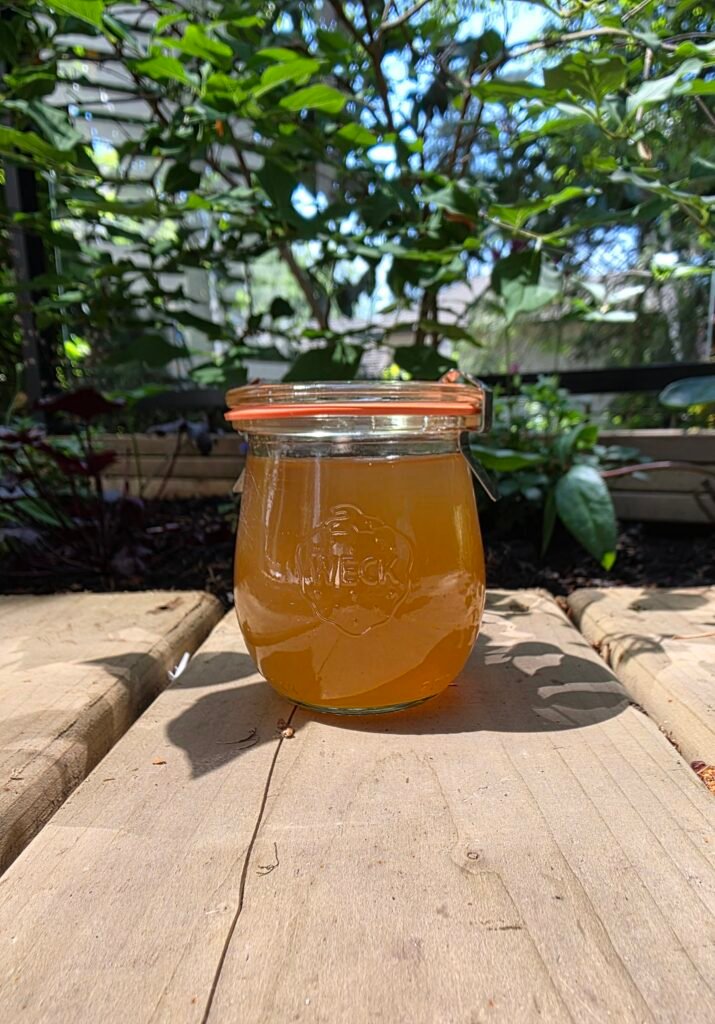
Apple lemon balm jelly. Sweet and citrusy. Made from a garden herb that costs nothing, a few apples, a lemon, and sugar. That’s all that it takes.
🔪 Prep:
35 mins
⏲️ Steep:
2 hrs
🫕Cook:
25 mins
🫙3
half-pint jars
💰Cost:
~$2 per jar
If your lemon balm has staged a takeover of the garden, this apple lemon balm jelly is what to do with it. Apple juice carries the flavor. Lemon zest sharpens it. A measured amount of sugar and pectin sets it. The finished jelly is amber, citrusy, herbal, and nothing like what’s on a store shelf. No specialty ingredients, no wasted harvest, no excuses to throw the lemon balm in the bin.
Why You’ll Love This Lemon Balm Jelly:
- Lemon balm costs nothing! It’s already taking over your garden
- One afternoon, a few dollars in ingredients, 3 jars on the shelf
- No specialty equipment beyond a juicer and a standard canning gear
- Reliable set with either standard or low-sugar pectin
- Limoncello-like flavor that holds its own next to cheese, cheesecake, or a cocktail rim
- A real use for a bumper crop. Most gardeners give the rest away or throw it out
The Story Behind This Apple Lemon Balm Jelly
Our neighbour was halfway to the garbage bin with a giant armful of lemon balm when we happened to step outside at exactly the same moment.
“Do you fancy some of this lemon balm?” she asked. “I put it in tea, but this year it completely took over the garden. I can’t possibly use this much. If you don’t want it, I’ll throw it out.”
We are physically incapable of watching usable food go in the bin. Five minutes later we were standing in the kitchen with an enormous pile of lemon balm that smelled like lemon candy, fresh herbs, and summer evenings all at once.
My doctor sister said: “You know lemon balm has calming properties. We should make tea.”
Tea?
Sure… Reasonable. Sensible.
But the second you crush lemon balm between your fingers, your brain wanders into jam territory. The smell practically demands sugar.
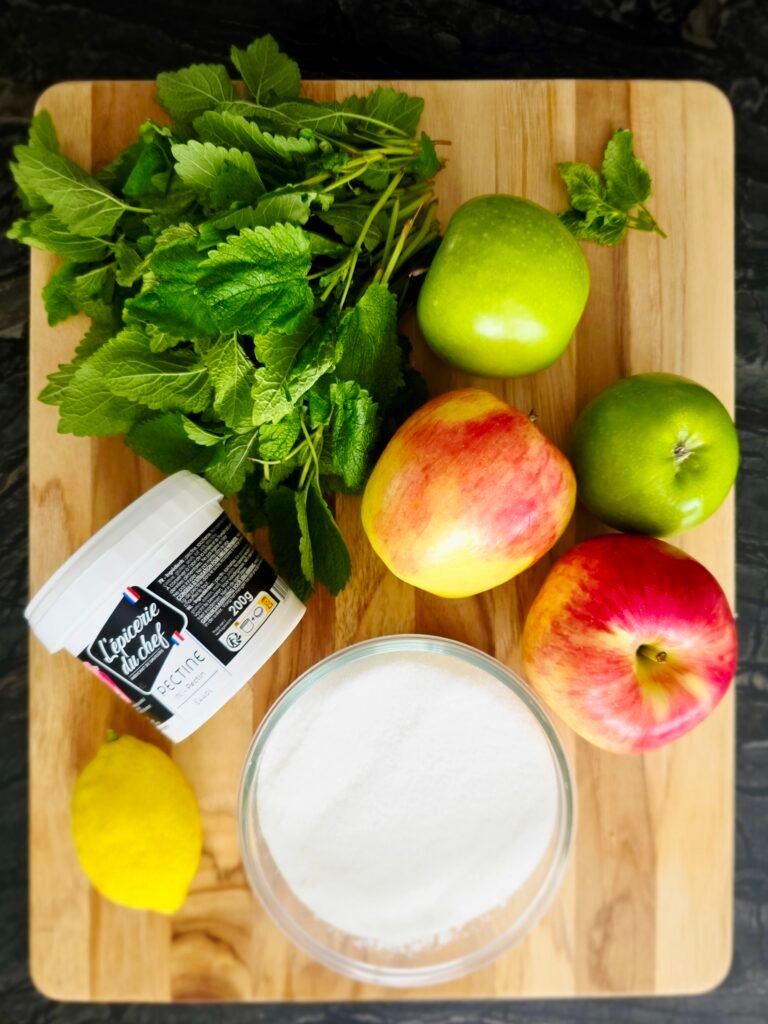
A few more sniffs and the rest came together quickly. Apples for body and natural pectin. Lemon zest to sharpen the aroma. Just enough sugar to turn the whole thing glossy and spreadable.
Decision made.
Apple Lemon Balm Jelly it is.
Key Ingredients in Apple Lemon Balm Jelly
Lemon Balm
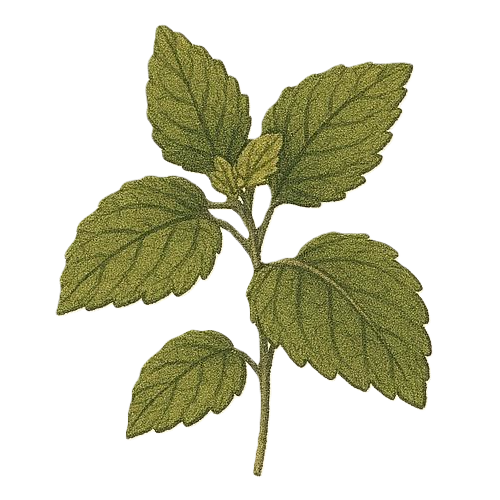
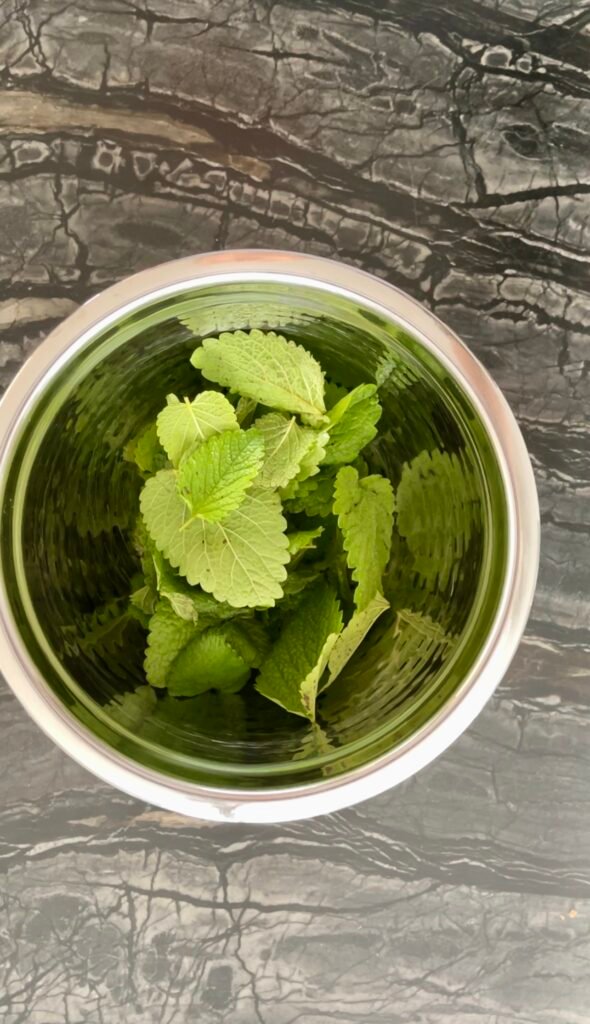
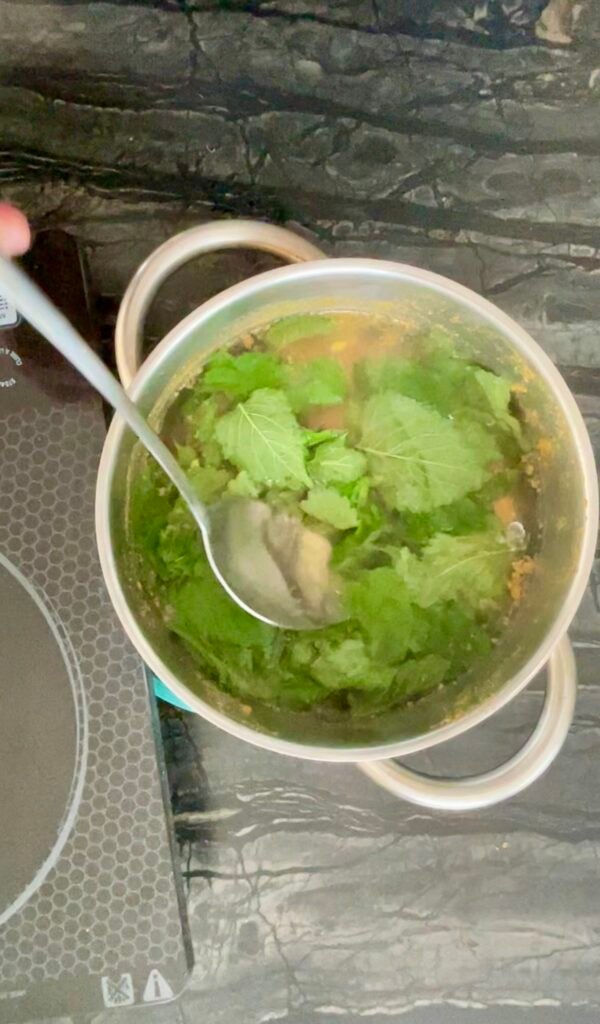
Lemon balm is the flavor base of this jelly. Fresh leaves steeped in hot apple juice extract the citrusy-herbal character that makes the finished jar worth the trouble. Dried lemon balm loses most of the volatile oil that does the work. Basically, don’t bother.
Substitution: No direct substitute. Lemon verbena is the closest if you have it, but the jelly flavor shifts.
Apples
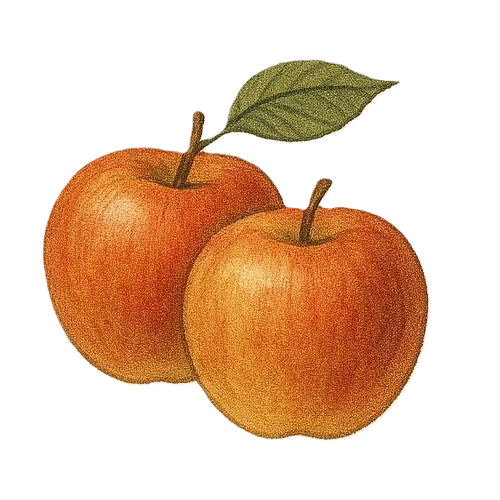
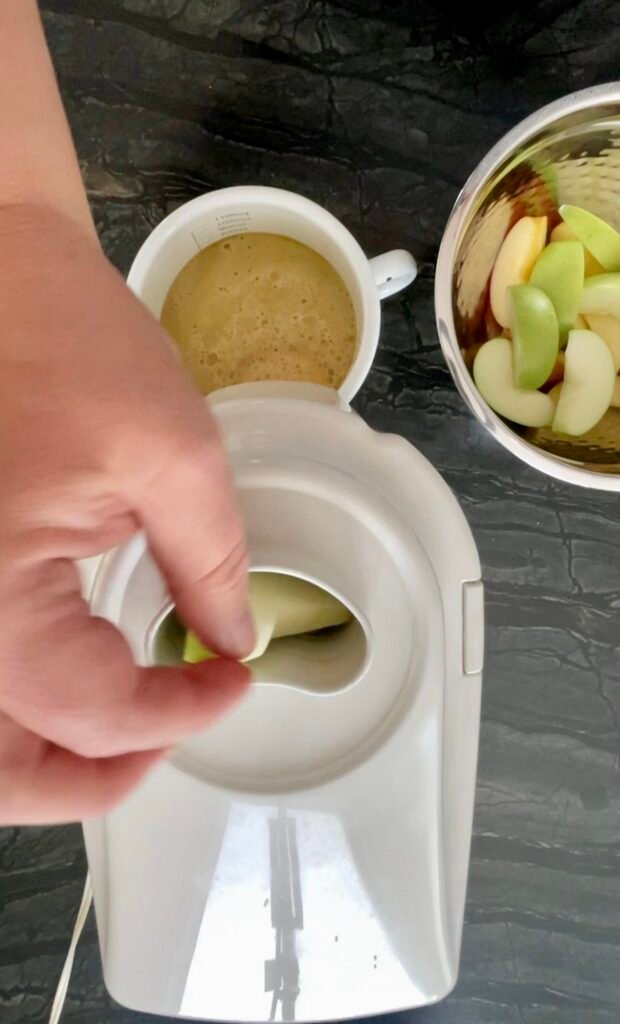
Apples carry the liquid base and contribute a small amount of natural pectin and calcium – both of which matter for the set, especially if you use low-methoxyl pectin. A mix of Granny Smith (brightness, acidity) and Gala (softens the edges) gives a more balanced jelly than either alone.
Substitution: Use all Granny Smith for a sharper jelly or all Gala for a softer, sweeter one. Any apple you like works. Do not use bottled apple juice. It lacks the natural pectin and the structure won’t be the same.
Low Methoxyl vs High Methoxyl Pectin for Jelly -Which Should You Use?
High Methoxyl Pectin
Most jelly recipes are written around standard high methoxyl powdered pectin – Sure-Jell, Certo, or whatever sits on the shelf at your local store.
It works, it’s predictable, and if you follow the ratio the jelly sets every time.
The tradeoff is sugar. High methoxyl pectin needs a high-sugar environment to activate, which locks you into the full sugar amount the recipe calls for. For a delicate, herb-infused jelly like this one, that’s a lot of sweet with very little room left for flavor.
Low Methoxyl Pectin
Low methoxyl pectin such as Pomona’s Universal Pectin in North America, sets differently. It’s activated by calcium rather than sugar, which means you can cut the sugar significantly and still get a reliable set. For this jelly, 2 cups of sugar is enough. The flavor comes through cleaner. The lemon balm actually has room to be tasted.
The common concern with low methoxyl pectin is the calcium water packet. Some people notice a slight chalky aftertaste from it. In this recipe, the calcium packet isn’t necessary at all.
So, what should you use? Basically, use what you have. If standard high methoxyl powdered pectin is already in your pantry, use it. We recommend a proportion of 1 tsp of pectin per cup of liquid, or simply follow the directions on your pectin’s packet.
However, if you have low methoxyl pectin on hand, this jelly is a strong argument for reaching for it.
👩🍳 Pantry Master’s Note for Apple Lemon Balm Jelly
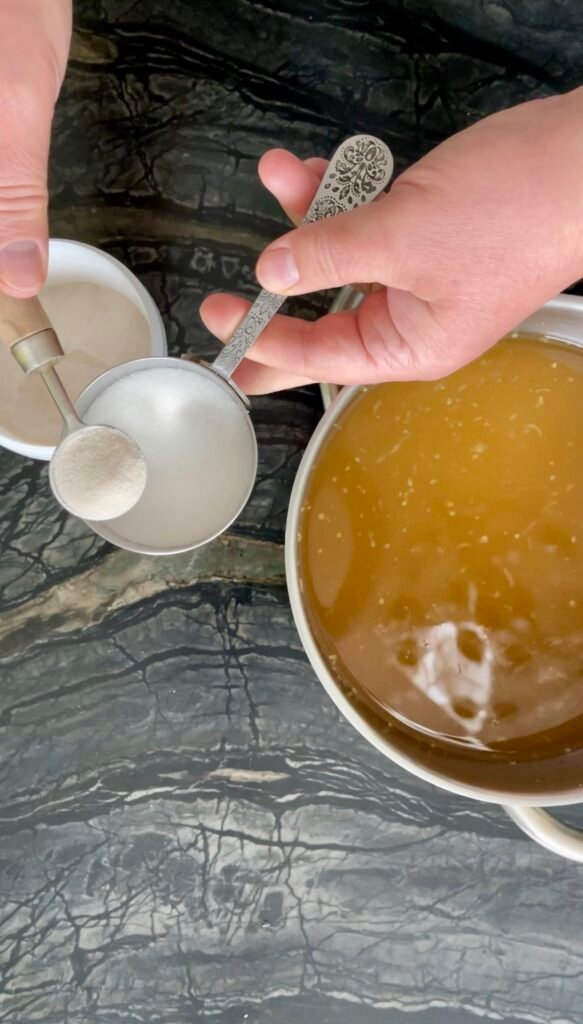
- Apples are naturally high in calcium, which means the apple juice base activates Pomona’s pectin on its own – no calcium water packet needed. Mix 1 tsp low methoxyl pectin with ⅓ cup sugar, add it mid-cook, and you’re done.
- Why we completely skip liquid pectin: Because liquid pectin is water-based, commercial versions require added shelf-stabilizers and preservatives (like sodium benzoate) to prevent mold growth in the bottle – which we’d rather avoid when making simple, homemade preserves. Instead, we choose powdered pectin for a cleaner, more straightforward ingredient list.
- We use a wide, heavy-bottomed stainless steel pot for this and other jelly recipes. The larger surface area evaporates water faster, which keeps the total cook time short and protects the delicate lemon balm flavor instead of boiling it away.
What this Apple Lemon Balm Jelly costs to make
The “expensive” part of this jelly is basically just apples. Lemon balm is a garden volunteer in most cases – you either already have it or someone is actively trying to give it away. Everything else is pantry standard.
Apples don’t cost much in both Canada and USA, and this recipe uses about 3–4 lb to produce enough juice for one batch. That puts the base cost surprisingly low for a full canning yield.
| Ingredient | USD $ | CAD $ |
| Apples (3–4 lb / ~1.4–1.8 kg) | $3.20 – $5.60 | $4.35 – $7.60 |
| Lemon (1 large) | $0.50 – $0.90 | $0.70 – $1.25 |
| Sugar (~3 cups / ~600 g) | $1.50 – $2.20 | $2.00 – $3.00 |
| Lemon balm (3 cups leaves) | $0.00 | $0.00 |
| Pectin (per-batch estimate) | $1.00 – $2.50 | $1.50 – $3.50 |
| Total batch cost (3 half-pint jars) | $6.20 – $11.20 | $8.55 – $15.35 |
Max Cost per Jar: $3.73 USD / $5.12 CAD
Artisan herbal jellies (especially citrus-herb blends like lemon balm, mint, or lemon verbena) commonly sell for $10–$16 per small jar at farmers’ markets and specialty food shops. You’re making this for about a quarter to a sixth of that.
Common Mistakes When Making Apple Lemon Balm Jelly (and how to fix them)
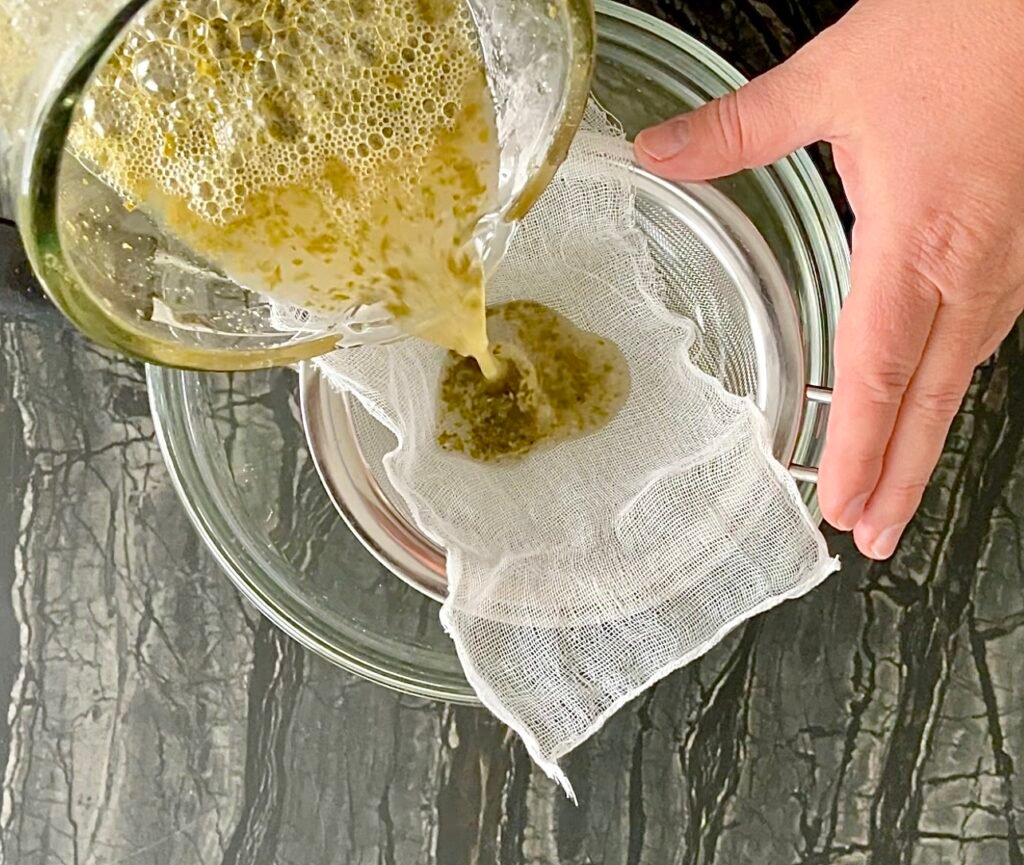
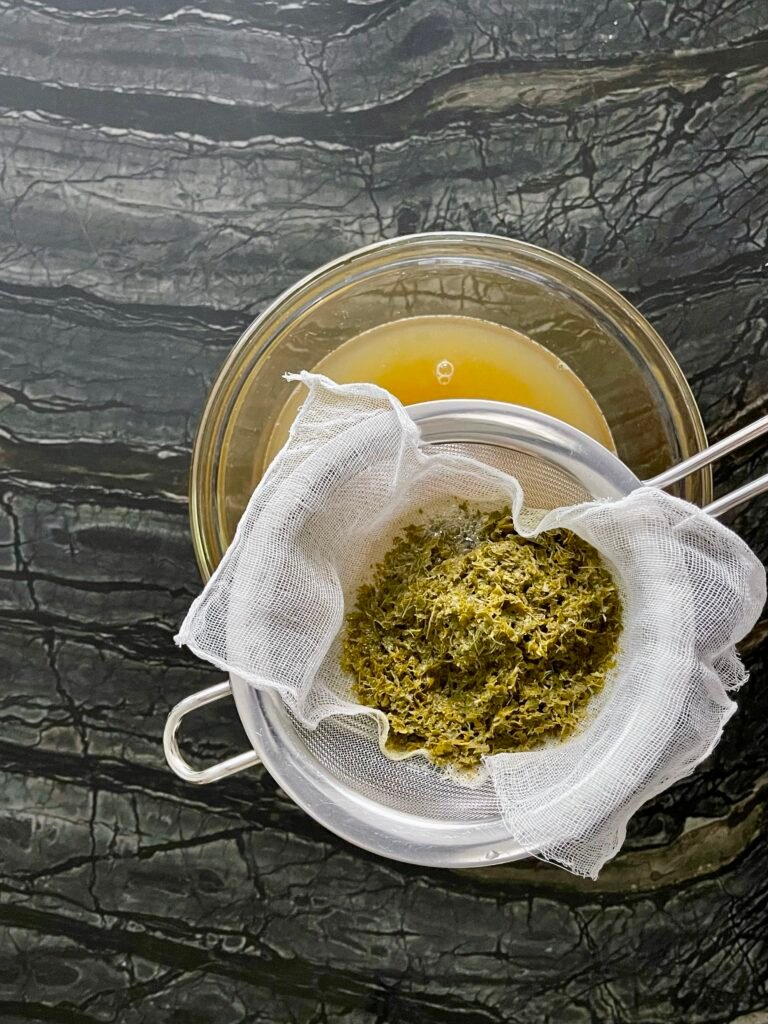
❌ Forcing the liquid through the cheesecloth:
This is the fastest way to turn a clear jelly cloudy. Let gravity do the work! The extra 20 minutes of patience is the difference between a finished jar that looks like sunlight and one that looks murky.
❌ Boiling the lemon balm too aggressively:
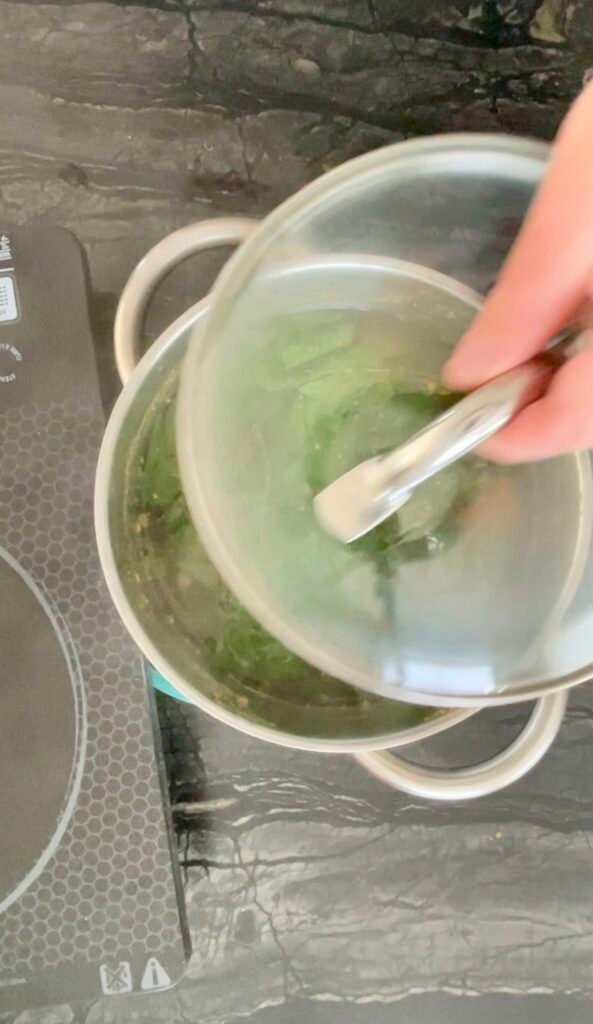
Lemon balm goes bitter when overcooked. For that reason, we steep the leaves in hot juice rather than simmer them for any length of time.
Apple Lemon Balm Jelly – Old-Fashioned Preserve from the Herb Garden
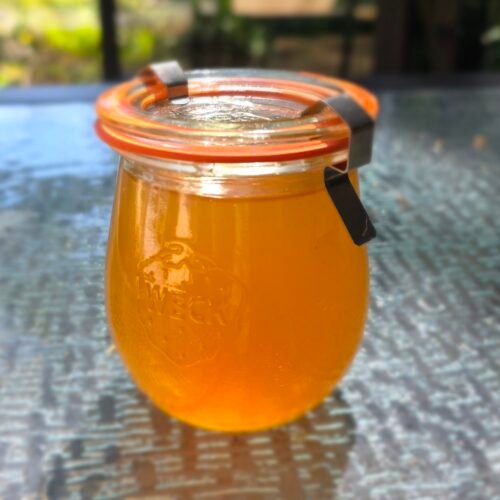
How to Test Jelly Set Without a Thermometer (The Cold Plate Test)
The cold plate test works because pectin starts forming a network as the jelly cools.
Important to realize, a boiling pot can look watery even when the final texture is already there. That’s why, eyeballing it on the stove leads to overcooked jelly more often than undercooked.
- Before you start cooking, place two or three small plates in the freezer.
- When the jelly has cooked for about 20 minutes, spoon a small amount onto a cold plate and wait 30 seconds.
- Next, push it gently with your finger. If the surface wrinkles slightly and the jelly moves slowly instead of flooding back together, you’re done. But, if it runs thin, keep cooking in five-minute intervals and re-testing.
Canning Methods
This is a high-acid, jelly style preserve. While the standard processing time for jellies is 5-10-15 minutes, we recommend the NCHFP’s optional 10-minute boiling water/ atmospheric steam canner process that is believed to provide a stronger vacuum in the jar for hot pepper jelly type preserves.
Both water bath canning and atmospheric steam canning use identical processing times for this recipe. We typically use an atmospheric steam canner for speed and lower water use, but a water bath canner works equally well and is the most widely used method in home preserving.
Processing table – Steam Canner & Water Bath
Jar size: Half-pint or Pint (8 oz / ~250 mL or 16 oz / ~500 mL)
Pack style: Hot
Applies to: Atmospheric steam canner AND water bath canner (same processing times)
| Altitude | Processing time |
| 0–1,000 ft | 10 min |
| 1,001–6,000 ft | 15 min |
| Above 6,000 ft | 20 min |
Not sure which elevation band is yours? Our Canning Altitude Calculator will give you the answer in a couple of seconds.
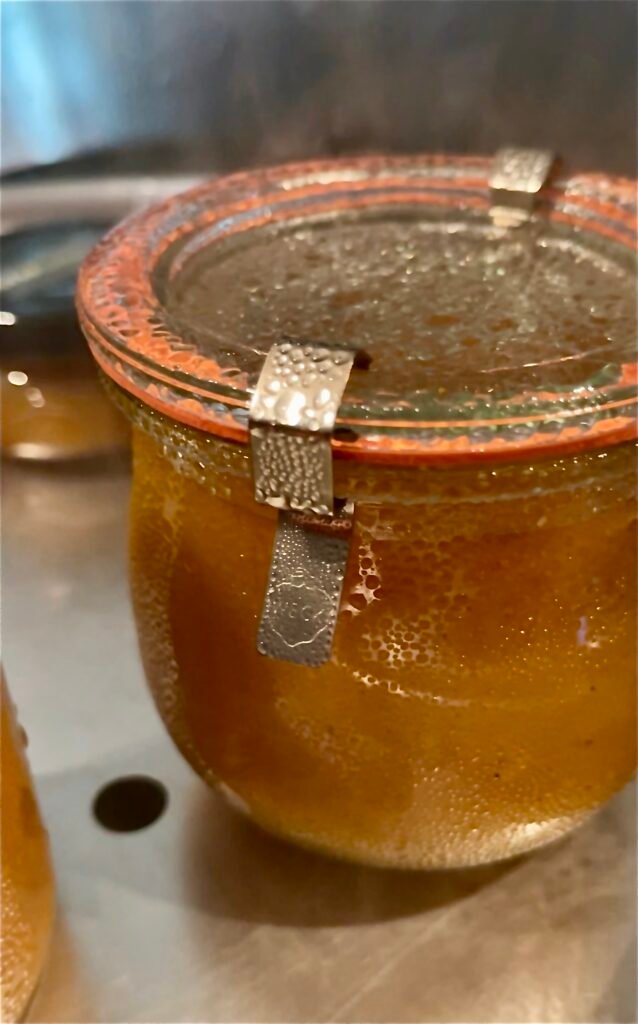
Atmospheric Steam Canning
Atmospheric steam canning is newer to the home canning world. Nevertheless, it has been validated for high-acid preserves like this. It uses less water, heats up faster, and doesn’t require jars to be submerged.
- Prepare your atmospheric steam canner according to the manufacturer’s instructions. Typically, fill the base with the recommended amount of water and preheat until steam begins to vent.
- Place filled jars on the canner rack. Cover with the dome lid.
- Start timing once a steady column of steam has been venting continuously.
- When processing time is complete, turn off heat.
- Remove jars straight up with a jar lifter. Most important, do not tilt. Place on a towel-lined counter or cutting board.
New to steam canning?
Ready to ditch water bath canners?
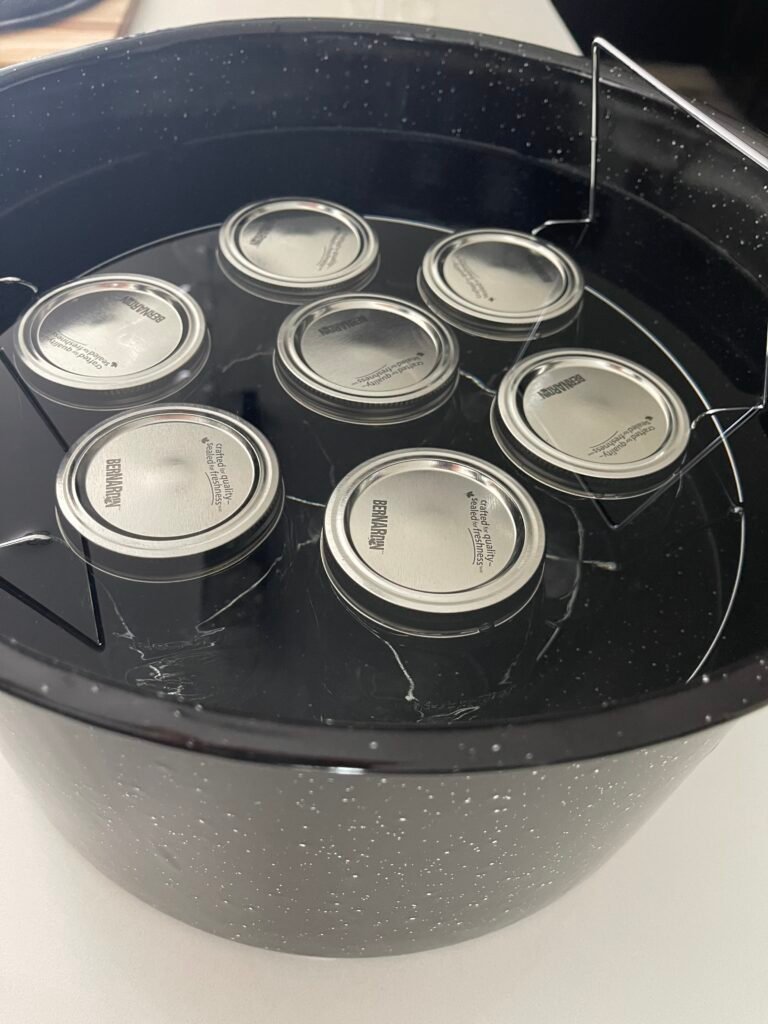
Water Bath Canning
Undeniably, water bath canning is the most widely used method for high-acid preserves and the one most canners learn first. If you already own a water bath canner, this is a perfectly sound way to process this jam.
- Place filled jars on the canner rack and lower it into boiling water. Always remember, water must cover the lids by at least 1 inch.
- Start timing once you reach a full rolling boil. Processing times are identical to the table above.
- When processing is complete, turn off heat and let jars rest in the water for 5 minutes before removing them. This step helps prevent siphoning.
- Lastly, remove jars straight up with a jar lifter.
Looking to understand how the two methods compare?

Prefer Open Kettle?
Open kettle canning is not a USDA-recommended method. For this recipe, we used atmospheric steam canning to get consistent, shelf-stable results. However, open kettle remains a long-established traditional method that some experienced canners still use for high-acid preserves.
We don’t dismiss traditional methods. For those who choose to use open kettle, we’ve put together a guide that explains how it is practiced, along with the key steps aimed at reducing common risks within that traditional approach.
After sealing (all methods)
- Do not touch, adjust bands, or press lids for 12–24 hours.
- After cooling, check seals: press the center of each lid. If it doesn’t flex, the seal is good. Any jar that didn’t seal goes in the fridge → use within 3 weeks.
- Remove bands for storage (they trap moisture and can mask a broken seal over time). Label with contents and date.
- Store in a cool, dark place. Peak quality for 12–18 months.
Check your processing time/ canning pressure if you’re above 1,000 feet↗️
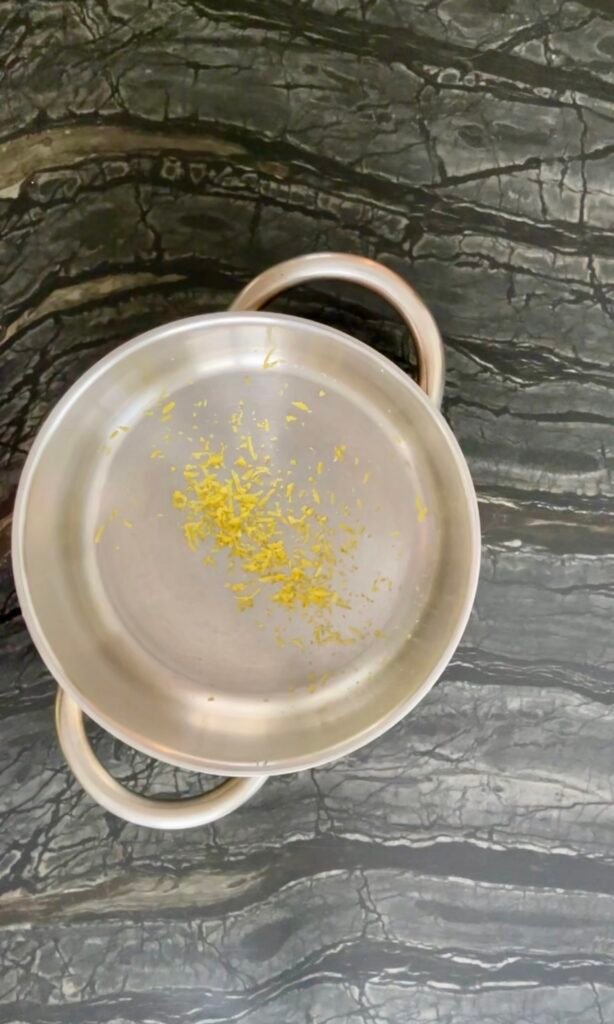
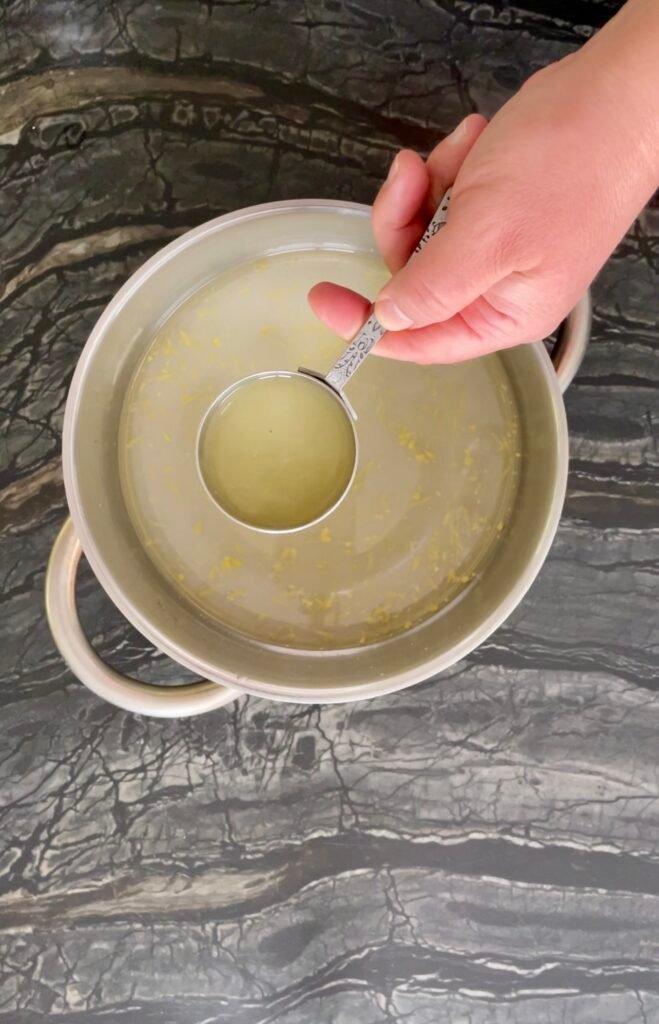
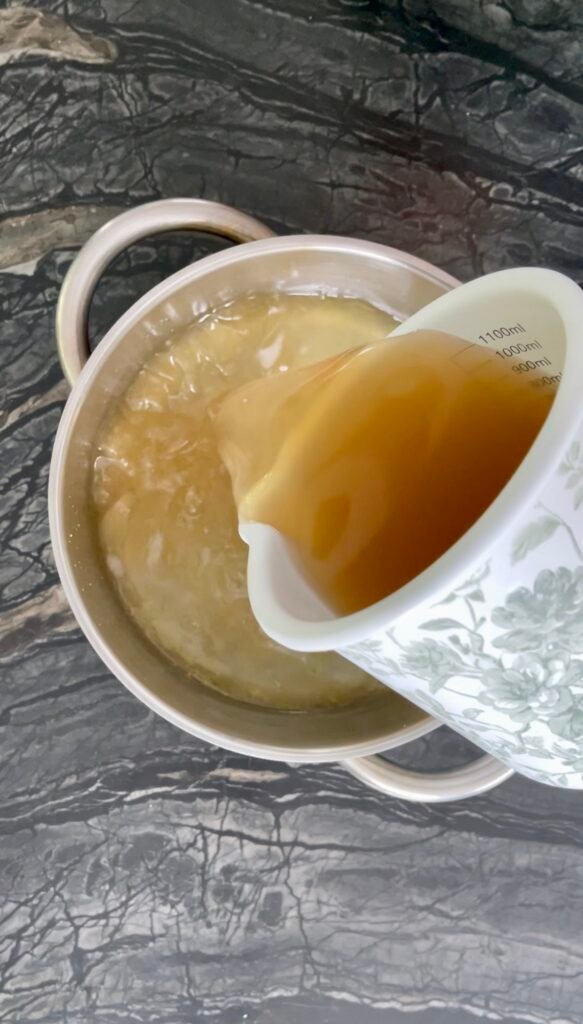
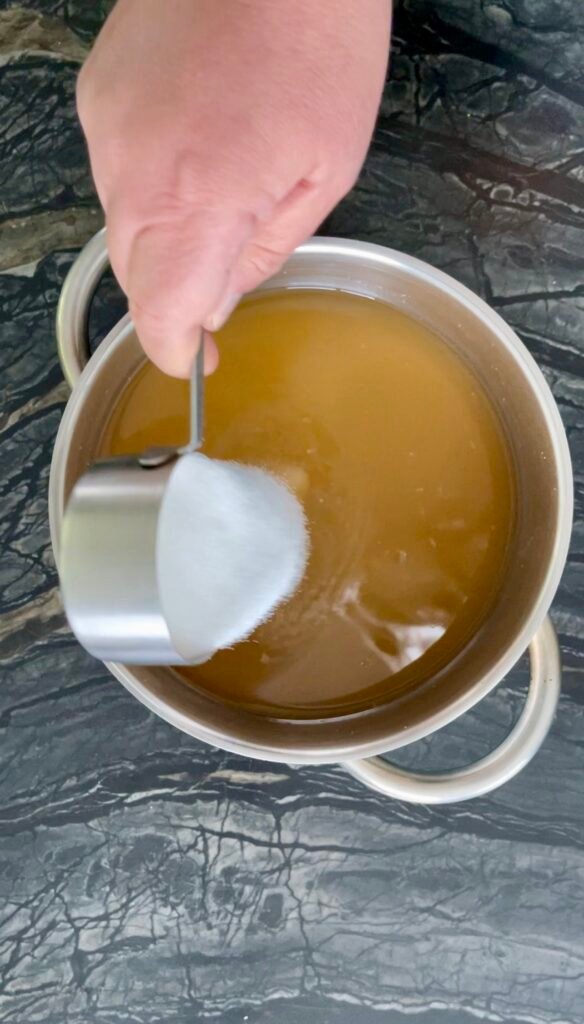
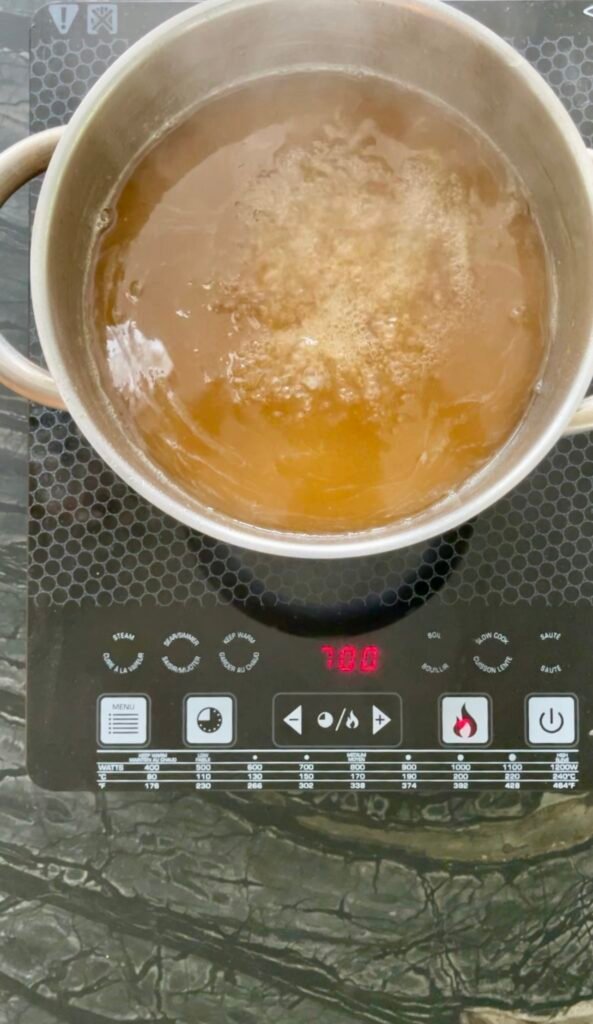
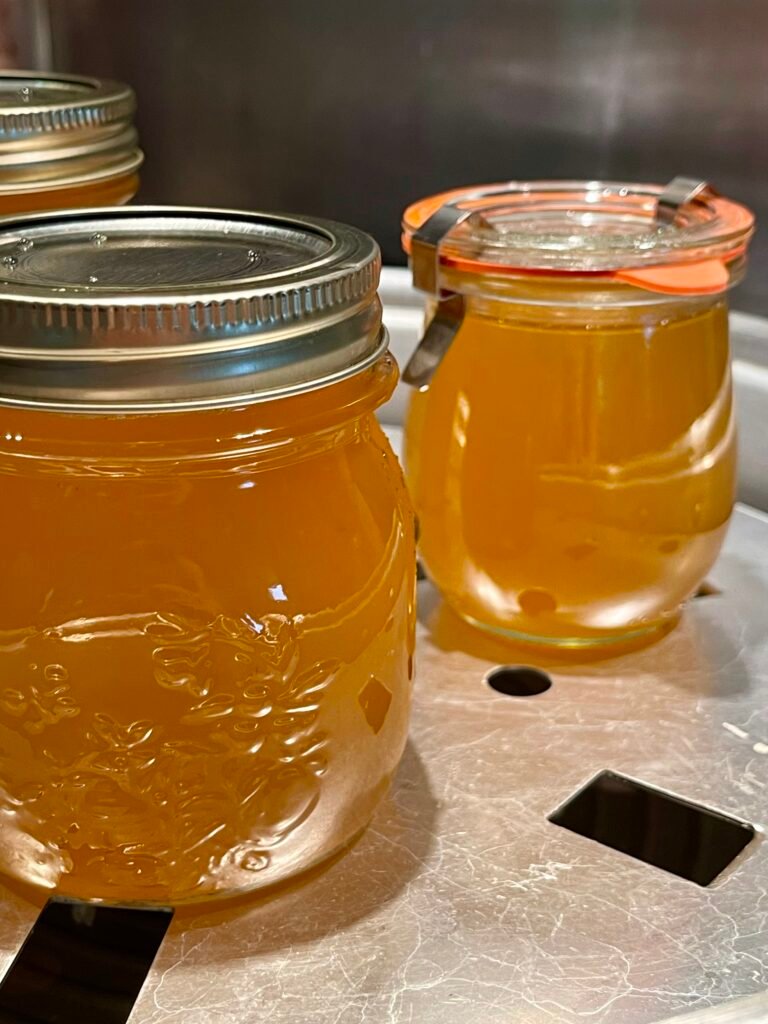
How to Make Apple Lemon Balm Jelly – Step-by-Step Photo Gallery
Apple Lemon Balm Jelly Serving Suggestions
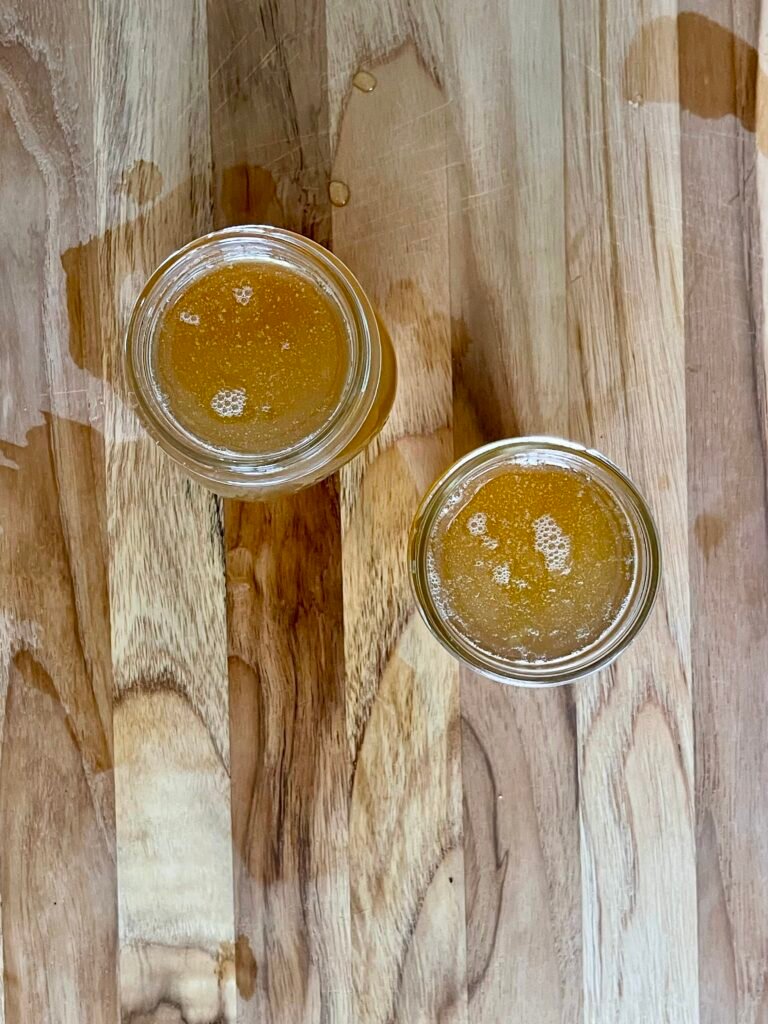
This lemon balm jelly belongs anywhere honey, citrus marmalade, or floral preserves would normally land. But, it tastes fresher and much more interesting. The lemon balm gives it a soft herbal edge that works surprisingly well with savory food, too.
Try it with:
- Spread on toasted baguette with ricotta and a crack of black pepper – unexpected and genuinely elegant
- On a cheese board with goat cheese or a creamy brie – the citrus-herb note cuts through fat cleanly
- Melted and swirled into Greek yogurt with granola – tastes like a boutique breakfast spot, not a $3 jar
- Whisked with olive oil and white wine vinegar as a vinaigrette for bitter greens like radicchio or frisée
- Warmed and spooned over Italian ricotta cake – the herbal sharpness keeps it from going cloying
FAQ
We use 250 mL half-pint jars. Not only it’s a right size for gifting, but it also is a right size for a cheese board. Plus, it is easy to finish within a couple of months once opened. However, if you want a larger jar for your own shelf, 500 mL pints work too.
Yes, provided you have a pot large enough to let the mixture reach a full rolling boil without boiling over. Above all, keep all proportions the same! Also, a wide, heavy pot works better than a tall narrow one. Reason being, the wider surface area helps the jelly reach the gel point on time without overcooking.
Yes. The combination of fresh apple juice and fresh lemon juice gives this jelly a naturally high acidity, well within the safe range for either method. As a result, no pressure canner is needed. Most important, process per the table in the Canning Method section.
Most often, the pectin ratio was off or the mixture didn’t reach a full rolling boil long enough before the cold plate test. In either case, to fix it – return everything to the pot, whisk in another teaspoon of pectin mixed with ¼ cup sugar, bring back to a rolling boil for 1–2 minutes, retest on a cold plate, and re-jar with clean lids.
No! To clarify, dried lemon balm has lost most of the volatile oils that give this jelly its citrusy-herbal character. As a result, your preserve will mostly taste like a sweet apple jelly.
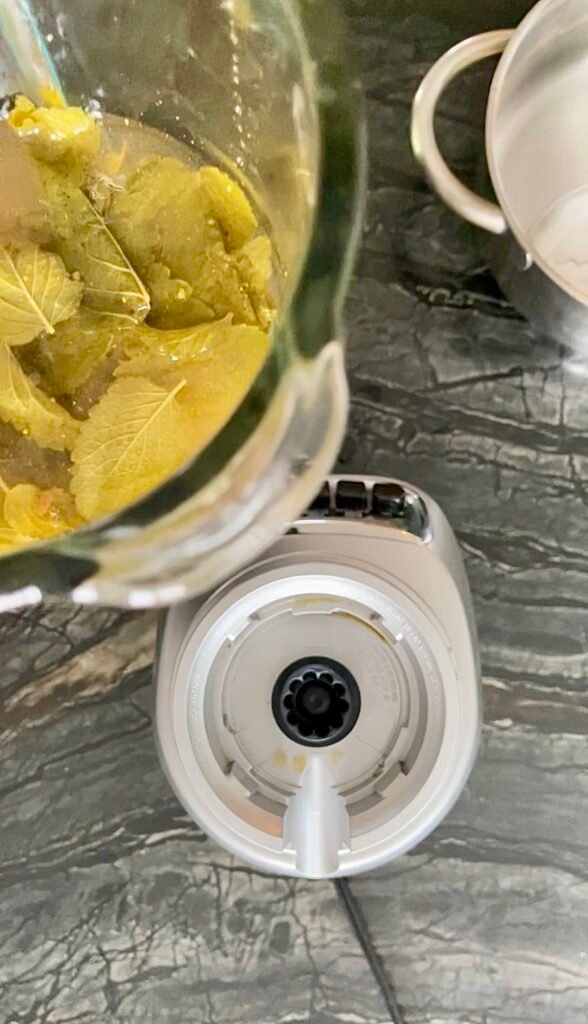
Yes. Fresh-juiced apples bring the natural pectin and calcium that contribute to the set. Bottled apple juice is pasteurized and overprocessed. As a result, it lacks both. If you don’t have a juicer, a high-powered blender plus a fine-mesh strainer can work, but the yield is messier and slower.
it is hard to describe, but think limoncello in spreadable form – bright, citrusy, slightly herbal, with the clear apple background.
Properly canned and sealed jars keep peak quality for 12–18 months in a cool, dark pantry. Although this jelly remains safe to eat past that as long as the seal holds, but flavor and color may change over time. Once a jar is opened, refrigerate and use within 3 weeks.
Beyond this jelly, lemon balm makes excellent syrup, infused vinegar, herbal tea (fresh or dried for the pantry), and a citrus-leaning pesto with toasted almonds.
No. The NCHFP does not test individual third-party recipes. What it provides is a methodology and processing framework for canning categories, plus reference recipes for specific preserves. This recipe is built on that framework . Specifically, the processing times match NCHFP guidance for high-acid jellies at the relevant altitude bands.
Related Recipes
Like lemon balm, rhubarb is plentiful and easy to over-grow – same “use the bumper crop” energy
Join the pantry
Fresh recipes when the season calls for them. Preservation guides you can trust – every method, traditional to modern. Ideas for turning your pantry into weeknight dinners. Seasonal alerts that help you preserve more for less. Honest reviews of the tools that matter.
Tried this preserve? We’d love to hear how it turned out!