
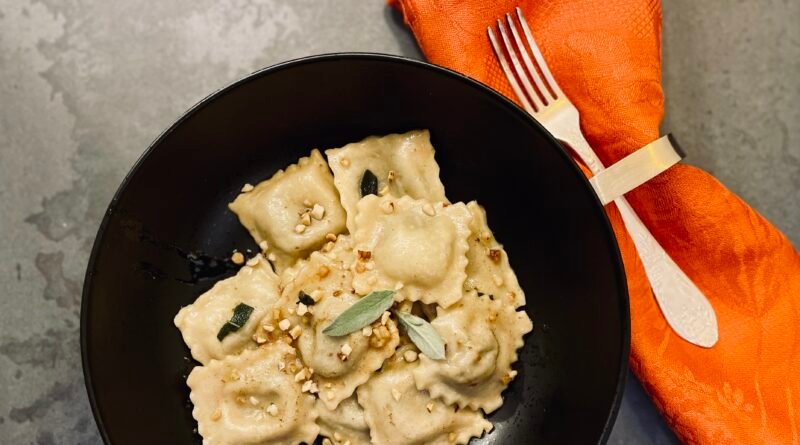
Ravioli with Goat Cheese and Mushroom Filling (Freezer-Friendly, Restaurant-Quality at Home)
Views: 227
If you’ve ever decided to make ravioli and then stalled at the question of ravioli with what, you’re not alone. Ricotta ravioli fillings are safe and familiar. After a while, though, they all start to taste the same. When that happens, it’s easy to assume that ravioli with anything more interesting must be complicated or better left to restaurants. This recipe proves otherwise. Made with fresh ravioli dough, each ravioli is filled with rich mushroom duxelles blended with tangy goat cheese, nutty Parmesan, and fragrant sage. If that sounds delicious, it’s because it is!
Feel free to jump straight to the recipe, or stick around for a few quick tips and flavor ideas that will make this ravioli truly shine. No long stories – just practical tricks to help you get the best results.
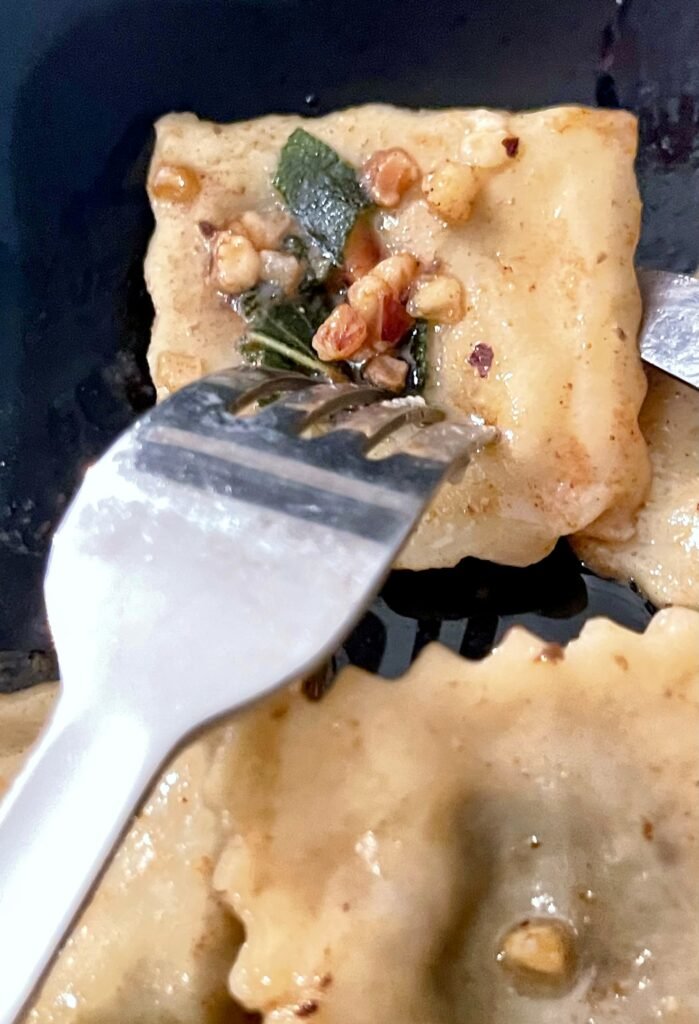
A friend came over yesterday. It wasn’t unplanned, but as always, the day got away from us. There were still things to finish and no time for elaborate cooking. That’s when the freezer stepped in to save the day. A zip-top bag of ravioli with goat cheese and mushroom duxelles came out, straight from the freezer. While the ravioli cooked to al dente – about 4 minutes, we browned butter with sage and finished it with crushed hazelnuts. Dinner was ready in no time.
As we enjoyed our quick meal with a glass of white wine, our friend paused and said, “I feel bad eating something this delicious because my hubby is missing out.”
That moment summed up this ravioli recipe perfectly. Instead of cooking everything from scratch every time, we focus on smart prep. First, make and freeze foundational components, like mushroom duxelles, which can be easily turned into sauces, fillings, soups, and yes, even restaurant-quality ravioli. Next, take it a step further: assemble a batch of these ravioli, freeze them, and you’ll have complete, delicious meals whenever you want something impressive but without the stress of spending two hours in the kitchen.
👉 Check out our Mushroom Duxelles post to learn how to prepare and freeze duxelles for this ravioli filling.
💰Cost of Making This Recipe
Our goat cheese and mushroom duxelles ravioli is one of those recipes that looks expensive, tastes like a restaurant dish, but is surprisingly affordable.
This recipe makes about 76 ravioli, depending on how thin you roll the dough and how generously you fill them.
Our Serving size: 10–12 ravioli per person.
Total servings: 6 generous main-course portions.
*All prices are current as of January 2026.
| Ingredients per batch (~6 servings) | Estimated Cost (Average)* | |
| US | Canada (CAD) | |
| Pasta Dough: | ||
| 1 cup 00 flour | $0.80 | $0.80 |
| 1 cup all-purpose flour | $0.25 | $0.40 |
| 3 eggs | $1.50 | $1.20 |
| Filling: | ||
| 1 cup mushroom duxelles (cost based on previously made duxelles) | $2.00 | $5.15 |
| 120 g goat cheese | $3.75 | $6.50 |
| ¼ cup grated Parmesan cheese (~ 25 g) | $1.00 | $1.45 |
| Fresh sage + salt | $0.45 | $0.50 |
| Estimated Total Costs | $9.75 | $16.00 |
Estimated costs of homemade ravioli per serving: $1.63 (US) / $2.70 (CAD).
Compare to:
- Restaurant ravioli: $20–$35 per plate
- Store-bought filled ravioli: $4 to $14 per serving.
Gotchas, Tips, and Things That Actually Matter
✅Start With a Dry Ravioli Filling
Because we make these ravioli with mushroom duxelles, the texture of the duxelles matters. It should be thick and concentrated, not loose or watery. If your duxelles was frozen, thaw it fully and cook off any excess moisture before mixing the filling. A dry filling seals better, freezes better, and keeps your ravioli from bursting when you cook them.
✅Let the Goat Cheese Soften
Before mixing the filling, let the goat cheese sit at room temperature. Soft goat cheese blends smoothly with the duxelles, Parmesan, and sage, giving you a creamy, even ravioli filling. Cold cheese stays clumpy and slows everything down.
✅Use a Piping Bag to Fill Ravioli Fast
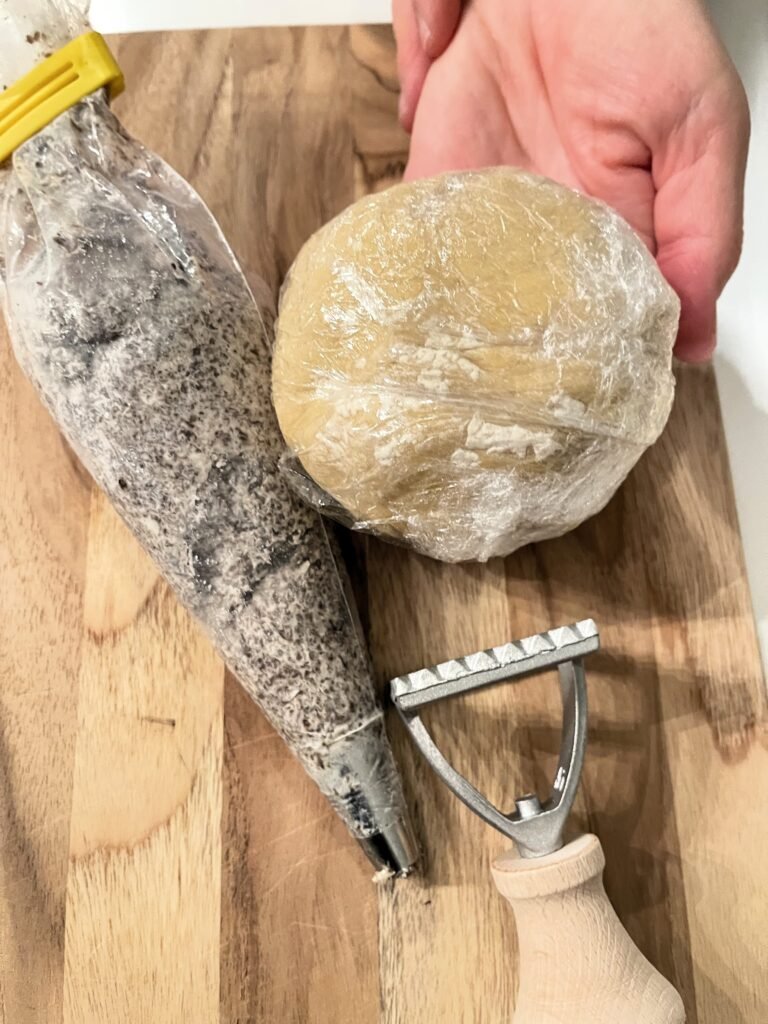
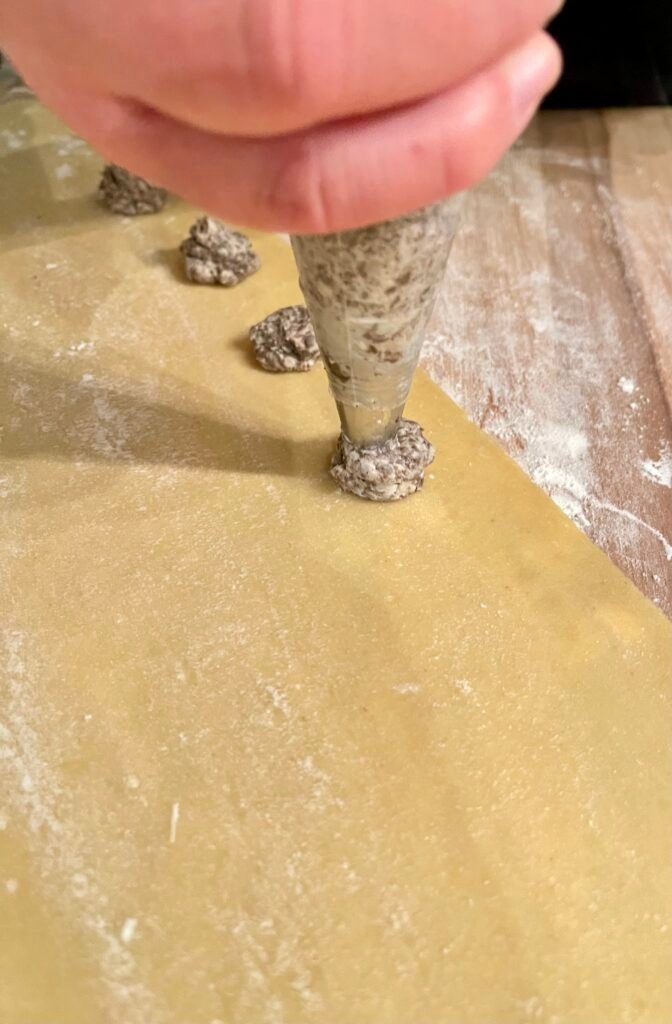
Instead of spooning the ravioli filling onto the dough, transfer it to a pastry piping bag (or a zip-top bag with the corner snipped off). Pipe equal amounts of filling onto each sheet of pasta. This keeps portions consistent, helps the ravioli cook evenly, and speeds up assembly – especially helpful when making a big batch of ravioli.
✅Don’t Overfill the Ravioli
While you maybe tempted to add more filling, but less is better here. As a general rule, about 1 to 1½ teaspoons per ravioli is enough. Overfilled ravioli are harder to seal and they are more likely to burst during cooking or freezing.
✅Prevent Pasta Dough From Drying Out
Whether you are using a ravioli mold, or a ravioli cutter, you won’t be able to process the entire dough ball in one go. To prevent the dough from drying out, it’s important to keep the dough you’re not working with tightly wrapped in plastic.
✅Seal Ravioli Well and Push Out Air
After filling, lightly moisten the edges of the dough, press firmly around the filling, and push out any trapped air before sealing. This step is especially important for homemade ravioli you plan to freeze, since trapped air expands in boiling water and can cause leaks.
✅Flour Lightly, Then Brush It Off
While a light dusting of flour prevents sticking, but too much flour between layers prevents a proper seal. Dust as needed, then brush off any excess before sealing the ravioli.
✅Freeze Before Storing
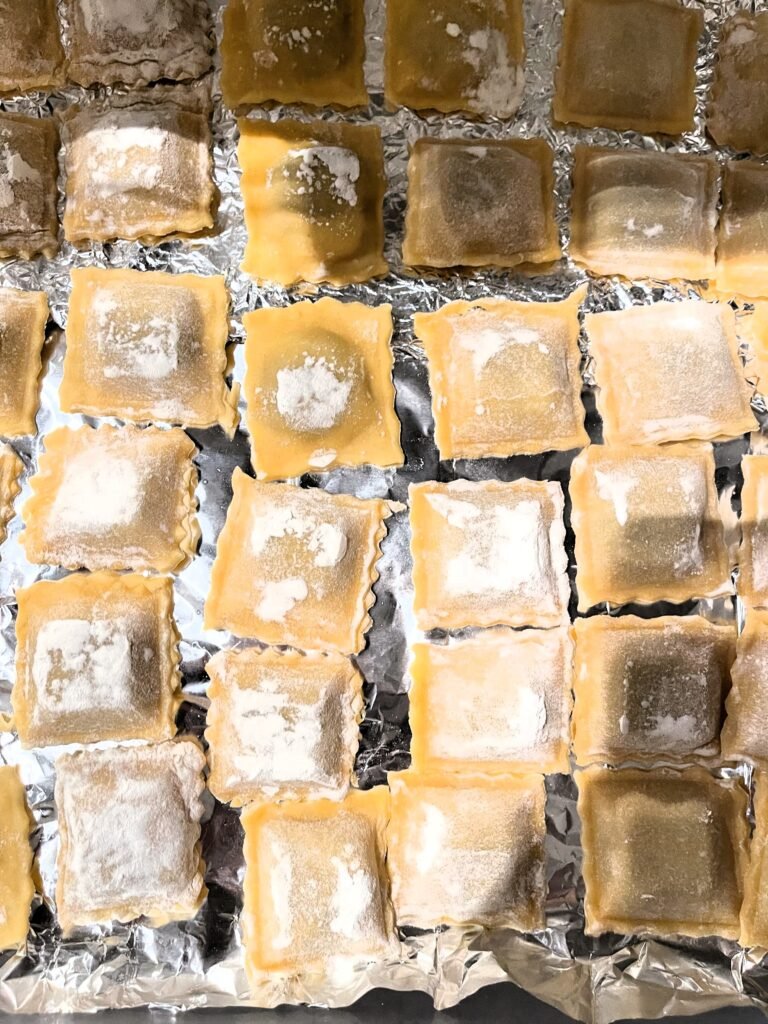
If you’re freezing your homemade ravioli, arrange them in a single layer on a floured tray and freeze until solid. Only then transfer them to freezer bags. This keeps your ravioli separate and easy to portion later.
✅Cooking Ravioli (Fresh or Frozen)
Whether you’re cooking this ravioli fresh or straight from the freezer, the method is the same. However, the timing is slightly different – we advise to add 1 extra minute if cooking ravioli from frozen.
Once cooked, use a slotted spoon to transfer the ravioli directly into your warm sauce. If needed, add a splash of pasta cooking water to help the sauce coat the ravioli.
✅Cooking Times
Fresh ravioli: Cook for 3–4 minutes, until tender and floating.
Frozen ravioli: Cook directly from frozen for 4–5 minutes. Do not thaw.
✅Traditional Italian Pasta Water Ratio
In Italian cooking, pasta water follows a simple and reliable formula known as the 1–10–100 rule. First, bring 1 litre of water (about 4¼ cups) to a full, rolling boil. Next, add 10 grams of salt, which equals about 2 teaspoons of fine salt or 1½ teaspoons of kosher salt. Then, once the water is boiling, add 100 grams of pasta, roughly one standard serving.
As a result, the pasta itself becomes properly seasoned as it cooks. In fact, properly cooked ravioli should taste good even before any sauce touches it.
Sauce Ideas for Goat Cheese & Mushroom Ravioli
🍲Because this goat cheese and mushroom ravioli has a rich, earthy filling, the best sauces are simple and restrained.
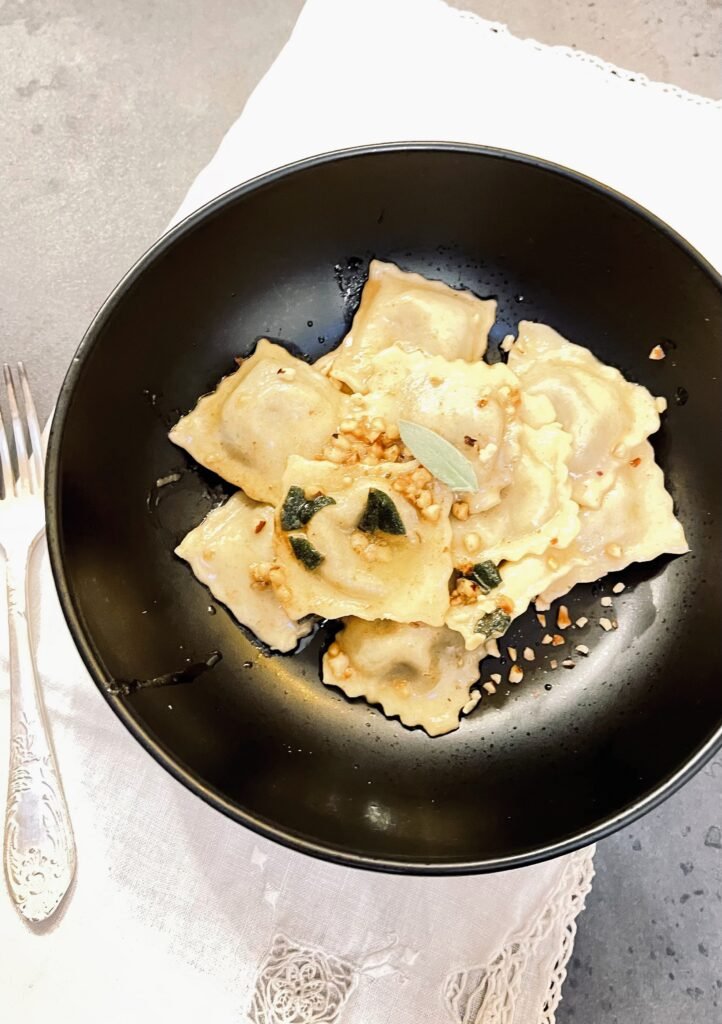
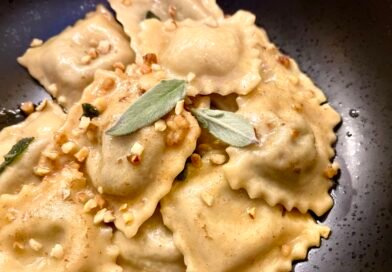
- A classic brown butter sauce with fresh sage is hard to beat and lets the mushroom duxelles shine. For extra texture, finish with crushed pistachios, or hazelnuts.
- If you want something lighter, try olive oil, garlic, and a splash of pasta cooking water, finished with Parmesan.
- Also, small spoon of crème fraîche or mascarpone stirred into warmed butter creates a silky sauce without overpowering the mushroom ravioli filling.
The goal is balance. This ravioli doesn’t need much help to taste restaurant-worthy.
How to make goat cheese and mushroom ravioli – step-by-step
Homemade Goat Cheese and Mushroom Ravioli Recipe
Ingredients
Pasta Dough:
- 1 cup 00 flour
- 1 cup all-purpose flour
- 3 large eggs
Filling:
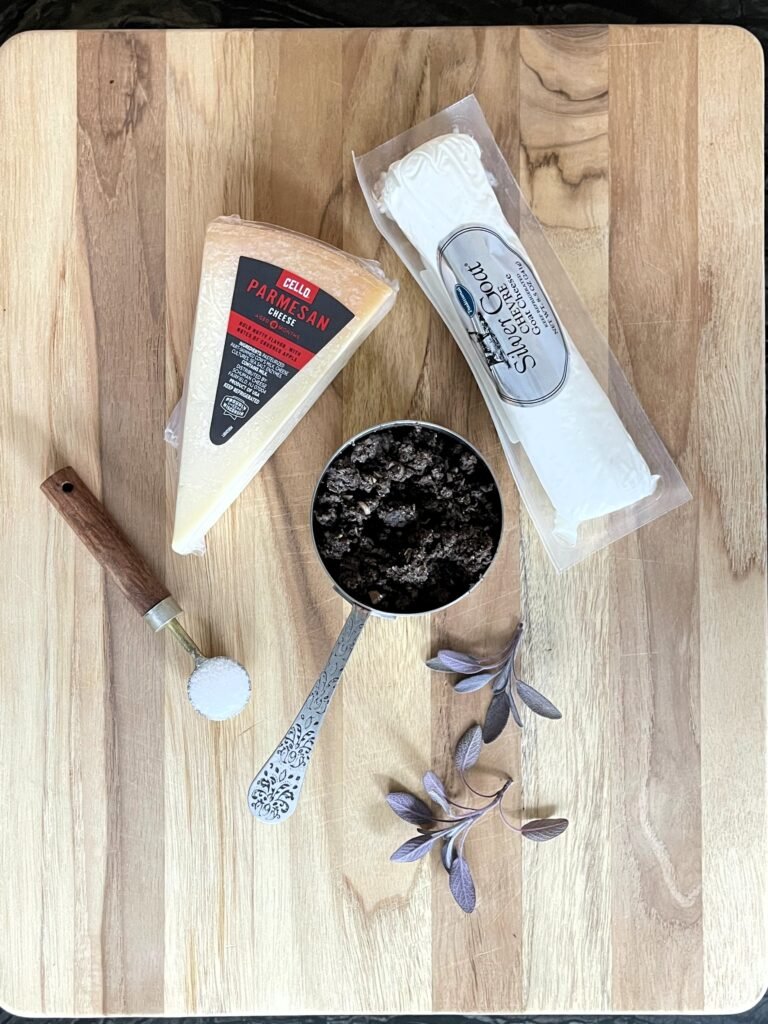
- 1 cup mushroom duxelles (fully thawed and moisture cooked off)
- 120 g goat cheese (softened)
- ¼ cup finely grated Parmesan cheese
- 1 tsp salt
- ½ tsp fresh sage (finely minced)
Equipment
- Rolling pin or Pasta Machine (- to roll the dough)
- Knife or Ravioli Mold (- to form the ravioli)
Our Favorite Tools for This Recipe
The ones we use and wholeheartedly recommend (affiliate links):
Instructions
Make the Pasta Dough:
- Combine flour on a clean surface or in a bowl. Make a well in the center.
- Crack eggs into the well.
- Using a fork or your fingers, gradually whisk the eggs while incorporating small amounts of flour from the edges of the well. Continue mixing until the dough starts to come together and becomes too thick to mix with a fork.
- Once the dough begins to take shape, use your hands to knead it into a smooth, elastic ball. This process usually takes about 5-10 minutes. If the dough feels too sticky, you can add a sprinkle of flour. If it’s too dry, you can add a few drops of water.
- Once the dough is smooth and elastic, wrap it in plastic wrap and let it rest for at least 30 minutes at room temperature. This allows the gluten to relax and makes the dough easier to roll out.
- After resting, the pasta dough is ready to be rolled
Make the Ravioli:
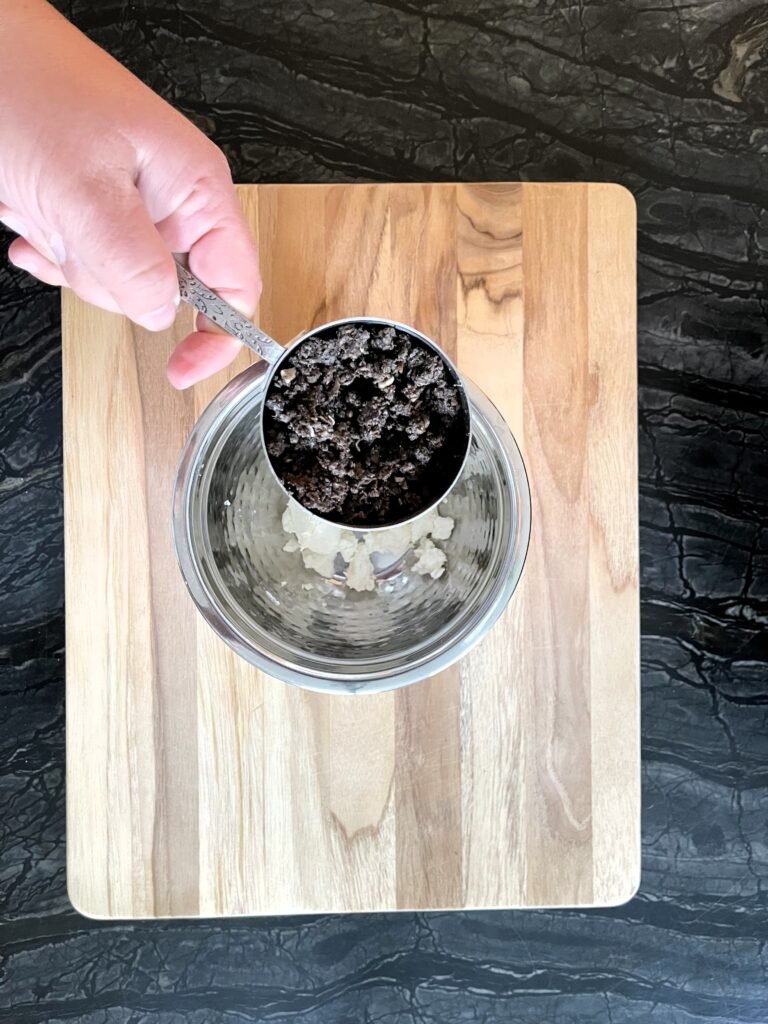
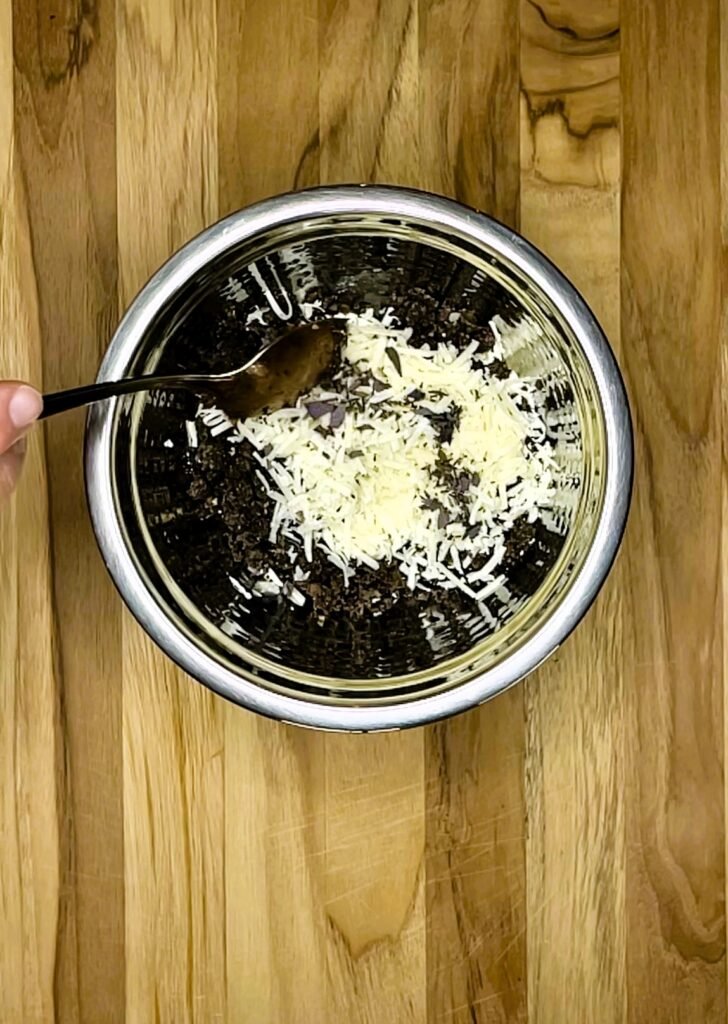
- In a bowl, mix the mushroom duxelles, goat cheese, Parmesan, salt, and minced sage until smooth and well combined.
- Dust your work surface with flour to prevent sticking, and divide the dough into smaller portions.
- Roll out one portion of dough into a thin sheet using a pasta machine or rolling pin. Lightly flour as needed to prevent sticking, then lay the sheet on a floured surface.
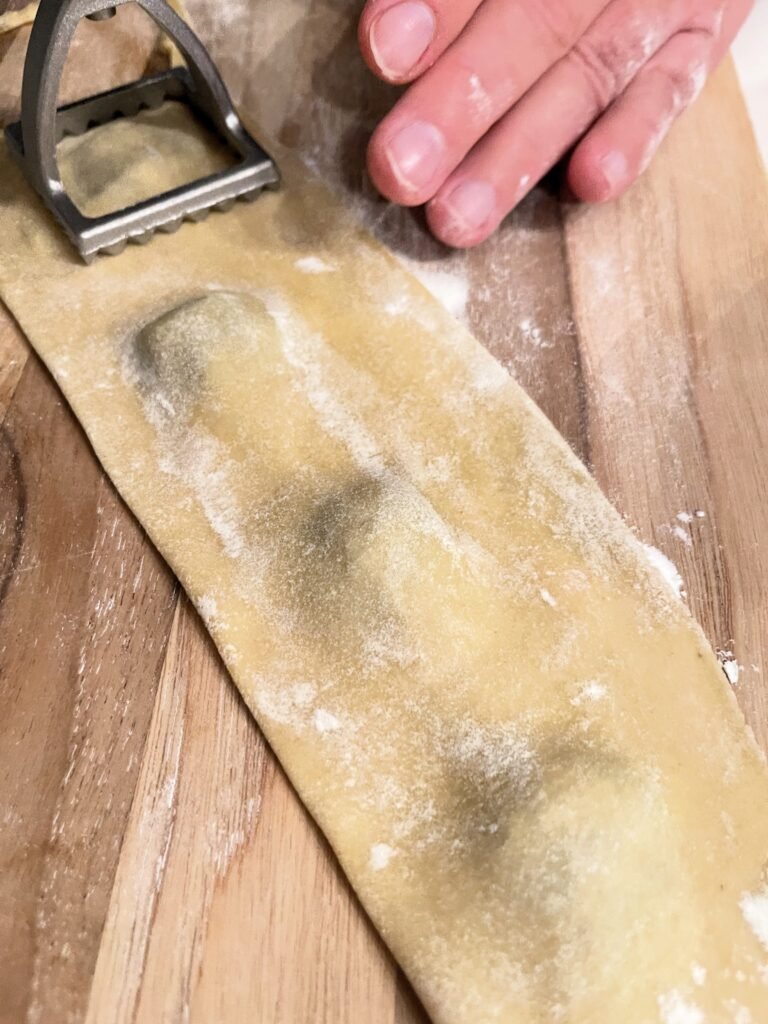
- Spoon or pipe small mounds of filling (about 1 to 1½ teaspoons each) onto the pasta sheet, spacing them evenly. Lightly moisten the dough around the filling with water.
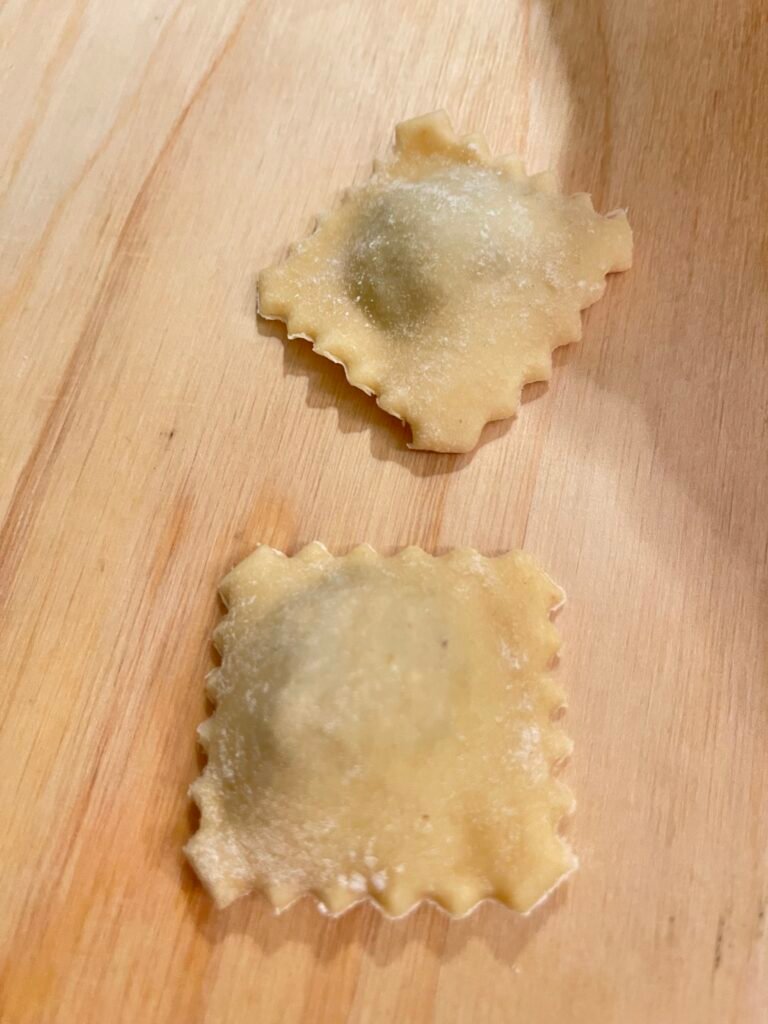
- Place a second sheet of pasta over the filling. Press gently around each mound to push out air, then seal firmly. Cut into ravioli using a ravioli cutter or knife. *Note: This ravioli recipe can also be made using a ravioli mold. The process stays the same; you’ll simply press and shape the ravioli in the mold instead of cutting them by hand.
- Finally, repeat the process with the remaining portions of dough, unwrapping one piece at a time and keeping the rest covered until needed.
Freeze Fresh Ravioli (optional):
- To freeze uncooked ravioli, clear a flat space in your freezer, line it with foil or floured parchment, and place the ravioli in a single layer without touching. Freeze until solid.
- Transfer frozen pasta to airtight freezer-safe bag or container. Store for up to 6 months.
Cook Ravioli:
- Bring well-salted water to a rolling boil (follow the 1–10–100 rule: 1 litre water, 10 g salt, 100 g pasta), then cook ravioli for 3–4 minutes if fresh or 4–5 minutes straight from frozen – until tender and floating (do not thaw).
- Lift out with a slotted spoon directly into warm sauce, adding a splash of pasta water if needed so the sauce lightly coats each ravioli.
Yield & Serving Size:
This recipe makes about 76 ravioli, depending on how thin you roll the dough and how generously you fill them.Serving size: 10–12 ravioli per person➡️Total servings: 6 to 7 generous main-course portions. 👉 Freezer tip: If you’re already setting up your pasta machine, it’s worth doubling the batch. Ravioli freeze beautifully, and the extra time upfront pays off with multiple future dinners that need almost no effort. *Refer to our Mushroom Duxelles post for making and freezing duxelles.
Make a batch! Then come back and tell us how this recipe worked out for you. Leave us a comment below, write us, like us on X, Facebook, Pinterest, Instagram and Blue Sky. And remember, sharing is caring!
FAQ
If the ravioli have been frozen, add them directly to well-salted, fully boiling water. Do not thaw. Thawing can cause the pasta to stick or tear before cooking. Once added, allow the water to return to a boil and cook the ravioli for 4–5 minutes, until al dente.
Always start timing after the ravioli go into fully boiling water
First, bring the salted water to a rolling boil. Only then add the ravioli. Once the water returns to a steady boil and the ravioli begin to float and move freely, start the timer.
Fresh ravioli: 3–4 minutes from the moment they’re added to boiling water
Frozen ravioli: 4–5 minutes from the moment they’re added to boiling water
If the water stops boiling briefly when the ravioli are added, wait until it comes back to a boil before starting the timer. This ensures the pasta cooks evenly and doesn’t turn mushy or undercooked.
Frozen ravioli keep well for up to 2 months when properly sealed. After that, they’re still safe to eat but may lose some texture. To be more specific, frozen ravioli may become slightly chewy, and the filling can dry out or develop minor freezer flavor if stored longer than 2 months.
So, the 2-month recommendation is really about optimal taste and texture, not food safety. You could safely extend it longer, but the ravioli may not taste as good as when freshly frozen.
 Got more questions? Don’t be shy – leave us a comment or send us a message without ever leaving the blog! [Contact us here.]
You May also like:
-
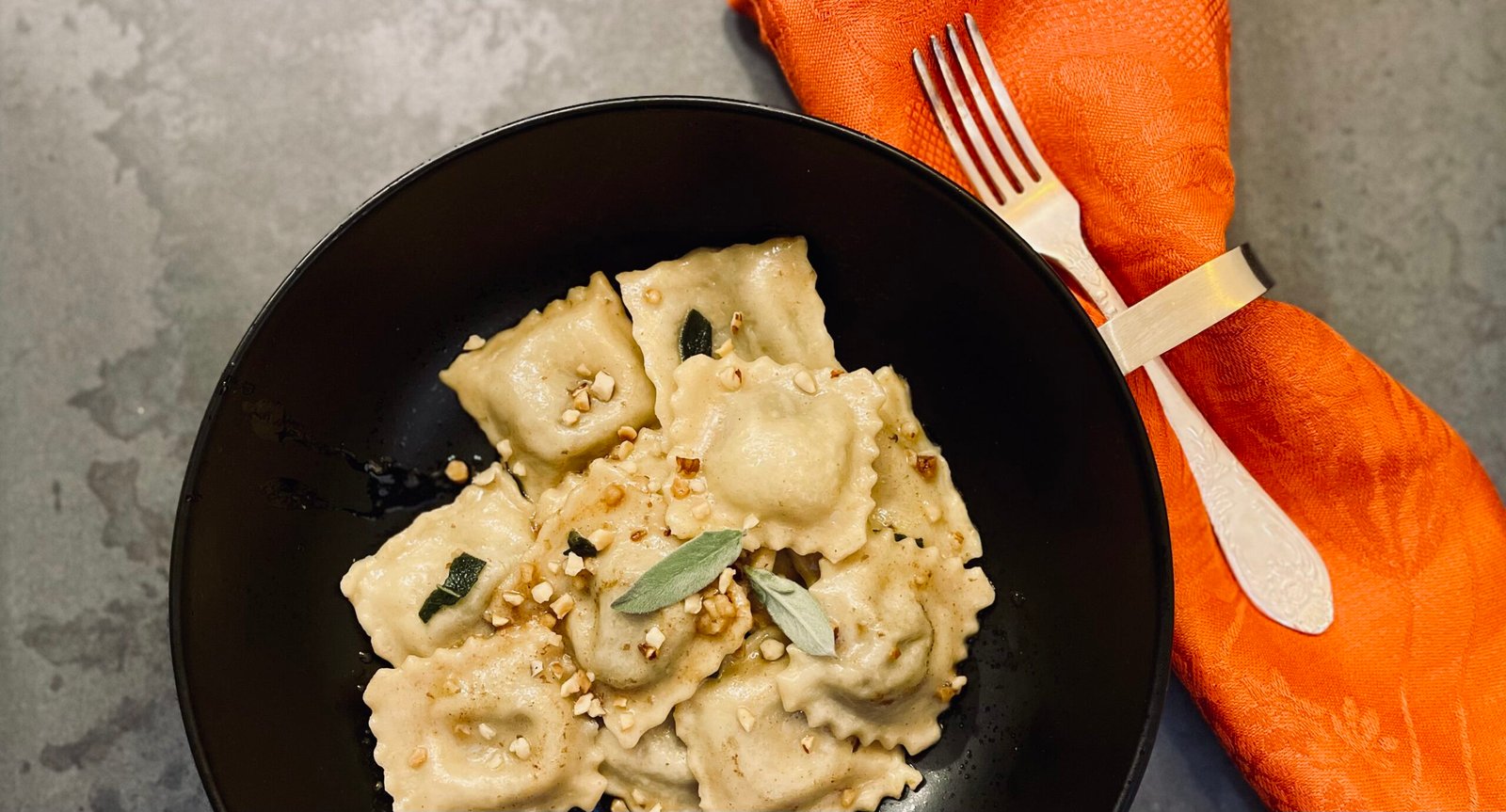
Ravioli with Goat Cheese and Mushroom Filling (Freezer-Friendly, Restaurant-Quality at Home)
Our goat cheese and mushroom ravioli recipe is for those who want an upgrade to a classic ricotta ravioli filling or looking for ways to use mushroom duxelles. Designed as… read more
-
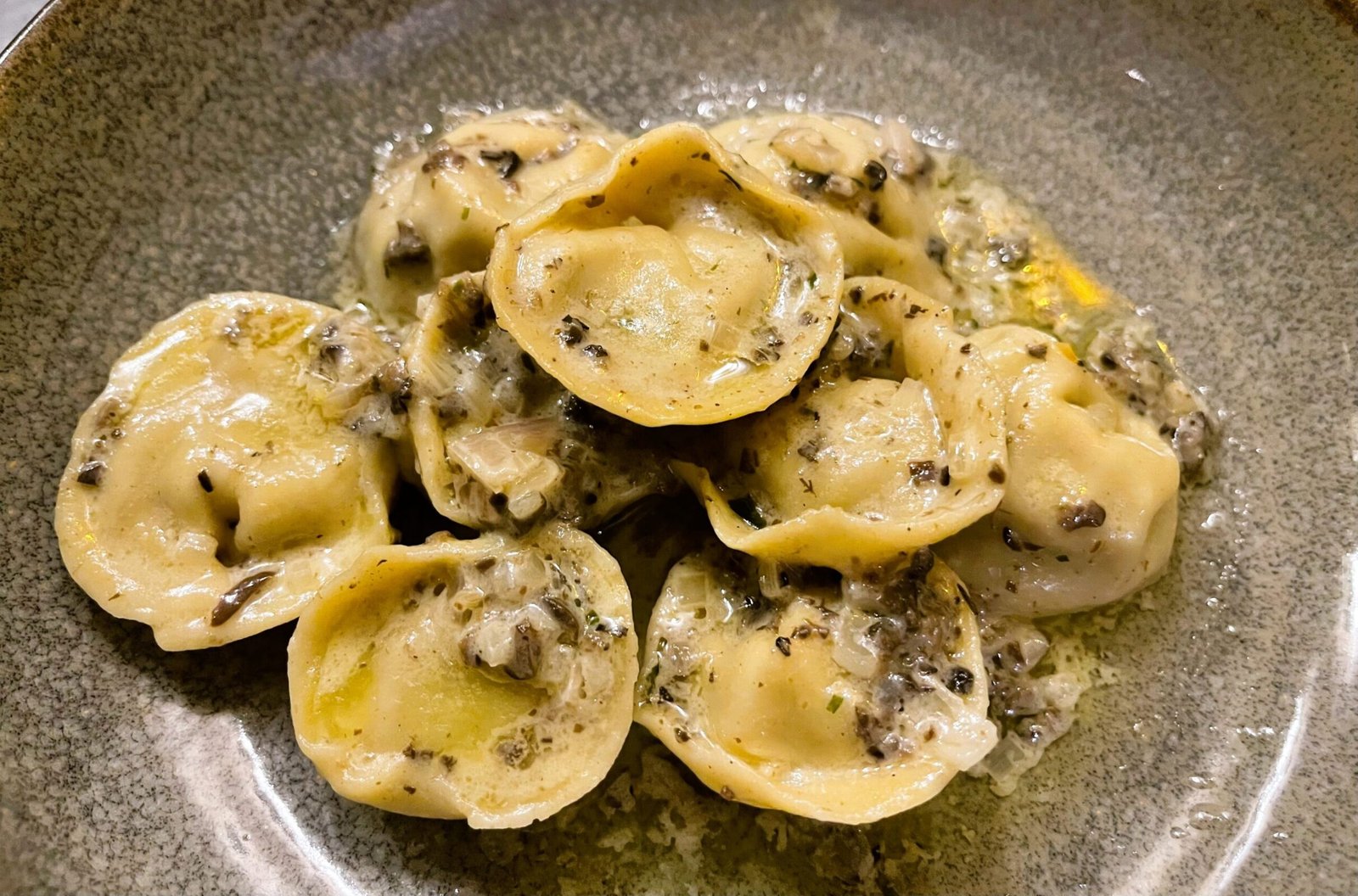
Homemade Tortellini With Potato and Pancetta Filling: Make-Ahead Pasta for the Freezer
These tortellini with potato and pancetta are rich, practical, and made for the freezer. Inspired by Emilia-Romagna tortellini recipe and reminiscent of Ukrainian perogies, this make-ahead homemade pasta is reliable,… read more
-
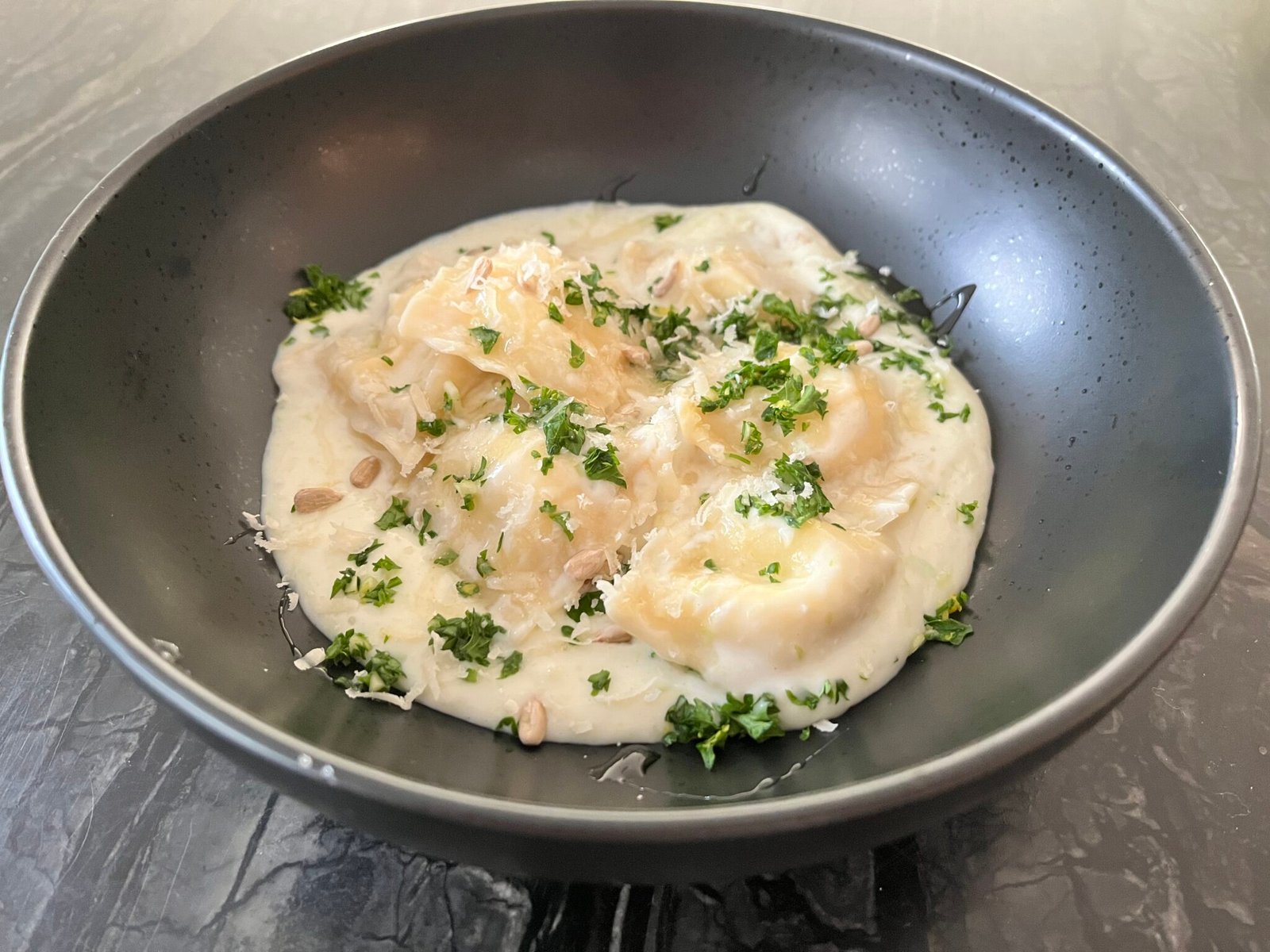
How To Make Freezer Friendly Ricotta Ravioli From Scratch
Making ricotta ravioli at home might seem intimidating, but with this step-by-step guide, it’s entirely doable — and so worth it! Freezer meals don’t have to be predictable. This recipe… read more
-
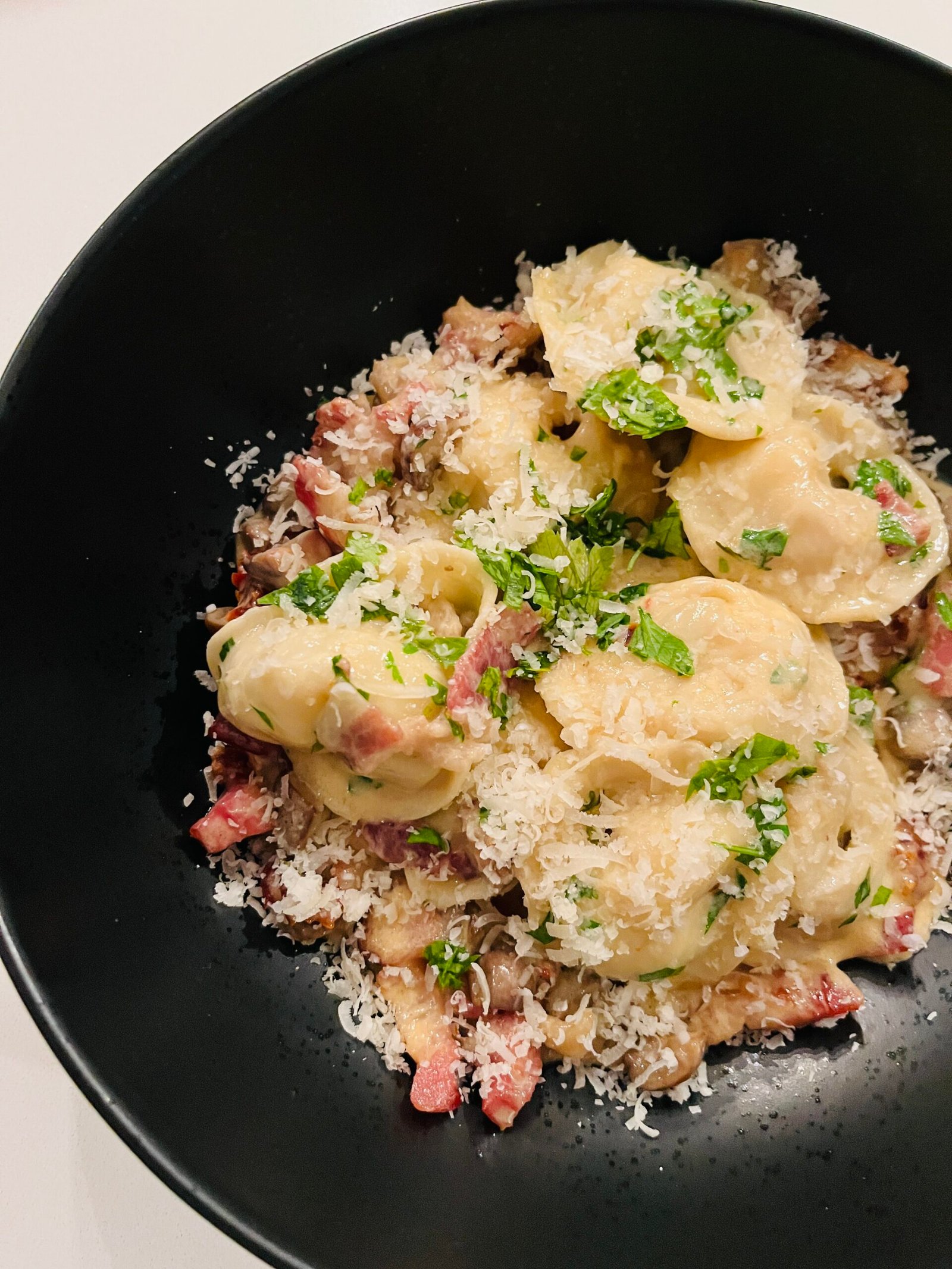
How to Make Turkey Tortellini from Christmas Turkey Leftover
Got leftover Christmas turkey still hanging out in your fridge? Transform it into roast turkey tortellini with our ultimate Christmas turkey leftover recipe! These tortellini are easy to freeze, and… read more

Leave a Reply