How to Make Citrus Jam, Marmalade, and Jelly (and Create Your Own Recipes with Confidence)
Views: 0
The key to great citrus jam, jelly and marmalade is controlling bitterness and balancing flavor. Sounds complicated? It doesn’t have to be! Learn the difference between jam, marmalade, and jelly, plus how to build flavor, and choose the best citrus jam making method to match your personal preferences and style.
Citrus jam sounds simple.
Fruit. Sugar. Heat.
But citrus doesn’t behave like other fruit.
Bitterness. Peel. Pectin. Timing.
Every decision changes the result.
And suddenly you’re wondering:
Why does my jam taste harsh?
Why is my marmalade bitter…but that artisanal citrus jam was amazing?
And what’s the actual difference between jam and marmalade anyway?
We’ll answer all of that. But most importantly, by the end of this guide, not only will you know how to follow a citrus jam recipe, you’ll understand how to build one. Because, like any jam, citrus jam isn’t one thing. It’s a set of choices.
What Is the Difference Between Citrus Jam, Marmalade and Jelly
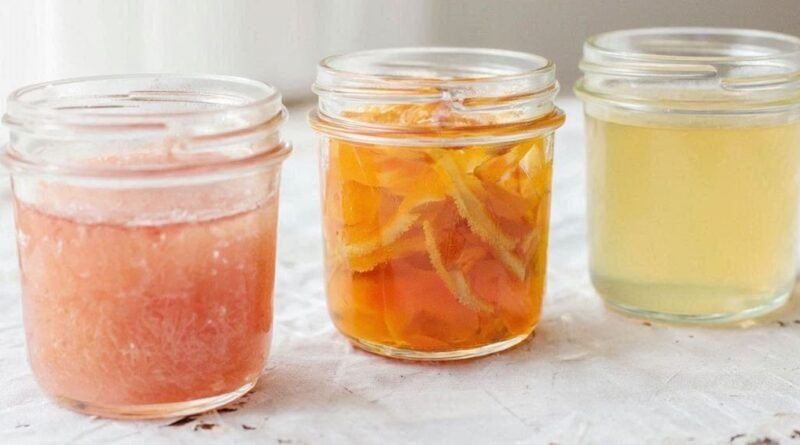
Let’s clear this up first, because everything else depends on it. Citrus jam, marmalade, and jelly are all fruit preserves. But, they’re made differently.
citrus jam
Just the Fruit
Basic Citrus Jam is made from fruit pulp and sugar.
It’s soft, spreadable, and usually smooth or slightly textured. With citrus, that means:
- little to no peel
- a clean, bright flavor
- fruit pulp
marmalade
The Whole Thing
Basic Marmalade is citrus-specific. Whole citrus: peel, juice, pulp. That peel is what gives marmalade its signature balance of sweet and bitter. You control:
- intensity (full fruit use)
- bitterness (peel level)
- structure (pectin release from seeds)
jelly
Just the Juice
Basic Citrus Jelly is the most refined. It’s made from strained juice only -no pulp and no peel. The result is:
- very smooth
- clear
- firm
Collectively all of these are called citrus preserves.
Definitions aside, the real decision is not what you’re making, it’s what texture and flavor profile you want to have.
Do you want:
- Crystal-clear?
- Bitterness?
- Texture?
That decision shapes everything that follows.
Why Citrus Is Harder to Work With
Most fruits behave. Citrus doesn’t. Here’s why:
- pith adds bitterness
- peel carries oils and intensity
- pectin levels change by fruit and ripeness
- heat shifts flavour quickly
That last one matters more than you think. Cook citrus too long, and it goes from bright to dull to bitter. Which means, the real skill isn’t just cooking, it’s knowing when to stop.
We’ll come back to that, because it’s one of the biggest turning points in making better jam.
Traditional English Marmalade Method
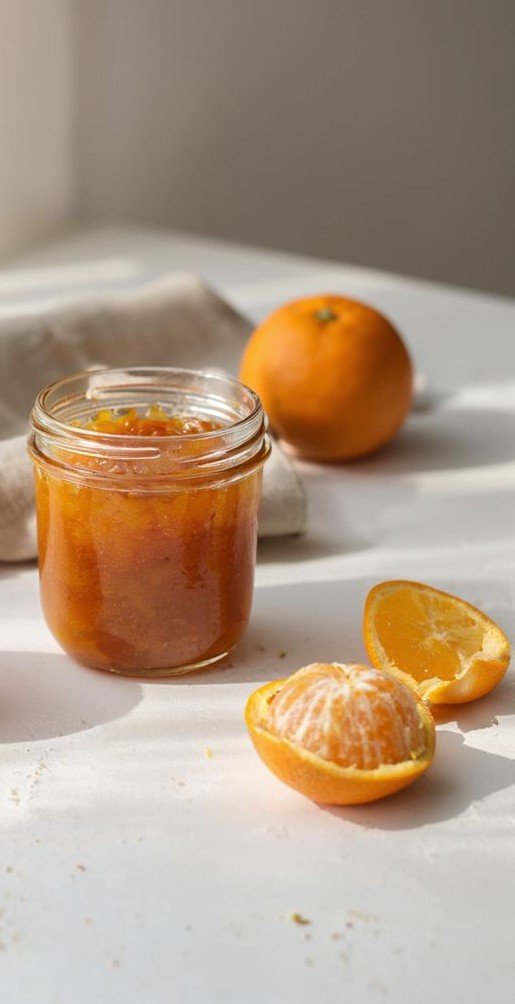
Traditional English marmalade isn’t trying to be subtle. It’s known for:
- Intense citrus flavor
- Noticeable bitterness
- Chewy strips of peel
It’s bold. Structured. If English marmalade were a person, it would definitely have strong opinions.
Some people love it. Others try it once… and quietly move on. Either way, it’s worth understanding because this method shows you how citrus jam works at its core.
How to Prepare Citrus for Classic Marmalade
Begin by slicing your oranges and lemons in half and juice them. Then, comes the step most people underestimate. You need to fish out every single seed (pip).
Yes, every single one.
And, no, don’t throw them away.
Once done, place the seeds in a bowl along with any tough membranes you can scrape out from the fruit. Set them aside. Keep in mind, these citrus parts are bitter. But, they are also rich in natural pectin, which will help your marmalade set. We’ll come back to them later.
Finally, thinly slice the peel. This step shapes the final texture. Thicker slices stay chewy. Thinner slices soften more during cooking.
How to Make the Pectin Bag
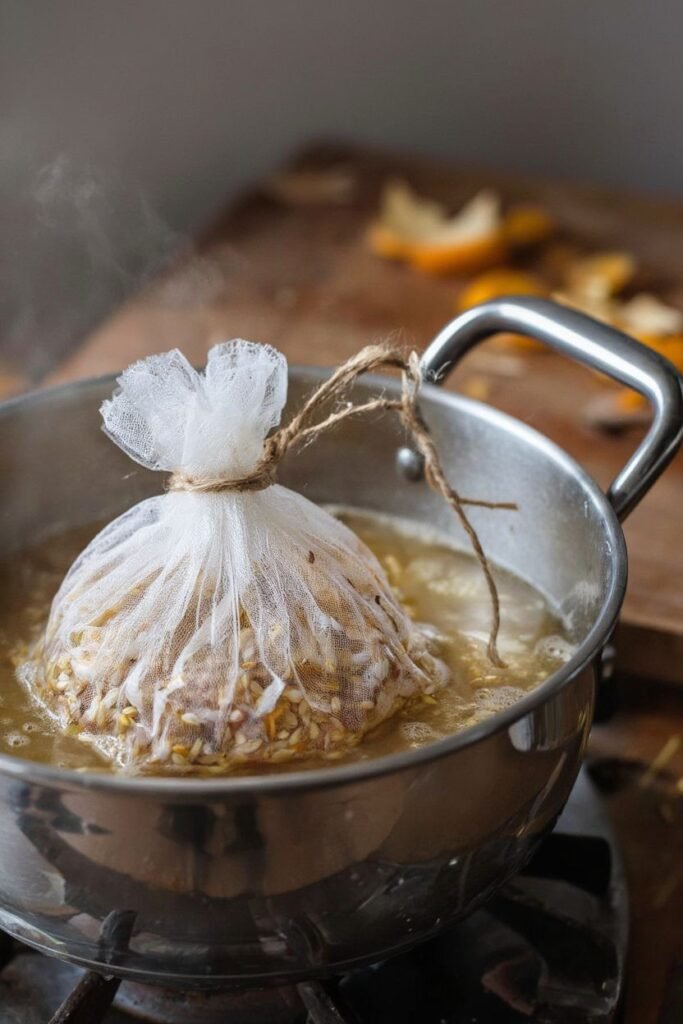
Take those reserved seeds and membranes and wrap them in a piece of cheesecloth. Tie it into a small bundle. This is your pectin bag.
 Pro tip – leave a long string attached to the top of the bundle so you can tie it to the handle of your pot.
As it cooks, this bag will slowly release pectin into the liquid. That’s why you can and should skip the commercial pectin altogether when making classic English marmalade.
Soaking Citrus
To start the process, add your sliced peel, juice, and water to a large pot. Then, submerge the pectin bag in the liquid, cover, and leave it for about 24 hours.
This step may look passive, but it does important work:
- pectin begins to release from the seeds
- peel starts to soften
- bitterness in peel begins to mellow
Skip this step, and you’ll end up with tougher peel and less balanced flavor.
How to Cook Marmalade (And Why Timing Matters)
The next day, bring the pot to a gentle simmer. Let it cook slowly for about 2 hours, or until the peel is completely soft. At this step you’re looking for one thing – peel that is butter-soft.
This matters more than it sounds.
If you add sugar before the peel softens, the sugar will “lock” the peel structure. And once that happens, it stays tough for good.
Extracting the Pectin
Once the peel is soft, remove the pectin bag. Place it in a fine mash strainer over the pot and press it firmly with a spoon. Alternatively, squeeze it carefully with tongs. A thick, sticky, jelly-like substance will come out. That’s your natural pectin.
Return this to the pot, then discard the bag. It has done its job.
Finishing the Marmalade
Now, and only now, add the sugar. Make sure you stir it until fully dissolved. Once done, increase the heat and bring the mixture to a fast boil.
Cook for about 15–20 minutes, or until it reaches setting point (around 220°F / 104°C or passes the cold plate test). As it boils, the liquid reduces and everything starts to come together and slowly turn into marmalade.
Lessons from Making Marmalade This Way
This method isn’t just tradition for the sake of tradition.
It teaches us:
- where pectin comes from
- why English marmalade is bitter
- why timing matters
Once you understand this, modern methods make a lot more sense.
How to Make Citrus Jam – Modern Method
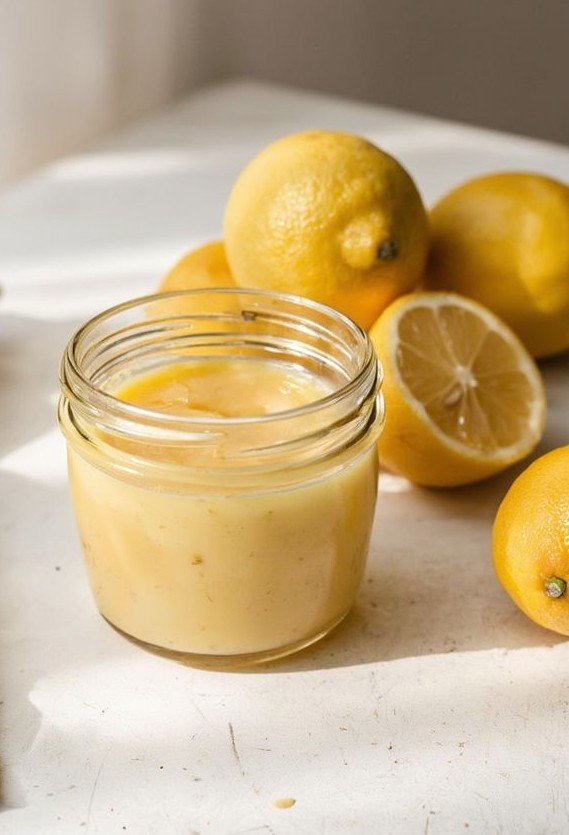
Modern citrus jam isn’t about long soaking times or slow pectin extraction. It’s faster. More direct. Most importantly, it gives you control.
You decide:
- how bright or deep the flavor will be
- how much of bitterness stays
- how much peel you keep
Two Ways to Approach Citrus (Before You Start Cooking)
At this point, you have two options. Both work. They just lead to slightly different results.
Option 1: Peel First (Cleaner, Brighter Citrus Jam)
This is the simplest and most straightforward approach.
Peel the citrus, break it into segments. Remove all the seeds, and as much of the white pith and membranes as possible. Then, chop the fruit and keep all the juices. Next, proceed to cooking. More about that in a bit. With this option, you get:
- Brighter flavor
- Minimal bitterness
- Smooth, clean texture
- Much less total time
Option 2: Cook Whole Citrus First (Control Bitterness Without Losing Depth)
If you want to work with the peel, but not the bitterness, this method gives you control.
- Start with whole citrus, unpeeled.
- Cover the fruit with water and bring it to a boil.
- Boil for 1 minute, then drain completely.
- Repeat this process 1–2 more times.
Each round pulls out some of the bitterness from the peel.
After that:
- Cover the citrus with fresh water again.
- Simmer for 1 hour, until the fruit softens.
Now you can decide what to do next. Your choices are:
- Peel and discard the skins to get cleaner jam
- Keep some or all of the peel to get more depth and texture
Either way, you get the flavor of citrus peel, without the harsh edge. To help you get started, we have a few recipes ready for you:
Deciding What to Keep (and Why It Matters)
Once your fruit is prepped (any of the two methods), you make your next choice:
- No peel → smooth, bright, low bitterness
- Some peel → more complexity
- More peel → closer to marmalade
And guess what, there’s no “correct” version. Instead, you’re building the outcome that works for you and you do it from the start.
Where the Citrus Jam Set Comes From (This Is the Key)
Before you go further, you need to be clear on one thing – what’s going to make your citrus jam set?
Because you removed the membranes, seeds, and most of the peel, you also removed most of the natural pectin. So, now you have three options to set your jam:
- Add pectin → fastest, most reliable method
- Increase sugar (up to 1:1 ratio) → traditional approach with a firmer set
- Cook longer → works, but comes at a cost
That last option is where things usually go wrong.
Long cooking will eventually thicken the jam, but the flavor dulls and brightness (a.k.a natural fruit flavor) fades. What’s worse, bitterness can creep in. Yes, it sets, but it’s no longer the same jam.
🔥How to Cook Citrus Jam
Everything you did earlier affects flavor. This step controls structure. Whichever option you used, from this point on, the process is the same – you’re making jam.
Remember, if the jam doesn’t set the way you expected, the reason is usually here:
- not enough pectin
- not enough sugar
- or too much/not enough cooking
✅The Base Process
- Add your prepared fruit to a pot with sugar.
- Bring it to a boil.
- Add pectin, if using. Depending on the type of pectin, you may add it before boiling or during the boiling step.
As it cooks, the fruit softens, the sugar dissolves and the mixture thickens as it reduces.
✅What to Watch for
First, the mixture looks loose. Then, it changes.
Bubbles slow down. The texture tightens. It starts to look cohesive.
Stay with it at this stage.
✅When It’s Done
You’re aiming for the point where it just begins to hold its shape.
- Sop too early, and you have runny jam
- Stop too late, and you have thick, heavy, less vibrant jam
If you’re unsure, use the cold plate test. It’s simple and more reliable than guessing.
Adding Spices, Spirits, and Other Fruits – How to Make Your Own Citrus Jam Variations
Once you can make a basic citrus jam, you start comparing other jars to your own. At first, all citrus jams seem interchangeable. However, you soon start singling out artisanal, small-batch and restaurant versions. Finally, you start asking a simple question: how did they get that flavour?
Orange with Pernod. Grapefruit with black pepper. Apple with citrus. Brandy, spices, herbs.
Same base, but very different results.
And that’s when the shift happens.
You’re no longer learning how to make jam. Instead, you’re learning how to control it.
Spices
Spices don’t change how citrus jam sets. Instead, they change how it tastes.
Cardamom, ginger, vanilla, black pepper – all of them work, but in different ways.
Add them early, and they blend into the jam.
Add them later, and they stand out more.
In either case, a little usually goes a long way. In fact, it’s easy to overpower the fruit if you’re not careful.
If the spice becomes the first thing you taste, then you’ve likely added too much.
Spirits
Just like spices, alcohol doesn’t play a role in setting the jam. That still comes from pectin, sugar, and cooking time. What alcohol does, however, is carry aroma.
Brandy adds depth, while rum brings a bit of richness, and orange liqueur accentuates the citrus flavor.
When you add it matters.
Added early, it blends in and mostly cooks off.
If added at the end, more of that aroma stays in the finished jam.
In any case, you’re not making your jam boozy. Rather, you’re shaping how it smells and finishes.
Other Fruits
Citrus on its own can be sharp. But, adding other fruit to the mix changes that.
For example, berries soften the acidity. Apples add body and natural pectin, while stone fruit rounds everything out. Overall, this is just as much about creativity as it is about balance.
So, if your citrus jam feels too sharp or too tight, this is usually the easiest way to adjust it.
Where This Fits
All of these are adjustments. In other words, they don’t change the method or replace the base. Instead, they build on it.
Firstly, start with a citrus jam you understand. Then, change one thing. That’s how you get consistent results. All of a sudden, you’re creating your own versions instead of copying someone else’s.
Processing Time Guidelines for Water Bath & Atmospheric Steam Canners
Preserve type: Jam.
Style of Pack: Hot
| Processing Time at Elevations of: | 0 – 1,000 ft | 1,001 – 6,000 ft | Above 6,000 ft |
| Jar Size: 1/2 Pint (8 oz, ~250 ml) | 5 min | 10 min | 15 min |
water bath canning times; atmospheric steam canning times;

Make a batch! Then come back and tell us how this recipe worked out for you. Leave us a comment below, write us, like us on X, Facebook, Pinterest, Instagram and Blue Sky. And remember, sharing is caring!
❓FAQ❓
Bitterness comes from the pith, seeds and peel. In particular, too much peel, not enough pre-treatment, or long cooking will push bitterness up. As a result, even a well-balanced recipe can turn sharp if these factors stack up.
To reduce citrus jam bitterness:
-remove more pith and membranes
-blanch whole citrus 1–3 times before cooking
-balance with sugar or other fruit
-avoid overcooking
Each of these approaches accomplish the task differently. For example, removing pith cuts bitterness at the source, while blanching softens harsh compounds. In contrast, adding sugar or fruit rounds out the flavor. Choose your approach based on the final flavor you want.
It’s usually due to one of three reasons: not enough pectin, not enough sugar, or stopping the cooking process too early. In other words, the jam structure never had a chance to form.
Less commonly, it can happen if there’s too much liquid in the mixture or if the measurements were inaccurate.
It’s usually due to too much pectin or a sugar ratio that’s too high.
This can happen if you added pectin while also keeping the peel and membranes (which are naturally rich in pectin), or if the jam was reduced too aggressively during cooking.
The result is a jam that sets very quickly but may turn out stiff or slightly rubbery in texture.
Next time, try reducing the amount of added pectin or stopping the cooking process a bit earlier.
 Got questions? Don’t be shy – leave us a comment or send us a message without ever leaving the blog! [Contact us here.]
 Curious about reusable jars? Want to save money and be eco-smart? We’ve got just the article for you!
 Not sure how to sterilize canning jars? Find the answer about “dos and don’ts” of canning jars sterilization.
You May also like:
-
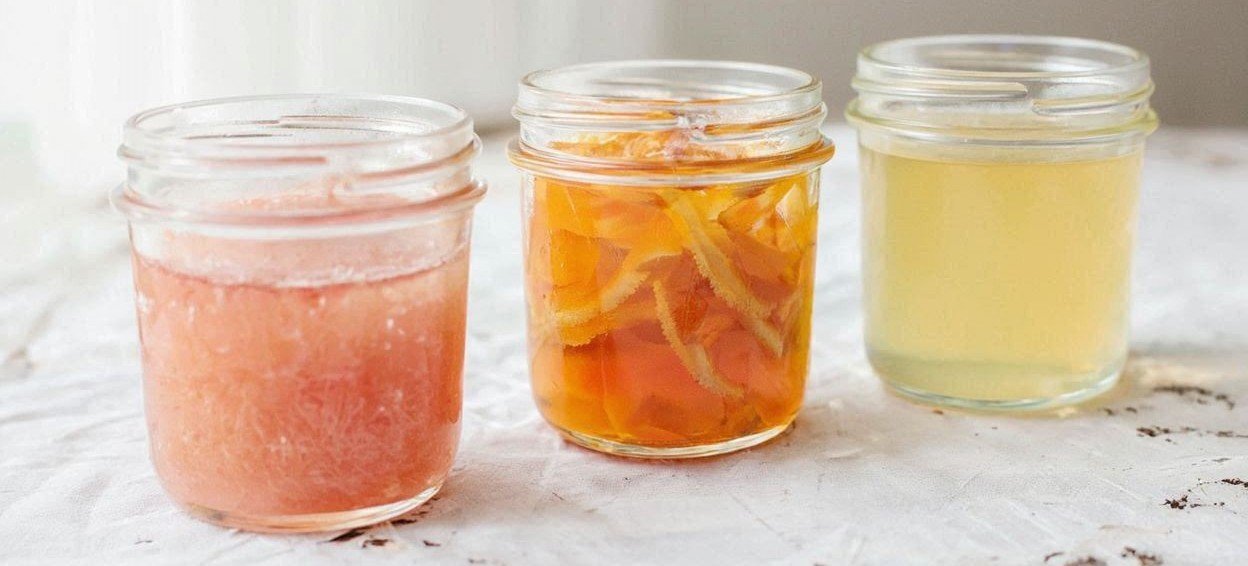
How to Make Citrus Jam, Marmalade, and Jelly (and Create Your Own Recipes with Confidence)
Making citrus jam can be tricky, but it doesn’t have to be! Discover the difference between jam, marmalade, and jelly. Learn how to avoid common mistakes. Understand the citrus jam… read more
-
Blood Orange Marmalade: Your New Favorite Citrus Jam Recipe
To all the citrus marmalade haters out there—we see you. And we promise: this blood orange marmalade is different. It’s bright, bold, and anything but boring. It even has a… read more
-
Raspberry Blood Orange Jam – Make With Fresh Or Frozen Berries
Are Michelin stars handing out awards for jams yet? If they are, this Blood Orange Raspberry Jam is a top contender! With the perfect blend of tangy blood oranges and… read more
-

How To Make Lemon Ginger Jam With Honey
If life gives you lemons, don’t make lemonade—make lemon jam instead. Need a holistic cold and flu remedy? Then this lemon jam recipe is for you! It does a double… read more
-
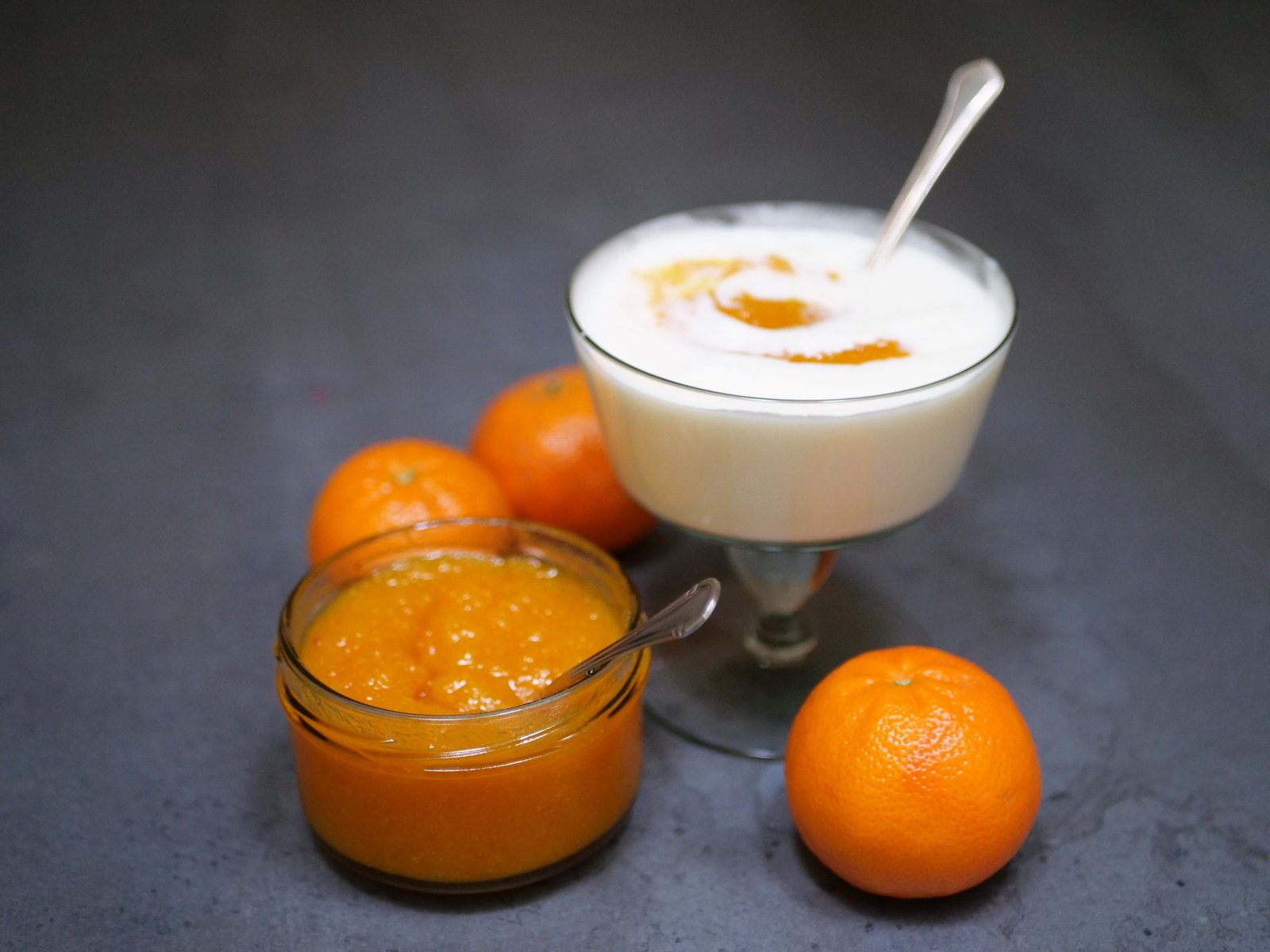
Simple Mandarin Jam With Peel: Old-Fashioned Georgian Recipe
Explore the world of Mandarin jam. With plenty of pulp, a moderate amount of zest, and just enough sugar to sweeten without overpowering, it delivers a vibrant burst of citrusy… read more
-
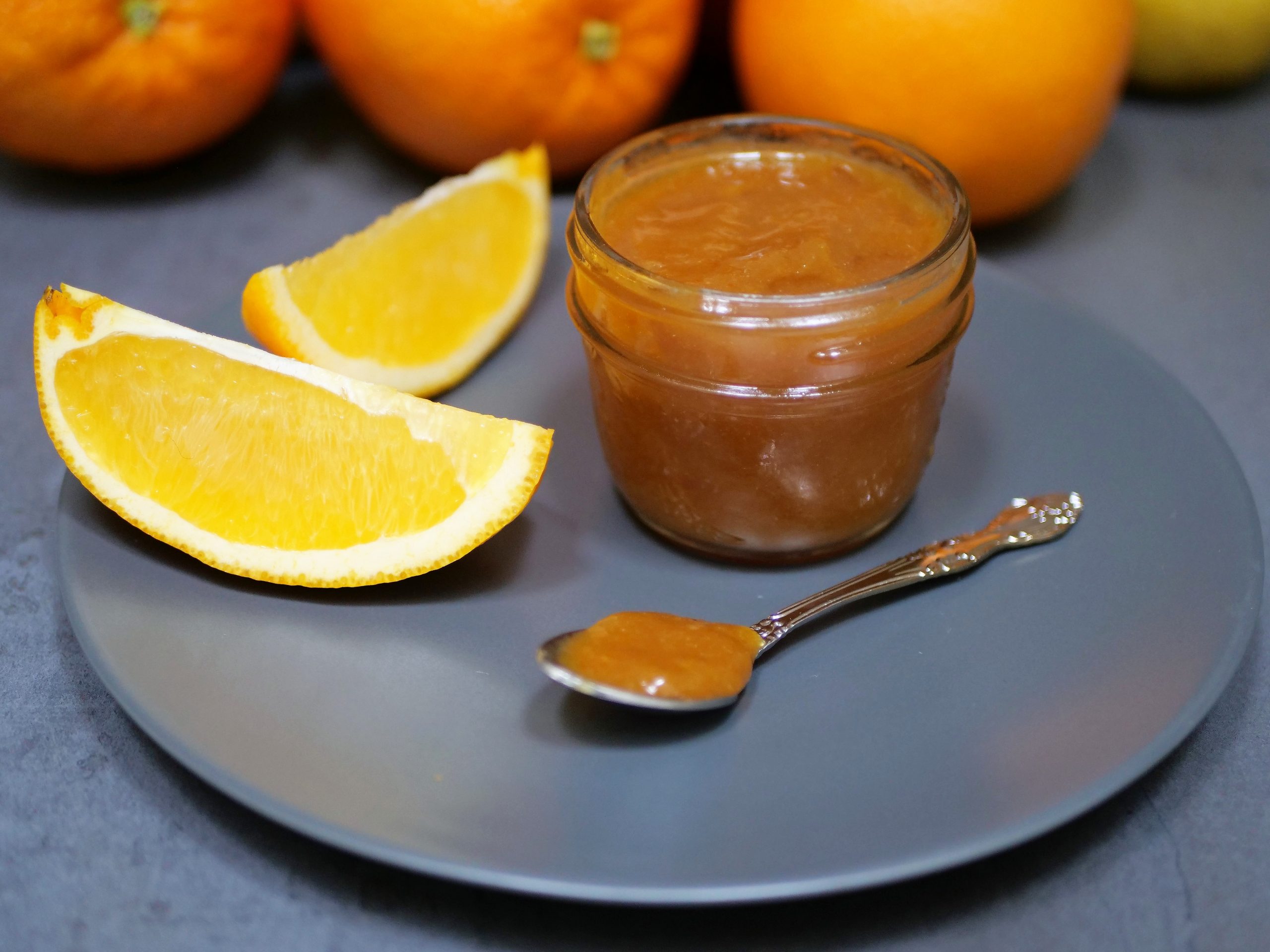
How To Make and Preserve Italian Style Orange Marmalade
This orange marmalade is a far cry from those overly sweet orange marmalades you’ve tried in the past. Packed with zest and plenty of pulp, ours is a perfect breakfast… read more

Leave a Reply