Cardamom Chardonnay Apple Butter Made In Classic French Style
Views: 236
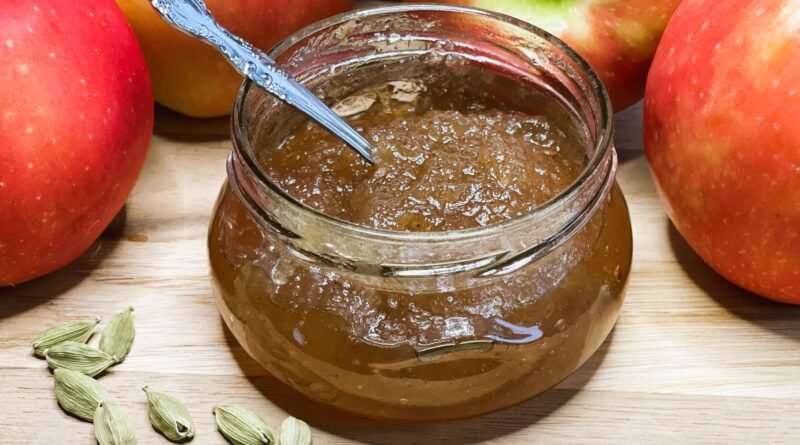
Apple butter may confuse Europeans, amuse skeptics, and delight North Americans. Yes, “apple butter” is a misnomer because it contains no actual butter or diary. However, when made thoughtfully, it becomes a luxuriously smooth and irresistible preserve.
Feel free to head straight to the recipe, or linger a little for a few helpful tips and flavor ideas to make this jam truly special.
Apple butter might be one of the most misunderstood staples in the North American pantry. If you’re not from the U.S. or Canada, the very name might sound suspicious.
Butter? Made from apples? Is this a prank?
Our European background made us skeptical about the value of making “apple butter”. Don’t get us wrong, this preserve has its charm. It’s rustic, slow-cooked, thick, and intensely apple-forward. What it lacks, in our opinion, is certain elegance – a refinement you find in artisanal European confiture.
Unsurprisingly, we did what any small-batch preserving obsessives would do: we combined the two preserve-making traditions.
Out artisanal apple butter recipe leans on the old-world culinary philosophies of Christine Ferber and the grand French houses like Fauchon, while still embracing the cozy, simmering spirit of traditional North American apple butter making. Crisp apples melt slowly into thick, caramel-like goodness, enriched with lemon, lifted by chardonnay, and perfumed with warm cardamom. The result is something that tastes both deeply familiar and delightfully unexpected.
What Exactly Is Apple Butter
The first time we encountered a jar of canned apple butter, we genuinely expected actual butter infused with apples. Something to melt into a pan sauce for pork chops. Perhaps a spreadable compound butter scented with warm spices. Imagine our surprise when we discovered it contained no butter at all, not even a dash. This raised more questions than answers.
- Why call it “butter”?
- Is it an apple jam? Maybe a custard or a fruit paste?
- Is it some sort of medieval invention that somehow avoided European migration?
The answer is simple. Apple butter is, at its core, a highly concentrated fruit spread made by cooking apples longer and slower than traditional jam. The goal isn’t gel structure. It’s caramelization.
Where apple jam aims for bright flavor and a soft set, apple butter aims for depth – a darker, smoother, more luxurious paste created by evaporating moisture and allowing natural sugars to brown.
Is Apple Butter a North American Thing?
Mostly, yes. In Europe, this ultra-thick, intensely cooked-down spread would typically be considered a form of jam or fruit paste. But in North America, “butter” became the colloquial term for smooth, spreadable fruit preserves.
Think apple butter, pumpkin butter, pear butter, even banana butter.
For those of us who didn’t grow up with it, the naming is bizarre. But once you taste it, especially our gourmet apple butter with French technique woven through, the concept starts to make sense.
Apple Butter vs Applesauce
This is a crucial distinction, especially for readers outside North America.
Applesauce
- Light in color
- Mild in flavor
- Contains more water
- Cooked quickly
- Soft and spoonable
Apple Butter
- Deep brown and glossy
- Rich, caramelized flavor
- Thick and spreadable
- Cooked for a long time
- Silky, almost creamy consistency
Applesauce vs apple butter comes down to moisture, intensity, and technique. Apple butter is richer, thicker, and far more concentrated.
Why Combine French Confiture Techniques with Rustic Apple Butter?
Because the rustic method alone doesn’t quite get us to that silky, pastry cream-like finish we adore.
Traditional French confiture values:
- balance of acidity and sweetness,
- aromatic layering,
- and slow but controlled cooking.
Rustic North American apple butter methods emphasize:
- long simmering,
- bold, cozy spice,
- and deep caramel notes.
Bringing the two together gives you artisanal apple butter that is both comforting and refined.
Cardamom and chardonnay are not traditional in either culture – and that’s precisely why they push this recipe into the modern era. They lift, perfume, and lighten the preserve, making it unmistakably 21st-century.
Tips & Tricks for the Best Apple Butter
 Use crisp apples: Mushy varieties break down too quickly and turn grainy.
Cook low and slow: High heat scorches quickly and ruins both color and texture.
Stir frequently: Apple butter is sticky. A heavy pot helps, but attention helps more.
Aim for a deep color: A pale apple butter tastes unfinished.
Use a wide pot, not a tall one: More evaporation = faster, more even reduction.
Taste at the end, not at the beginning: Flavors intensify dramatically during reduction.
For canning, keep the sugar as written: Sugar is a preservative and affects texture.
If freezing, you may slightly reduce sugar: But only slightly. You need sugar to achieve caramelization
Why Slow Cookers Get Mentioned So Often in Apple Butter Recipes
In North America, slow cookers have become the default method for apple butter because apple butter needs long, low, steady heat. It doesn’t hurt that slow cookers are common household items. Slow cooker reduces the risk of apple butter scorching. Plus, you can leave it unattended for hours. What’s more, many home cooks don’t like standing over a stove.
While we don’t agree with the method of making apple butter in the slow cooker because the depth and flavor will suffer, we do understand why people may want to use it. That’s why we have a special section in our recipe if you want to make the apple butter in a slow cooker.
How to Make This Recipe Work for Busy Schedules
This recipe is structured with intentional stopping points so you can cook in short segments and pick up later without risking the batch. Examples:
- Cook apples before work, finish the butter after dinner.
- Do the first reduction one evening and finish the next day.
- Refrigerate the pot whenever you need to pause.
Most importantly, the flavor continues to deepen as the mixture rests, so pausing is not only acceptable, it often improves the final result.
Step-by-Step Instructions
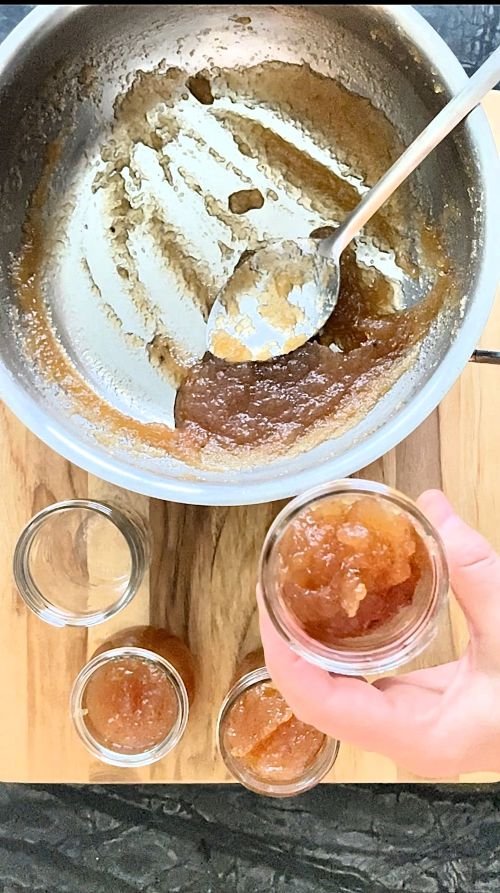
Serving Suggestions
Once we stopped wrestling with the name, we realized how incredibly versatile apple butter is. In fact, it behaves more like a pastry ingredient than a traditional jam.
Try it:
- spread on toast, brioche, croissants, or crumpets, especially when paired with a quality Devon cream
- folded into plain yogurt or oatmeal
- paired with aged cheddar or creamy chèvre and served on a cheeseboard with nuts
- layered into cakes, Swiss rolls, thumbprint cookies, or rugelach
- used as a filling for hand pies
- made into sauce and spooned over roasted pork, chicken, or root vegetables
- mixed into a vinaigrette for an autumn salad
- slightly warmed up and swirled through vanilla ice cream
Our favorite way to use apple butter is inside a warm crepe with toasted crushed walnuts sprinkled on top.
Recipe Card:
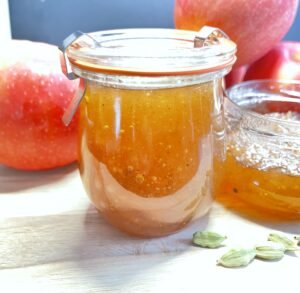
Cardamom Chardonnay Apple Butter
Equipment
- large pot
- Fine-mesh strainer
- heavy-bottomed pot
- Slow cooker (optional)
- Water bath canner or steam canner
- Jars, funnel, jar lifter
Ingredients
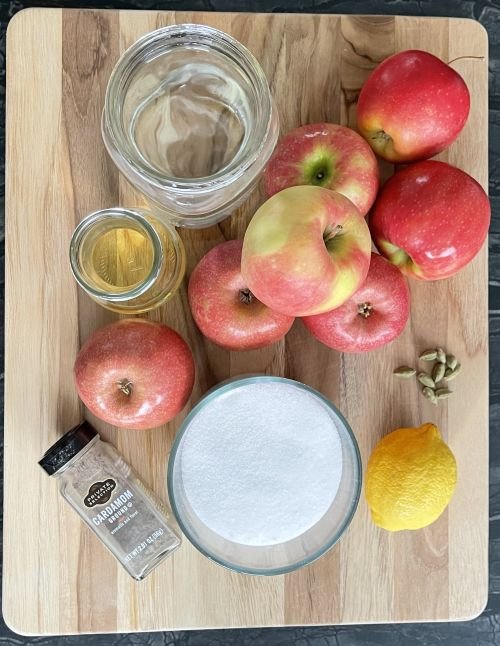
- 2.6 lb crispy apples peeled, cored, chopped (1200 g or about 8 medium apples)
- 2 2/3 cups sugar granulated (540 g)
- 1 tbsp ground cardamom (approx. 15 g)
- 1/2 tbsp cardamom pods lightly crushed (about 4–5 pods)
- 1/3 cup fresh lemon juice (80 ml)
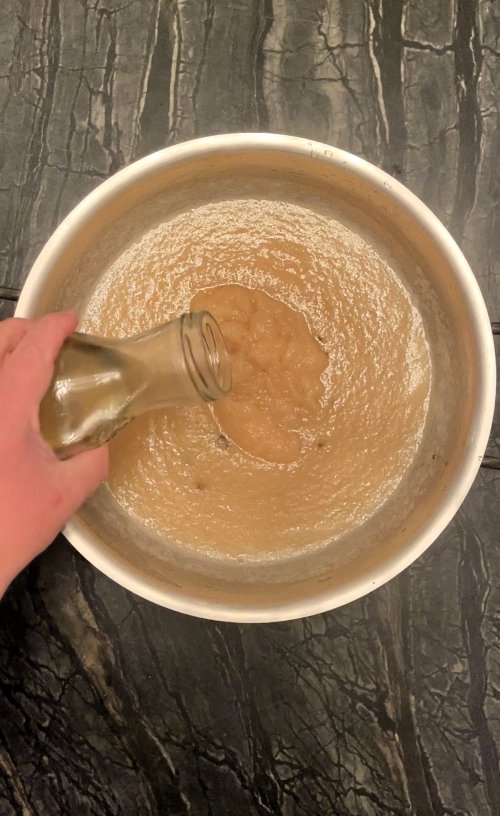
- 1/2 cup Chardonnay dry white wine (120 ml)
- 5 cups water (1.5 liters)
Instructions
This small-batch method is designed to be as hands-off and weekday-friendly as possible.
Step A. Cook the Apples
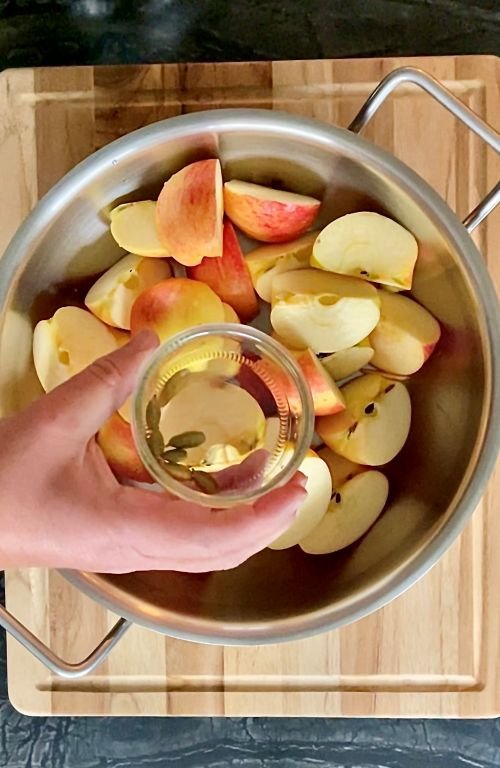
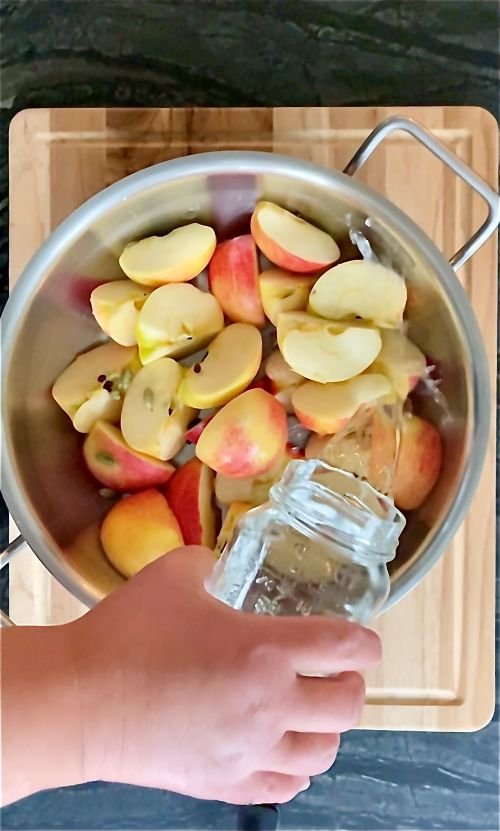
- Cut apples into quarters. Do not remove cores or seeds.
- Place cut apples and all the cardamom pods in a large pot. Add the 5 cups of water to cover.
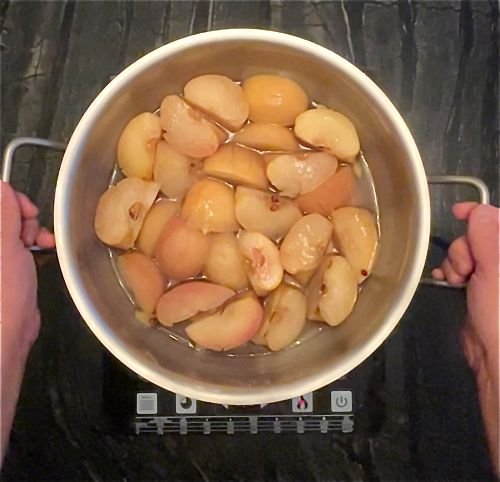
- Bring to a boil, reduce heat, and let apples simmer gently.
- Cook for 30 minutes, until apples are soft.
Step B. Remove from heat and let cool – uncovered
- You may refrigerate overnight or pause for several hours. You can start in the morning and finish in the evening.
Step C. Strain and Press
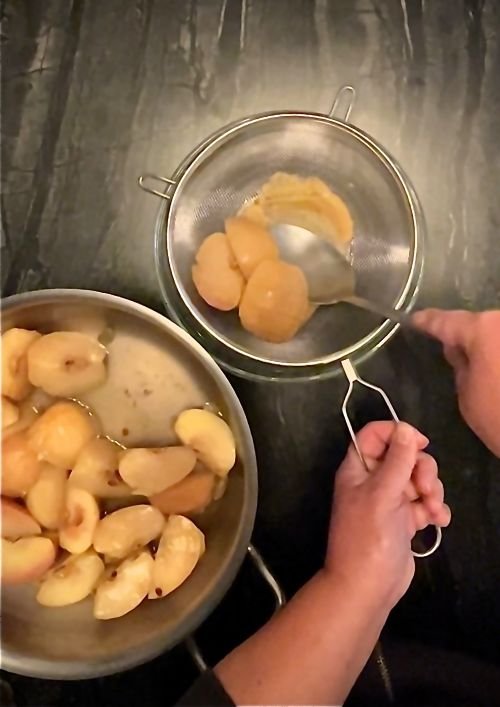
- Set a fine-mesh strainer over a large bowl. Strain the apples and reserve all the liquid.
- Using the same strainer, press the cooked apples with a large metal spoon until all the pulp passes through. Skins, cores, and seeds must stay behind.
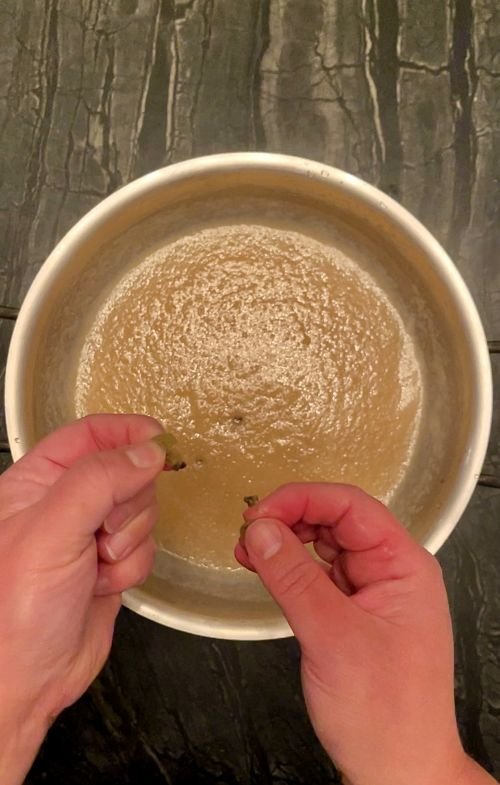
- Pick the cooked cardamom pods and scrape the seeds from the pods right into the apple pulp. Add ground cardamom and mix.
Step D. Combine Ingredients
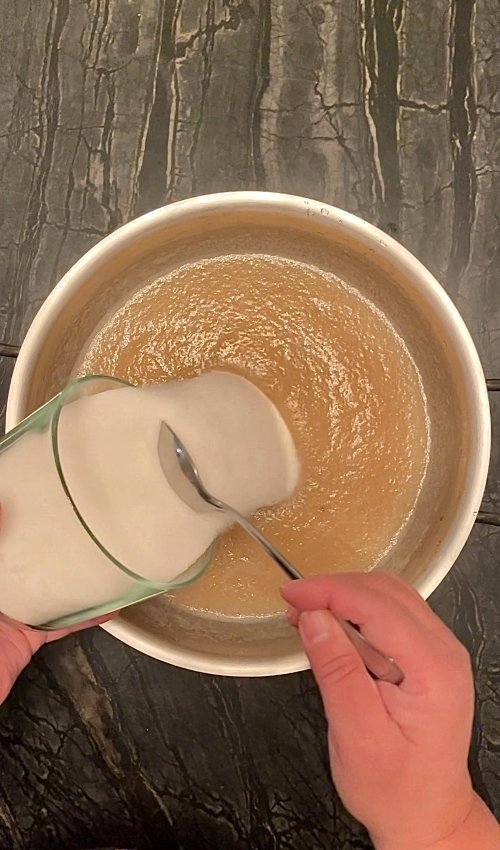
- In a wide, heavy-bottomed pot combine all remaining ingredients. Stir to combine
Step E. Cook in Three Stages (on stovetop)
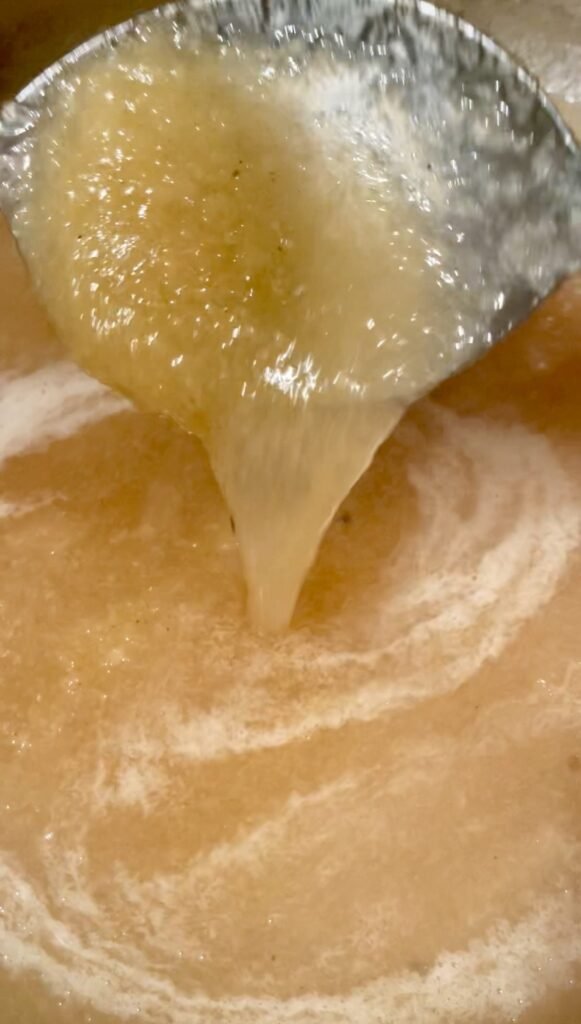
- Stage1: Bring the mixture to a gentle boil. Reduce heat to the lowest setting and cook for 10 minutes, stirring regularly. Turn off heat and let the pot cool completely, uncovered. It is fine to cool overnight.
- Stage2: Place the pot back on the heat, bring to a boil, reduce the heat, and cook for 30 minutes. Stir at least every 15 minutes. Turn off heat and let cool uncovered again.
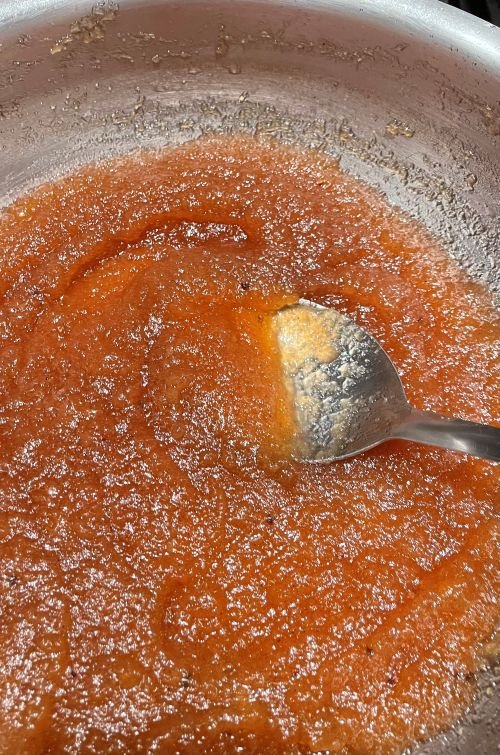
- Stage 3: Reheat once more. Bring to a boil, lower heat, and cook for 30 to 45 minutes until thickened to your preferred consistency. Test thickness using a chilled plate, since hot butters always look thinner in the pot than they do when cooled.
Alternative Step E: Slow Cooker Method (Start After Step D – Combine Ingredients)
- There is no shortcut for cooking and straining the apples, but once that step is done, the slow cooker can take over.
- Add the apple pulp, reserved apple juices, sugar, lemon juice, ground cardamom, cardamom seeds and wine to the slow cooker. Stir to combine.
- Cook on Low with the lid closed for the first 1 hour. This helps the mixture heat evenly without forming a skin or reducing unevenly.
- After the first hour, prop the lid open with a wooden spoon to allow steam to escape. This step is essential because apple butter must evaporate significantly to thicken properly.
- Continue cooking on Low for 3 to 5 hours, stirring every 1 to 2 hours.
- Every slow cooker is different, so the reduction time may vary. The mixture should gradually darken, thicken, and become glossy.
- The apple butter is done when it holds its shape on a chilled plate.
Store or Can
- Pack the butter into jars and process using a water bath canner or atmospheric steam canner following your standard time chart.
- You may also use freezer-safe jars and freeze the apple butter.
Processing Time Guidelines for Water Bath & Atmospheric Steam Canners
Preserve type: Jam.
Style of Pack: Hot
| Processing Time at Elevations of: | 0 – 1,000 ft | 1,001 – 6,000 ft | Above 6,000 ft |
| Jar Size: 1/2 Pint (8 oz, ~250 ml) | 5 min | 10 min | 15 min |
water bath canning times; atmospheric steam canning times;
Make a batch! Then come back and tell us how this recipe worked out for you. Leave us a comment below, write us, like us on X, Facebook, Pinterest, Instagram and Blue Sky. And remember, sharing is caring!
❓FAQ❓
Should you cook apple butter in a slow cooker with a lid closed or open?
Here’s the nuance, especially when making apple butter:
Both methods work, but they solve different problems.
Most slow-cooker recipes recommend to keep the lid closed, then open it during the last hour or two to allow liquid to evaporate. This method works, but expect a longer cook time. Your slow cooker also needs to run hot enough to reduce the mixture, even with the lid partially off at the end.
For apple butter, you’re trying to evaporate a lot of water to concentrate the flavor. Unlike soup or stew, apple butter must reduce significantly. For best results, either keep the lid propped open for most of the cooking time or start with lid closed and open it later, depending on your slow cooker’s heat output.
If you cook with the lid closed, the apple mixture will soften but won’t thicken significantly until the end. Plan for 6 to 10 hours of total cooking time, depending on the batch size and your slow cooker’s settings. If you cook with the lid open, you’ll get steady evaporation and thicker apple butter without waiting all day.
We recommend the hybrid method since the apples are already precooked and strained before entering the slow cooker. In other words, the mixture has already passed the “softening stage” before it goes into the cooker.
Is apple butter just apple jam?
Not quite. Apple jam is cooked to a soft-set consistency, while apple butter is cooked much longer until the sugars caramelize and the mixture becomes thick, dark, and deeply flavored. Apple butter is more intense, smoother, and richer than jam.
Is apple butter healthier than peanut butter?
Not really. Peanut butter contains protein and healthy fats, while apple butter is mostly fruit sugars. They’re both delicious but nutritionally different. Apple butter isn’t a substitute for peanut butter. It’s a sweet spread.
Can you eat apple butter on crackers?
🍘Apple butter tastes great on crackers, especially with cheese.
🧀It’s fantastic with aged cheddar, brie, goat cheese, or sharp pecorino.
Should apple butter be kept in the refrigerator?
Once opened, apple butter should be refrigerated. Canned apple butter stored in properly sealed jars can be kept at room temperature, but always refrigerate after opening.
Can you make apple butter from applesauce?
While it is true, that applesauce is often used as a common shortcut for making apple butter, we advise against it, especially when making this recipe.
Can I use a different wine?
It is possible to substitute Chardonnay for another white wine. Albariño, Pinot Grigio, or even a dry Riesling would all make good substitutes.
 Got questions? Don’t be shy – leave us a comment or send us a message without ever leaving the blog! [Contact us here.]
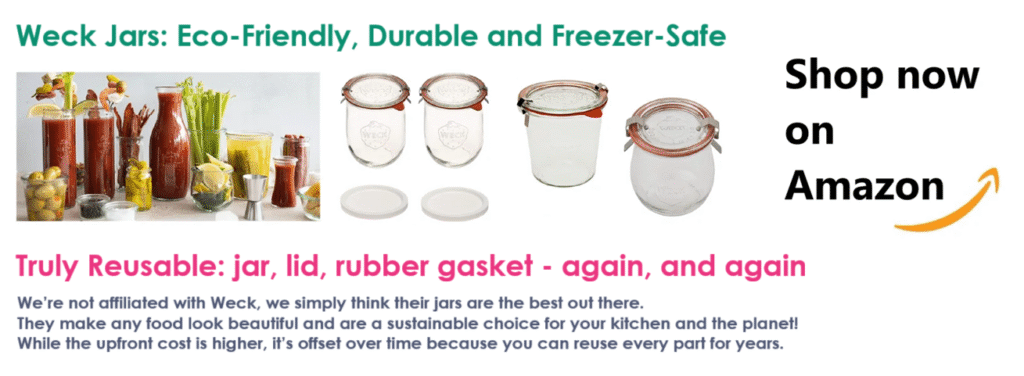
 Curious about reusable jars? Want to save money and be eco-smart? We’ve got just the article for you!
 Not sure how to sterilize canning jars? Find the answer about “dos and don’ts” of canning jars sterilization.
You May also like:
-
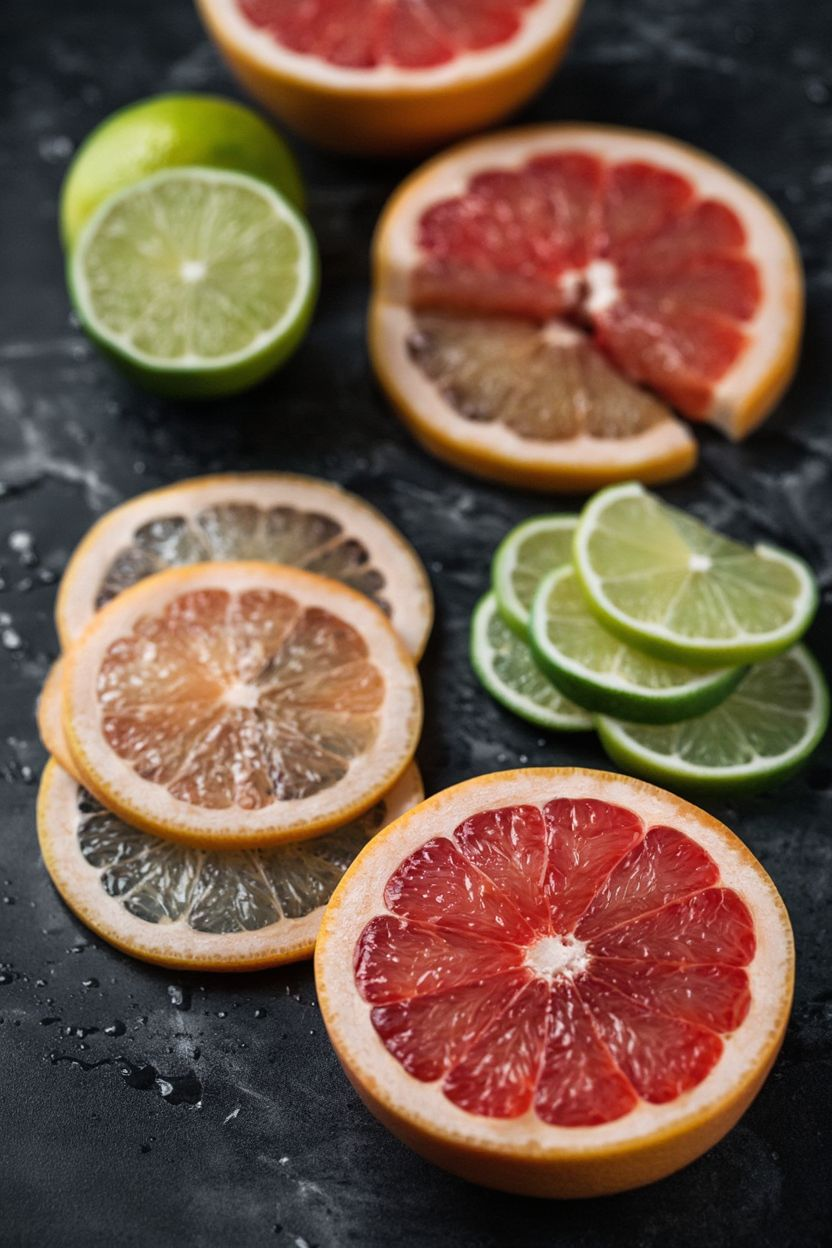
Pink Grapefruit Jam with Lime, Brandy, Cardamom and Juniper
This grapefruit jam begins with bright pink grapefruit and lime – sharp, fragrant, and full of color. Then brandy, green cardamom, and a whisper of juniper step in. All of… read more
-
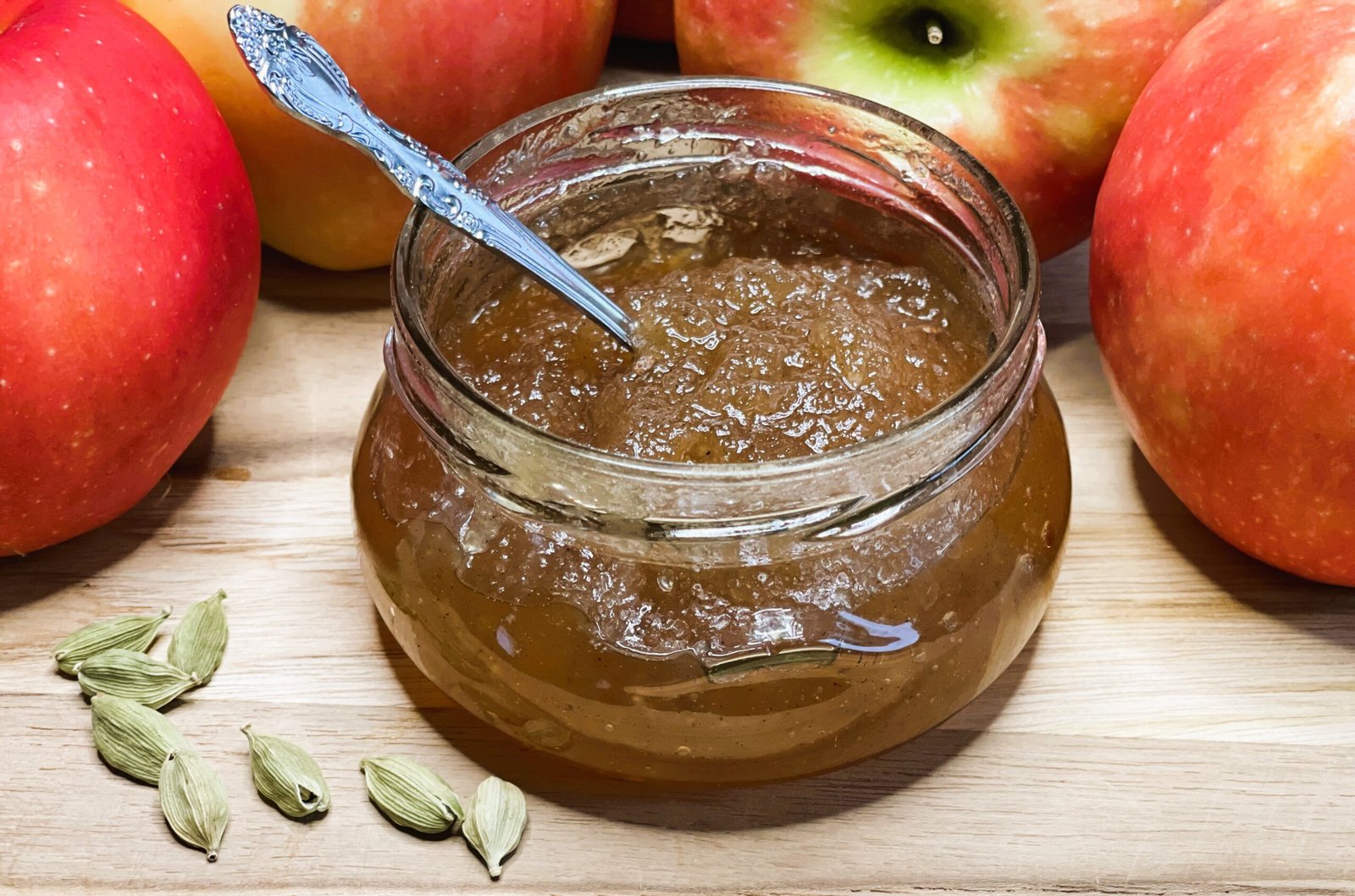
Cardamom Chardonnay Apple Butter Made In Classic French Style
This apple butter recipe blends the rustic charm of classic North American preserves with French artisanal finesse. Crisp apples are slow-cooked with cardamom, lemon, and a splash of chardonnay to… read more
-
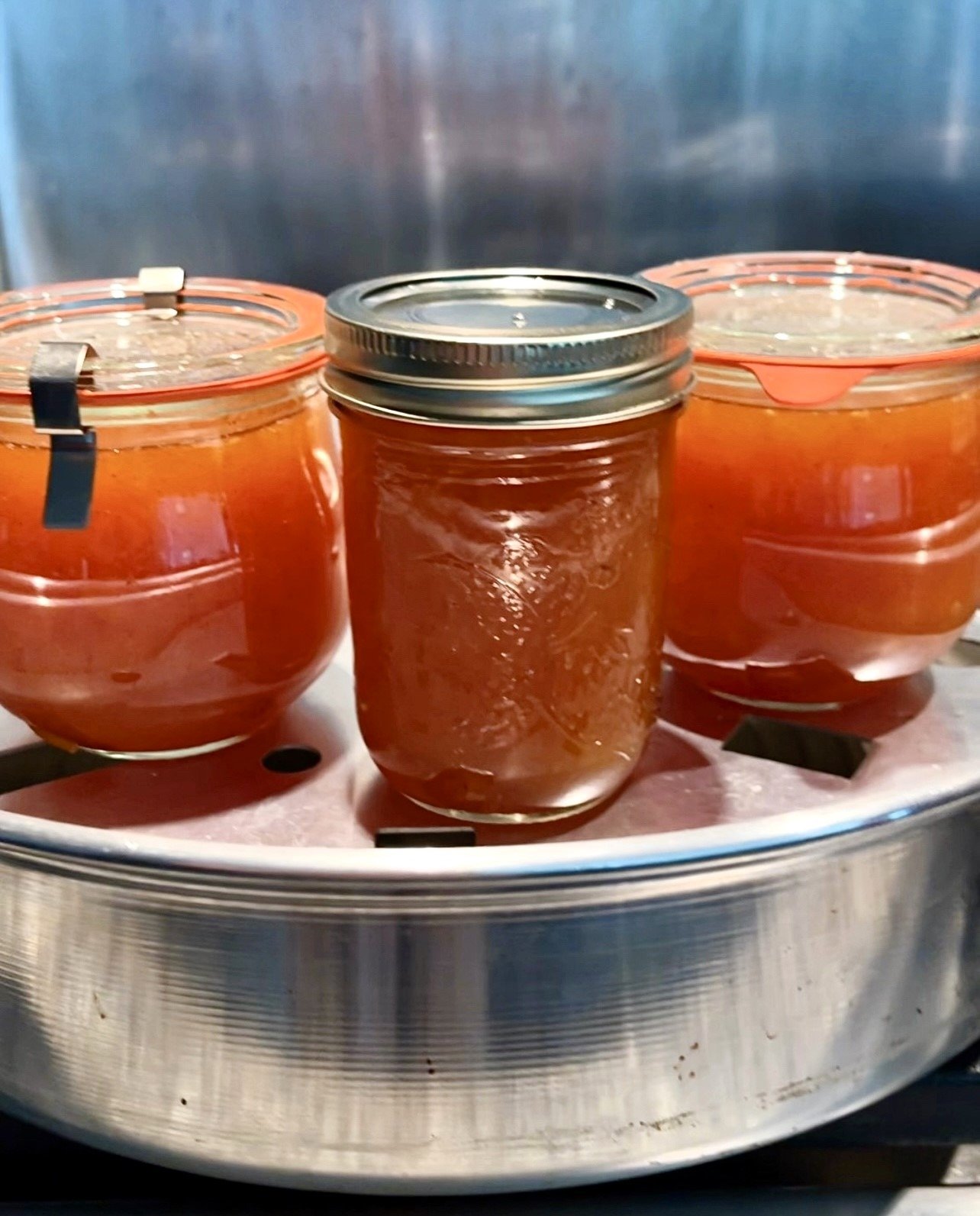
Sweet Tart Yellow Mirabelle Plum Jam Recipe: French Confiture Style
This sweet tart Mirabelle plum jam proves you don’t need a Parisian zip code or deep pockets to enjoy something classy and extraordinary. Got yellow plums in your backyard? One… read more
-
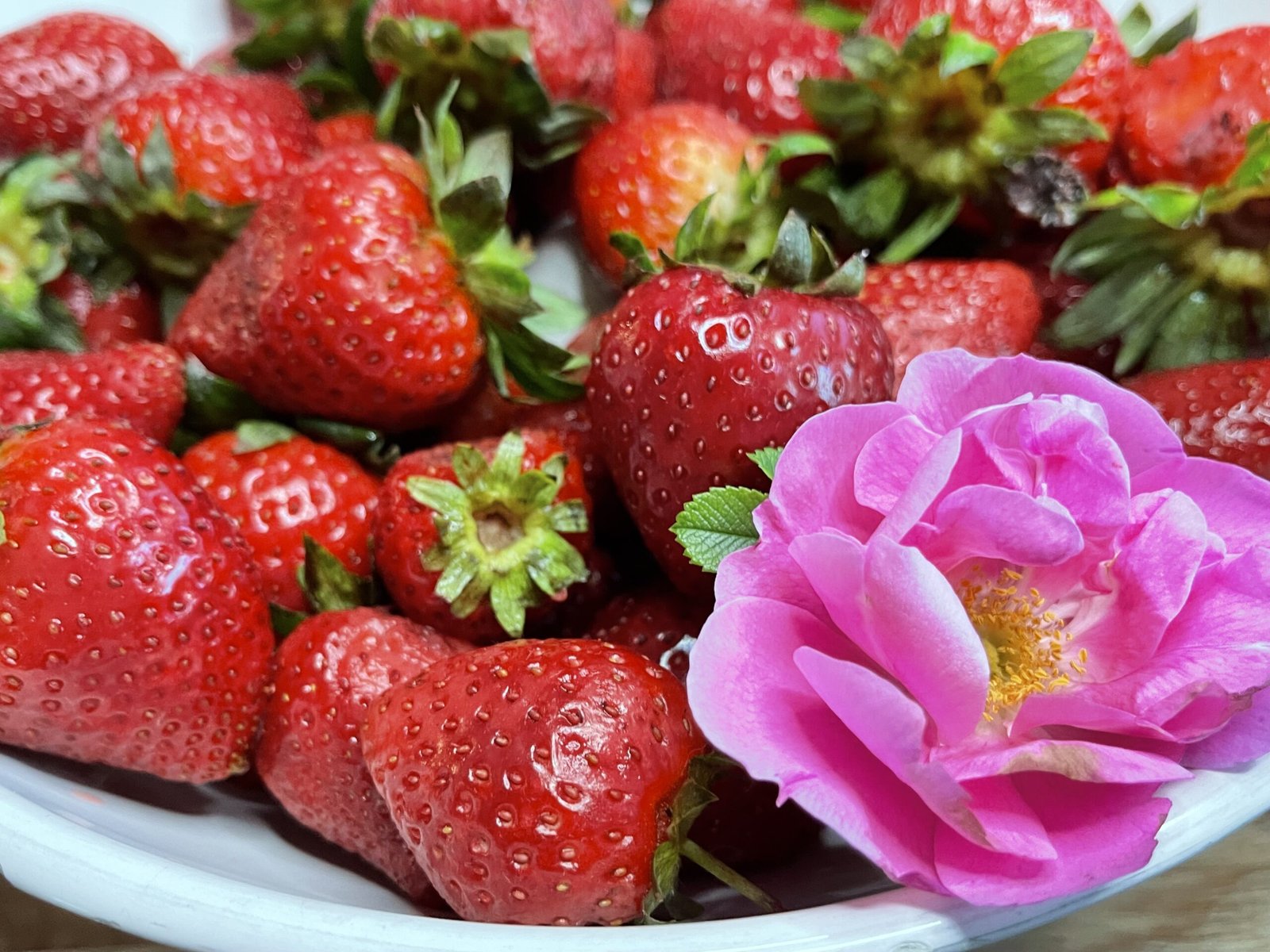
Strawberry and Rose Petal Jam: French Confiture Made Easy
Remember those jams sold at fancy patisseries that make you stop in your tracks? That’s this one! Full of ripe strawberries, perfumed with rose petals, and surprisingly low in sugar,… read more
-
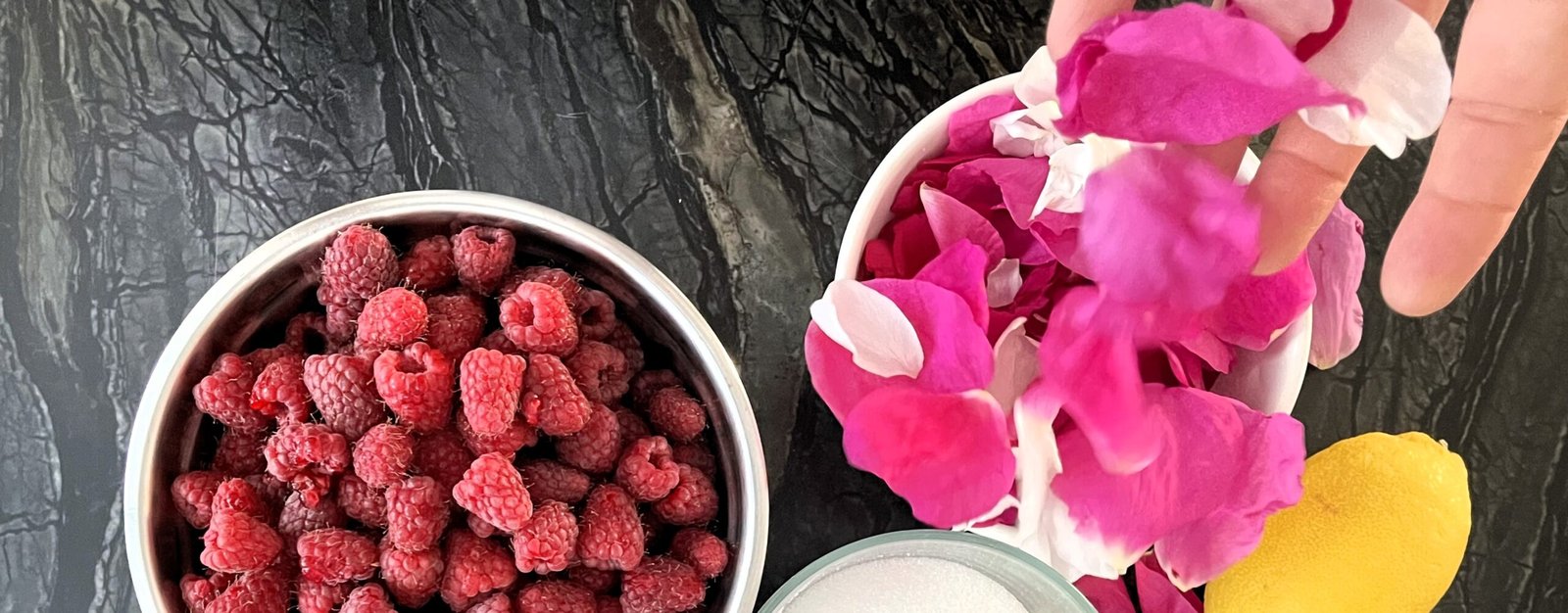
Unique Raspberry Wild Rose Petal Jam – Made Just For Cheese
This raspberry wild rose petal jam with Timut pepper is bright, floral, lightly tingly and also perfectly smooth. It’s designed as a jam for cheese, adding a lush, elegant layer… read more
-
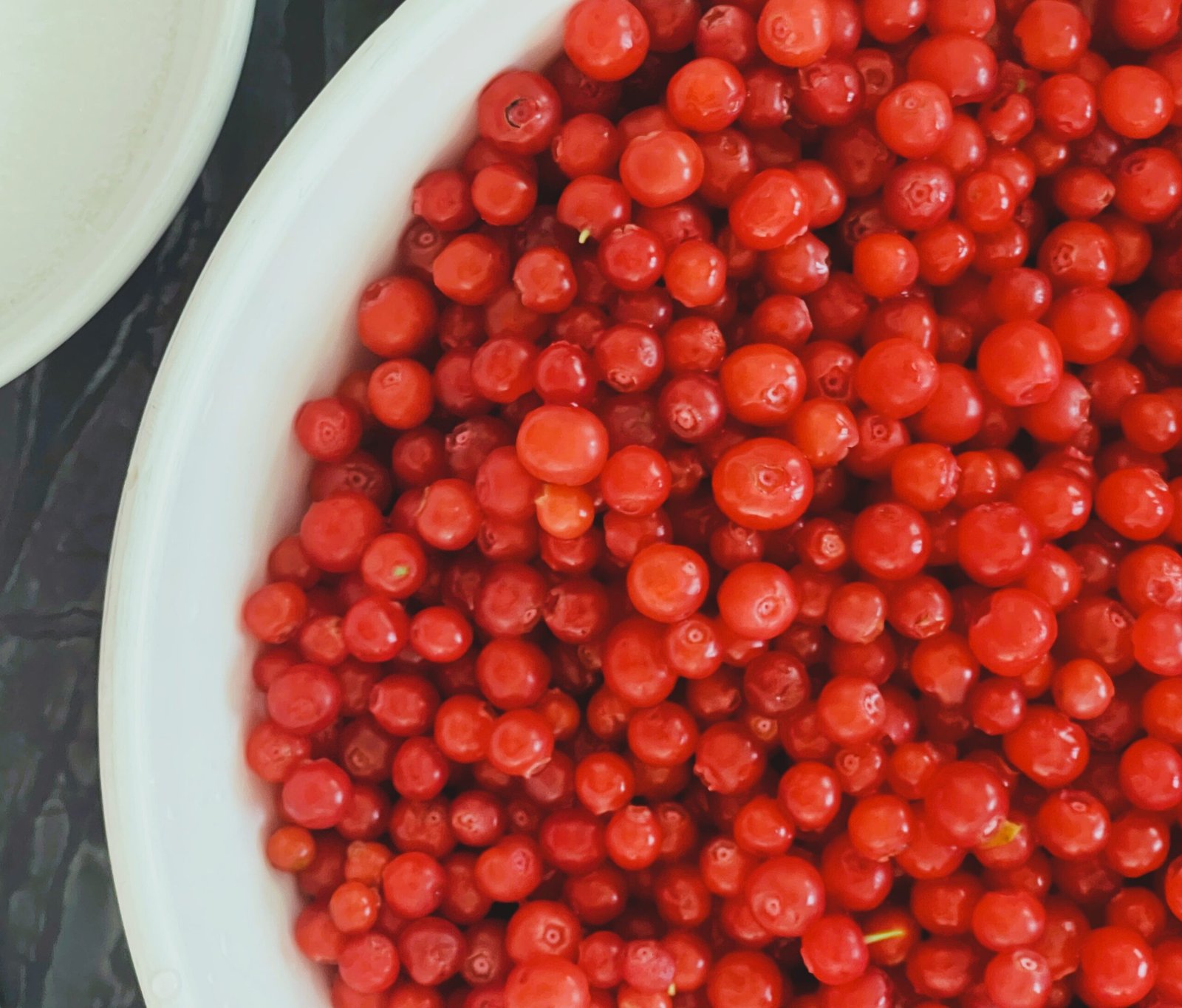
How to Make Red Huckleberry Jam (Bilberry Jam Canning Recipe)
This red huckleberry jam is a love letter to mossy trails, summer mornings, and berry bounty. If you’ve never tried to make huckleberry jam, this is your sign. Get out… read more
-
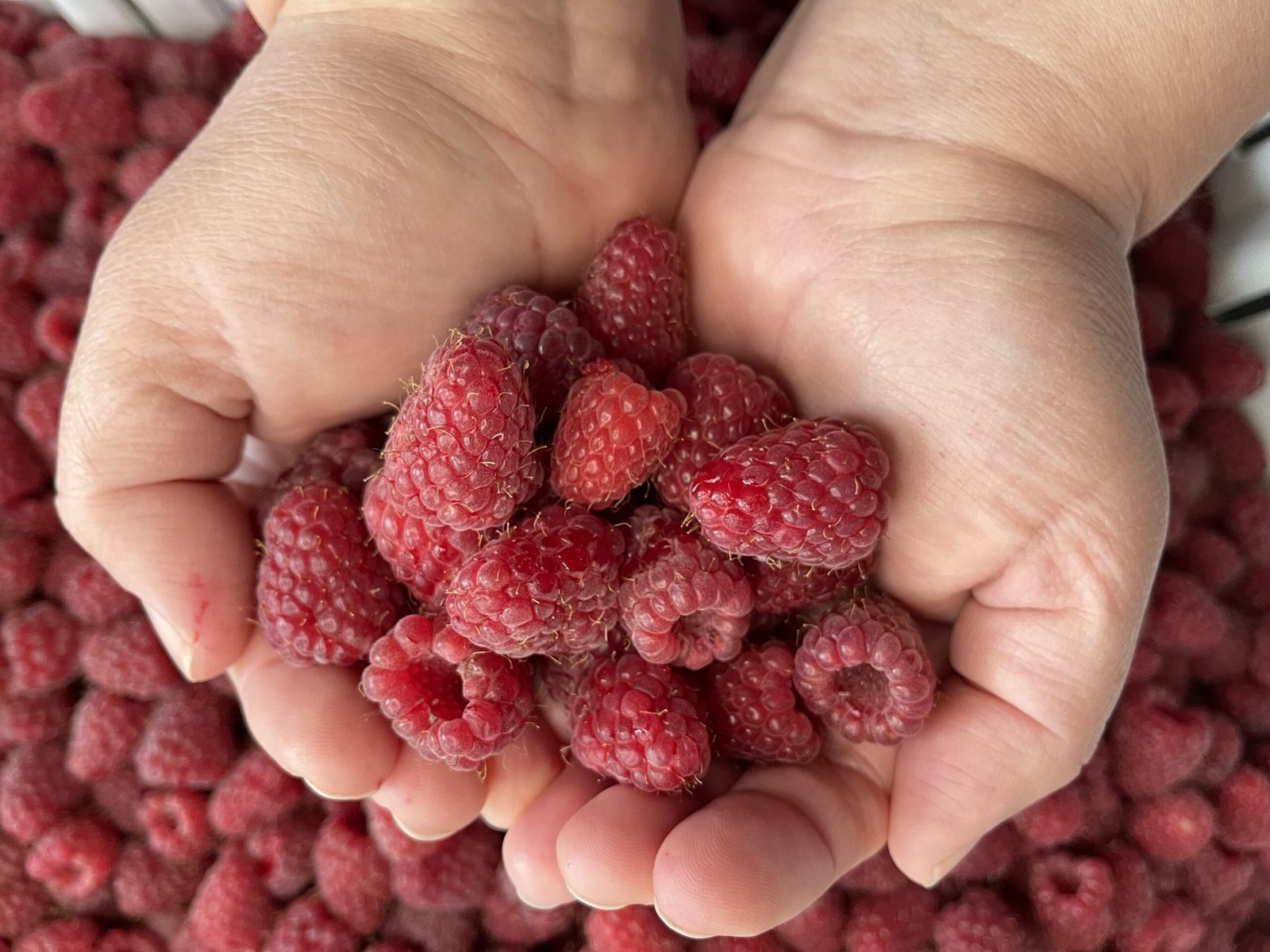
Boozy & Spiced Seedless Raspberry Jam for Grown-Ups
Our raspberry jam breaks out of the mold. Seedless, low sugar, spiked with port and pepper, this is the jam that went rogue. It’s like that guest at a polite… read more
-

Sweet And Spicy Pineapple Pepper Jam Canning Recipe
Sweet. Spicy. Bold. Pretty. Adaptable. Our pineapple pepper jam walks the fine line between kitchen staple and edible show-off. It’s not our most requested jam for nothing. It earned that… read more
-

Make-Ahead Christmas Jam Recipe (Cranberry-Strawberry Jam)
You could wait until December to make your Christmas Jam. You could. But let’s be honest: December is full of burnt cookies, delayed packages, and half-wrapped gifts. You’ll be frazzled.… read more
-
Cantaloupe Jam With Lime And Mint – Unusual Jams & Jellies
Cantaloupe jam might not be the first thing that comes to mind when you think of preserves, but it’s a hidden gem. Whether you need to use up extra cantaloupes… read more

Leave a Reply