
Smooth Mango Chutney Recipe
Smooth Mango Chutney. Not Over-Spiced. Not too sweet. 55% cheaper than store-bought.
🔪Prep: 20 min
🫕Cook time: 1 hr
🫙Makes 3 half-pint jars
💰Cost: ~$5 per jar
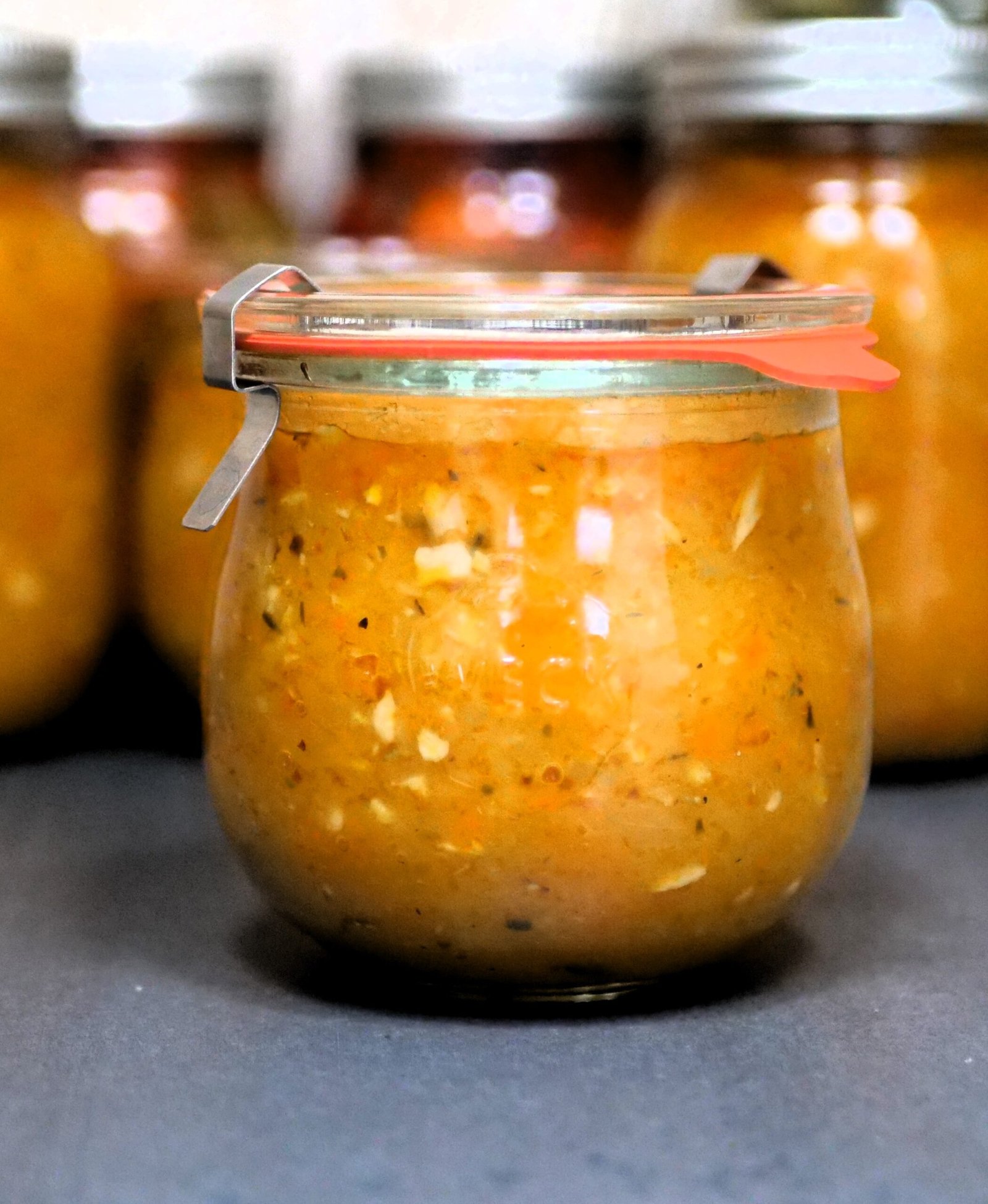
Most store-bought mango chutneys fail in predictable ways: excessive sweetness, dominant spice, and inconsistent, chunky texture. Our smooth mango chutney recipe addresses each of those while remaining straightforward to make in a single cooking session. It starts with fully blended mango for consistency, then builds flavour with bloomed garlic, ginger, and warm spices balanced by vinegar for acidity. The result is a smooth, spoonable chutney where mango remains the primary flavour. All without the cloying sweetness or texture issues found in many versions, and at a materially lower cost than comparable artisanal products.
Why You’ll Love This Mango Chutney:
- Balanced, not sugary: Vinegar to sugar to fruit combination keep the chutney from getting cloying
- Mango stays the main flavour: spices are measured to support, not mask the fruit
- Smooth, consistent texture: fully blended base means no chunks and no uneven spoonfuls
- Reliable, repeatable method: a straightforward recipe with predictable results
- Beginner-friendly recipe: clear steps, stable acidity, and no advanced techniques required
- One batch = months of use: shelf-stable jars ready whenever you need them
- Actually useful in cooking: integrates into sauces, glazes, and savoury dishes without clashing
- Costs less than store-bought: comparable quality at a materially lower per-jar price
Why One Chutney Isn’t Enough: The Case for a Smooth Mango Chutney
Our Major Grey’s mango chutney recipe worked exactly as intended.
It became one of our most re-shared recipes on social media – and for good reason. This chunky chutney worked in chicken salad, layered into sandwiches, in wraps, and much more.
A perfect jar to reach for – until it wasn’t.
We had a friend visiting from across the country. Naturally, you want to make something special for such an occasion. Steamed mussels with mango chutney made sense.
The flavour worked. The chunkiness and the raisins didn’t. You’d get a perfect spoonful, then hit a jammy raisin. Not what we were going for. It turned into a bit of a dinner disaster.
At that point, it was clear: this chutney wasn’t for that kind of cooking. In dishes where it needs to blend, like pan sauces, shellfish, and spreads, its chunky texture was getting in the way.
We tried to fix it anyway. We took a finished jar and blended it. The texture improved, but the flavour flattened. Cooking it longer made it heavy. Adding more spice just covered up the mango.
Wrong approach. So, we built a second version from the ground up.
This mango chutney is designed to be smooth and to integrate into a dish.
- No whole jammy raisins.
- No chunky texture to work around.
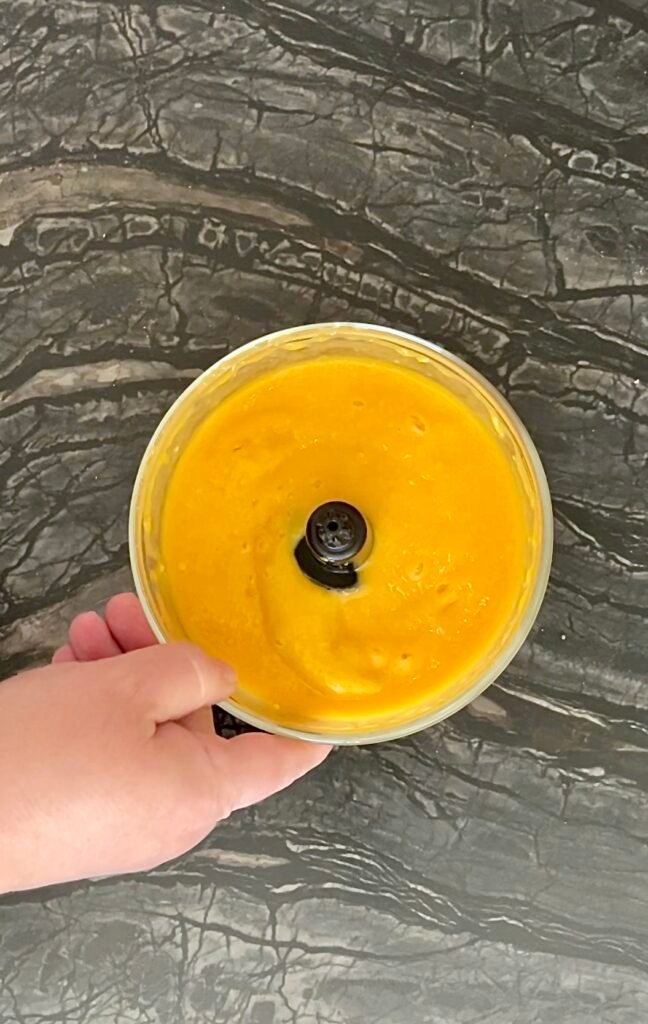
- Blend the mango first.
- Control the flavour early. That means simpler and fewer ingredients.
- Balance it with vinegar to keep it bright as it cooks down.
Our smooth mango chutney does what the original can’t. It coats, spreads, and finishes a dish cleanly. Moreover, it’s designed to be canned and kept on hand.
Beware, this isn’t a replacement
It’s the mango chutney recipe version for when you need smooth, consistent flavor. Alternatively, make this recipe when you simply don’t like chunky mango chutney.
We strongly recommend trying both.
Smooth Mango Chutney Key Ingredients

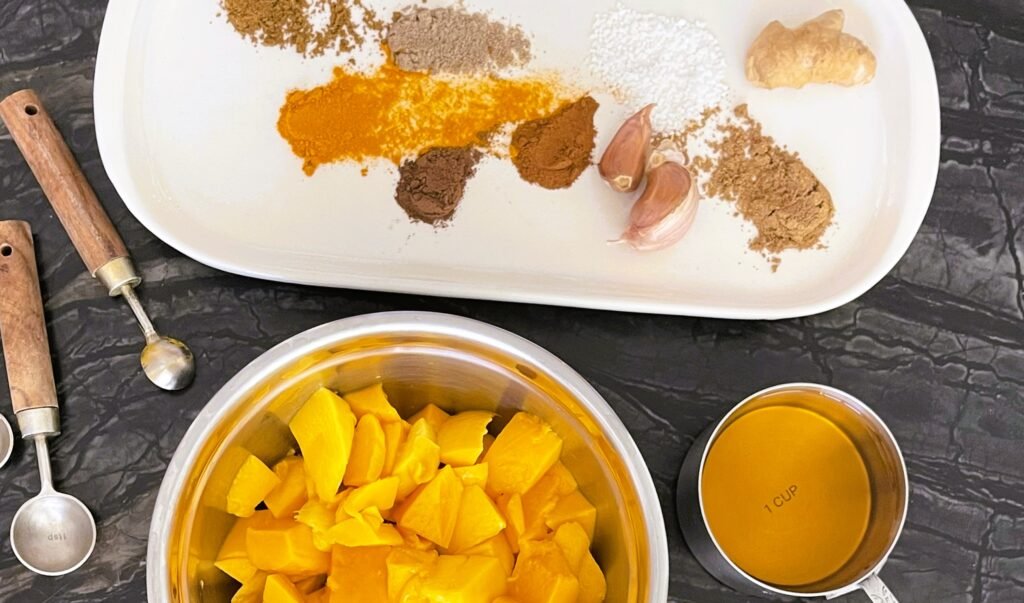
Mango
Fresh mango is the base of this chutney. Once fully blended, it creates a smooth purée that replaces the chunky texture found in many chutney recipes and allows the flavour to distribute evenly through the entire batch. We use ripe mangoes for natural sweetness and a softer body, which helps the chutney thicken as it reduces during cooking.
Substitution: Frozen mango works if fully thawed and well-drained. Canned mango is not recommended due to the added syrup and overly soft texture, which disrupts balance and final consistency.

Apple cider vinegar
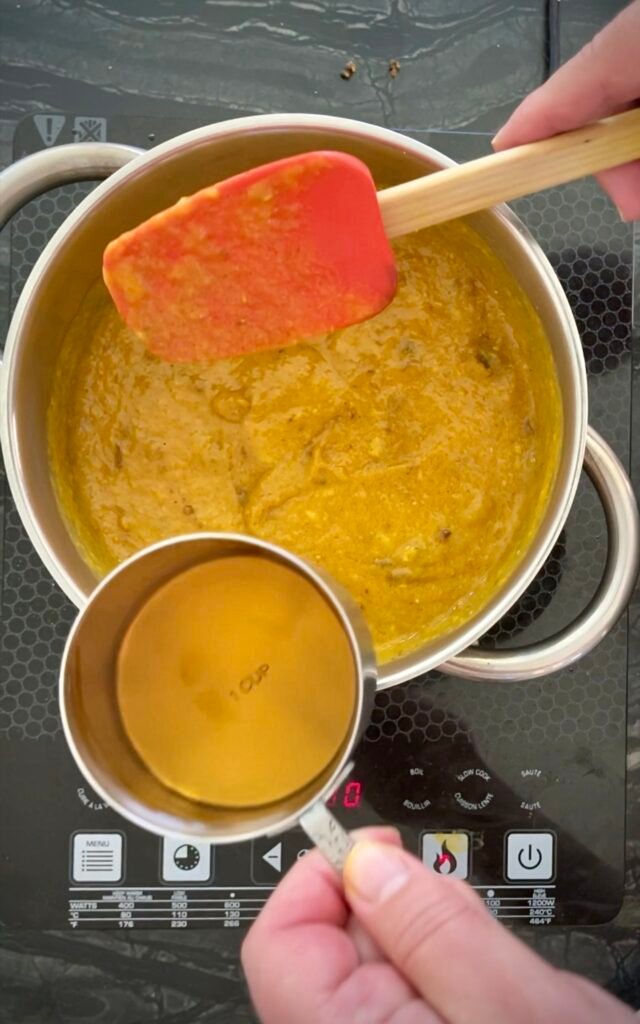
Apple cider vinegar provides the acidity that balances sweetness and supports safe preservation. It keeps mango chutney bright during long cooking and prevents the finished product from tasting flat or overly heavy.
Substitution: White wine vinegar can be used, but it produces a more aggressive finish. Do not reduce the quantity – the acid level is essential for both flavour balance and canning safety.
Sugar
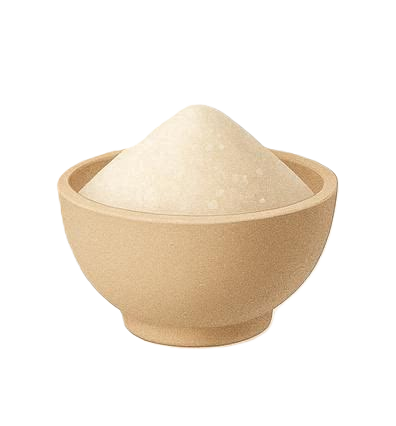
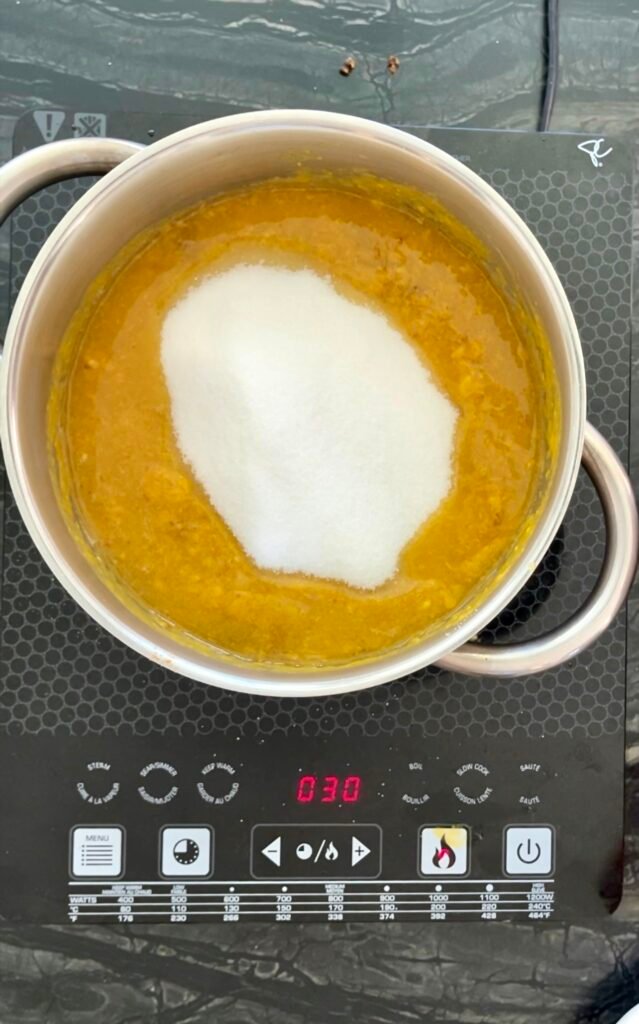
Sugar balances acidity and helps control how the chutney reduces during cooking. It contributes to body and preservation stability while preventing the mango from tasting overly sharp once vinegar is added.
Substitution: Slight reduction is possible (up to ~10–15%), but further reduction affects preservation stability and final texture. Liquid sweeteners are not suitable as they alter consistency and water balance.

Garlic & Ginger
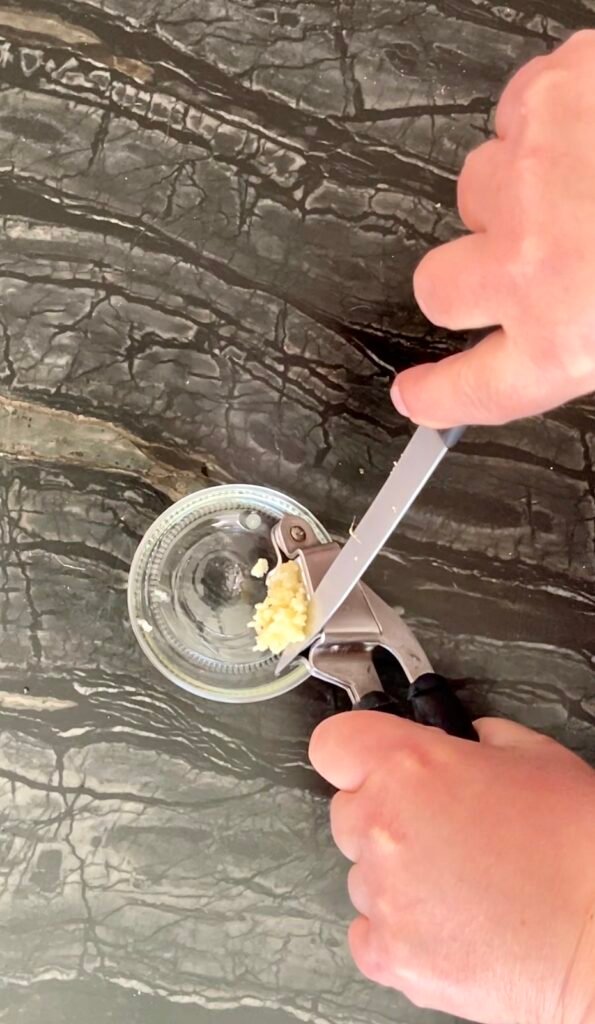
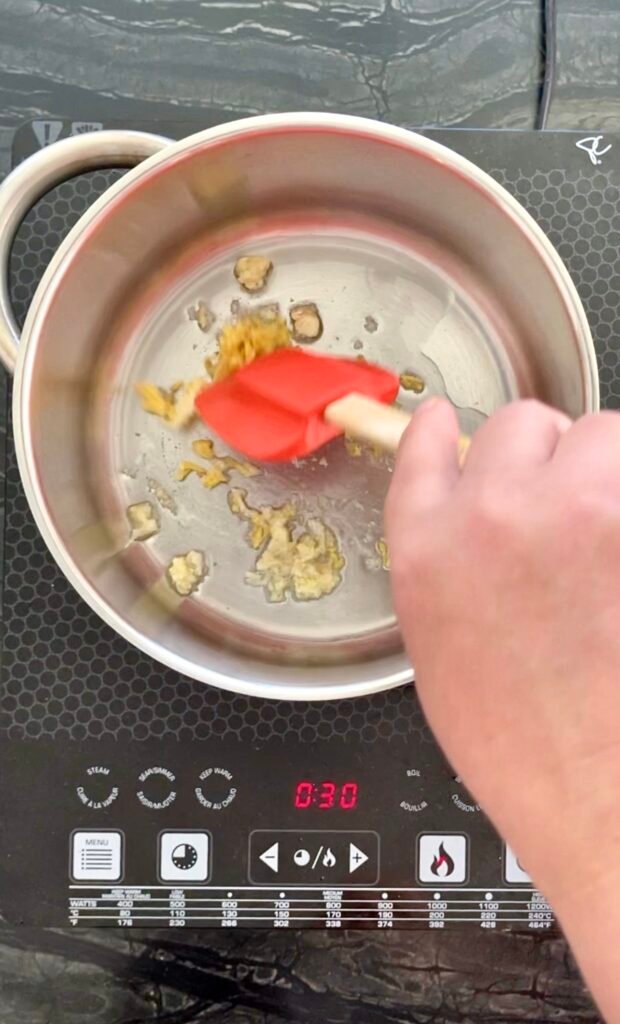
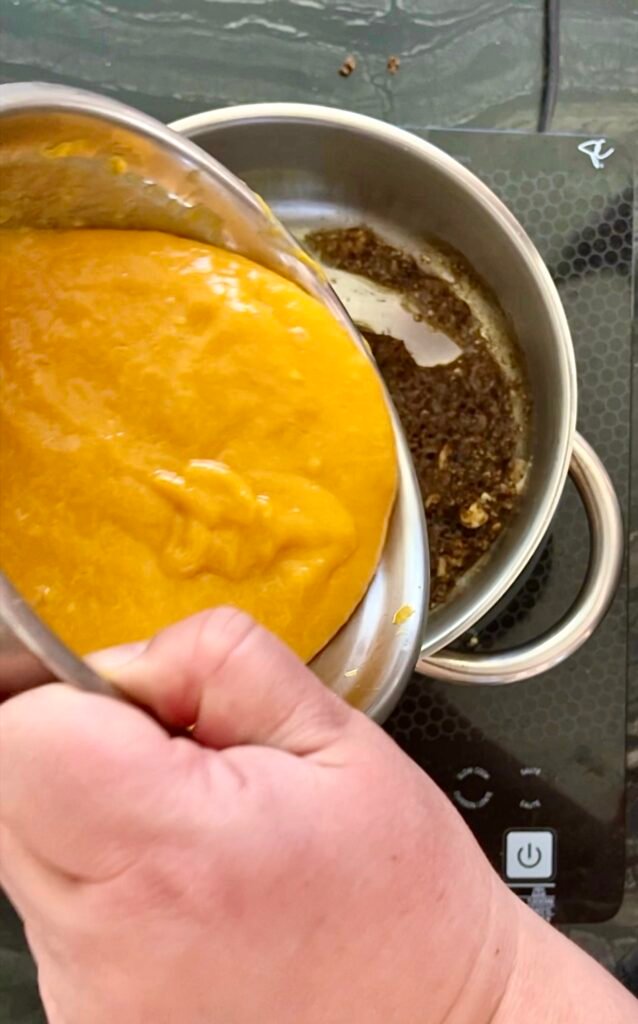
Garlic and ginger provide the aromatic base layer. They are gently bloomed in oil before the mango is added, which softens sharpness and ensures even flavour distribution throughout the smooth chutney.
Substitution: Powdered versions can be used in emergencies, but they produce a flatter, less integrated flavour profile.
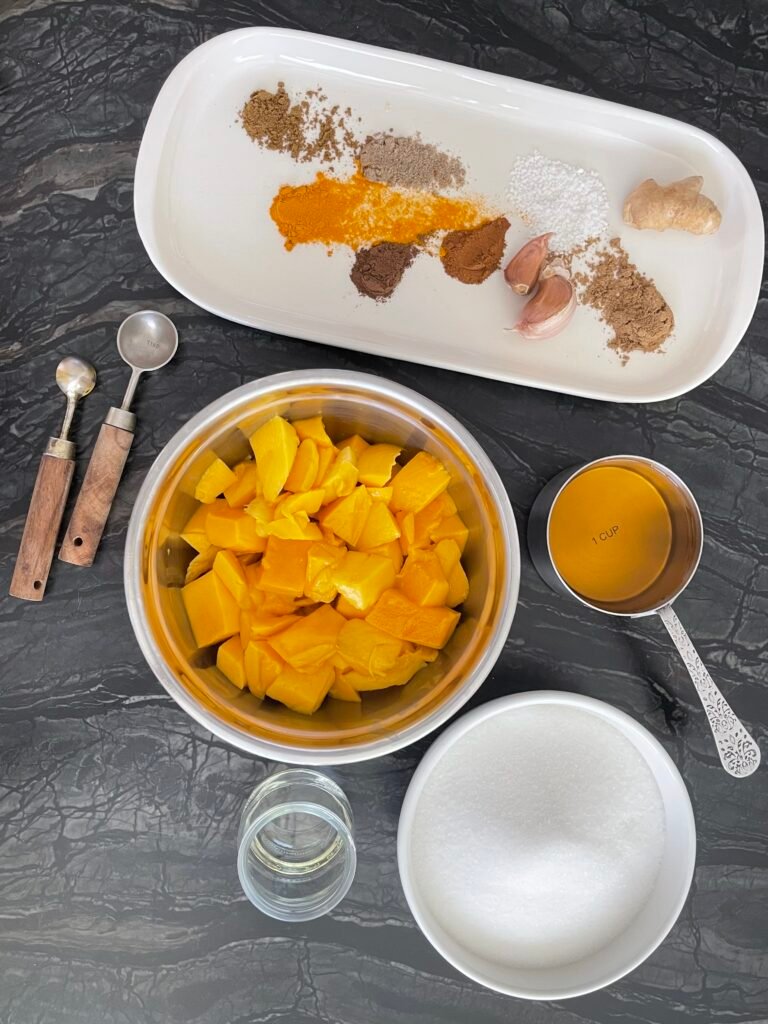
Spice blend (coriander, cumin, cinnamon, cardamom, allspice, turmeric)
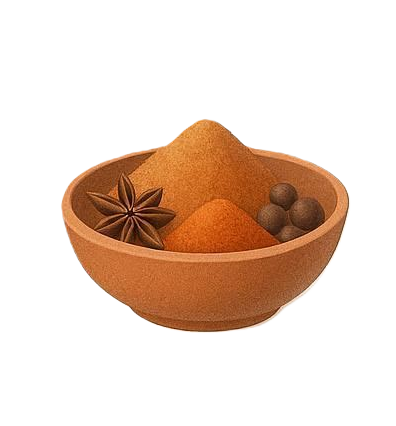
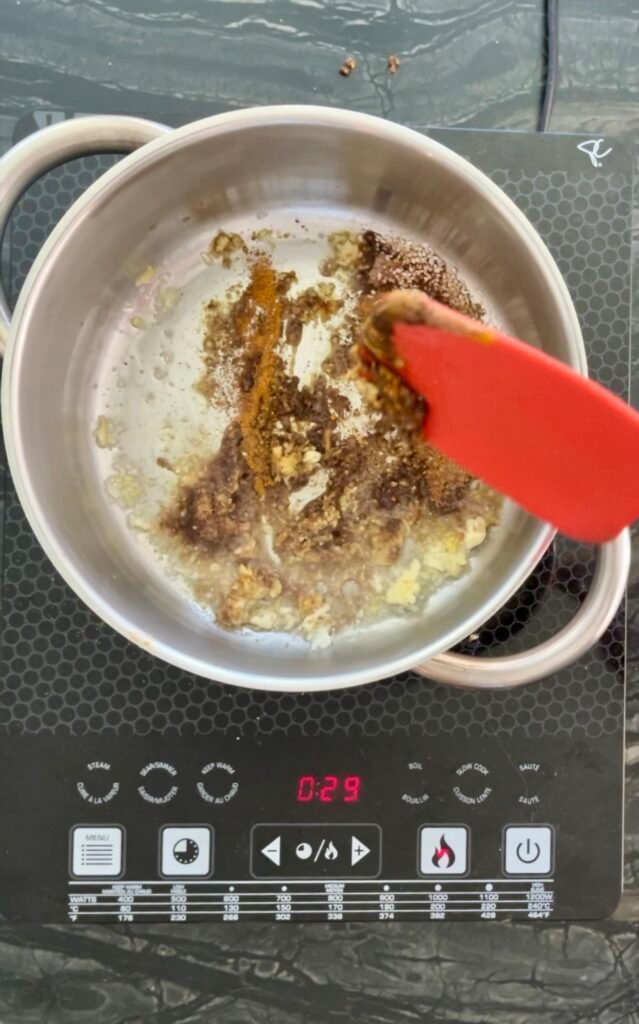
The spice blend adds warmth and complexity. However, it is deliberately restrained to keep mango as the dominant flavour. The spices are bloomed briefly in oil to unlock aroma and ensure even distribution in the finished chutney.
Substitution: Individual spices may be adjusted slightly, but increasing the total spice load will overpower the mango and disrupt the balance. Keep quantities controlled for a fruit-forward mango chutney.
Smooth Mango Chutney vs. Major Grey’s Mango Chutney: what’s the difference?
- Major Grey’s Mango Chutney is a chunky preserve.
- It’s built around visible fruit pieces and raisins that hold their shape through cooking. That texture works in cold or assembled applications like chicken salad, sandwiches, wraps, where contrast is part of the experience.
- Smooth Mango Chutney is built for integration.
- Instead of maintaining structure, the mango is fully blended before cooking. The result is a uniform base that disperses evenly into sauces and hot dishes, rather than sitting as separate elements within them.
- Major Grey’s mango chutney delivers distinct bites.
- Use Major Grey’s when structure and texture matter.
- Smooth chutney delivers continuity.
- Use smooth mango chutney when consistency and integration matter.
The difference is not just flavor, it is the preserve’s behaviour.
One sits on top of food; the other becomes part of it.
This matters most when heat is involved. In pan sauces, shellfish dishes, or anything where chutney is expected to emulsify into a liquid base, chunky chutney versions create interruption. You get uneven distribution or flavor – bursts rather than a consistent flavor.
Smooth chutney removes that inconsistency entirely.
Personally, we don’t treat these two chutneys as competing recipes. We treat them as two preserves with different jobs. Both of these have a place in our kitchen and help us prepare various meals throughout the year.
For cooking applications, we reach for the smooth version every time.
What does this homemade mango chutney cost to make
One of the easiest ways to reduce cost is to treat mango chutney as a seasonal bulk preserve rather than a single recipe. Mangoes drop significantly in price when bought in larger bags or during peak import cycles, and slightly overripe fruit often costs less while still working perfectly in our smooth mango chutney recipe. Everything else – vinegar, sugar, and spices – runs at a very low per-batch cost when bought in pantry quantities.
| Ingredient | USD $ | CAD $ |
| Mangoes (5 large, ~1.3 kg flesh) | 7.50 | 10.00 |
| Apple cider vinegar (1 cup / 240 mL) | 0.60 | 0.80 |
| Sugar (2 cups / 400 g) | 0.80 | 1.10 |
| Garlic + ginger | 0.70 | 0.90 |
| Spices (blended, per batch allocation) | 1.20 | 1.60 |
| Grapeseed oil (2 tbsp) | 0.40 | 0.55 |
| Total batch cost (3 x 250 mL jars): | 11.20 | 14.95 |
Cost per jar: $3.76 USD / $4.98 CAD
Comparable small-batch or artisan mango chutneys typically retail between $10–$16 per jar, depending on brand and import origin. This means you’re producing the same style of preserve for roughly one-fifth to one-third of the retail cost, even before accounting for yield flexibility when mangoes are in season.
Common mistakes when making mango chutney for canning
❌“Just a little more spice” across the board.
- Each spice amount looks small, so adding a bit extra feels harmless. In practice, those small extras add up, especially when working with very potent spices like the ones we use in this mango chutney recipe. As a result, the mango starts to fade.
- We recommend sticking to the listed proportions for at least your first batch, so you can decide whether you actually want to add more spice to future batches.
❌Reducing the vinegar because it smells strong.
- At first, the vinegar can seem sharp. But, vinegar mellows as it cooks and becomes part of the mango chutney. Cutting the vinegar amount throws off flavour and affects canning safety.
- Do not reduce the vinegar. If it smells strong early on, but give it time! It settles.
❌Increasing sugar “just to be safe.”
- More sugar doesn’t make this mango chutney safer – acidity does. What sugar does do is push the chutney back into overly sweet territory.
- Trust the ratio. This is how you avoid that cloying finish most versions have
❌Stopping the cook too early (runny chutney).
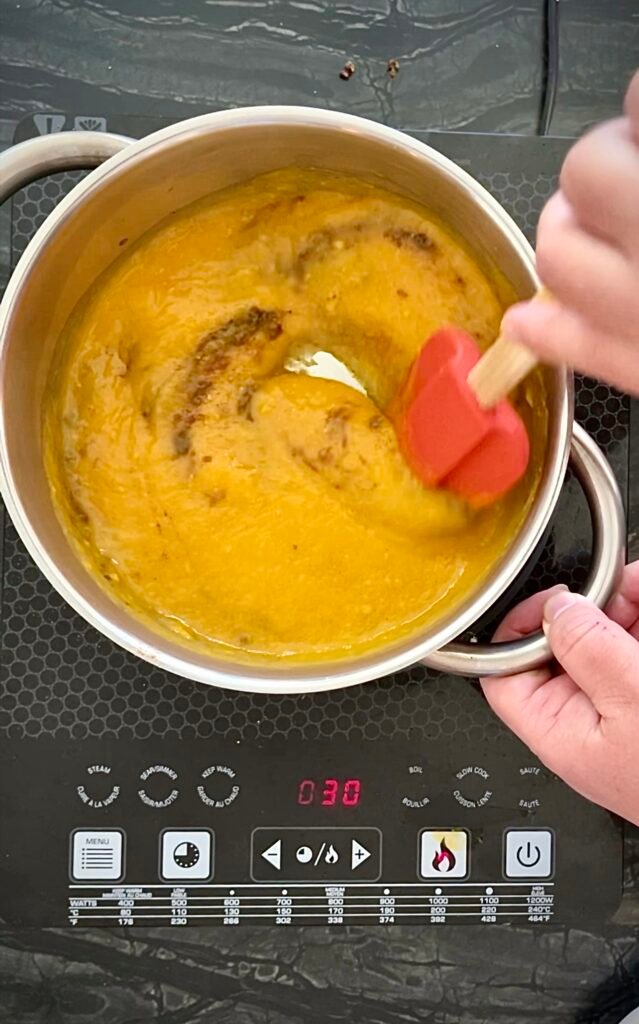
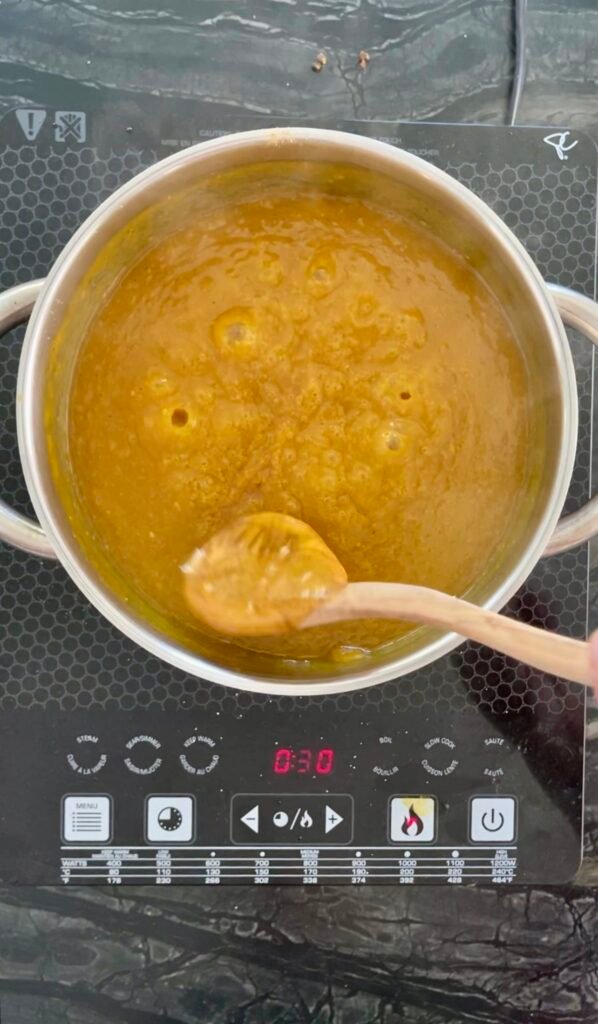
- Without added pectin, chutney thickness comes from reduction. If it’s still dripping thinly off the spoon, it’s not ready.
- Look for a slow, ribbon-like fall and a line that holds briefly when you drag a spoon across the pot.
❌Cooking too long and losing the mango.
- Going too far creates a heavy, jammy texture and dulls the fruit.
- Once the chutney thickens and looks glossy, stop. You’re aiming for smooth and spoonable, not thick paste.
Smooth Mango Chutney (Balanced, Not Overly Sweet or Over-Spiced)
Canning Method
This is a high-acid, pickled-style condiment. For that reason, the processing method follows standard high-acid canning guidelines used for pickles and relishes. The vinegar provides the acidity required for shelf-stable preservation using either water bath canning or atmospheric steam canning (not to be confused with pressure canning).
Both methods use identical processing times for this recipe. We typically use an atmospheric steam canner for speed and lower water use, but a water bath canner works equally well and is the most widely used method in home preserving.
Processing table – Steam Canner & Water Bath
Jar size: Half-pint or Pint (8 oz / ~250 mL or 16 oz / ~500 mL)
Pack style: Hot
Applies to: Atmospheric steam canner AND water bath canner (same processing times)
| Altitude | Processing time |
| 0–1,000 ft | 10 min |
| 1,001–6,000 ft | 15 min |
| Above 6,000 ft | 20 min |
Not sure which elevation band is yours – our Canning Altitude Calculator will give you an answer in a couple of seconds.
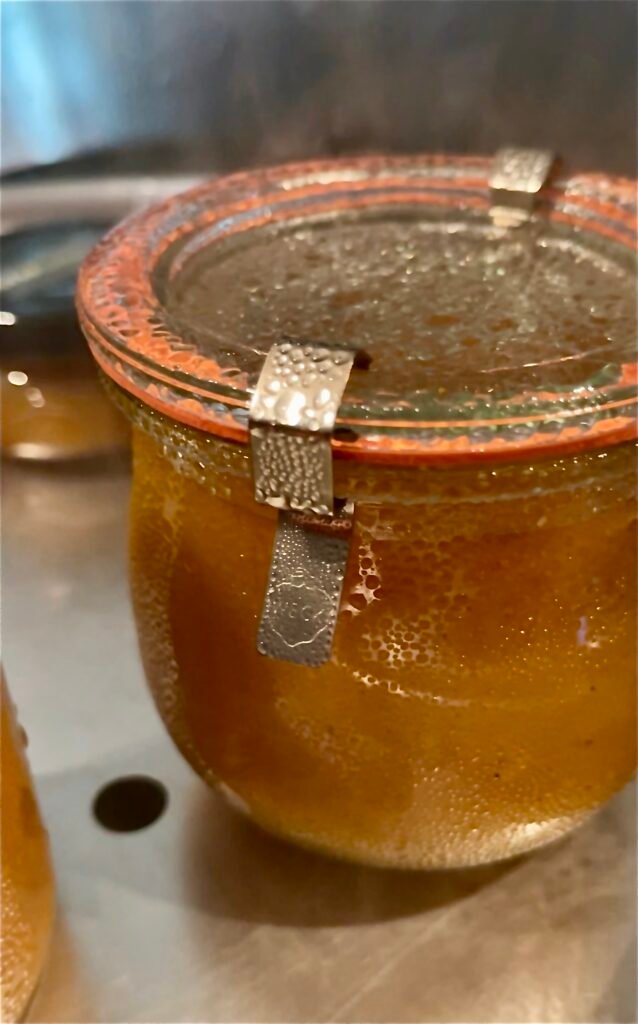
Atmospheric Steam Canning
Atmospheric team canning is newer to the home canning world. Nevertheless, it has been validated for high-acid preserves like this. It uses less water, heats up faster, and doesn’t require jars to be submerged.
- Prepare your atmospheric steam canner according to the manufacturer’s instructions. Typically, fill the base with the recommended amount of water and preheat until steam begins to vent.
- Place filled jars on the canner rack. Cover with the dome lid.
- Start timing once a steady column of steam has been venting continuously.
- When processing time is complete, turn off heat.
- Remove jars straight up with a jar lifter. Most important, do not tilt. Place on a towel-lined counter or cutting board.
New to steam canning?
Ready to ditch water bath canners?
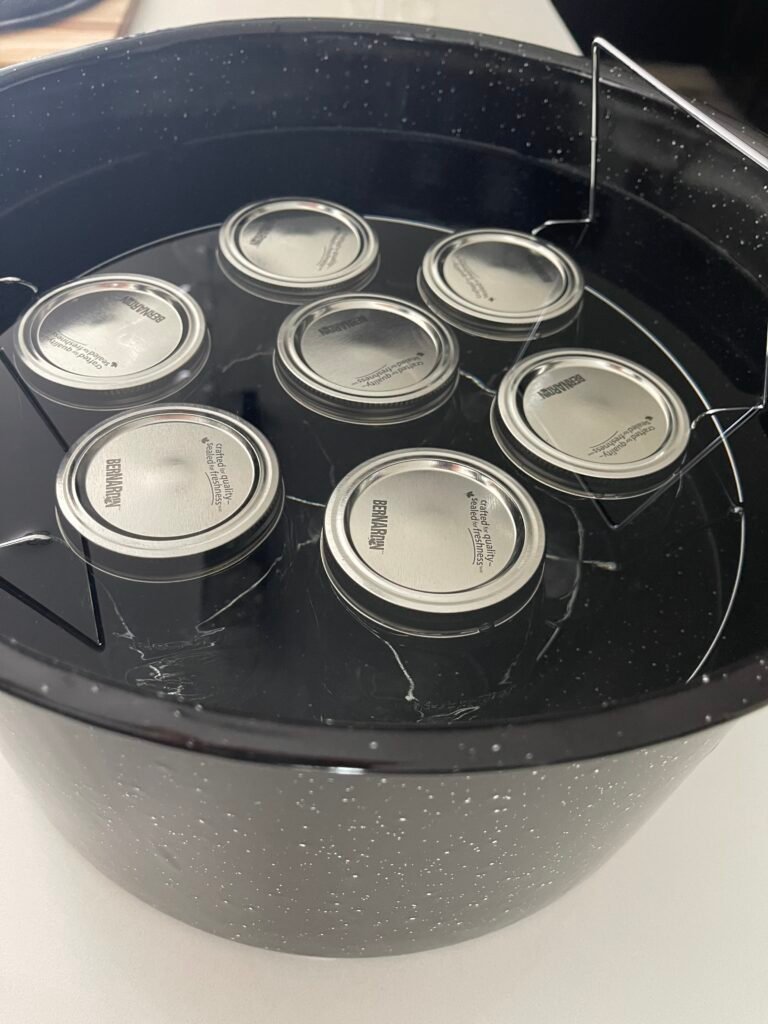
Water Bath Canning
Undeniably, water bath canning is the most widely used method for high-acid preserves and the one most canners learn first. If you already own a water bath canner, this is a perfectly sound way to process this jam.
- Place filled jars on the canner rack and lower it into boiling water. Always remember, water must cover the lids by at least 1 inch.
- Start timing once you reach a full rolling boil. Processing times are identical to the table above.
- When processing is complete, turn off heat and let jars rest in the water for 5 minutes before removing this. This step helps prevent siphoning.
- Lastly, remove jars straight up with a jar lifter.
Looking to understand how the two methods compare?

Prefer Open Kettle?
Open kettle canning is not a USDA-recommended method. For this recipe, we used atmospheric steam canning to get consistent, shelf-stable results. However, open kettle remains a long-established traditional method that some experienced canners still use for high-acid preserves.
We don’t dismiss traditional methods. For those who choose to use open kettle, we’ve put together a guide that explains how it is practiced, along with the key steps aimed at reducing common risks within that traditional approach.
After sealing (all methods)
- Do not touch, adjust bands, or press lids for 12–24 hours.
- After cooling, check seals: press the center of each lid. If it doesn’t flex, the seal is good. Any jar that didn’t seal goes in the fridge → use within 3 weeks.
- Remove bands for storage (they trap moisture and can mask a broken seal over time). Label with contents and date.
- Store in a cool, dark place. Peak quality for 12–18 months.
👩🍳 Pantry Master’s Note
- Mango gives this chutney its body and texture, but mango alone isn’t acidic enough for safe water bath or atmospheric steam canning, as most varieties exceed the 4.6 pH limit.
- Safety comes from the vinegar, which supplies the necessary acidity and ensures the final mixture qualifies as a high‑acid preserve.
- Garlic, ginger, and spices are naturally low in acid, but because they’re added in modest amounts and thoroughly cooked into the acidic base, they don’t affect the overall safety of the chutney.
Do not reduce the vinegar – doing so affects both flavor balance and canning safety
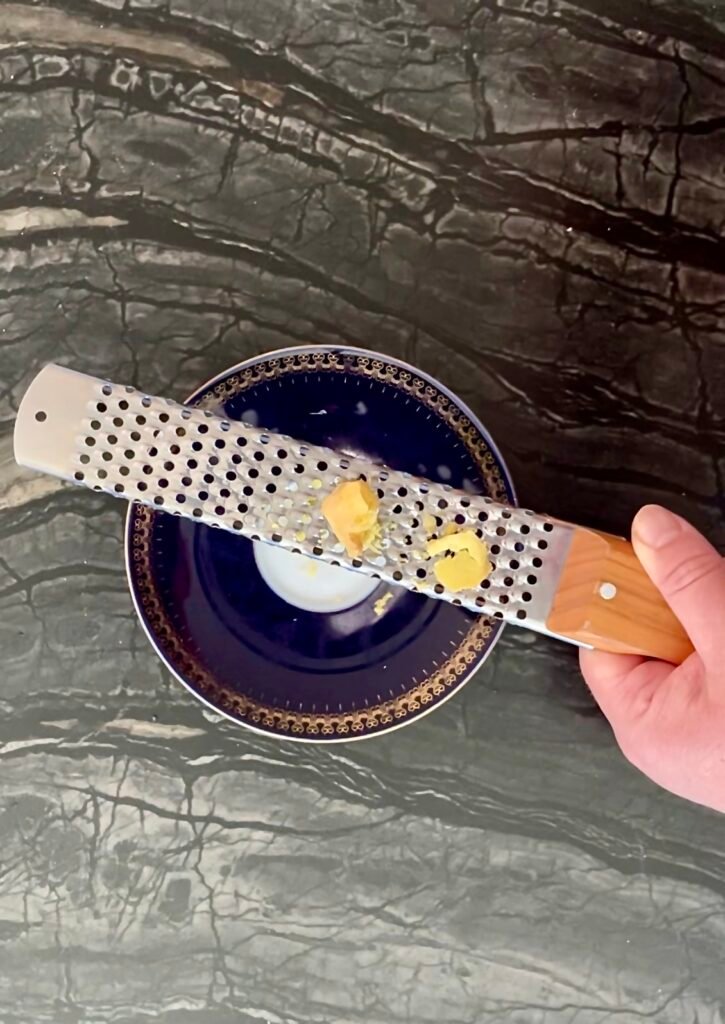
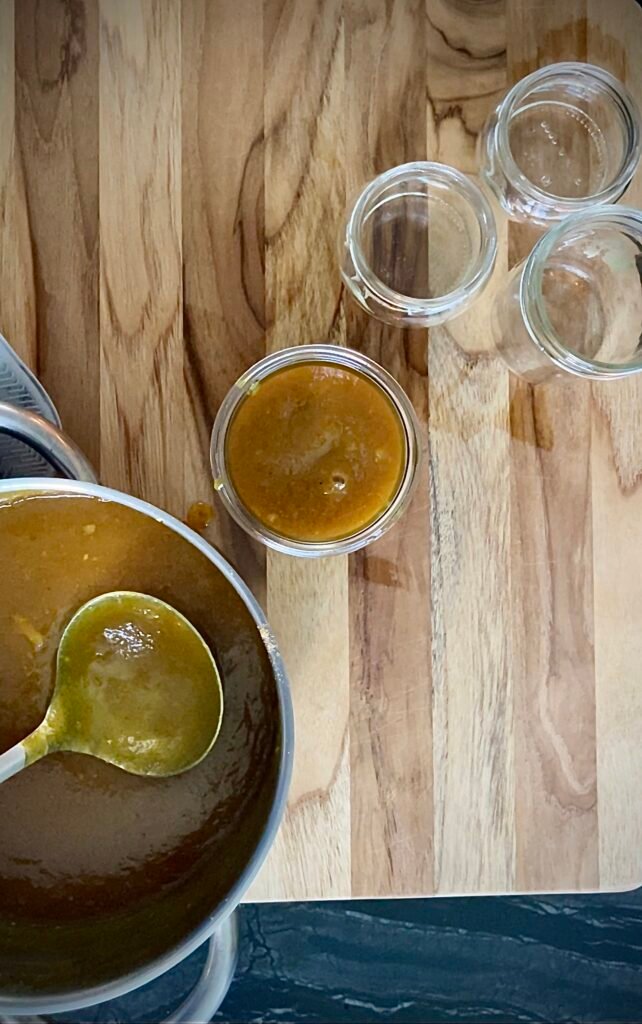
How to Make Smooth Mango Chutney – Step-by-Step Photo Gallery
Mango Chutney Serving Suggestions
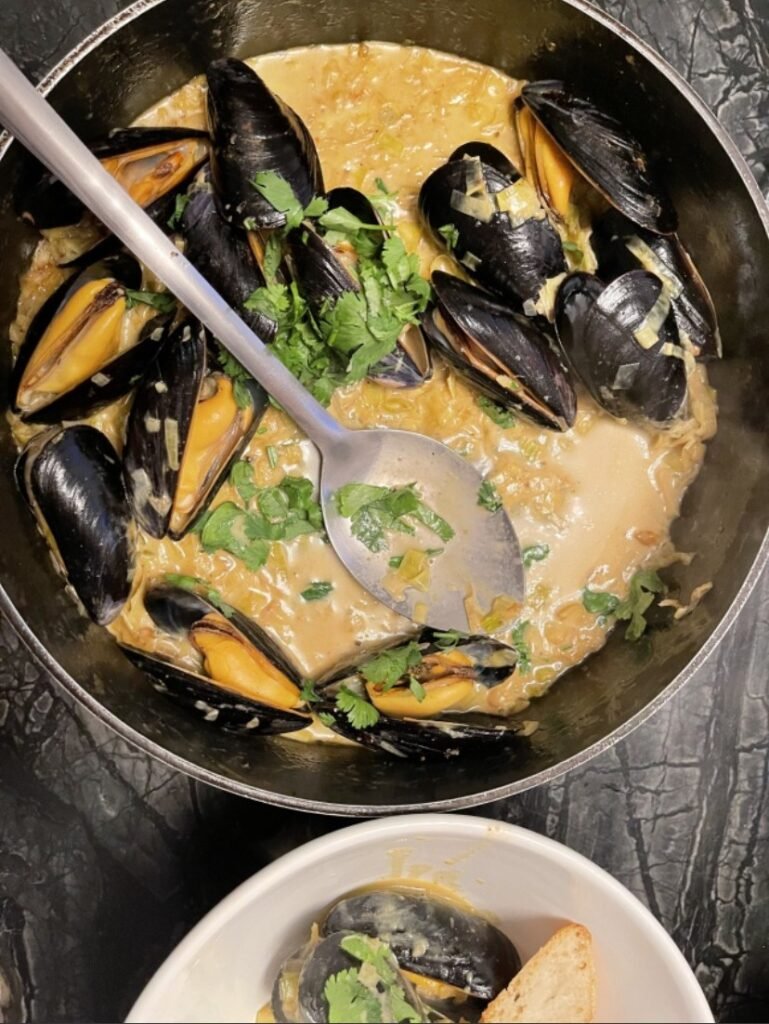
This mango chutney is built to be used in cooking, not just served alongside. Because it’s smooth, it integrates well into a dish. The acidity cuts richness, while the mango adds depth without sweetness taking over. Frankly, it behaves more like a finishing sauce rather than a condiment.
Try it with:
- Spoon into a pan of steamed mussels at the start. Because this is a smooth mango chutney, it blends into the broth without chunks or uneven texture
- Swirled into a pan sauce for chicken or pork. This mango chutney adds acidity and body in one step
- Brushed over grilled shrimp or salmon in the last minute of cooking. We recommend mixing it with a bit of grapeseed oil first. It glazes well without burning
- Mixed into mayo or yogurt for an instant spread for wraps, burgers, or roasted vegetable sandwiches. The taste will surprise you.
- Added to a cheese board, especially with sharp cheddar or alpine-style cheeses
FAQ
This mango chutney doesn’t rely on pectin to set. Instead, it develops its texture through reduction and concentration. For that reason, the traditional cold plate test used for jams doesn’t work here. If you use a cold plate test, this mango chutney will firm instantly due to temperature shock, which can give a false “set” even when the mixture is still undercooked.
So, rather than relying on cooling tests, read the chutney in the pot:
• Ribbon test: Lift a spoon and let the chutney fall back. It should drop slowly in a thick, cohesive ribbon rather than thin drips.
• Line test: Drag a spoon across the bottom of the cooking pot. The line should briefly hold before slowly filling back in.
• Visual cue: At the same time, the surface becomes glossy and slightly tighter as moisture evaporates.
To get these cues right, pan choice matters.
We use a wide, heavy-bottomed braiser, because surface area drives evaporation and allows the line test to work properly. In contrast, a narrow, deep pot traps steam, slows reduction, and makes it virtually impossible to do a line test.
Reducing the vinegar lowers the acidity and pushes the chutney out of the safe range for shelf-stable water bath or steam canning. As a result, it would no longer be reliably safe for long-term storage at room temperature. In this recipe, the vinegar controls the final acidity and determines both flavour balance and preservation safety.
Yes, but scaling should respect evaporation requirements for this preserve. A wider and larger pan is required to maintain proper reduction speed. If the surface area is insufficient, your mango chutney may overcook before it reaches correct consistency.
Processing time ensures proper heat penetration and seal formation. Shortening it can result in incomplete sealing or reduced shelf stability over time. Altitude adjustments are especially important, as boiling point changes affect processing effectiveness.
This is not a gelled preserve. The texture is created through reduction, not pectin activation. That’s why it behaves more like a smooth condiment or sauce than a jam. Also, this is the reason why doneness is judged by reduction cues rather than jam set tests.
It is designed for both uses. However, it performs particularly well in cooking. Because it is smooth and fully blended, it integrates with meat and seafood dishes, pan sauces, and marinades without changing texture or introducing chunks.
No. This is not a USDA-tested recipe. It was developed in our kitchen as an artisanal preserve, based on traditional methods and our own cooking experience. Where applicable, we draw on established food-preservation principles and reference trusted sources, but this specific recipe has not been laboratory tested or validated by the National Center for Home Food Preservation.
This recipe falls into the category of chutneys and pickled condiments. To build the processing guidance, we referred to established processing tables for these types of products from sources like Bernardin Home Canning and the National Center for Home Food Preservation.
These references provide general time-and-temperature frameworks for high-acid preserves. We adapted those frameworks to suit this specific recipe.
That said, this does not mean the recipe itself has been laboratory tested.
Related Recipes
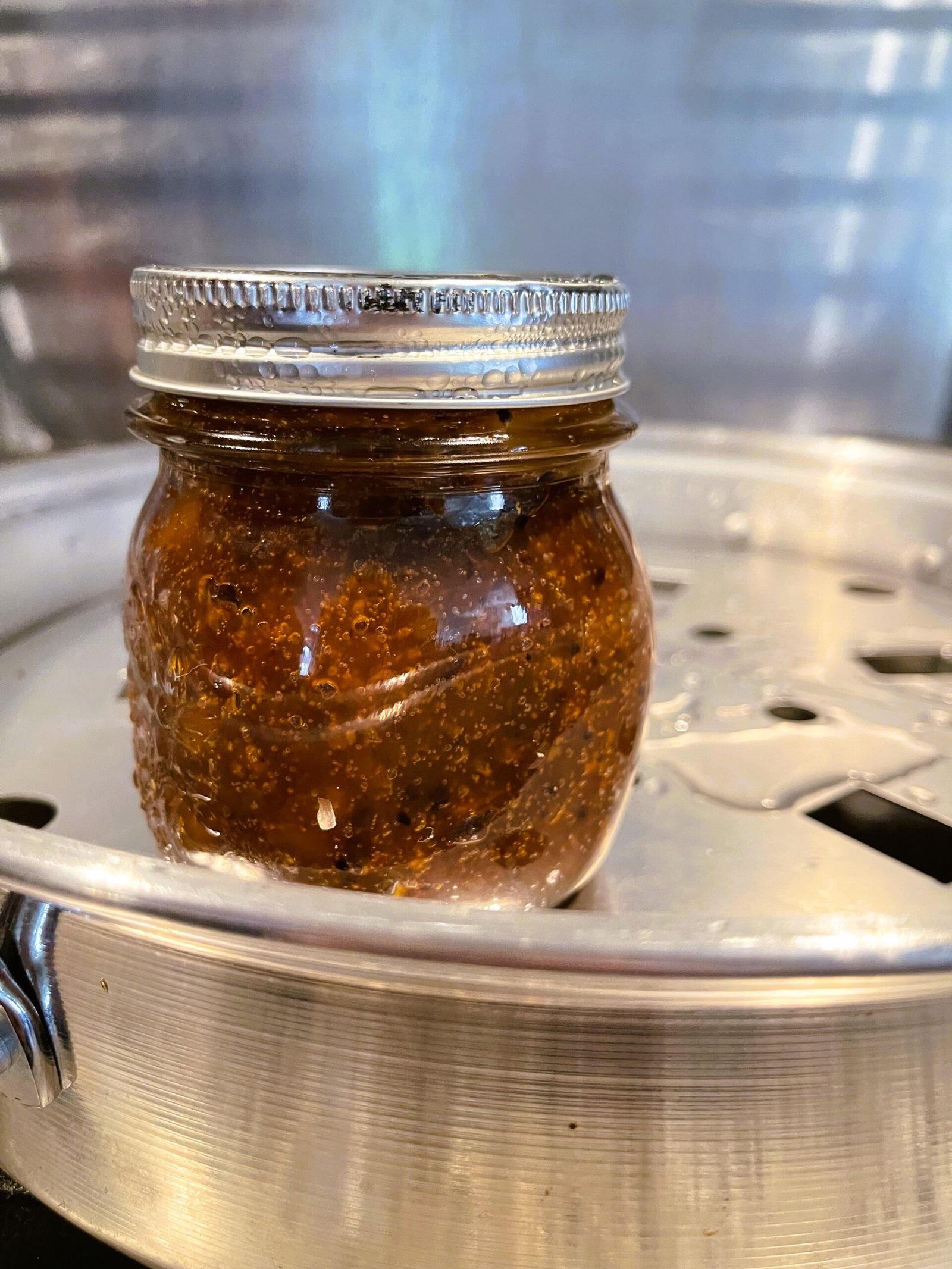
Different main ingredient, common approach – slow cooking fruit or vegetables with sugar, acid, and spices.
Join the pantry
Fresh recipes when the season calls for them. Preservation guides you can trust – every method, traditional to modern. Ideas for turning your pantry into weeknight dinners. Seasonal alerts that help you preserve more for less. Honest reviews of the tools that matter.
Tried this preserve? We’d love to hear how it turned out!