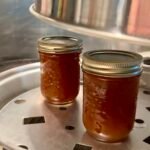
Pineapple Mango Pepper Jam - No Pectin Canning Recipe
This pineapple mango pepper jam recipe is built for the pantry shelf. Make it in spring when pineapple is at its best price, put it up for the year, and reach for it whenever you need something that works on a cheese board, a pork roast, or as a layer in a sandwich. One session, five jars, no pectin.
Servings: 5 half-pint (~250 ml) jars
Ingredients
- 8 Cubanelle or Italian frying peppers 1.65 lb | 750 g whole → ~3 cups | 720 mL pulp and juice after processing
- 1 Pineapple peeled and cored. Weight: ~2.1 lb | 980 g whole → ~2¼ cups | 535 mL pulp and juice after processing
- 1 lb Mango thawed if frozen - drain before measuring (455 g)
- 2 Jalapeños (~1.4 oz | 40 g)
- 4 cups Granulated sugar (1.75 lb | 790 g)
- 2¼ cups Apple cider vinegar 5% acidity (18 fl oz | 540 mL)
- ¼ cup Freshly squeezed lime juice about 2 small limes (~2 fl oz | 60 mL)
- 1 tsp Smoked paprika
- ½ tsp Cumin
- ¼ tsp Coriander
Instructions
Puree the mango
- Puree the mango flesh in a food processor or blender until completely smooth. Set aside.
Juice the pineapple
- Run the pineapple through a juicer, collecting both the juice and the pulp. Measure the final yield carefully.
- This recipe depends on reaching the correct pineapple yield. If your pineapple produces less juice than expected, juice additional pineapple until you reach the required amount. Alternatively, reduce the sugar and vinegar proportionally to keep the preserve balanced.
Juice the peppers
- Run the cubanelle peppers and jalapeños through the juicer. Measure the final pepper juice and pulp yield.
- Peppers vary significantly in water content depending on freshness and season. If your yield is lower than expected, juice additional peppers or reduce the sugar and vinegar proportionally.
Separate the soft pulp
- After juicing, go through the pulp container and discard the tough pineapple fibers, dry pulp, and larger pepper skins.
- Keep the soft pulp and return it to the juice mixture. That soft pulp is what helps give the jam its body and natural set.
Combine the base
- Pour the pineapple juice and pulp, pepper juice and pulp, and mango puree into a large heavy-bottomed pot. Stir until fully combined.
Add the remaining ingredients
- Add the sugar, apple cider vinegar, bottled lime juice, smoked paprika, coriander, and cumin.
- Stir until the sugar is fully dissolved and the spices are evenly distributed.
Bring to a boil
- Bring the mixture to a full rolling boil over medium-high heat, stirring regularly to prevent scorching.
Cook down
- Reduce the heat to medium and maintain a steady simmer.
- Cook for approximately 40–60 minutes total. Start checking consistency around the 40-minute mark, as cooking time will vary depending on stove strength, pot width, and the natural water content of the fruit.
- The jam is ready when it thickens and passes the chilled plate test. A small spoonful placed onto a cold plate should wrinkle slightly when pushed with your finger.
- Stir regularly throughout cooking to prevent sticking and ensure even reduction.
Skim the foam
- As the jam cooks, skim off any foam that rises to the surface. This gives the finished jam a cleaner appearance.
Proceed to canning
- Once the jam reaches the proper consistency, remove it from the heat and immediately proceed with the water bath or atmospheric steam canning method outlined in the Method section.